How KEF Fixed the “Dry” Sound of the Q Series with the Q750
For decades, KEF has been synonymous with engineering-driven loudspeaker design. Long before computer modeling became standard practice, the company was already using advanced calculations and innovative materials to push performance forward. Today, while aluminum drivers and CAD tools are commonplace, KEF’s ambition to refine and evolve its sound remains unchanged.
The Q Series has embodied that philosophy since 1991. Now in its eighth generation, it continues to serve as KEF’s gateway into true point-source loudspeaker design, thanks to the Uni-Q coaxial driver. The Q750 sits at the heart of this lineup, replacing the well-regarded Q700. On paper, the update looks evolutionary rather than revolutionary — but extended listening reveals a more meaningful shift.
What’s New in the Q750?
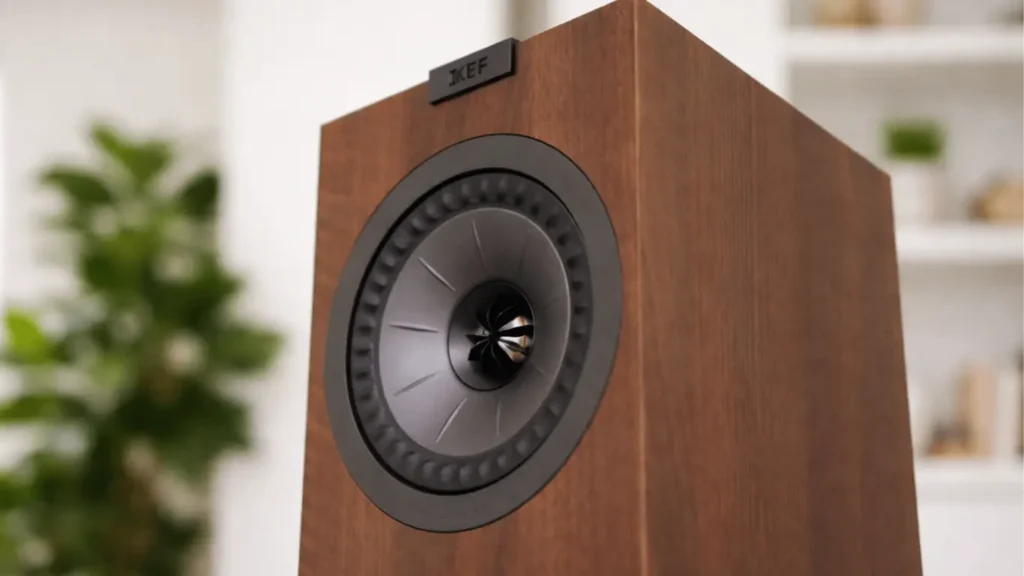
While the visual differences are immediately apparent, the real story lies beneath the cabinet walls.
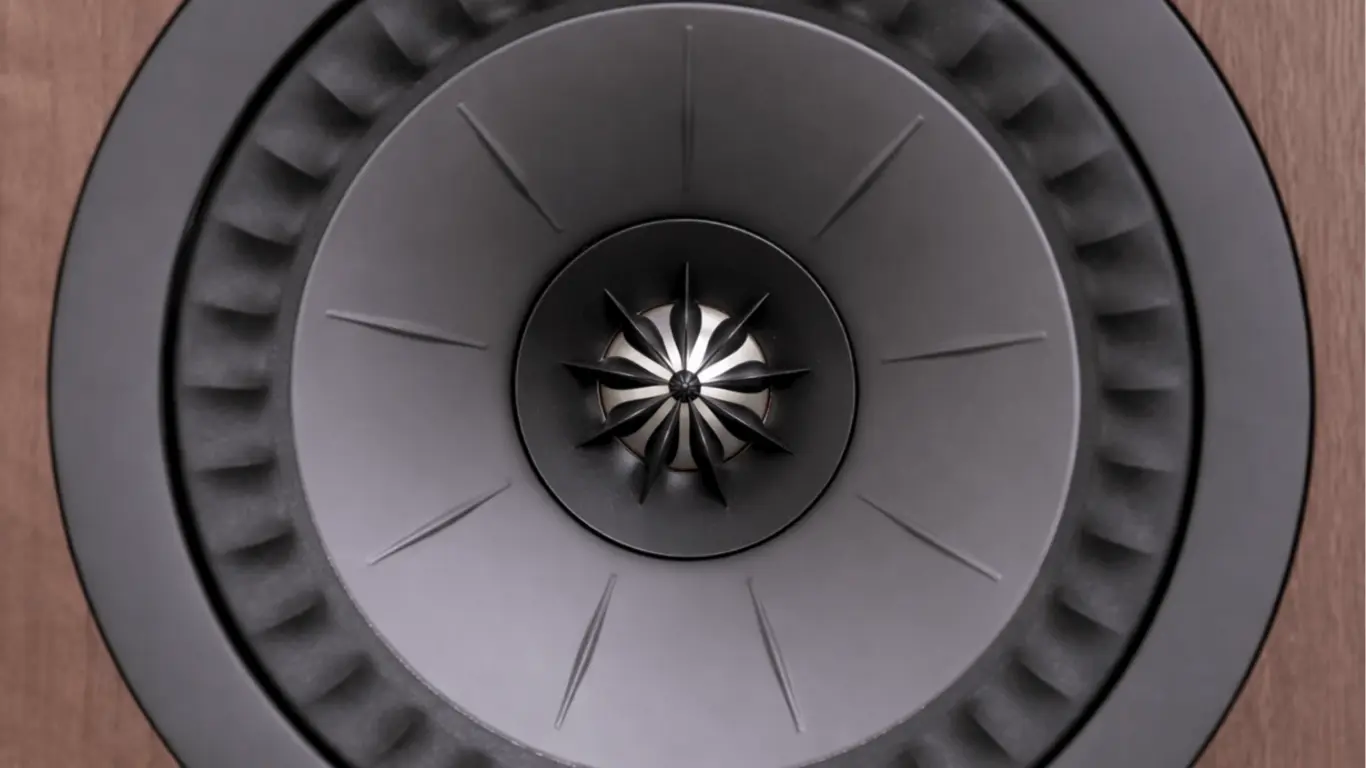
The Uni-Q driver has been subtly but significantly revised. A newly reinforced midrange cone improves structural rigidity, while a rear-loading tube behind the tweeter helps absorb unwanted energy from the back wave, lowering distortion and improving treble clarity.
Check Out: KEF Q150 Review: A Budget Speaker That Quietly Redefined “Real Hi-Fi”
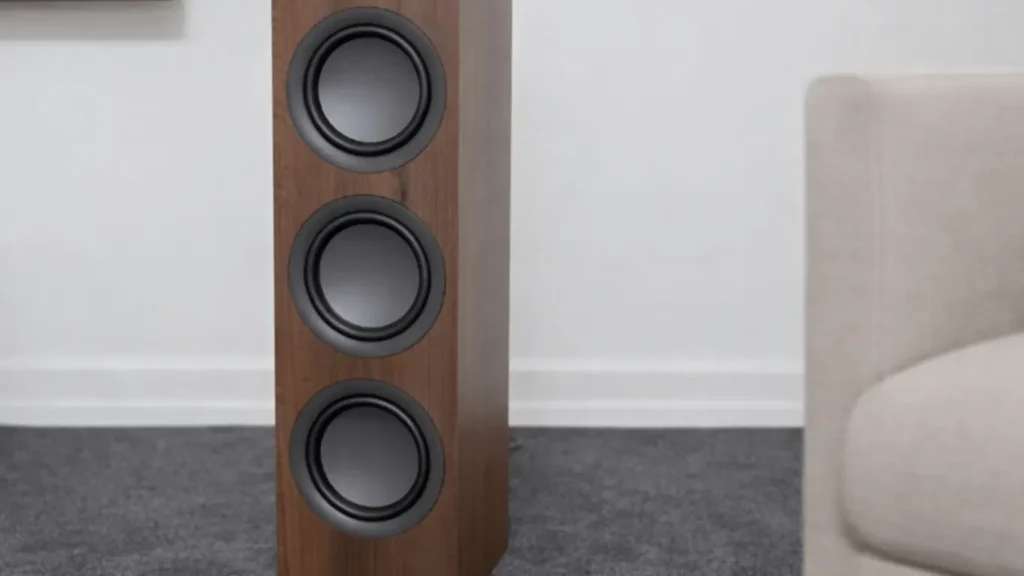
Bass performance has also been reworked. A redesigned spider allows the active woofer to behave more precisely at higher excursions, while the two passive radiators — positioned symmetrically above and below the active driver — have been optimized for tighter, more controlled low-frequency response. This vertically aligned layout mirrors KEF’s obsession with point-source behavior, extending the Uni-Q concept into the bass region.
The crossover network has been completely redesigned, using lower-distortion inductors and a simplified signal path. These changes primarily benefit bass coherence and overall tonal integration.
Listening Impressions: Familiar, Yet Clearly Different
What stands out immediately with the Q750 is a noticeable increase in warmth and tonal richness through the midrange and upper bass. This is not a dramatic departure from KEF’s house sound, but it is a meaningful refinement.
Compared directly with the Q700 using identical amplification and instant A/B switching, the differences were consistent. The Q700 sounds drier and more analytical, with excellent focus and precision, but less depth in the low end and slightly reduced treble openness. The Q750, by contrast, feels more expressive and emotionally engaging, trading a touch of midrange transparency for body and musical flow.
Detail retrieval remains high in both speakers, but the Q750 presents that information in a more relaxed and believable way. Where the Q700 impresses with accuracy, the Q750 invites longer listening sessions.
Soundstage, Placement, and Dynamics
One of KEF’s long-standing strengths — wide, even dispersion — remains fully intact. Tonal balance stays consistent across the room, making the Q750 forgiving of less-than-perfect seating positions.
On-axis listening reveals a slightly brighter treble balance, while toeing the speakers toward a point just behind the listening position results in the most natural soundstage proportions. This setup produces a deep, spacious image without exaggeration, while maintaining excellent detail.
Dynamic performance is a highlight. Both micro- and macrodynamics are rendered with ease, whether capturing the subtle phrasing of jazz bass or the large-scale crescendos of orchestral music. Live recordings benefit especially from the Q750’s ability to separate crowd ambience from the main performance without losing cohesion.
Bass is notably more controlled than in previous generations. Kick drums finally sound tight and properly weighted rather than bloated, and bass guitar lines remain articulate even during complex passages.
Genre Matching: Strengths and Limits
The Q750 excels with classical, jazz, blues, soul, pop, and well-recorded rock. It also handles progressive and melodic metal convincingly, preserving texture without fatigue.
However, extremely aggressive material exposes its gentler voicing. Hard-edged metal and raw guitar-driven tracks can sound slightly softened, lacking the last degree of bite and attack. Compared directly, the Q700’s sharper, more forward presentation suits this material better.
This is not a flaw so much as a tuning choice. The Q750 does not attempt to shape itself around specific genres; instead, it remains neutral and revealing, leaving tonal tailoring to amplifier and source selection.
Final Verdict
The KEF Q750 isn’t a radical departure from the brand’s engineering roots, but it represents a confident, mature step forward for the Q Series. By refining the Uni-Q array and rethinking the cabinet’s internal damping, KEF has managed a difficult balancing act: they’ve retained the pinpoint imaging the series is famous for while introducing a sense of “soul” and musicality that was sometimes missing in previous generations.
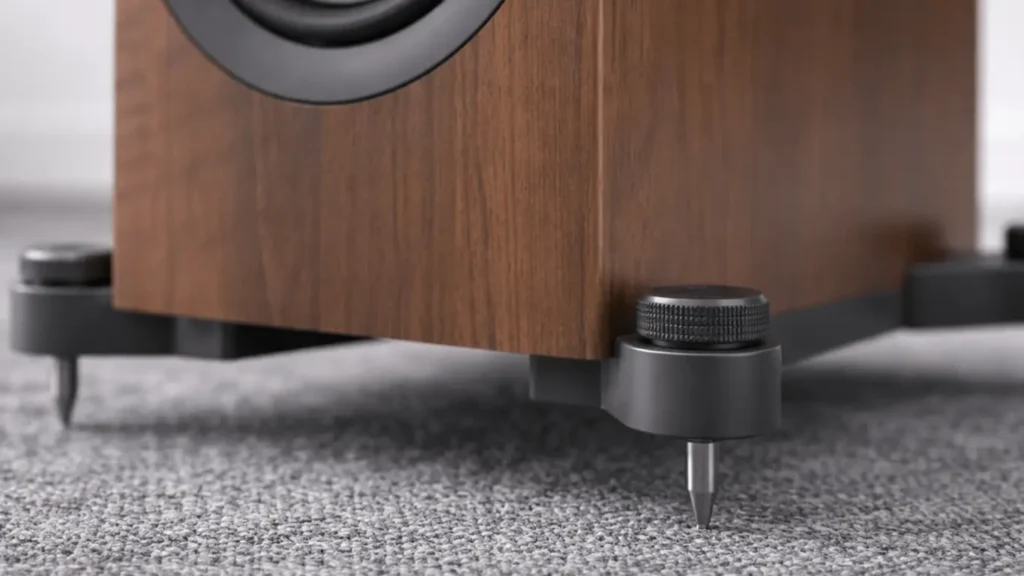
It is a speaker that prioritizes the listener’s experience over raw laboratory measurements. While it remains highly revealing, it no longer feels like it’s “shouting” detail at you. Instead, it invites you into a deep, three-dimensional soundstage that remains stable no matter where you sit in the room.
To get the absolute best out of them, we recommend pairing them with a high-current integrated amplifier. While they are efficient enough to run on a budget receiver, a bit of extra power really tightens the grip on those passive radiators, turning “good” bass into “authoritative” bass.
The Bottom Line: If you value long-term listening comfort, a rich midrange, and a soundstage you can almost walk through, the Q750 is a standout in its class. It’s a modern classic, softened just enough to make you fall in love with your music collection all over again.
Overall Score: 8.7 / 10
Breakdown
- Sound Quality: 9.0
- Resolution & Detail: 8.8
- Dynamics: 8.9
- Bass Control: 8.7
- Soundstage & Imaging: 8.8
- Value for Money: 8.6
- Build & Design: 8.5
Recommended for:
Classical, jazz, classic rock, high-quality recordings, and long listening sessions
Consider alternatives if:
You prioritize aggressive attack, ultra-lean monitoring, or primarily listen to extreme metal
Comparison Sidebar: Q750 vs Q700
| Feature | Q750 | Q700 |
|---|---|---|
| Sound Signature | Warm, expressive, smooth | Neutral, dry, monitor-like |
| Midrange | Fuller, richer | Cleaner, more transparent |
| Treble | Airy, slightly bright on-axis | Controlled, less open |
| Bass Depth | Deeper, more controlled | Tighter, lighter |
| Dynamics | Excellent micro & macro | Excellent, slightly leaner |
| Soundstage | Deep, immersive | Precise, more compact |
| Best Genres | Classical, jazz, classic rock | Hard rock, metal, analytical listening |
| Long Listening Comfort | Excellent | Good |