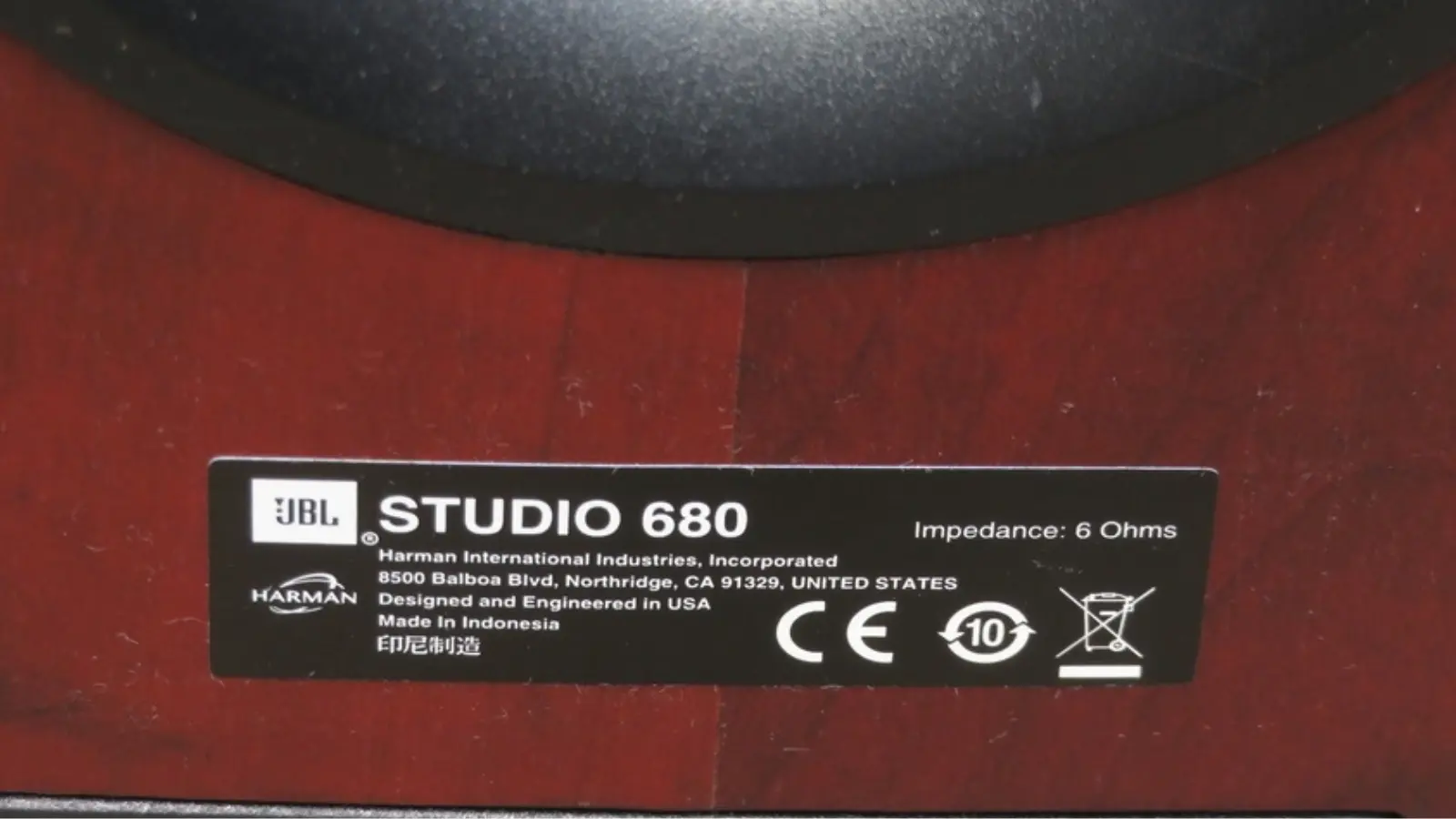
What Happened When I Took My MartinLogans Out and Put JBL Studio 680s In?
There are certain changes I make to my listening system only a few times a year, and replacing the main speakers is one of them. The MartinLogans have been in this system long enough that I know their character almost instinctively, so disconnecting them and moving a pair of JBL Studio 680s into the same position immediately changed the room’s atmosphere. What happened next was the part I was really interested in.
On paper, it was an unusual pairing. The JBL Studio 680 sits in a very different part of the market from the MartinLogans, and it would have been easy to put the JBLs into a more modest system and judge them in that context. I wasn’t interested in doing that. I wanted to know what happened when JBL’s Studio-series floorstander got the same electronics, the same room, and the same recordings I normally use with a much more expensive speaker.
Why Did JBL Spend Six Years Building a $100,000 Speaker?
I didn’t change the system around the JBLs. The Krell amplifier continued to drive the speakers through the Anthem AVM 50v, the Oppo remained my source, and the JBL Studio 680s simply went into the MartinLogans’ usual position. I wanted the speaker to show me what it could do without giving it a different amplifier, different source, or carefully assembled supporting system as an excuse for whatever I heard.
The JBL Studio 680 Looks More Conventional Than It Actually Is
The Studio 680 is an interesting speaker before a single note is played because JBL has taken a fairly traditional floorstanding design and combined it with technology that gives the speaker some of the company’s professional-audio DNA.
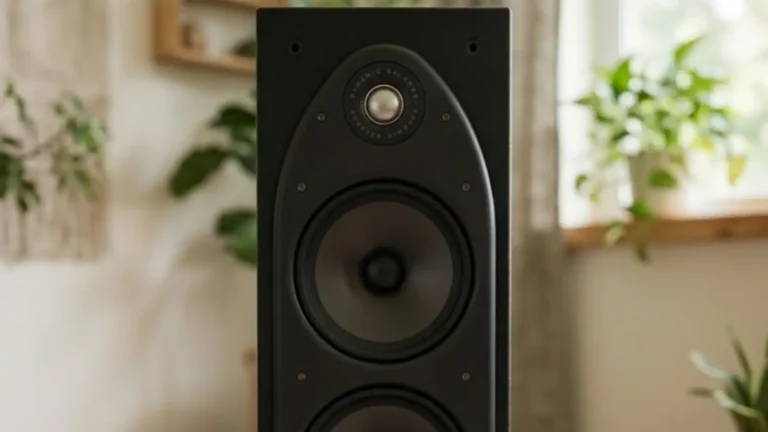
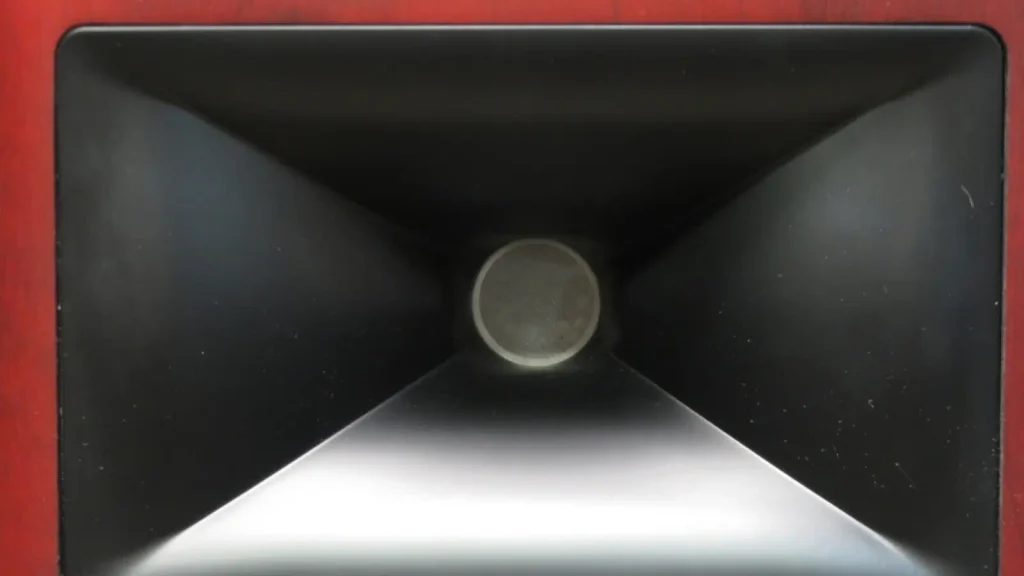
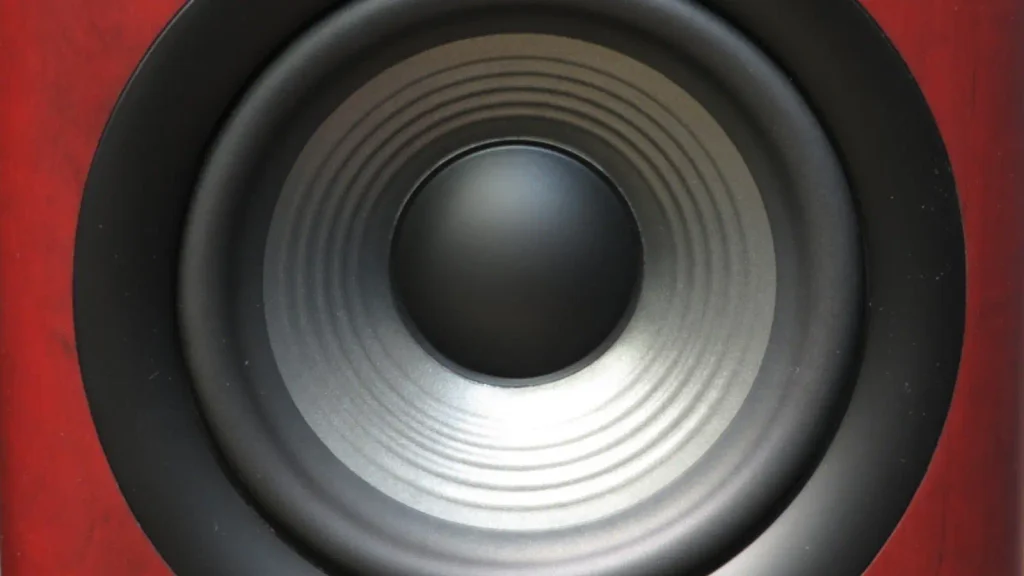
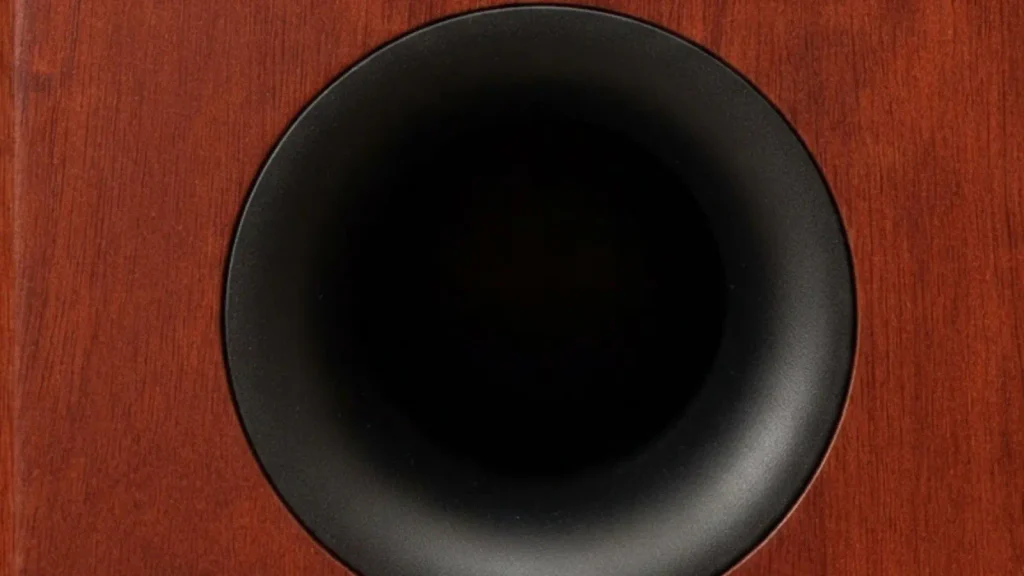
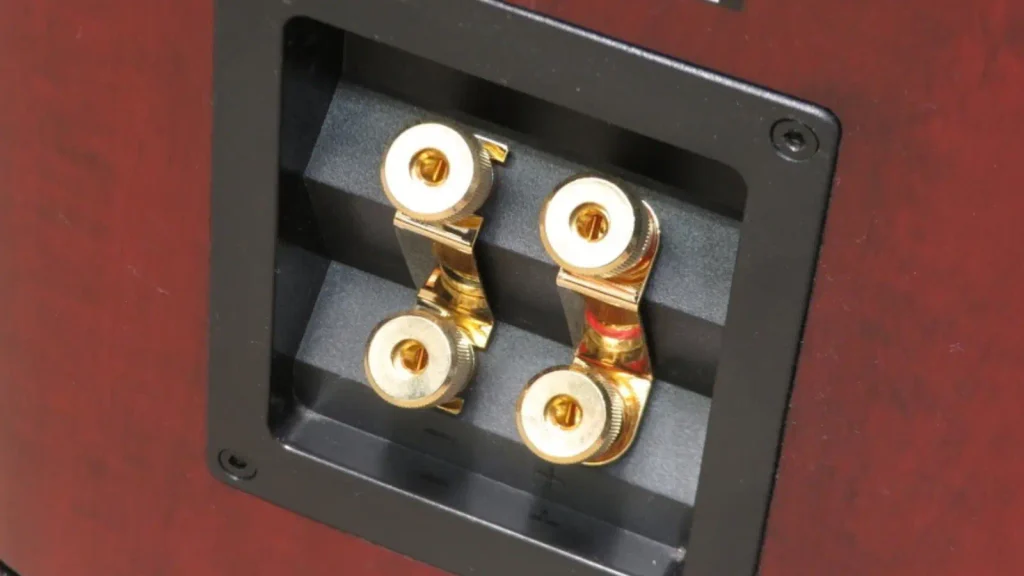
It is a 2.5-way design with two 6.5-inch PolyPlas woofers and a 1-inch 2414H-1 compression driver mounted on JBL’s High-Definition Imaging waveguide. The cabinet is rear-ported and uses MDF construction with a wood-grain vinyl finish.
There is nothing particularly flashy about the way the speaker is built, and I actually prefer that. It looks like a loudspeaker rather than an expensive piece of furniture trying to disappear into the room. The large waveguide immediately tells you that JBL wasn’t simply following the conventional soft-dome formula for the top end.
But specifications only tell part of the story.
What interested me more was how that compression-driver arrangement would behave in this particular system, especially when the speaker was being asked to replace a pair of MartinLogans that I know extremely well.
The two speakers are fundamentally different loudspeakers, so I didn’t expect them to produce the same presentation. In fact, that would have defeated the purpose of the exercise. I wanted the JBL to be itself.
I Started With a Recording I Know Almost Too Well
I started with Sheryl Crow’s “Soak Up the Sun,” a recording I know well enough that I don’t need to concentrate on the song itself to know when something in the system has changed.
It is also a good first listen because there is enough energy in the recording to make a speaker show its personality without turning the session into a laboratory exercise. I wasn’t sitting there trying to identify individual frequencies or ticking boxes for bass, midrange and treble. I wanted to hear whether the JBL could settle into the system and make me forget that I had just changed the speakers.
That is always one of the first things I look for when I replace a familiar pair. If I’m spending more time thinking about the loudspeaker than listening to the recording, something isn’t quite right.
With the Studio 680s in place, I was immediately aware that I was hearing the familiar system from a different perspective. That was hardly surprising, but it was also exactly why I wanted to make the swap.
A familiar recording becomes a useful reference when the loudspeaker is the one variable that has changed.
Eric Clapton Made the Difference Easier to Hear
From there I went back to Eric Clapton’s Unplugged, starting with “Hey Hey” and moving through “Tears in Heaven” and “Before You Accuse Me.”
These are recordings I’ve returned to many times over the years, partly because they are enjoyable and partly because there isn’t much production clutter between the listener and the musicians. Clapton’s guitar work gives the speaker plenty of opportunity to show how it handles the texture of an acoustic performance, while the relatively intimate recording environment makes it easier to pay attention to the relationship between the voice, guitar and surrounding ambience.
With the JBLs in place, I found myself listening to the recordings differently simply because the speaker presented the material from such a different design perspective from the MartinLogans.
That was exactly the reason I wanted to do the swap in the first place.
I wasn’t looking for the JBL to reproduce the MartinLogans. I wanted to know whether I could simply listen to the music and allow the Studio 680 to establish its own character.
Diana Krall Was Where I Stopped Thinking About the Speaker
Diana Krall’s “All or Nothing at All” from Love Scenes gave me another perspective.
This is one of those recordings where the arrangement is open enough that you can spend time listening to the way the vocal, piano and bass fit together rather than having a dense production surrounding everything. I usually come back to recordings like this when I want to settle down after the initial excitement of putting a new speaker into the room.
The first few tracks with a new loudspeaker can make you concentrate too much on what is different. A familiar jazz recording encourages you to sit back and listen to the performance instead.
With Krall, I was particularly interested in the way the JBL handled the central vocal and the instruments around it, because this kind of material can quickly expose a speaker that is more interested in sounding impressive than maintaining the balance of the recording.
This was also the point where the whole exercise became less about the fact that I had put a JBL Studio 680 into the system and more about simply listening to the music.
That is always a good sign for me.
Then the JBL Had to Deal With Saving Private Ryan
The cinematic material was where the Studio 680 had to move away from the smaller-scale intimacy of the music.
I put on the opening battle sequence from Saving Private Ryan and later returned to Gladiator, partly because I wanted to hear what the JBLs would do when the material became much larger and more demanding.
This is where a floorstander has an obvious advantage over a small monitor, not simply because of the cabinet size but because the entire design is intended to move more air and reproduce a much larger range of material from a single enclosure.
I wasn’t using these sequences as some kind of artificial torture test. I wanted to hear what happened naturally when the system went from a singer and a guitar to explosions, orchestral passages, voices, and large-scale effects.
It gave the Studio 680 a completely different workload from the acoustic and jazz recordings, and that contrast was useful because it showed how the speaker behaved when the recording itself became the dominant event in the room.
Moving between music and movies also helped keep the review grounded. I wasn’t trying to find one recording that made the JBL sound good. I wanted to live with it across the material I would actually use in my system.
The MartinLogans Kept Coming Back Into My Head
After spending time with the JBLs, I kept coming back to the MartinLogans in my head because they are my familiar reference in this system.
That doesn’t mean the Studio 680 needs to be compared with them on every sentence, and I certainly don’t think a speaker review becomes more useful simply because one product is declared the winner.
The two designs approach reproduction differently, and that’s actually what made the experiment worthwhile.
The JBL doesn’t need to imitate what the MartinLogans do. It needs to establish its own identity and make sense when connected to a serious system.
Putting it into this setup made that distinction much easier to appreciate because there was no weaker surrounding component for the JBL to hide behind.
The Studio 680 had the same room, the same electronics and the same recordings. The only major thing that had changed was the speaker.
Putting an Affordable JBL Into a Serious System Changed the Review
What I liked about the exercise was that the Studio 680 forced me to reconsider the usual way affordable speakers are reviewed.
We often put a speaker into a system built around its price, listen for an hour or two and then decide whether it represents good value. There is nothing wrong with that approach, but it can also limit what we learn about the loudspeaker itself.
The JBLs were given the same Krell amplification, Anthem processing and Oppo source that I use with my regular speakers. That made the review less about whether the Studio 680 was simply “good for the money” and more about what JBL had actually built.
Once the price stopped being the central subject, the speaker became much more interesting.
Instead of asking whether the Studio 680 sounds impressive for an affordable floorstander, I was listening to it as a loudspeaker in a serious system.
That is a very different question.
And I think it is one worth asking more often.
The Studio 680 Doesn’t Need to Pretend to Be a More Expensive Speaker
That is really what I took away from spending time with the Studio 680.
It is easy to look at its position in JBL’s range and assume that it should be evaluated only as an affordable floorstander. But putting it into a serious system changes the question.
Instead of asking whether it looks impressive for its price, I found myself asking how naturally it could become part of a system that I already know extremely well.
The Krell, Anthem and Oppo were not changed for its arrival, and neither were the recordings I use when I want to understand a speaker.
I simply gave the JBL the same opportunity I give the MartinLogans: connect it, sit down, put on music and see where the evening goes.
That’s ultimately the appeal of the Studio 680 for me.
It doesn’t need a complicated story around it. It is a conventional floorstanding JBL with two 6.5-inch woofers, a compression driver and a waveguide, but once it is placed into a proper system those specifications become much less important than the experience of actually listening to it.
Sheryl Crow, Clapton, Diana Krall and the movie soundtracks gave me very different ways of approaching the speaker, and moving between those recordings made it clear why I prefer reviewing loudspeakers this way rather than simply reading a specification sheet and trying to predict what they will sound like.
So What Happened When the JBL Studio 680 Replaced My MartinLogans?
The MartinLogans eventually went back into their usual place, but the Studio 680s had done what I wanted them to do.
They had been given a serious system, familiar recordings, and enough listening time to become something more than a product sitting in a reviewer’s room waiting to be described.
For a speaker in this part of JBL’s range, that is probably the most interesting thing about it.
The Studio 680 doesn’t need to pretend that it belongs to a completely different class of loudspeaker. It doesn’t need to become a MartinLogan, either.
What mattered to me was what happened when I stopped thinking about its price and simply treated it as the loudspeaker connected to my system.
I listened to Sheryl Crow. I went back to Clapton. I spent time with Diana Krall. Then I put on Saving Private Ryan and Gladiator and let the system get much bigger.
Eventually, I stopped thinking about the fact that the MartinLogans weren’t there.
And for me, that is where a speaker review becomes interesting.
The Studio 680 had stopped being an affordable JBL floorstander sitting in a review system and had simply become the pair of speakers I was listening to that evening.
That’s a much more useful answer than a specification sheet could give me.