Why Did JBL Spend Six Years Building a $100,000 Speaker?
For most of this year, the JBL Summit K2 has been the most talked-about speaker nobody could tell you much about. It broke cover at HIGH END Vienna in June 2026, debuted in Asia-Pacific a month later, and started appearing at dealers — all while serious published listening impressions remained remarkably scarce. I’ve been following the Project K2 line the way some people follow football transfers, so I’ve been watching for the first serious ears-on account the way you’d watch a transfer deadline.
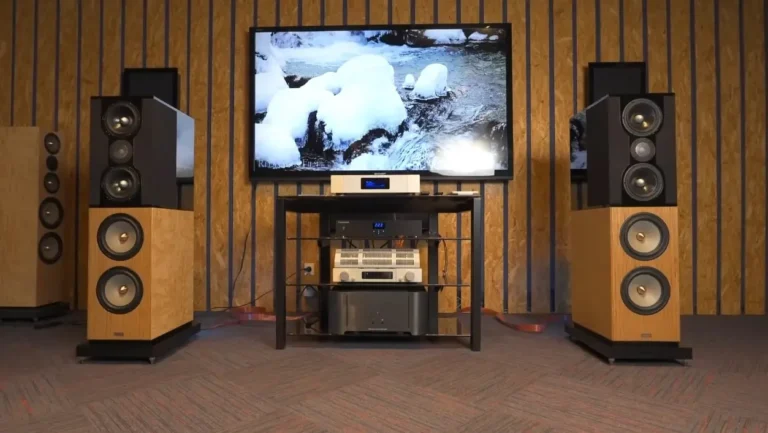
It’s here. US dealer Audio Advice got JBL to leave a pair in their lab for an extended listening session, running on Mark Levinson’s new 600 Series electronics, and published the first detailed account I’ve found so far. Around the same time, the K2 showed up at the Helsinki Hi-Fi show on the end of D’Agostino Momentum monoblocks. Two rooms, two continents, two very expensive amplifier stacks — and the reports rhyme.
The name carries forty years of weight
JBL doesn’t use the word “project” the way other brands use “flagship.” A Project speaker, in JBL’s telling, is what happens when leadership tells its engineers to ignore budget entirely and build the best loudspeaker the technology allows. In eighty years, JBL has created only five Project loudspeaker families: the Hartsfield, Paragon, Everest, K2 and now Summit.
The Forgotten JBL Speaker Audiophiles Are Still Buying Used
The K2 name arrived after Everest as the more attainable flagship — still built without compromise, but sized to fit an actual living room. Then came successive generations including the S9800 and S9900, with industrial designer Dan Ashcraft shaping several generations. What Hi-Fi reviewed the S9900 back in 2017 and called it one of the best speakers money could buy, praising its “spellbinding combination of dynamics, insight and finesse.”
Here’s the twist the Audio Advice team confirmed with JBL: the Summit K2 is a clean-sheet design. None of the specific hardware carries over from the previous K2. The compression-driver-and-horn architecture that has defined the name from the beginning is still here, but everything underneath it is new. JBL says the Summit project took about six years and produced roughly a dozen new patents, a good number of which landed in the K2.
What $99,990 buys you
The spec sheet, straight from JBL’s own document, is worth reading slowly.
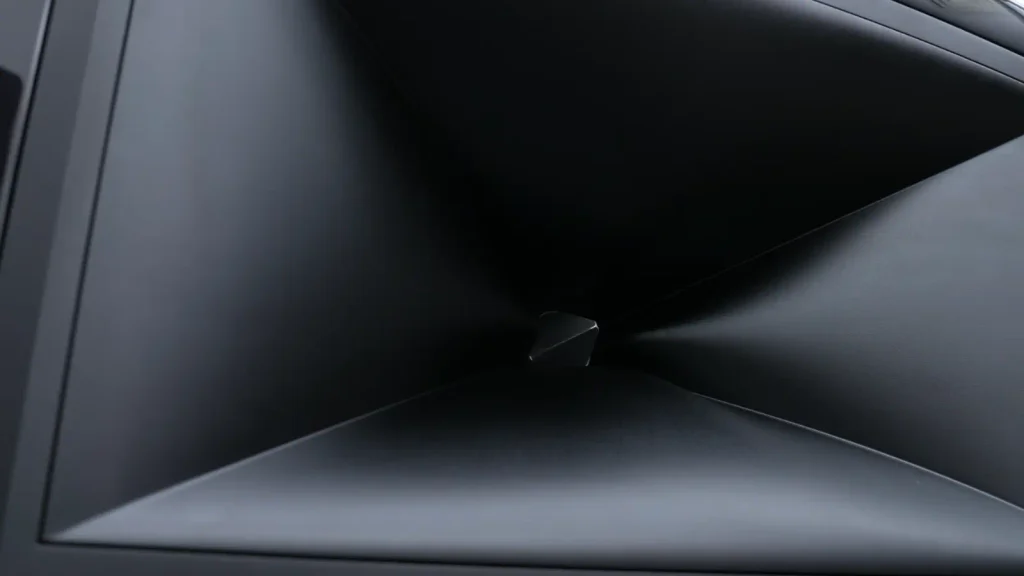
Three — not one — D2815 compression drivers handle the highs: 1.5-inch dual-diaphragm, dual-motor units, their output combined through a 3-into-1 manifold into a large Sonoglass High Definition Imaging horn. That’s six diaphragms and six voice coils working as a single high-frequency section. The manifold’s internal geometry is too complex for conventional machining, so JBL 3D-prints it out of aluminum and finishes it by hand.
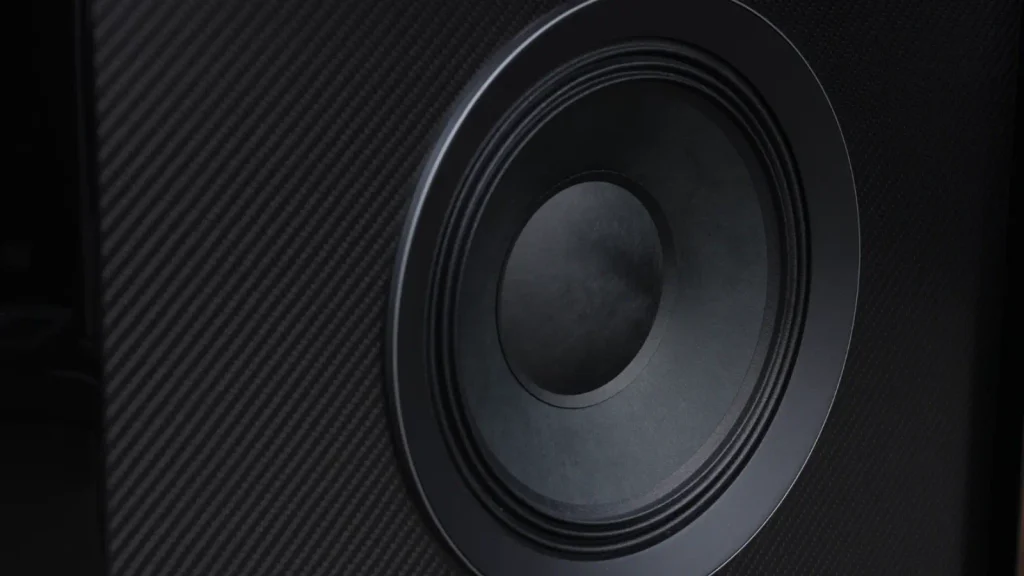
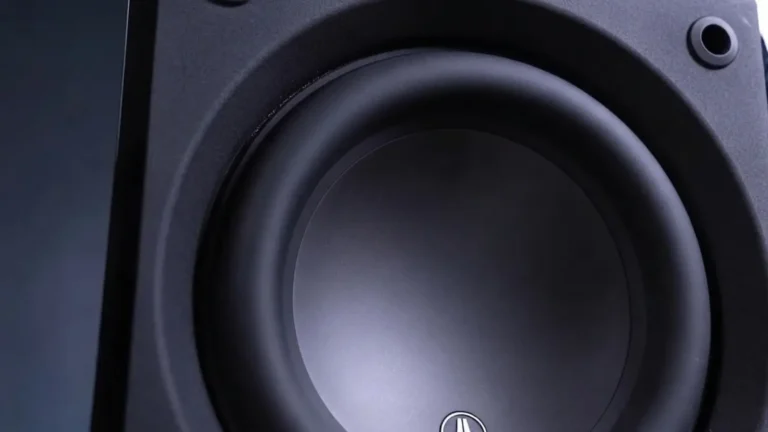
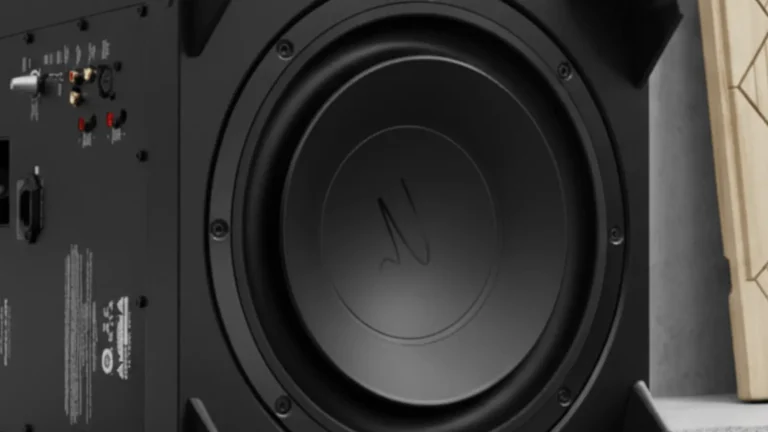
Below that, a 10-inch mid-bass driver and a 15-inch woofer, both using JBL’s triple-layer Hybrid Carbon Cellulose Composite cones and Differential Drive motors — the same motor technology JBL uses in its professional touring rigs.
The numbers: 92 dB sensitivity, 25 to 600 watts recommended power, 4 ohms nominal dipping to 3.27 ohms at 86.8Hz, frequency response from 18.2Hz to 26.5kHz at -10dB, with a -6dB response of 24.6Hz to 23.5kHz. Maximum calculated output is 118.8dB.
Each speaker weighs 239 pounds and stands over four feet tall. The crossover is JBL’s new Series MultiCap network — and here’s a lovely detail Audio Advice dug up: JBL keeps the capacitors constantly charged through a small circuit powered by a 9-volt battery, the same biasing principle Greg Timbers used decades earlier on the original K2’s Charge-Coupled network.
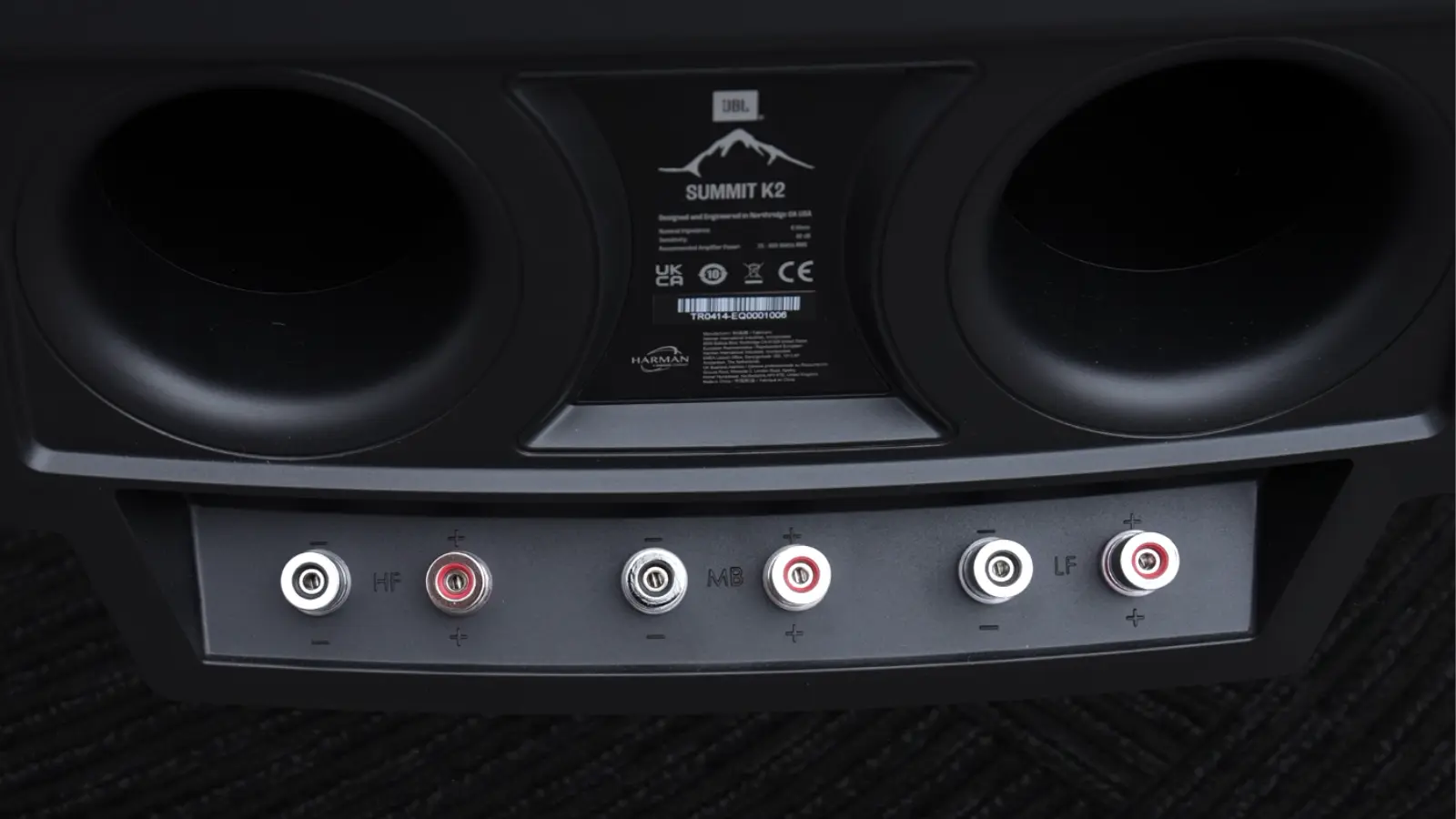
The speaker can be single-wired, bi-amped, or tri-amped through three pairs of rhodium-plated binding posts. The cabinet has pressed curved walls to kill internal standing waves, dual rear-flared ports, and IsoAcoustic isolation feet as standard. Finishes: high-gloss black with platinum accents, or Macassar Ebony veneer with gold detailing.
Read that again and notice what’s going on. This isn’t a luxury object with audio attached — it’s a pro-audio weapon wearing a tuxedo. Differential Drive motors, compression drivers, 118.8 dB maximum output: this is concert technology, civilized just enough to live in a living room the size of a small apartment.
What it actually sounds like — the first ears on it
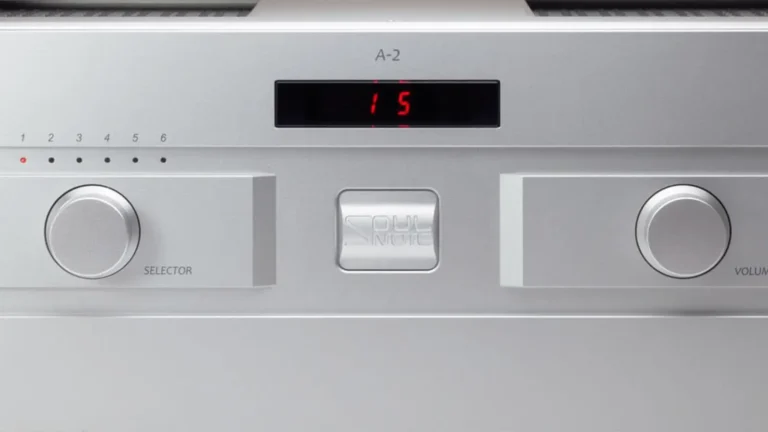
Audio Advice ran their pair with Mark Levinson’s new 600 Series: the No. 626 preamplifier and the No. 632 stereo power amplifier, rated at 250 watts per channel into 8 ohms. Both brands sit under the Harman umbrella, making it a natural pairing for the K2. A Danish dealer, Bülow Steensen, also used Mark Levinson electronics with its K2 demo, with an Arcam ST25 handling streaming.
The first thing that stands out in Audio Advice’s account is how effortless it sounds. The K2 delivered the immediate transient attack associated with a good compression-driver and horn design, while avoiding the aggressive character that can sometimes accompany large horn speakers. Vocals came across as direct and lifelike, while the top end remained detailed without becoming edgy.
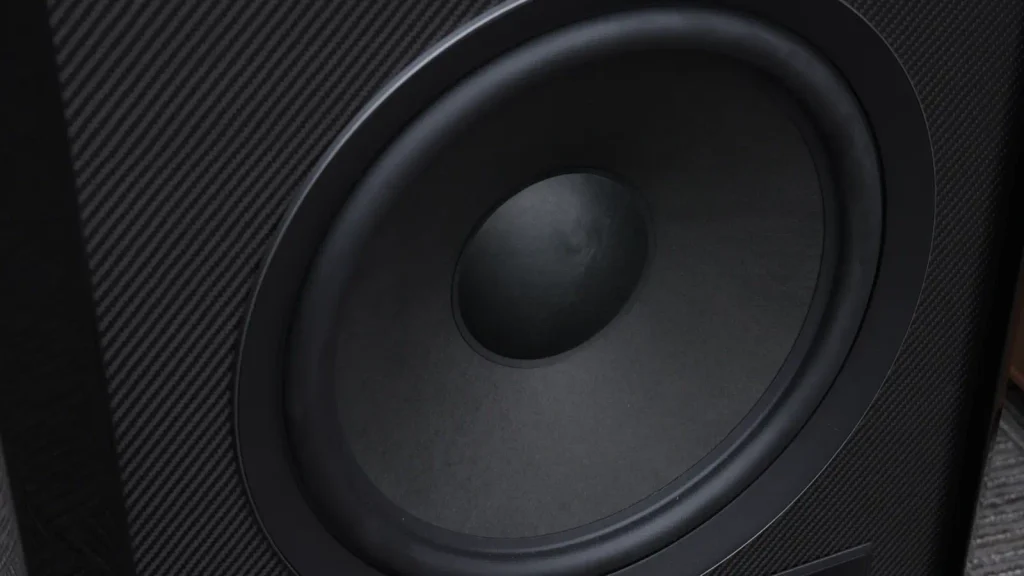
On Hugh Masekela’s “Stimela,” the brass had bite and energy without becoming harsh, while the 15-inch woofer performed serious weight. Audio Advice also noted that the bass started and stopped quickly rather than turning into one continuous wall of low-frequency energy.
On Nils Lofgren’s “Keith Don’t Go,” the acoustic guitar had impressive attack and texture, vocals sat naturally in the center of the soundstage, and there was a clear sense of the room around the performance.
What surprised them most was that the K2 wasn’t only impressive when pushed hard. Despite its 15-inch woofer and three compression drivers, Audio Advice found it equally impressive at normal listening levels, retaining the classic JBL sense of dynamics, scale and physicality while bringing a level of refinement more associated with a modern reference speaker.
The Helsinki report backs up the loud part. There, the K2 ran on D’Agostino Momentum monoblocks with a dCS Varèse DAC in the chain, and the Finnish report noted that it played loud — “and for the most part successfully.”
One honest caveat before you take any of this as gospel: Audio Advice is a JBL dealer. This is a dealer listening session, not an independent magazine review — and it is still the most detailed dedicated listening account available so far. What Hi-Fi, Stereophile and the rest of the press haven’t yet published full independent reviews of the Summit K2. Treat this as the opening chapter, not the verdict.
The system to hear it at its best
If you’re auditioning the K2 — or building the room around it — the pattern across the demonstrations so far is consistent. The intended system includes Mark Levinson’s 600 Series: the No. 626 preamp and No. 632 stereo power amplifier, with Arcam on source duty. That’s what Audio Advice used in its listening session and what the Danish dealer chose for its K2 demonstration. JBL has also repeatedly demonstrated the Summit range with Mark Levinson electronics.
The specifications explain why you need that caliber of amplification. A nominal 4-ohm load dipping to 3.27 ohms at 86.8Hz is not a casual load — it demands serious current delivery, not just a big wattage number on the brochure.
The 92 dB sensitivity means you don’t need a monster amplifier simply to make the K2 loud, and Audio Advice notes that the speaker is efficient enough to work with “a wider variety of amps, including some tube designs.” But you need a serious amplifier if you want proper control of that 15-inch woofer.
The alternative on record is the Helsinki route: D’Agostino Momentum monoblocks, if your taste runs to American muscle over Harman’s house pairing. And for the technically minded, the tri-amp capability is the interesting bit — three amplifier channels per speaker, one per driver section. At this level, that’s not a feature; it’s a statement of intent about who JBL thinks is buying.
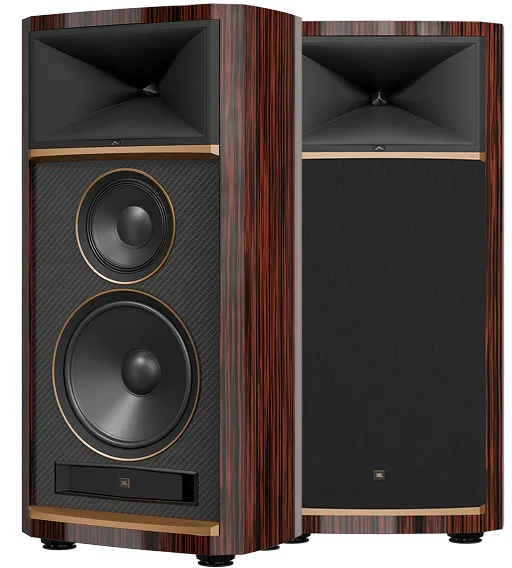
And the room: 239 pounds per speaker, rear ports, a 15-inch woofer, and a cabinet more than four feet tall. This demands serious room planning, solid floors, and the IsoAcoustic feet doing their decoupling work.
This is not a speaker you simply place. It’s a speaker you install.
The verdict, such as it is
I can’t give you a reviewer’s verdict yet, because the review record is still dominated by one detailed dealer listening session and show demonstrations. But the shape of the thing is now visible, and it’s promising: a clean-sheet K2 that keeps the line’s signature dynamics and scale while aiming for the refinement of a modern reference speaker — with a horn top end that, by the first detailed account, doesn’t shout.
Pricing is $99,990 a pair in the US, S$139,000 in Singapore where it’s already on demo at Sound Gallery by IMS, with the global rollout continuing through authorized Summit retailers.
When the first independent magazine reviews land, the questions to watch are the ones Audio Advice couldn’t answer in one session: whether that triple compression-driver array stays composed at truly punishing levels, whether the bass stays as taut in an ordinary living room as it did in Audio Advice’s listening environment, and whether the Macassar Ebony finish looks like $100,000 in person.
I’ll be reading those reviews with everyone else — and updating this piece the moment there’s something real to add.
JBL Summit K2 Specifications:
| Specification | JBL Summit K2 |
|---|---|
| Design | 3-way floorstanding loudspeaker |
| High-frequency drivers | 3 × D2815 1.5-inch dual-diaphragm, dual-motor compression drivers |
| Mid-bass driver | 10-inch Differential Drive |
| Woofer | 15-inch Differential Drive |
| Horn | Sonoglass HDI |
| Manifold | 3-into-1 expansion manifold |
| Sensitivity | 92 dB |
| Nominal impedance | 4 ohms |
| Minimum impedance | 3.27 ohms at 86.8Hz |
| Recommended amplifier power | 25–600W RMS |
| Frequency response (-6dB) | 24.6Hz–23.5kHz |
| Frequency response (-10dB) | 18.2Hz–26.5kHz |
| Maximum calculated SPL | 118.8dB |
| Crossover points | 270Hz / 1,080Hz |
| Bass loading | Dual rear-flared ports |
| Dimensions | 50.4 × 25.0 × 18.1 inches |
| Weight | 239lb / 108.4kg each |
| Finishes | High Gloss Black / Macassar Ebony |
| US price | $99,990/pair |