Revox T700 Studiomaster Black Edition Review: A Closer Look Top Player
All the equipment that Revox now produces (apart, of course, from the restoration of its classic reel-to-reel tape recorders) is rather digital and digitally oriented, focused primarily on building its ecosystem and multi-room systems. There are also devices described as “all-in-one”; there is an audio server, along with wired and wireless speakers with their characteristic, recognizable appearance. But, as I said, everyone loves to live in their ecosystem. The vinyl player seems to be something separate, but this is only true at first glance.

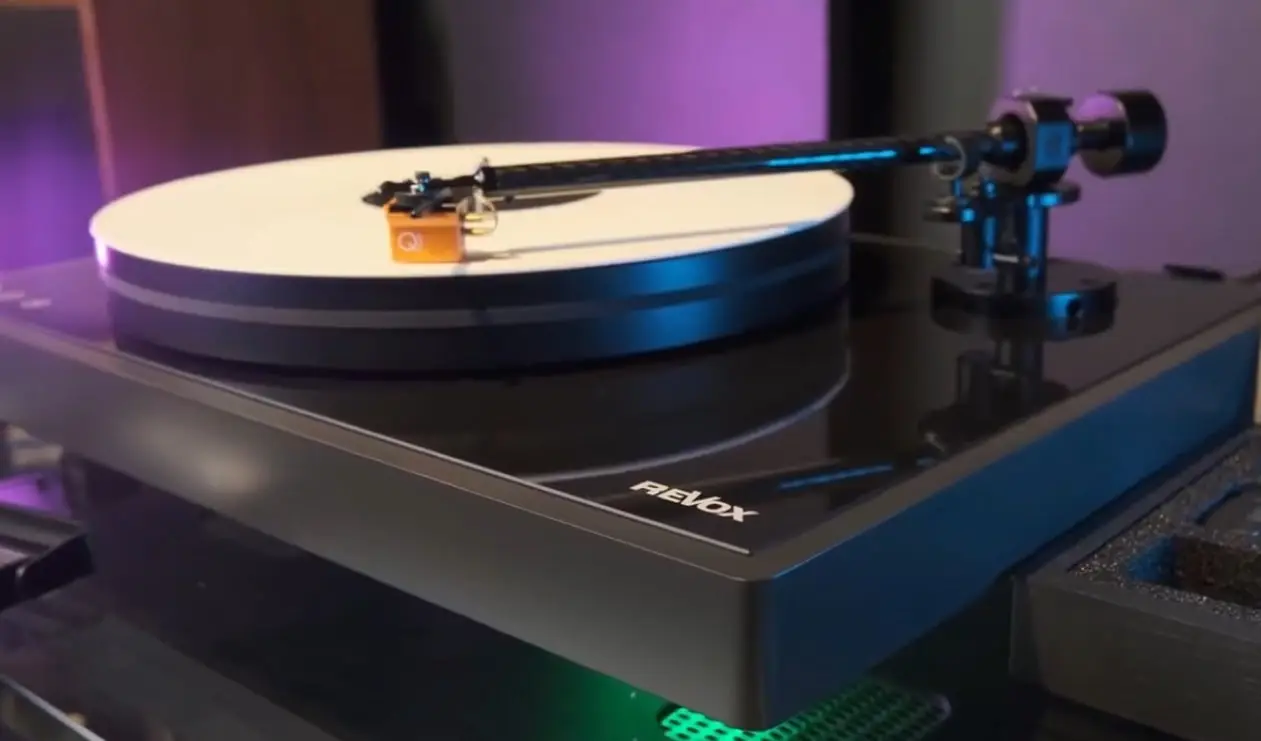
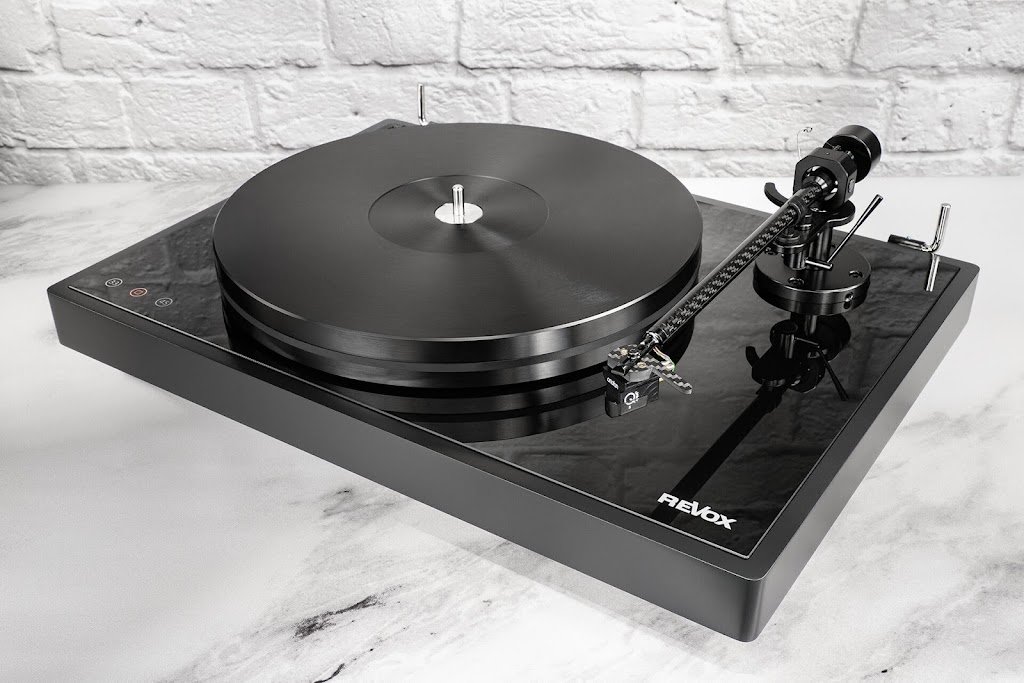
Firstly, its external style. A very laconic design made of aluminum and glass, all completely black, and this also includes elegant touch controls. Secondly, the player comes almost ready for use: the head is pre-installed, and you only need to install the counterweight using standard scales. Yes, there is also a built-in phono stage, which again follows the design of other Revox devices: they do not have phono stages, either built-in or separate.
Check Out: ELAC Miracord 80 Turntable Review:
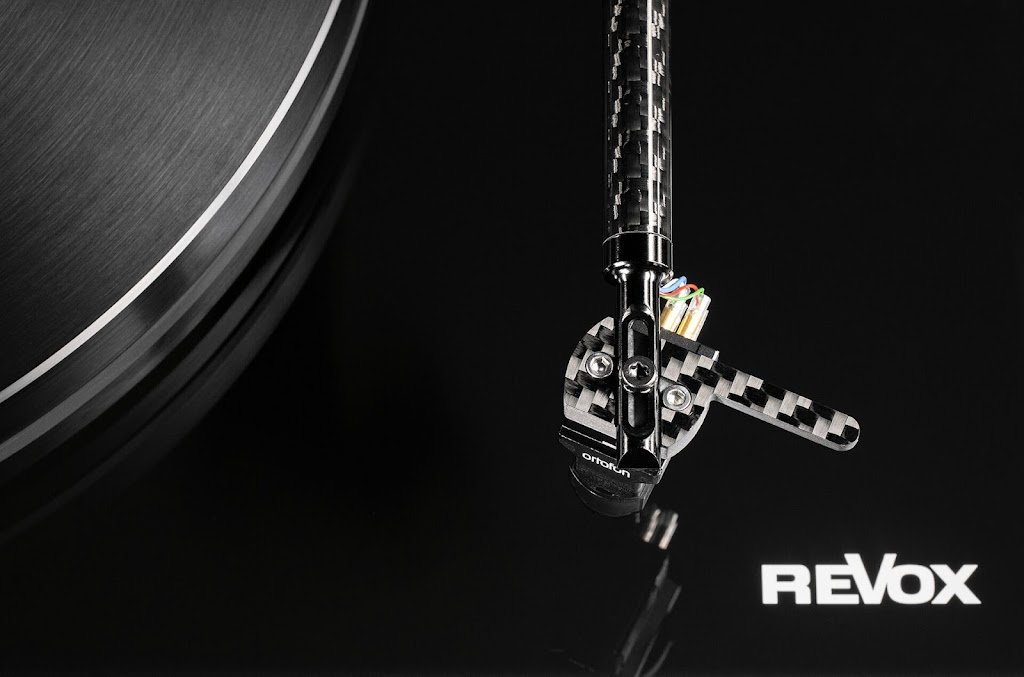
I first wrote that the Revox T700 Studiomaster is the only player in the catalog, and in essence, this is true. But two configurations are available. One is the usual basic one; it comes with an Ortofon Quintet Bronze MC head, and the one that I got for testing is the Black Edition version, which has a pre-installed older head, Ortofon Quintet Black S. This in itself is nice; the heads, especially the older one, are very good.
 |
The quality of the head pre-tuning is good: I checked everything but did not change the height, geometry, or azimuth. However, when adjusting the height, I note that the tonearm is set for 180-200-220-gram records, not for thinner editions from previous years. But in practice, if it is not possible to reconfigure, then it is better to have a slightly raised option than a slightly overwhelmed one. This means that all that remains is to install the counterweight and the anti-skating weight – and that’s it. You can listen.
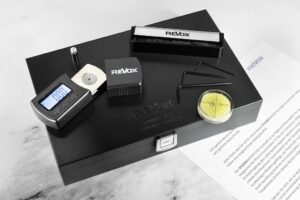
I was a little disappointed by the standard scales included in the kit. Nominally, they were calibrated, but the weight was still shown with an error of 0.15 grams. Nominally, the pressure range of this head allows such a tolerance, but in reality, a difference of 0.1 grams can already be heard – the sound is slightly different. However, even with this error, you can approximate the average value and then slightly adjust the weight by ear. But this should be done only after the head has run for 30-40 hours and has broken in.
 |
| Bearing cup |
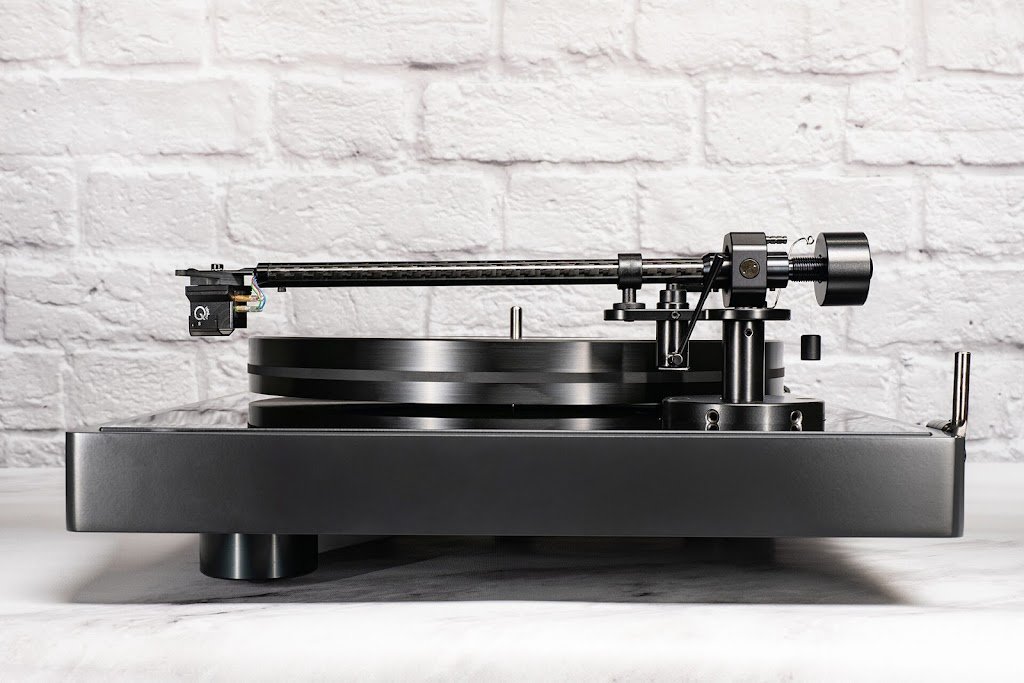
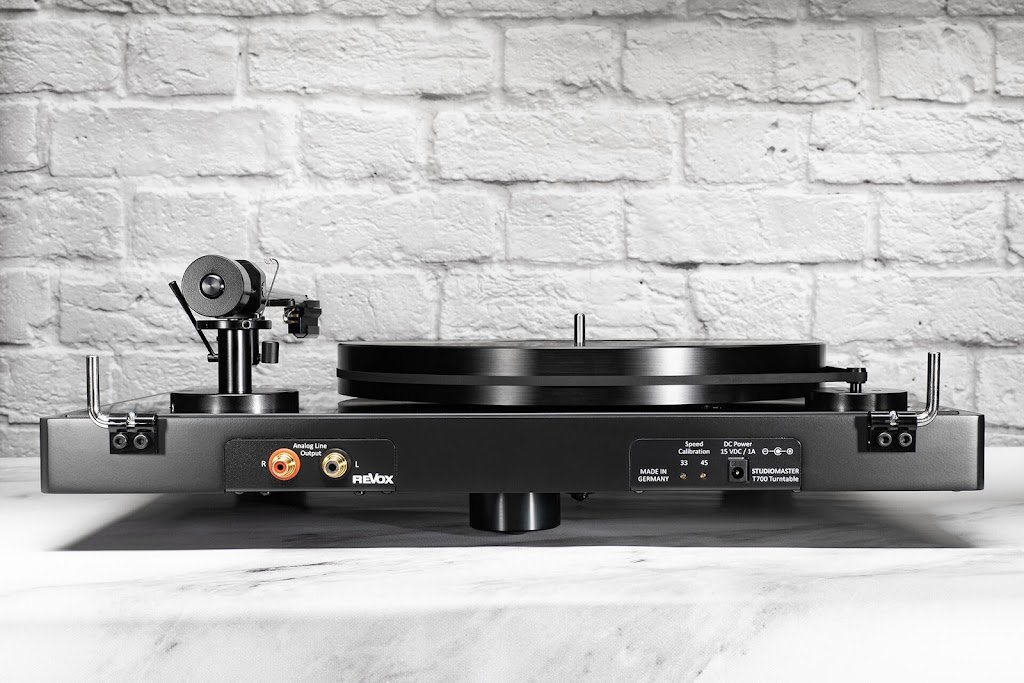
Now, let’s look at the design as a whole. The table is made of MDF, aluminum on the sides, and glass on top. It was done carefully; I couldn’t find any negligence anywhere. The table rests on three fairly massive aluminum support legs, complemented by rubber hemispherical inserts. You can adjust the position of the table; the package includes a good bubble level.
You May Like: Cayin MT-12N Review:
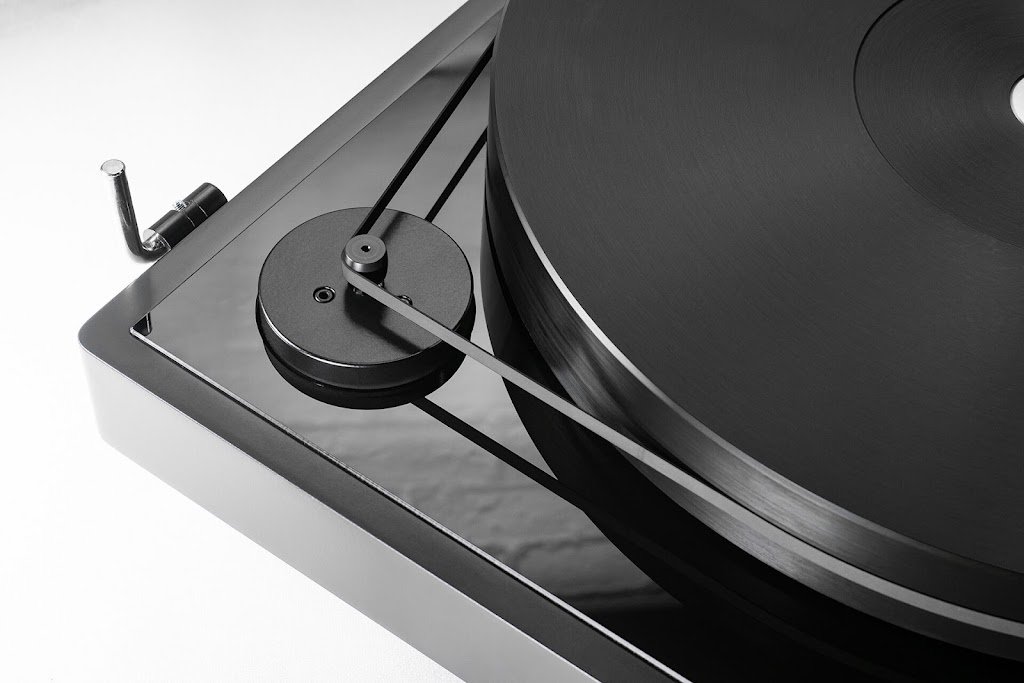
The player has a belt drive, and the motor is installed in the housing, but is connected to the housing in a slightly movable way: logically, the design provides for some kind of damping. A flat belt transmits rotation to the outer surface of the main disk, which is made of polyoxymethylene and operates without any additional mat.
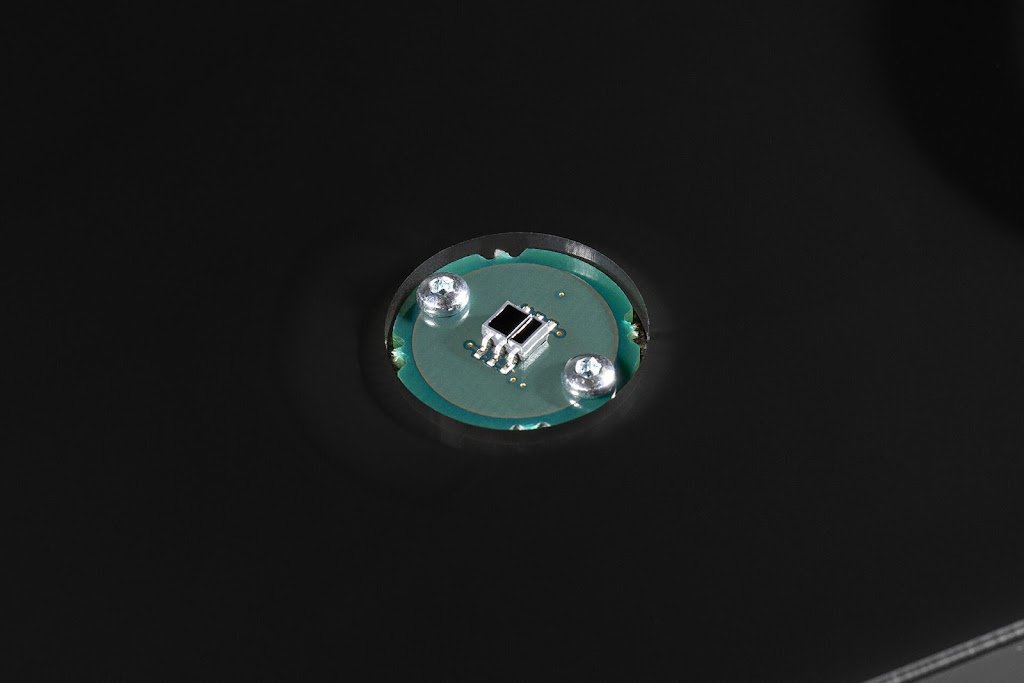 |
| Disc rotation control sensor |
Control – using touch buttons on the table surface. They also show when the disk has reached the required speed. The design provides both adjustment of each speed (33.3 and 45 revolutions) and an optical rotation sensor. The motor power supply is a remote pulse, but the unit used is of high quality. However, let’s not forget that in our case, this unit powers not only the motor but also the corrector board…
The bearing here is a classic non-inverted one with a fairly massive cup and pulley. A support ball is used inside. Lubricant is poured into the bearing at the factory, and the turntable arrives with a corresponding plug. But there is no additional oil included in the kit, although potentially such a bearing may require topping up/replacement after a few years. However, there is nothing complicated here; choosing an analog is not a problem – there are no specific materials or extreme loads in the design, and the oil chamber provided inside the glass allows you to fill in oil with a reserve for a very long time.
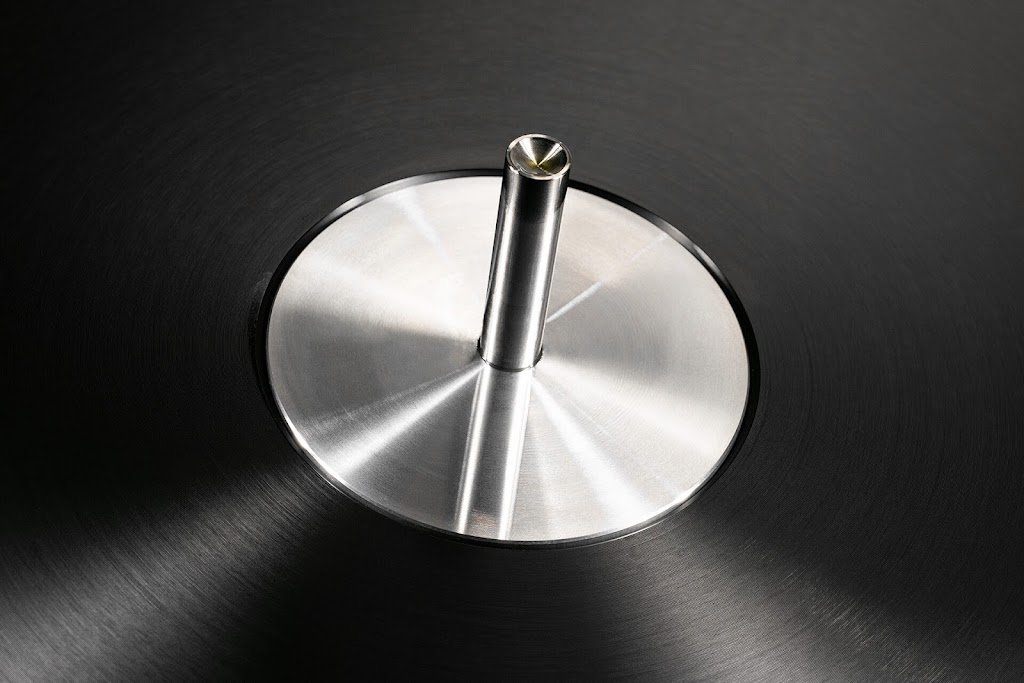 |
| y Revox T700 Studiomaster |
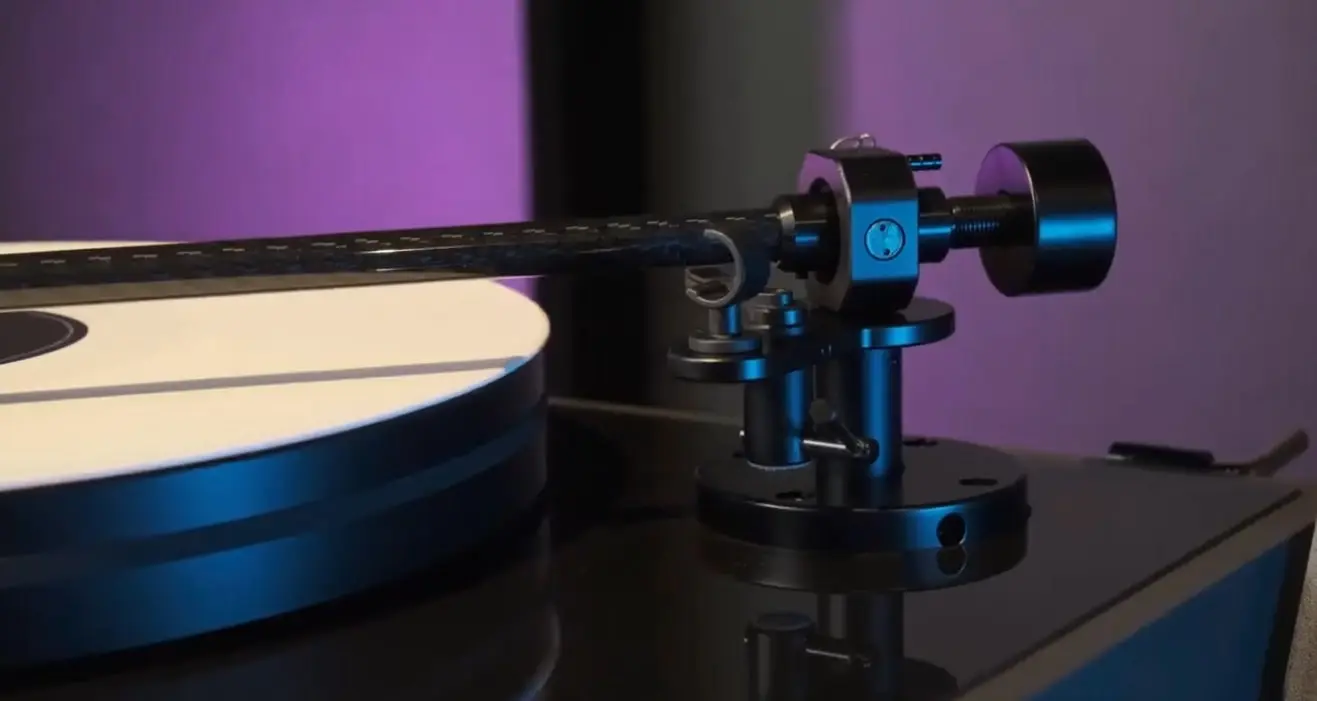
The player has a 9-inch tonearm, the most familiar rotary design, with a carbon or combined tube, a carbon shell, and all the necessary settings. Head position, height, azimuth, clamping, and anti-skating – everything here can be adjusted if necessary, and the range of settings does not differ from most average models. Effective weight – 11 grams.
Check Out: Pre Box S2 Digital Preamp
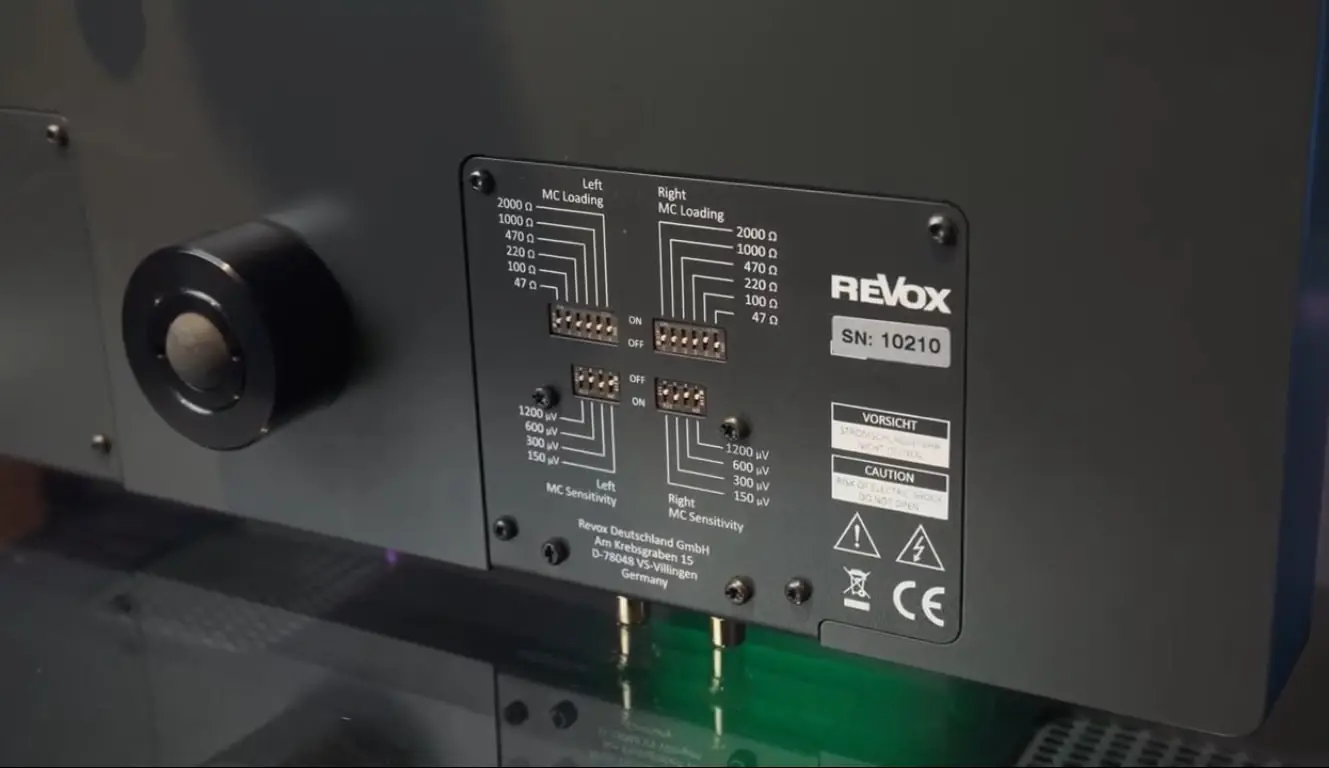
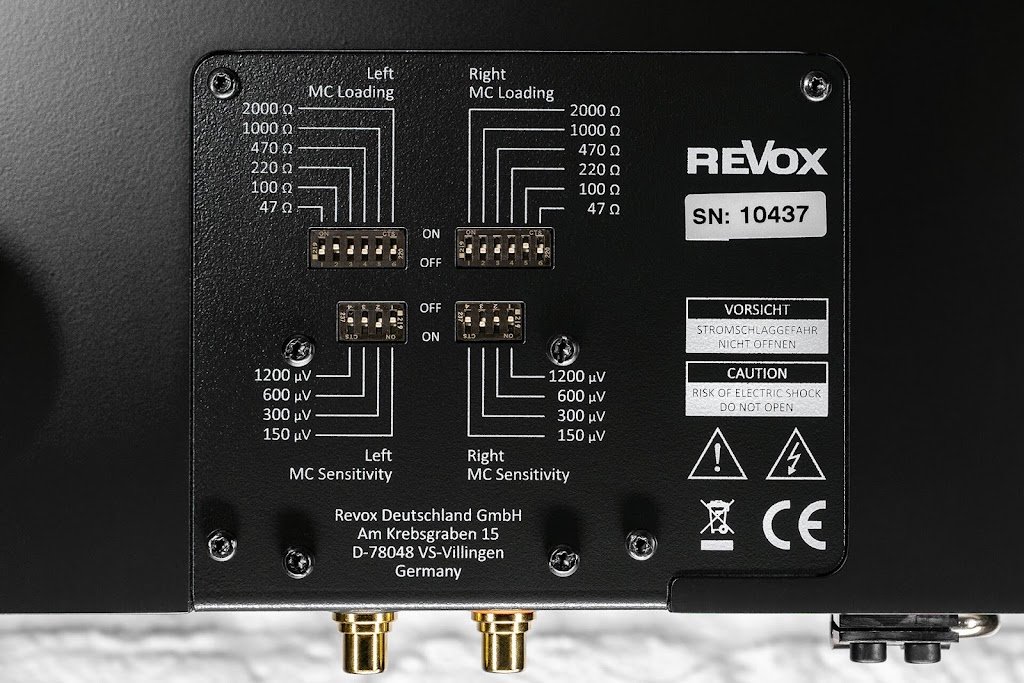
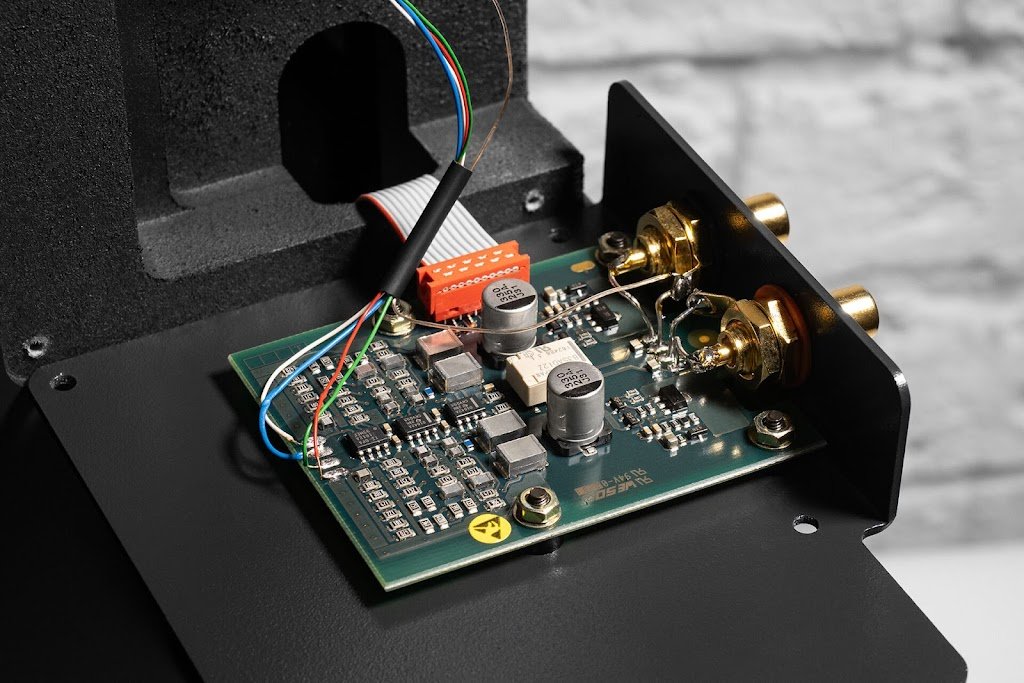
Now has a built-in phono stage. It is designed to work only with MC heads and has a good tuning range for both impedance and gain. But it has neither the required impedance nor the capacitance settings required for MM heads. I opened it after listening and was very surprised – this tiny circuit played better than one would think from its appearance. I have encountered this several times, when either a very budget corrector turned out to be quite good, or when an expensive corrector contained a couple of operational amplifiers and several parts, but in general, this is a rare exception to the general rules.
So, in general, I have only one big question for the phono stage: Why didn’t they make a switch that would allow the signal to bypass it? The answer is in the same place as I assumed at the very beginning – in focusing on your ecosystem. However, if the need suddenly arises, bypassing the built-in corrector using a soldering iron will take 15 minutes.
Even the output wires of the tonearm are laid with such a margin that this can be done as comfortably as possible. As a grounding terminal, you can use one of the board screws, for example. But this is an option for non-standard use, although, from everything I saw in the mechanics of the player itself, the hardware and, especially, the standard head may allow you to reveal external components of a higher level.
The player did not show any oddities or peculiarities in use. Even the standard brush for cleaning records is included in the kit, so that when used, the record will not slip on the disc. However, if desired, you can use a not-very-heavy regular or collet clamp here.
Also Read: Onkyo TX-8270 Review
Additionally, based on my observations, a thin leather or cork mat may not be damaged; only the height needs to be adjusted in this case. It is also quite possible to change the standard phono cable, especially since in the basic version, you will not need a phono cable but a regular analog unbalanced interconnect.
During the warming-up process (and here we are talking about both the head and the phono stage), the sound changes quite a lot. Only out of the box, the system doesn’t sound very good – harsh, flat, tight. At this time, I was playing records, which I didn’t particularly mind, but I turned the sound on the amplifier to almost zero and left the room. After several records, you can already start listening, although you need to understand that the sound will still change, although not as noticeably as in the first hours.
When the device has more or less come to its senses, you can already draw some conclusions and look for characteristics.
I started listening to the John Coltrane Quartet album “Ballads”. The sound is detailed but a little chambered and moderately pedantic, although there is no sharpness. The sound is not chopped up; there is unity and, perhaps, even neat musicality. The tonal balance is very fair; nothing is sticking out or falling through. The presentation as a whole tends to be neutral. The character is not very complex.
There is a slight tendency to enlarge the sounds and slightly muffle the after-sounds. I think this is the main merit of the built-in phono stage – the head is capable of more. Here, indeed, the Ortofon Quintet Bronze mentioned in the passport would probably be more appropriate, and Black S already somewhat exceeds the capabilities of the corrector. Although from a good point of view, you can also hear the head – very accurate reading of the material, good detail, plasticity. But timbrally, the sound is a little more formal and strict than I expected.
Regarding individual components: the bass is there, as far as it is present on the recording, the elaboration is neat but not very complicated, and the rhythm section is readable. The mids are neither bulging nor flattened, but rather closer to flat; the upper frequencies are neat, not smoothed out, but not flashy either. The detail is not bad; there is enough dynamics in the example of this recording. In general, the sound is neat and unhurried but without the feeling of lethargy or slowness.
The stage is medium in size, more in width than in depth, but the images are well-separated and readable. There is no holographic precision, but there is no mess either.
 |
Then I put on the Dave Brubeck Quartet’s “Blue Rondo” CD. The sound has lightness, mobility, and some plasticity. However, there is also something like restraint, maybe a little dryness. Quite a bit, but there it is. And you certainly can’t say that the sound is warm or overblown.
The frequency range is transmitted smoothly, without distortions. The presentation is definitely light, but there is no brightness or sparkle – rather a kind of muted matte light, so to speak.
 |
Using this recording as an example, I did not notice any noticeable problems with the dynamics: there is no stiffness, and the sound is quite harmonious, although not sharply rapid-fire. The detail is simply assured. I wouldn’t call it very high, even from the head itself. I expected a little more, but I won’t say that there are a few details or that there is an obvious simplification.
Rather, one feels a certain uncomplicated visual presentation with a claim to neutrality. The sound is perceived normally, just as sound, just as music. Without any lofty epithets, there is nothing particularly to belittle here.
The scene of this recording turned out to be slightly larger than average, but, again, more in width than in depth. The images are readable, and the air between them is moderately present.
 |
The third album in the test is JJ Cale & Eric Clapton’s “The Road To Escondido”. The sound is full, juicy, and here it already seems a little warm. However, even with knowledge of how the record was recorded, there is still a slight restraint and emphasized accuracy.
The detail is not bad, sufficient, and the dynamics are all right. Good melody, unity, neat emotionality – and all this without getting into details and nuances. Yes, the sound is painted with large strokes, of course, emphasizing emotion rather than analyticality. Does this spoil the overall picture here? Not really. Rather, it looks at the familiar from a slightly different angle.
Listening is quite comfortable; even in a high-resolution system, there is no obvious contradiction, even if the device does not coincide with the other components in the coordinate system – the character and handwriting are audible, and the shortcomings as such do not stick out; everything is at the level of emphasis. Listening to such a sound is not at all boring, and due to moderate restraint, no wow effect leads to fatigue throughout playing one to one and a half records.
 |
The device produces quite good rhythmicity, perhaps a little smoothed out, a little more “muscular” and sometimes seeming forced, but neither haste nor slowness is noticeable. In different compositions, it seems that the first one or the other color shows itself a little, but it’s impossible to identify it as unambiguous; it’s not very expressed quantitatively. But this is not monitor-analytical sound, of course.
Now for a completely different genre: My Dying Bride’s “The Dreadful Hours.” Surprisingly atmospheric and quite realistic emotionally. The sound is dense and rich, but I wouldn’t say that it lacks detail. With this recording, the presentation is a little more compact through the midrange and slightly smoothed in the upper frequencies, which more or less corresponds to the recording itself. However, with the Revox, everything becomes more noticeable and visually apparent.
Of course, more details and nuances could be extracted here, but there is no mess. The instrumental parts and vocals are separated quite well, and their relative proportions are correct, so perhaps the result was even better than expected. I thought there would already be a certain limit in terms of detail, but it remained consistent with what I heard on the previous recordings.
Finally, I played a recording of Queen’s works performed by a symphony orchestra. Here, you can hear the volume of the hall and feel the air around the instruments. On the quieter fragments, everything is good; the timbre is perhaps a little simpler, but without distortion. The instruments sound somewhat predictable.
There is bass, midrange, and treble, and the player has already demonstrated an even tonal balance, with no exceptions here. As with the previous album, on complex and richly layered passages, the detail does not collapse but remains consistent with what we heard before. Yes, it is a little less than we would like, and less than the installed cartridge is capable of delivering, but this limitation remains consistent even with complex genres. And once again, there is that pragmatically restrained sound that simply exists and does not impose itself.
Conclusion:
The player is a bit of a thing in itself, partly with the pretension of being a design object, while still looking like a classic turntable. Although I must say that all the mechanical elements are done properly. A built-in phono stage is relatively unusual in this segment, but the manufacturer did not go down the path of creating a combined “do everything” machine. The player has neither automation nor digital functions. The phono stage, although built in and not particularly complicated, offers a good range of adjustments.
There is no way around the built-in phono stage, and yes, this is a problem. It seems to me that the phono stage here could have been connected at a much higher level, but the device is clearly designed for people who want to bring it home, unpack it, spend 10 minutes setting it up, and start listening without thinking about additional components, cables, cartridge matching, and adjustments.
But we must give it credit: overall, this all-in-one player still performs at a good level. If we compare the cartridges, the performance is right at the level of the Quintet Bronze configuration, while the Black S is already slightly above the upper limit of what the built-in phono stage can comfortably exploit. On the other hand, considering the price of the device, it would be rather strange to get a budget MM cartridge pre-installed.
In terms of genre, I would like to call the device universal, but within that universality, it gravitates toward pop music, less demanding rock, and medium- and small-scale compositions in different genres. Although, as practice has shown, you can certainly listen to symphonic music on it. The whole question is how you want to listen to it. If you want something unobtrusive but with an emphasis on emotion, moderately detailed and without an exaggeratedly analytical character, then you can listen to absolutely anything.
Revox T700 Studiomaster Specifications
Player
Drive: Belt drive
Rotation speeds: 33.3 and 45 rpm
Speed tolerance: <0.1%
Dimensions (W × D × H): 470 × 337 × 156 mm
Weight: 10.3 kg (2.85 kg platter)
Tonearm
Design type: Rotary
Settings: Cartridge position, height, azimuth, tracking force, anti-skating
Effective length: 237.6 mm
Overhang: 15 mm
Effective mass: 11 g
Built-in phono stage
Type: MC
Frequency response: 7 Hz – 80 kHz (-3 dB)
Signal-to-noise ratio: -69 dB (20 Hz–20 kHz)
THD: 0.005%
Channel imbalance: 0.2 dB
Channel separation: >80 dB
Low-cut filter: From 10 Hz
RIAA curve accuracy: ±0.2%
Impedance settings: 47, 100, 220, 470, 1000, 2000 ohms
Input sensitivity: 150, 300, 600, 1200 µV