This Tiny Subwoofer Promised Bass Down to 11Hz. Could It Really Deliver?
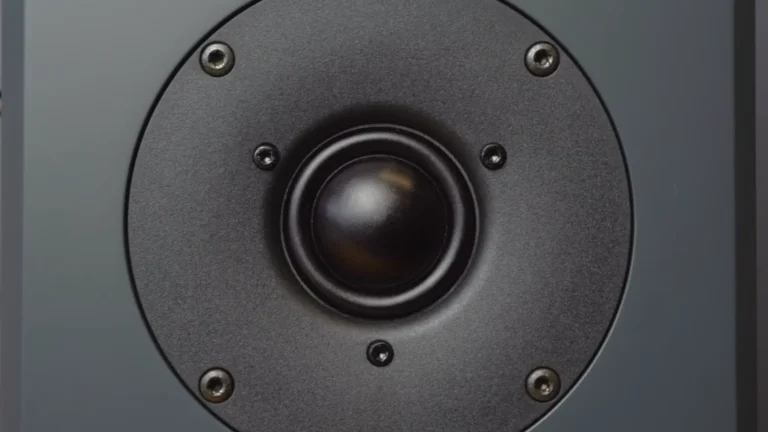
The Definitive Technology SuperCube Reference promised the kind of deep, physical bass usually associated with much larger subwoofers. With an 1,800-watt amplifier, a 14-inch driver and two passive radiators packed into a cabinet smaller than many floorstanding speakers, it made a compelling case for serious bass without sacrificing an entire corner of the living room.
There is something uniquely satisfying about deep, physical bass when watching a movie or listening to music. The right subwoofer does more than make explosions louder. It brings weight to a kick drum, reveals the lowest notes in a bass line and makes a movie soundtrack feel as though it is happening in the room rather than coming from a collection of speakers.
Yet deep bass has traditionally presented a problem for home audio enthusiasts. Compact subwoofers can fit neatly into a living room, but their small cabinets and drivers can struggle to reproduce the lowest frequencies at high volume levels. Larger designs offer greater potential for output and extension, but they can dominate a room and become difficult to accommodate in a shared living space.
That compromise helped make compact, high-performance subwoofers so appealing. Their long-excursion drivers and powerful amplifiers demonstrated that relatively small enclosures could deliver impressive results. But there was still a difference between producing satisfying bass and reproducing the deepest, most demanding passages with authority.
This Discontinued 175-Pound Subwoofer Packed 2,000 Watts and Serious Bass
The Definitive Technology SuperCube Reference, originally priced at $1,699, was designed to bridge that gap. As the flagship of the company’s SuperCube range, it combined substantial amplification, a large active driver and two passive radiators in an enclosure measuring less than 17 inches on each side.
The promise was ambitious: genuine low-frequency extension, high output and the sort of control that would make the subwoofer equally appealing for music and home theater. The question was whether a cabinet this compact could deliver the performance without the usual compromises.
Definitive Technology SuperCube Reference: Design and Build Quality
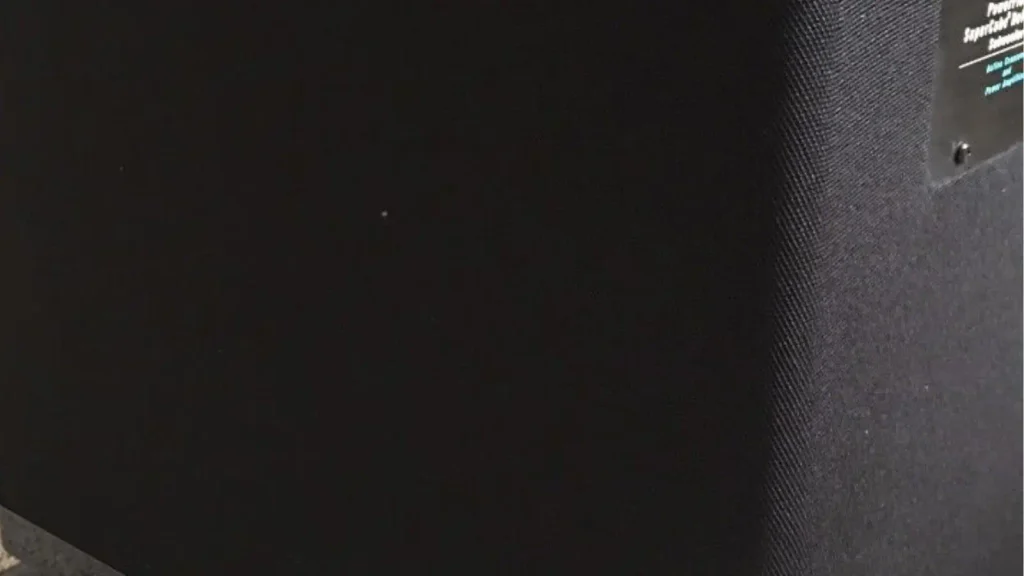
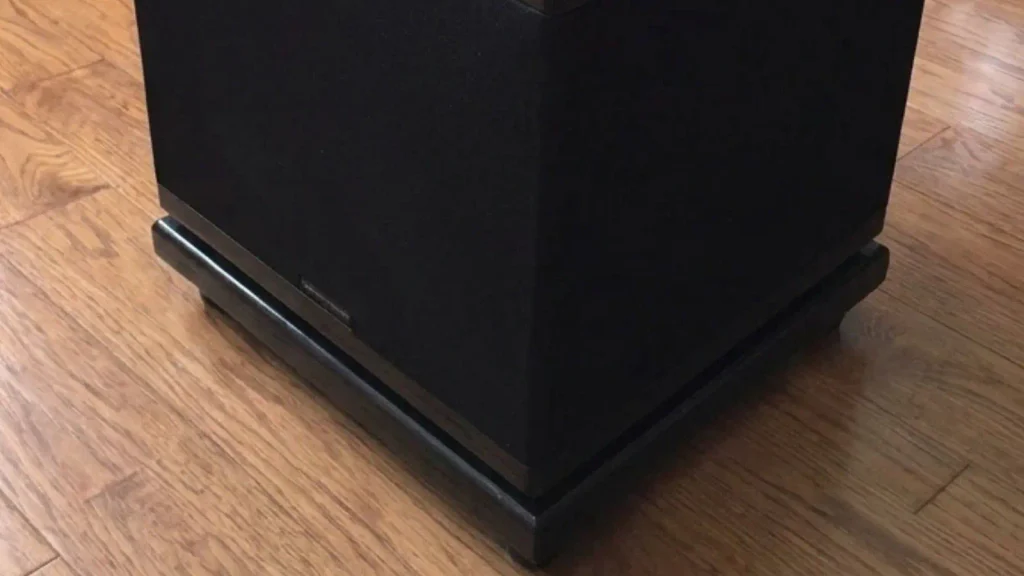
Definitive Technology gave the SuperCube Reference a contemporary appearance that was considerably more discreet than its capabilities might suggest. Most of the enclosure is covered in black fabric, while the top and bottom caps provide a contrasting finish in piano-gloss black or golden cherry.
My review sample arrived in golden cherry, and the combination of dark fabric and wood finish gave the subwoofer an understated, attractive appearance. Rather than looking like an oversized piece of home theater equipment, it had a finish that could sit comfortably alongside conventional hi-fi speakers and contemporary furniture.
The styling also followed the visual approach used by Definitive Technology’s BP Series SuperTower bipolar loudspeakers, creating a consistent look across the company’s product range.
The enclosure, however, tells a different story when it comes to handling. Weighing approximately 111 pounds, the SuperCube Reference is a remarkably dense piece of equipment for its dimensions of 16.7 x 16.7 x 16.9 inches. Once positioned on its spikes, it feels reassuringly substantial, although moving it around the room is another matter.
That weight becomes particularly relevant during setup. Subwoofer placement can make a considerable difference to bass performance, and a design this heavy is not something most owners will want to move repeatedly while experimenting with different positions.
A 14-Inch Driver and 1,800 Watts in a Compact Cabinet
The SuperCube Reference’s specifications explain why Definitive Technology made such ambitious claims for its flagship subwoofer.
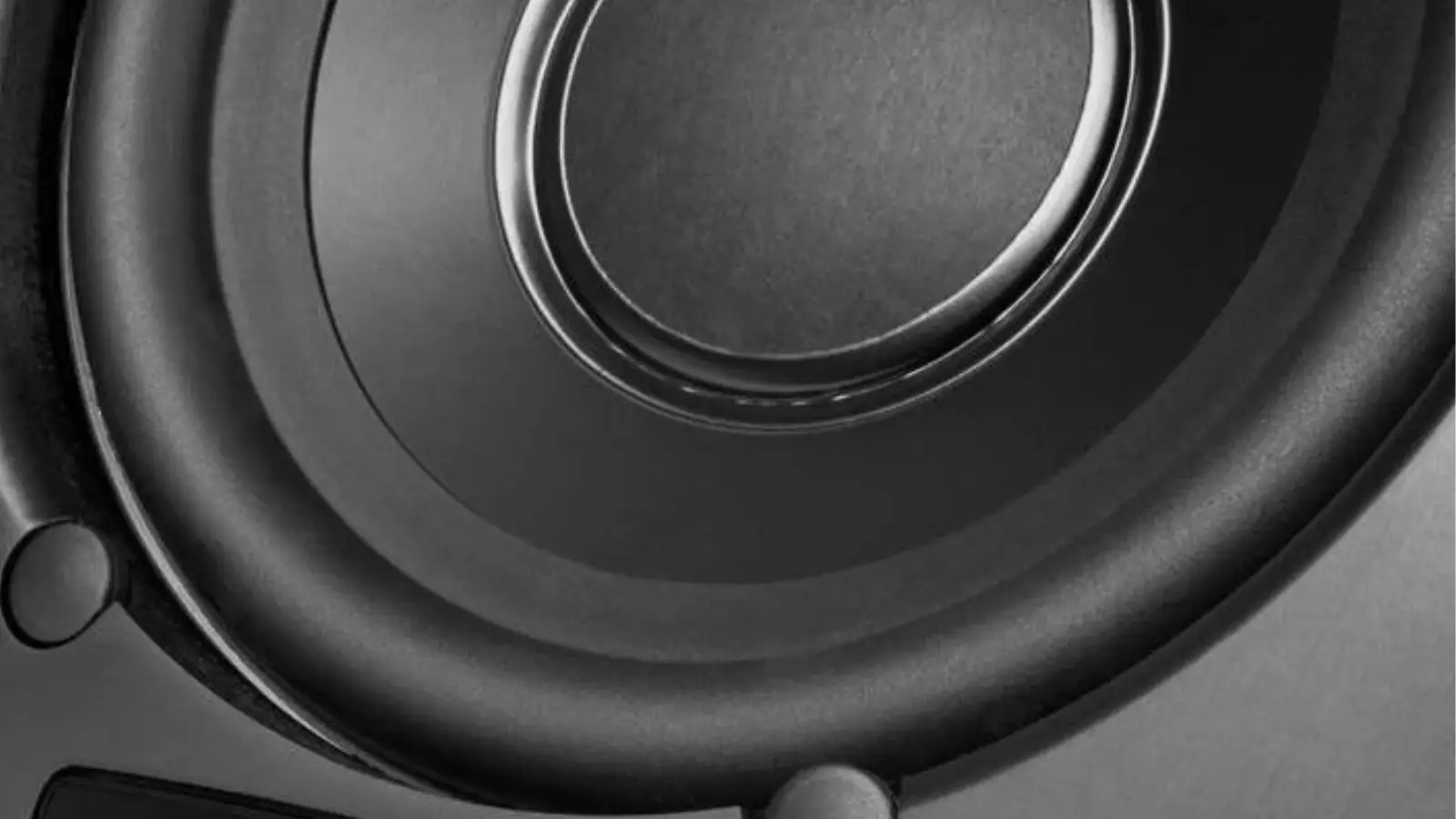
At its heart is a 14-inch long-throw active woofer powered by an integrated 1,800-watt digitally coupled Class D amplifier. Rather than relying on a conventional port, the design uses two opposed 14-inch passive radiators positioned at 90-degree angles to the active driver.
These passive radiators respond to pressure changes inside the enclosure, helping the system produce substantial low-frequency output from a relatively compact cabinet. The arrangement allows the SuperCube Reference to pursue the deep bass extension and high output associated with much larger designs without requiring a traditional ported enclosure.
Definitive Technology specified a frequency response of 11Hz to 200Hz. That impressive lower-frequency figure was a major part of the SuperCube Reference’s appeal, although a manufacturer’s frequency-response specification should not be confused with independently verified output at every frequency or in every room.
The combination of a large active driver, passive radiators and substantial amplification was intended to deliver more than sheer volume. Properly integrated with the main speakers, the subwoofer needed to reproduce bass with enough speed and control to preserve the shape of musical notes while providing the physical impact demanded by movie soundtracks.
That balance is particularly important in a system used for both music and movies. A subwoofer that delivers plenty of output but sounds slow, bloated or disconnected from the main speakers can undermine the performance of an otherwise excellent system.
Connectivity and Controls
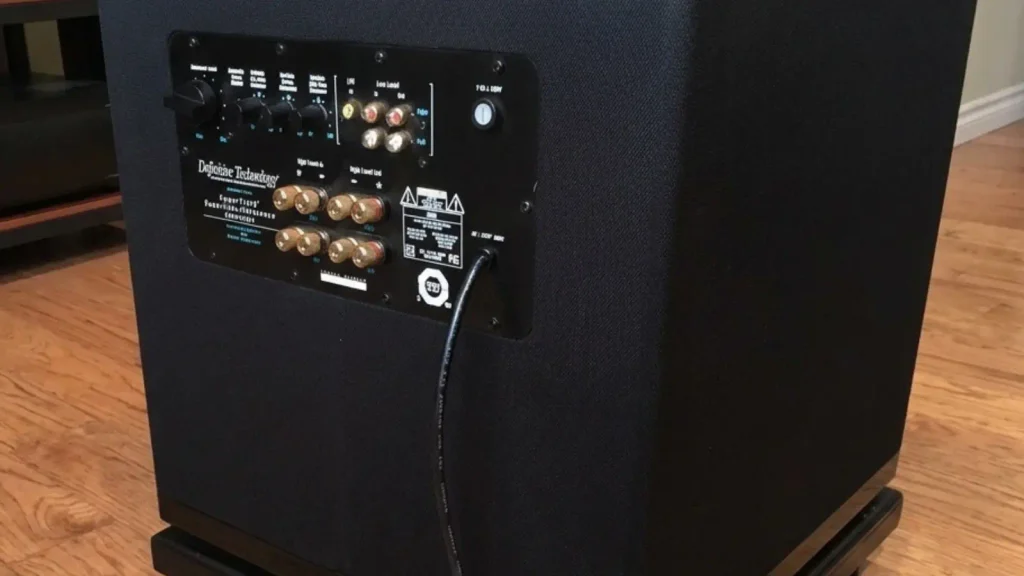
The rear panel provides a range of connections and adjustments intended to make the SuperCube Reference compatible with different system configurations.
Why the Definitive Technology Mythos ST Is More Than Just a Pretty Speaker
Low-level RCA connections allow it to be connected to a home theater receiver or other suitable preamplifier output. Speaker-level connections provide another option, while the available high-pass filtering can be useful when integrating the subwoofer with compatible main-speaker connections.
The high-level approach can be attractive to listeners who want to relieve their main amplifier of some of the demands associated with low-frequency reproduction. However, it requires additional speaker cabling and careful attention to the intended connection method.
One particularly useful feature is the continuously variable phase control, adjustable from 0 to 180 degrees. Instead of limiting the user to a few fixed settings, the SuperCube Reference allows finer adjustments to help align the subwoofer’s output with that of the main speakers at the listening position.
Its variable crossover controls cover the 40Hz to 150Hz range, providing room to experiment with the transition between the subwoofer and the main loudspeakers. There is also a volume control and a fuse.
These adjustments matter because even a highly capable subwoofer cannot overcome every problem created by poor placement or an unsuitable crossover setting. The goal is not simply to hear more bass, but to make the additional low-frequency energy sound like a natural extension of the rest of the system.
Setting Up the SuperCube Reference
Subwoofer placement is one of the most important parts of getting a system to perform properly. Room dimensions, nearby walls, furniture and the positions of the main speakers can all influence the balance of the lowest frequencies.
Before adding a subwoofer, it helps to establish a reasonably balanced response from the existing speakers. Their distance from surrounding walls can affect perceived bass, while room modes can create peaks and dips that make certain notes sound disproportionately loud or unusually weak.
Once the main system is properly positioned and level-matched, the subwoofer can be integrated more methodically.
My listening room measured 16 x 27 feet and served several purposes. Along with being a home theater and music room, it was also the family room, computer room and a place where the kids could sleep over. As a result, the SuperCube Reference had to fit into a shared living space rather than an idealized listening room with unlimited placement options.
I used a RadioShack analog SPL meter and a test-tone generator to evaluate possible locations.
The first candidate was behind a couch. Connecting the subwoofer’s LFE input to the LFE output of my B&K AVR307 receiver with a single-ended RCA interconnect, I powered it up and began testing.
That position quickly proved unsuitable. With the SuperCube Reference sitting beside a sliding glass door, the bass during The Matrix Reloaded produced an unexpectedly dramatic result. Looking at the glass from outside, I was reminded of the glass building scene in the first Matrix film, immediately after the helicopter crash. The effect was enough to convince me that another location was needed.
Unfortunately, the corners of the room were unavailable, even though corner placement is often a useful starting point for subwoofer experimentation.
The next option was along the wall between my Revel Studios, which were positioned eight-and-a-half feet apart and three feet from the wall. I oriented the SuperCube Reference’s active driver away from the wall, leaving its two passive radiators directed along the wall.
From there, I used test tones and SPL measurements to find a position that reduced the most troublesome peaks and dips. Moving a subwoofer even a short distance can change how its output interacts with a room, so the process involved repeated measurements rather than simply choosing a convenient spot.
The eventual position was toward the left speaker, with the left passive radiator approximately 14 inches from an ASC Tube Trap. After settling on the placement, I adjusted the phase and set the high-pass and low-pass filters to work with the Revels’ specified frequency response.
Further fine-tuning helped reduce an unevenness in the bass response. With the setup as balanced as the room allowed, it was time to see what the SuperCube Reference could do with music and movies.
Music Listening: Peter Gabriel and A Perfect Circle
My first choice was the remastered SACD of Peter Gabriel’s Plays Live Highlights from Geffen Records. Having become increasingly interested in high-resolution formats, I was eager to hear whether the SuperCube Reference could reveal something that my existing speakers had not fully communicated.
I started with “San Jacinto.”
The immediate impression was that the recording contained more low-frequency detail than I had previously appreciated. My Revel Studios already delivered impressive bass extension below 30Hz, but the SuperCube Reference brought another dimension to the lowest-frequency information, adding a greater sense of depth and physical presence.
Tony Levin’s bass playing took on a more clearly defined texture. Its gravelly quality came through with convincing control, while the kick drum had energy and a sharp, taut attack. Even at high listening levels, the bass retained its character rather than collapsing into an indistinct rumble.
Integration with the Revels was better than I had expected. There was, however, a slight bloom around certain bass notes that I did not hear when using the main speakers alone. Measurements suggested a peak in the 25Hz to 30Hz region, so I returned to the phase and crossover adjustments. These changes reduced the problem, although a trace of it remained.
Later in the recording, the chorus in “No Self Control” introduced a synth-accompanied bass line that filled the space between the Revels. The added low-frequency presence helped reveal the layers within the performance, while the soundstage retained a convincing sense of depth and instrument placement.
The result was an enjoyable reminder that a subwoofer can contribute more than physical impact. When properly integrated, it can help a system communicate the weight, texture and scale of a recording without making the bass seem like a separate element.
Next came A Perfect Circle’s Thirteenth Step from Virgin Records. Having seen the band live in San Francisco two months earlier, I still had a clear memory of the powerful bass and drums that had driven the performance.
The album leans toward a warm presentation, with plenty of energy in the lower registers. On “The Package,” the bass lines sounded deep, crunchy and punchy, and the SuperCube Reference handled the demanding transients with impressive authority.
The track requires a combination of impact and articulation. Bass notes need to arrive with force, but their leading edges must remain clear enough to preserve the rhythm and definition of the performance. The SuperCube Reference managed this balance well, maintaining the sense of attack even as the music became heavier.
“Pet” provided another demanding test, with its powerful kick drum, bass and thundering guitar. The subwoofer remained composed under the assault, preserving the layers I had heard through the Revels while adding greater extension and physical weight.
Why Is Everyone Suddenly Buying the Klipsch SPL-120 Subwoofer?
The music retained its pace and dynamics, and the subwoofer did not draw attention to its position in the room. At its best, that is precisely what a well-integrated subwoofer should do: contribute substantial low-frequency energy while allowing the music to sound like a coherent performance from the main speakers.
Movie Listening: Star Wars and Rush in Rio
After the music sessions, I turned to one of my favorite test DVDs, Star Wars: Episode I – The Phantom Menace.
The podrace sequence offered an opportunity to examine how well the SuperCube Reference could separate different low-frequency effects in a busy soundtrack. As the turbines fired up, a subsonic hum announced the beginning of the race.
What impressed me was the subwoofer’s ability to reproduce the different engine sounds without allowing them to merge into an undifferentiated wall of bass. Even at high volume levels, the individual sounds retained their character, and the presentation did not become congested.
The Rush in Rio DVD from Anthem was another natural choice, particularly Neil Peart’s “O Baterista” drum solo.
At loud levels, the SuperCube Reference conveyed the varying impact of Peart’s drumming with considerable dexterity. The electronic drums later in the solo were especially revealing. Some of the lower-frequency sounds had a different weight and texture from what I remembered, giving the performance a fresh perspective.
Experiences like this reinforced the impression that the SuperCube Reference was not simply adding more bass to familiar recordings. Its extension was allowing me to hear aspects of the performances that had previously been less apparent in my system.
Master and Commander: When Bass Becomes Physical
For the final movie test, I selected Master and Commander: The Far Side of the World, a film that provides an excellent demonstration of how low-frequency effects can contribute to a sense of scale and physical presence.
The first encounter with the French ship begins with cannon fire at a distance. Rather than merely hearing the shots, I could feel their impact through the room. The low-frequency energy of each blast was striking, and I was surprised by the authority the SuperCube Reference produced from its relatively compact enclosure.
When the two ships eventually face off, the intensity increases considerably. The subwoofer conveyed the force of the action with an impact that made the scene feel unusually immediate.
At that point, however, my room was being pushed beyond the level I was comfortable with, and I had to reduce the volume. The neighbors had also begun to take notice.
It was a memorable demonstration of the SuperCube Reference’s output capabilities, but it also illustrated an important point about powerful subwoofers: the room and its surroundings ultimately determine how much of that performance can be enjoyed in practice.
A subwoofer capable of producing substantial low-frequency energy can be thrilling in a dedicated home theater. In a shared living space, the same ability requires a little more consideration.
Verdict: A Serious Subwoofer in a Surprisingly Small Package
The Definitive Technology SuperCube Reference made a convincing case for compact subwoofer design. Its combination of a 14-inch active driver, two passive radiators and a powerful built-in amplifier delivered the sort of deep, forceful bass that would normally encourage buyers to consider a much larger enclosure.
Its strongest quality was the balance between output and control. Music benefited from the additional depth and weight, while demanding movie sequences demonstrated how effectively the subwoofer could turn low-frequency effects into a physical experience. With careful placement and adjustment, it also integrated well with my Revel Studios.
The setup process was not entirely straightforward. The unit’s substantial weight made experimentation physically demanding, and the slight bass bloom I encountered showed just how important room acoustics and crossover settings can be. Even a capable subwoofer cannot eliminate the effects of an imperfect listening environment.
There is also a practical consideration for anyone looking at the SuperCube Reference today. This is a discontinued model, so prospective buyers will generally need to investigate the used market rather than assume the original price reflects present-day availability or value. Its age also makes the condition of the driver, amplifier and other components important considerations before purchasing one.
Nevertheless, the SuperCube Reference remains an interesting example of how much low-frequency performance manufacturers were able to extract from a compact enclosure. For listeners who want their music to have greater weight and their movie soundtracks to deliver genuine physical impact, its design demonstrates why a well-engineered subwoofer can make such a substantial difference to a system.
Definitive Technology SuperCube Reference Specifications
| Specification | Details |
|---|---|
| Type | Powered subwoofer with passive radiators |
| Active driver | One 14-inch long-throw woofer |
| Passive radiators | Two 14-inch radiators |
| Amplifier | 1,800-watt digitally coupled Class D |
| Frequency response | 11Hz–200Hz |
| Variable crossover range | 40Hz–150Hz |
| Phase control | Continuously variable, 0–180 degrees |
| Dimensions (W × H × D) | Approximately 16.7 × 16.9 × 16.7 inches |
| Weight | Approximately 111 pounds |
| Finishes | Piano-gloss black, golden cherry |
| Original price | $1,699 |
Specifications are based on published product information and the original review-era configuration. The $1,699 figure is the historical launch price, not a current market valuation.