This High-End Music Server Could Stream Your Entire Music Library Around the House
Things were moving fast in the world of digital music. Dedicated hard-drive music servers were becoming increasingly sophisticated, offering features that would have seemed almost unimaginable just a few years earlier. Entire music collections could be stored on a single device, controlled remotely, and accessed from computers, smartphones, and tablets.
What was once considered an extension of a traditional hi-fi system was quickly becoming its own product category.
The idea of accessing your music library from anywhere in the world was particularly exciting. Cloud-based services, multi-room playback, and internet radio were beginning to change how people thought about listening to music at home. Pandora, TuneIn Radio, and SiriusXM were among the services helping shape this new listening experience.
Today, many of these capabilities are familiar. Back then, however, they represented a significant step forward.
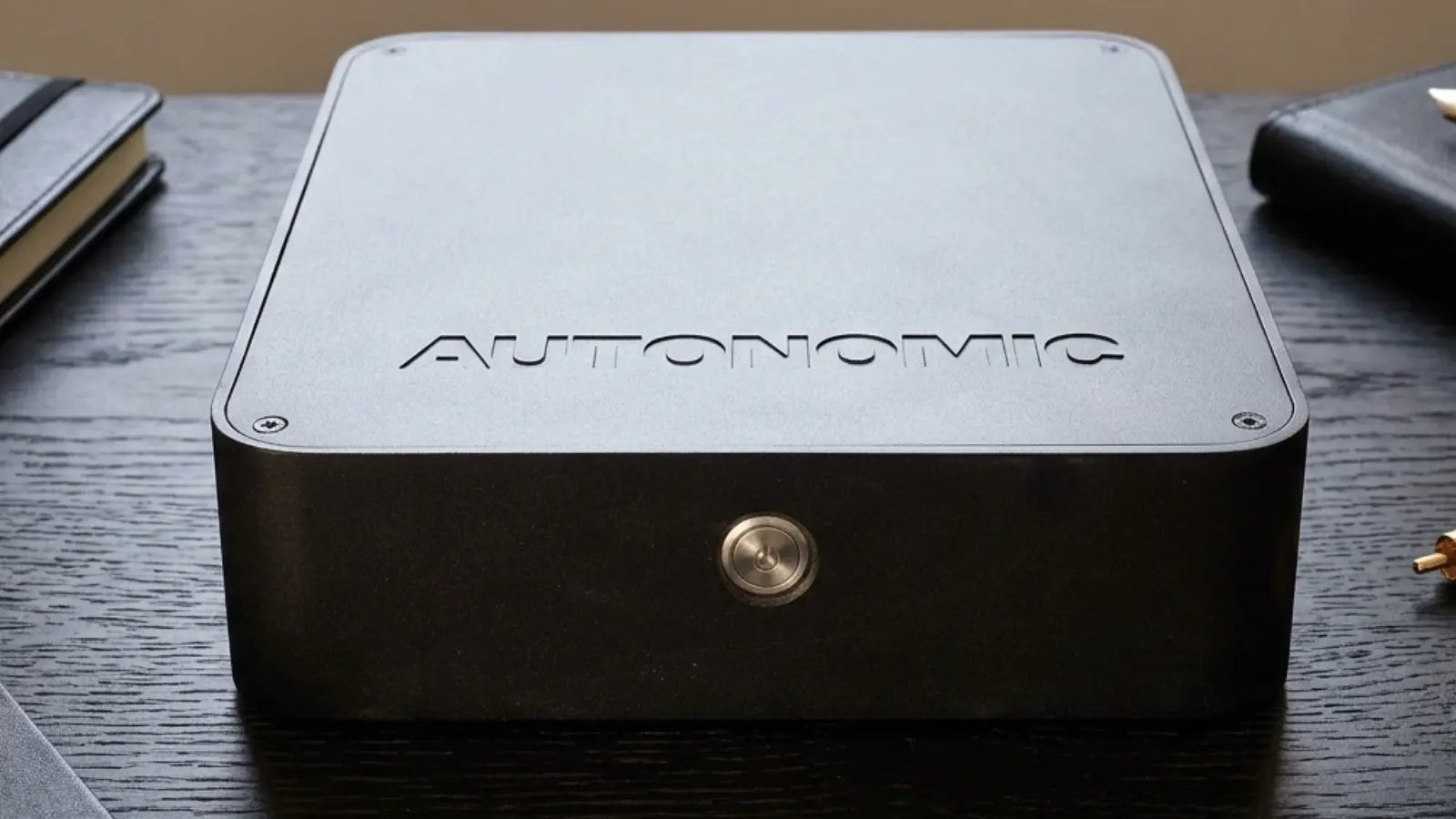
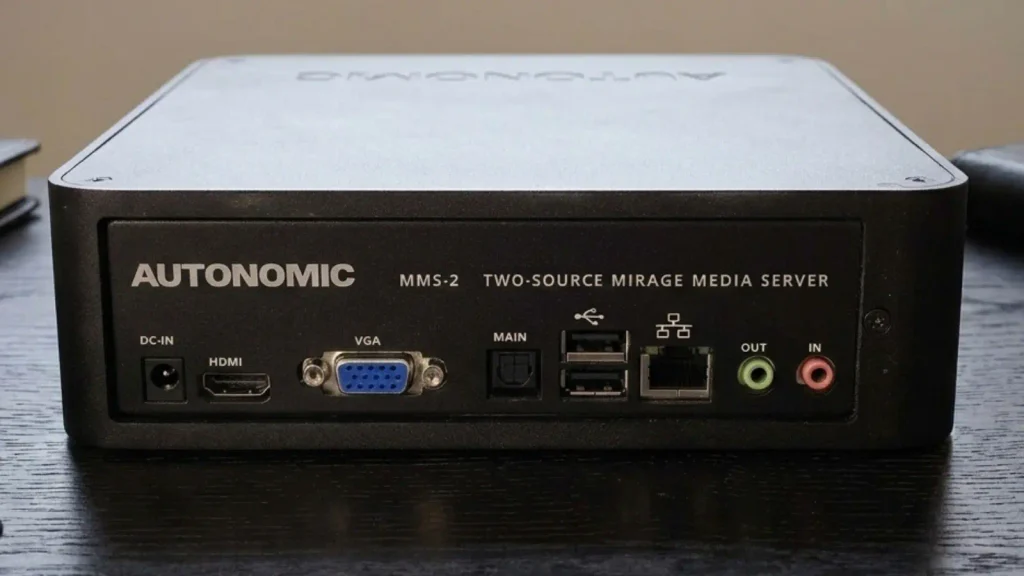
This brings us to the Autonomic Controls MMS-2, a dedicated music server that attempted to bring together local music storage, network playback, internet radio, and remote access in one compact component. Released in mid-December 2011 with an original price of $1,995, it was hardly an inexpensive addition to a hi-fi system. But its feature set suggested that Autonomic Controls had ambitions beyond simply building another digital music player.
And as I discovered during my time with it, the MMS-2 had something else going for it: surprisingly impressive sound quality.
A Compact Music Server With Serious Ambitions
Autonomic Controls may not have been a familiar name to every hi-fi enthusiast, but the company had established itself in networking, multimedia, and professional system integration.
The MMS-2 reflected that background. Rather than trying to look like a conventional audio component, it featured a compact black chassis that could easily find a home in a hi-fi rack or an AV installation.
Its rear panel offered USB connections, audio outputs, and a VGA video output. Internally, a 500GB magnetic hard drive provided storage for a substantial music collection, while support for numerous audio formats made it suitable for libraries containing everything from MP3 files to lossless FLAC and WAV recordings.
Supported formats included AIFF, FLAC, MP3, WMA, WAV, and several other popular file types. The server also supported 44.1kHz, 48kHz, and 96kHz playback.
What made the MMS-2 particularly interesting, though, was its approach to music control. Instead of requiring listeners to interact with the component directly, it could be operated through a computer, Apple iPhone, iPod Touch, or iPad.
For a product from this period, that was a particularly attractive proposition.
Setting Up the Autonomic Controls MMS-2
Getting the MMS-2 physically installed was straightforward. I placed it in my system like any other component, connected its digital output to the optical input of my Arcam rDAC using a Transparent Toslink cable, plugged in an Ethernet connection, and powered it on.
You can read my original review of the Aurender A200 Network Player Review
The initial network configuration, however, required a little more patience.
I visited the supplied browser address to access the setup interface, but the server was not immediately accessible. Fortunately, a quick call to Autonomic’s technical support team resolved the issue. A support representative manually assigned an IP address to the MMS-2 and guided me through the remaining configuration.
This involved downloading a media synchronization tool, enabling iTunes library sharing over the local network, and synchronizing my music collection with the server.
Once everything was configured, accessing the MMS-2 through its assigned IP address brought up the music library interface. My synchronized albums appeared alongside their embedded artwork, making it easy to browse the collection.
The actual listening experience was considerably simpler than the initial setup.
Using my Dell netbook over Wi-Fi, I could select an album and begin playback almost immediately. Skipping tracks, moving between albums, and pausing music were equally responsive.
It felt much like operating a CD player, except that my entire music collection was available from one interface.
I also downloaded the iPod Touch application, which worked remarkably well, even when controlling the server from another room. Another welcome feature was automatic synchronization with the iTunes library, meaning changes to the music collection were reflected on the MMS-2.
Internet Radio and Remote Music Access
The MMS-2 offered more than straightforward playback of locally stored music.
It also supported internet radio services, including Pandora, SiriusXM, and RadioTime, giving listeners access to a much broader selection of music and programming.
My wife logged into her Pandora account and was able to listen through the system using the iPod Touch. Pandora was particularly useful for discovering unfamiliar music and creating personalized playlists.
The MMS-2 also offered an interesting remote-access option through an MP3tunes account.
This allowed users to access their music server over an internet connection, even when away from home. There were some limitations at the time, particularly concerning supported file formats. MP3tunes was then limited to uploading lossy music files, while Autonomic was working with other providers to expand remote access to lossless and uncompressed formats.
It was an ambitious feature set, especially considering how early we still were in the evolution of networked home audio.
How Does the Autonomic MMS-2 Sound?
All those features are impressive, but a music server costing $1,995 still has to deliver the goods sonically.
Fortunately, the MMS-2 did not disappoint.
I was genuinely surprised by its sound quality. There is sometimes an assumption that products packed with networking features, remote controls, and software capabilities must compromise somewhere in their audio performance. That certainly wasn’t my experience with the MMS-2.
Using its optical digital output into the Arcam rDAC, I found its presentation exceptionally engaging.
Compared with my Logitech Squeezebox, the MMS-2 appeared to offer a slight improvement when playing FLAC files. The Olive music server I had reviewed previously made for a closer comparison, and based on my listening experience, the Autonomic was every bit as engaging.
Of course, the DAC or AV receiver used alongside the MMS-2 would play an important role in determining the final sound quality. I did not spend time evaluating its analog outputs, as my listening sessions focused on the optical digital connection.
The server could also deliver separate analog and digital audio streams, which added flexibility for different system configurations.
For my listening sessions, I used both FLAC and WAV files ripped from CDs, alongside recordings from my live music collection.
The Band’s Music From Big Pink, in its Mobile Fidelity hybrid SACD edition, sounded fantastic. The Red Book CD layer was reproduced with impressive clarity and musicality, delivering one of the most enjoyable presentations of the album I had experienced.
Espers, the neo-psychedelic folk group, were equally well served. Their album Espers III benefited from a spacious presentation that allowed the music to breathe. Instruments and musical details were rendered with an impressive sense of openness, reinforcing the appeal of high-quality digital playback from a properly configured music server.
The MMS-2 made a convincing case for hard-drive-based playback. It was not simply a convenient way to organize a music collection. It was a genuinely enjoyable source component.
Everyday Performance and Build Quality
During my time with the MMS-2, it proved to be a reliable and responsive addition to the system.
I left it powered on 24/7, and although the chassis became slightly warm during warmer days, it never caused any concern.
The unit was generally quiet. After extended operation, I could occasionally hear some mechanical noise, but only when placing my ear within a few inches of the chassis. From a normal listening position, it was effectively inaudible.
What impressed me most was the responsiveness of the interface. Browsing folders, navigating albums, and selecting individual tracks felt effortless. In fact, I found it quicker to navigate than my Logitech Squeezebox when working through folders and files.
That responsiveness made a real difference to the overall experience. Having an extensive music collection is one thing, but being able to explore it without frustrating delays is just as important.
The Verdict: A Music Server That Was Ahead of Its Time
I thoroughly enjoyed having the Autonomic Controls MMS-2 in my system. It was well built, responsive, enjoyable to operate, and offered a collection of features that made it feel considerably more advanced than a conventional digital music player.
There were, however, two limitations worth mentioning.
The first was its 500GB internal hard drive. Although that was a respectable amount of storage at the time, serious digital music collectors could quickly find themselves wanting more capacity.
The second was its limited digital connectivity. Having just one optical digital output felt restrictive, particularly for listeners with more elaborate digital systems. On the other hand, optical connections have the advantage of electrical isolation, which can help avoid ground-loop problems.
At its original $1,995 MSRP, the MMS-2 also faced some serious competition from other music server manufacturers.
Nevertheless, I came away thoroughly impressed. Its combination of responsive operation, extensive connectivity options, remote control capabilities, and excellent sound quality made it one of the most enjoyable digital playback solutions I had experienced.
I was particularly impressed by Autonomic’s technical support team, whose assistance made the initial setup considerably easier. Once configured, the server provided a month of hassle-free listening.
The MMS-2 could also play high-resolution 96kHz files, including downloads from services such as HDTracks, adding another reason for serious digital music enthusiasts to consider it.
Looking back, the Autonomic Controls MMS-2 represents an interesting chapter in the evolution of digital hi-fi. Many of the ideas it embraced, including centralized music libraries, smartphone control, network playback, and remote access, have since become commonplace.
It was an ambitious product, and while its storage capacity and connectivity now feel dated, its musical performance left a lasting impression.
For anyone who remembers the early days of dedicated music servers, the MMS-2 is a reminder of just how exciting that period was.