QED XT25 vs. QED Supremus Review: Entry-Level vs. Flagship Performance
The British brand QED, founded in 1973, has long been synonymous with high-quality audio cables. In this test, we explore two poles of their catalog: the QED XT25, the youngest and most affordable model, and the QED Supremus, the flagship, high-end offering. Rather than trying to directly compare them, a task that is both difficult and somewhat inappropriate, this review examines each cable individually, highlighting build, connectivity, and listening performance. By the end, it’s clear how the two represent different philosophies and price points, while sharing a recognizable “QED sound signature.”
Build & Design
QED XT25: Lightweight, Thoughtful Construction
At first glance, the XT25 appears simple, befitting its entry-level status. However, a closer look reveals a surprisingly sophisticated design:
- Conductor: Ten bundles of oxygen-free copper wound around a hollow central tube.
- Shielding: Aluminum metallized Mylar film.
- Outer Layer: Low-density polyethylene, providing durability and flexibility.
The overall cable is springy but not overly soft, allowing for easier routing in tight spaces, though extremely sharp bends should be avoided.
QED Supremus: Serious, Flagship Build
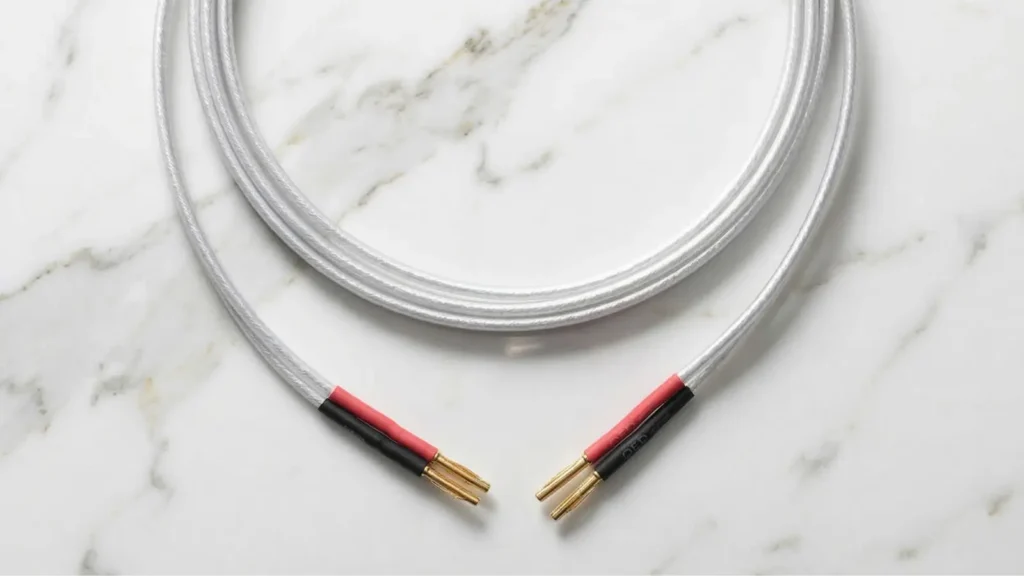
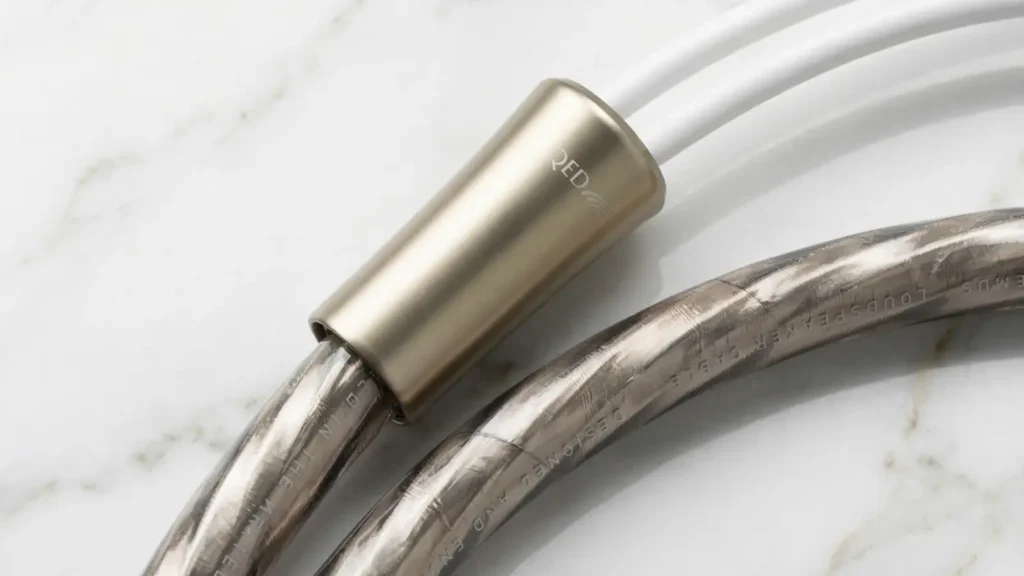
The Supremus is immediately more imposing: thick, rigid, and springy with a translucent outer sheath. Each cable comes with a certificate of assembly, offering authenticity and an extra layer of protection against counterfeits. Internally:
- Skeleton: Polymer core rods.
- Conductors: Sixteen silver-plated copper monofilaments per rod, enamel-coated and cryotreated for improved conductivity and stability.
- Insulation: Foamed polyethylene around each twisted conductor pair, reinforced with plastic inserts to maintain shape.
- Outer Sheath: Transparent, high-quality polymer.
The design is both practical and technically impressive, prioritizing performance without unnecessary frills.
Connectors & Termination
QED XT25: Airloc Mini Banana
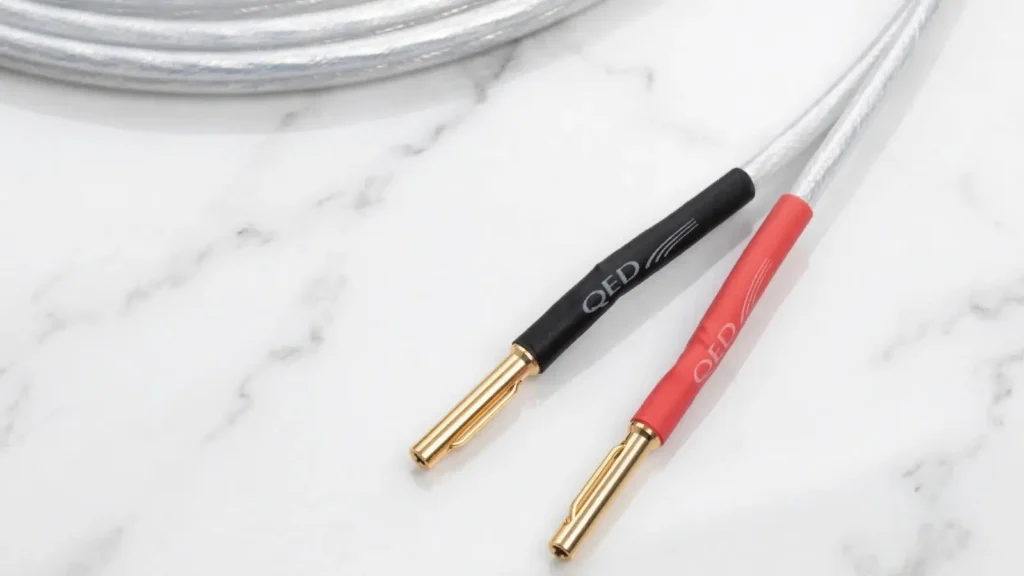
The XT25 sample was pre-terminated with QED Airloc Mini Banana Plugs. QED favors crimping, a process that ensures extremely tight, reliable contact, effectively creating a “cold weld.” The spring-loaded connectors are convenient, easy to install, and color-coded for channel identification. A small positive conductor marking indicates directionality, supporting proper phasing.
QED Supremus: Supremus Airloc Banana
Supremus uses its own Supremus Airloc connectors, available in spade or banana versions (our test used bananas). The rhodium-plated connectors offer secure, twist-to-lock fixation. While the locking mechanism is delicate, it ensures excellent contact. Channel marking is via colored rings, with cable markings indicating direction. Frequent disconnections may favor the spade option for durability.
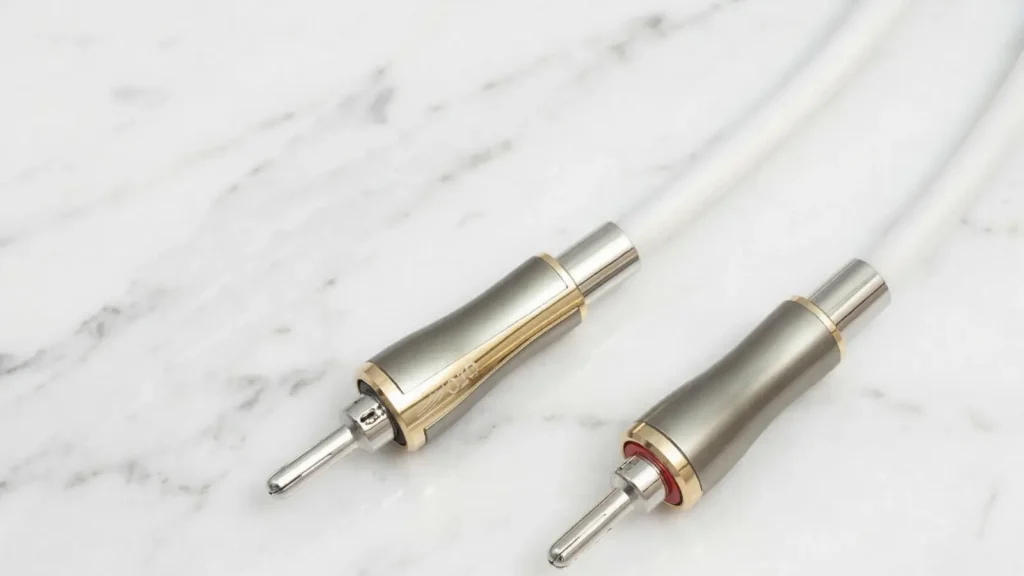
It’s worth noting that Supremus cables are dealer-only, custom-cut, and factory-terminated. This ensures precision, as enamel removal and crimping require specialized tools.
Technical Specifications
| Feature | QED XT25 | QED Supremus |
|---|---|---|
| Conductor | Oxygen-free copper | Silver-plated copper monofilaments (16 per rod) |
| Shielding | Aluminum Mylar | N/A (twisted pair with plastic inserts) |
| Insulation | Low-density polyethylene | Foamed polyethylene |
| Connectors | Airloc Mini Banana | Supremus Airloc Banana / Spade |
| Length Tested | Custom demo | Custom order |
| Price Range | Premium/dealer order | Premium / dealer order |
| Flexibility | Medium, springy | Thick, rigid, springy |
| Special Treatments | None | Affordable/entry-level |
Listening Impressions
QED XT25: Clean, Accurate, Lightweight
In our test system, the XT25 delivered a light but precise sound:
- Mids: Transparent, accurate, slightly elevated in the upper range, giving a sense of joy without harshness.
- Bass: Moderate depth, well-controlled, slightly formal but without muddiness or lag.
- Treble: Crisp but never piercing; some “elation” is perceptible but remains natural.
- Dynamics: Surprisingly good for the price; articulation remains intact even on complex passages.
- Soundstage: Adequate depth and separation; image contours could be sharper, but overall air and spacing are reasonable.
The XT25 excels as a high-quality budget option, proving that entry-level cables need not be faceless or uninspiring. It outperformed several other similarly priced cables in the test.
QED Supremus: Detailed, Transparent, Refined
Supremus presents a more refined, monitor-like sound:
- Transparency: Exceptional clarity and detail; every note and overtone is audible without being overwhelming.
- Bass: Precise and textured; composure similar to XT25 but far more nuanced and expressive.
- Mids & Highs: Slight lift in the upper mids but never harsh; natural tonal balance preserved.
- Dynamics & Detail: Smooth, confident, and free from artificial coloration. Even complex symphonic recordings maintain composure.
- Soundstage: Accurate depth and width; images well-separated and clearly defined, creating a believable three-dimensional scene.
The Supremus is honest, unobtrusive, and versatile, ideal for systems capable of revealing its capabilities without overwhelming the presentation. It is not overly colored or emotionally exaggerated, a sign of thoughtful engineering.
Practical Considerations
- XT25: Convenient for home use, affordable, works well in mid-range systems or as temporary high-quality cabling. Easy to route, durable, and reliable.
- Supremus: Dealer-order only, premium build, requires planning for connector type and length. Ideal for high-end installations where ultimate clarity, detail, and fidelity are desired.
Both cables benefit from standard burn-in; no extreme waiting period is necessary, and performance is stable from the outset.
Conclusions
Comparing the XT25 and Supremus, one cannot ignore their shared QED “handwriting”: precision, transparency, and balanced tonal signature. Yet, the differences reflect their respective positions:
- QED XT25: Remarkably capable for its price, offering clarity, dynamics, and reliability without pretension. Perfect for budget-conscious audiophiles or as a dependable secondary system cable.
- QED Supremus: Flagship-level performance, highly detailed, precise, and versatile. Excellent for high-end systems where every nuance matters.
QED demonstrates that even entry-level cables can have a recognizable family character. The Supremus expands on this with craftsmanship, superior materials, and refined engineering. Both are excellent in their context, showing continuity of design and philosophy across price tiers.
Verdict:
Spending time with the QED XT25 and its flagship sibling, the Supremus, is a fascinating lesson in brand identity. The XT25 is something of a revelation at its price point, delivering a sound that’s clean, articulate, and surprisingly dynamic. It proves you don’t have to break the bank to get a cable with genuine character, one that brings a sense of precision and even a little joy to your music without ever sounding harsh. Step up to the Supremus, and it’s like taking a high-definition photograph of the same scene.
Every brushstroke of detail, every textured bass note, and every ounce of spatial information is rendered with breathtaking clarity and composure. It’s more honest, more revealing, and utterly unflappable, but it never forgets its musical manners. You’re paying for a monumental leap in refinement, a cable that disappears into the service of the music, letting a top-tier system truly sing. Both cables share that unmistakable QED ‘handwriting ‘, a balanced, transparent signature, but they express it in ways perfectly suited to their very different audiences.
Pros and Cons:
| Model | Pros | Cons |
| QED XT25 | High flexibility; Crisp mid-range; Affordable price point. | Lacks the deep bass weight of flagship models. |
| QED Supremus | Reference transparency; Cryo-treated conductors; Locking Rhodium plugs. | Rigid construction; High price; Requires significant space. |
Read Next: Deepen your hifi knowledge with The Whole Truth About Speaker Cables: Enough to Get it Right.