Magnat RV4 Review: The Amplifier That Gets Better By Being Less Powerful
After spending several weeks with the Magnat RV4 in my listening room, paired against the Musical Fidelity M6si and a range of speakers from the efficient Langa Chicago Wolf to the compact Dynaudio Excite X18, I can say this: the RV4 is one of the most thoughtfully engineered hybrid amplifiers available at its price point. Here’s what actually sets it apart.
What Is a Hybrid Amplifier: and Why Does It Matter?
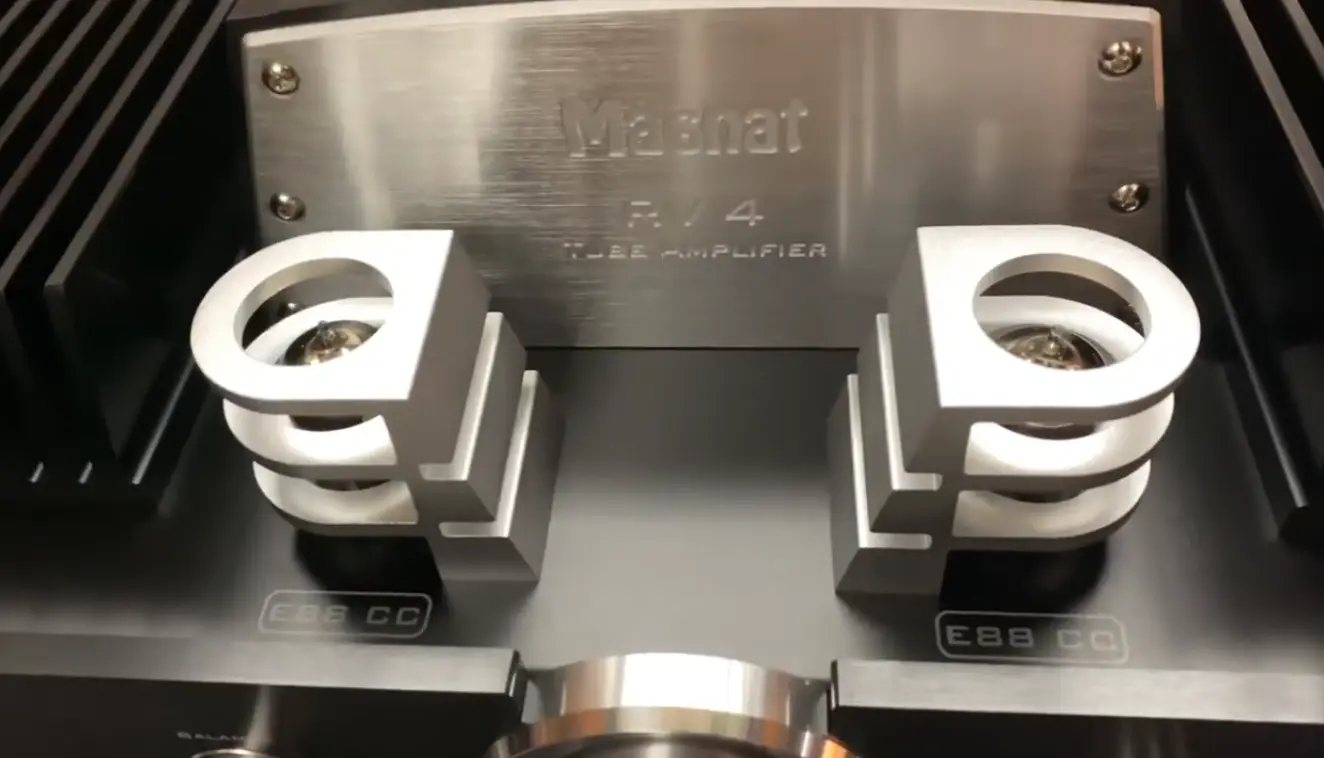
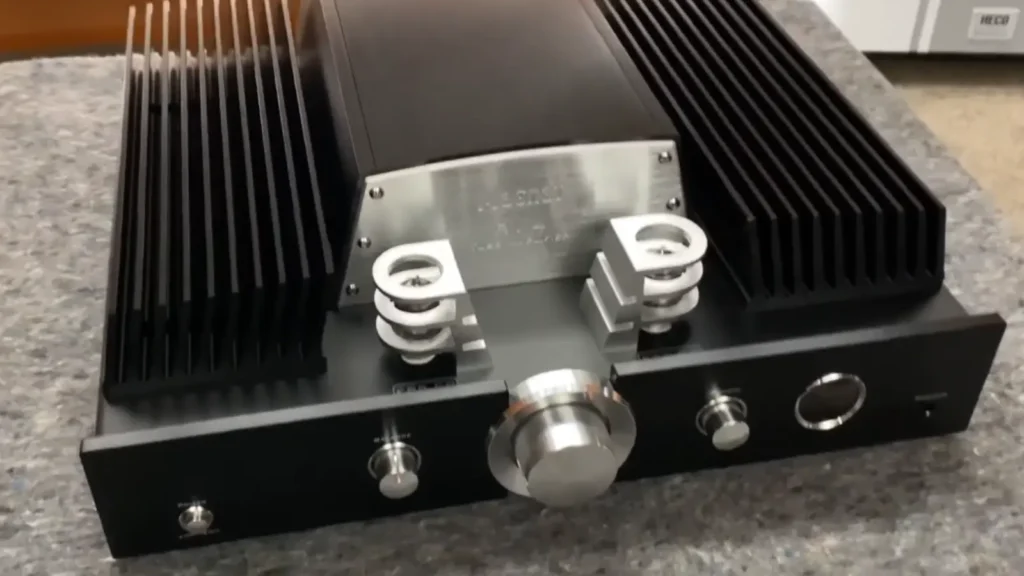
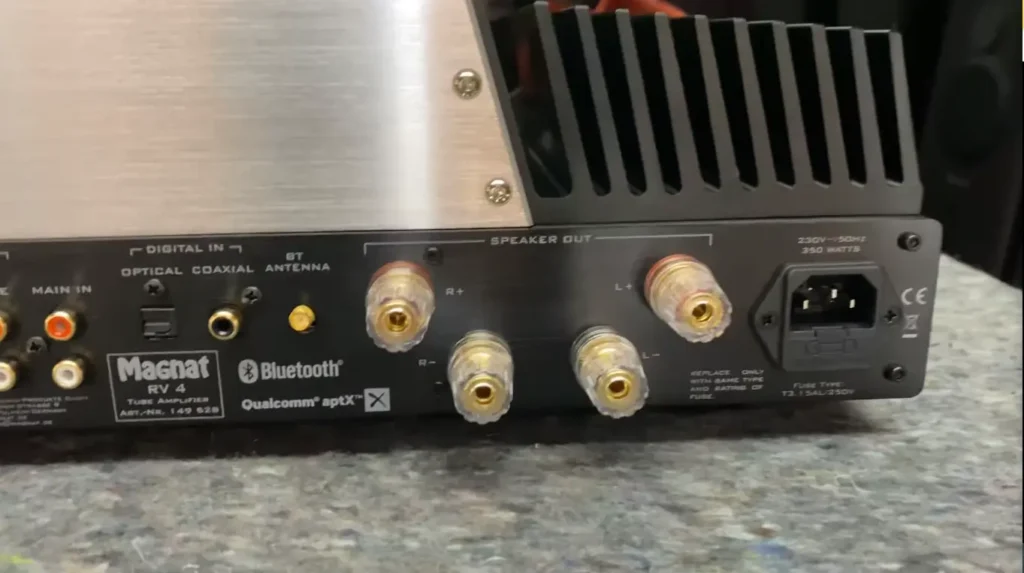
The debate between tube and transistor amplification has never truly been settled. Tube amplifiers are widely praised for their natural timbre and tonal warmth. Transistor amplifiers win on raw power, which most real-world loudspeakers still require. The hybrid approach splits the difference: tubes handle the preamp stage (where tonal character is shaped), and transistors manage the power stage. The Magnat RV4 follows this architecture, with E88CC tubes from Electro-Harmonix in the preamp and Sanken transistors driving the output.
Why Magnat Deliberately Reduced Power from 250W to 150W
This is the most counterintuitive decision in the RV4’s design — and the most important one to understand. The previous RV3 delivered 250 watts per channel, but Shandro Fischer, the engineer overseeing product development at Voxx (parent company of Magnat, Heco, and Oehlbach), found that the power supply couldn’t adequately support that output. The bass lacked substance. The fix was to reduce the transistor count and output power to 150 watts per channel — keeping the same power supply, but giving it less to strain against. In practice, 150W proved more than sufficient for every speaker I tested.
The Phono Stage: An Unexpected Highlight
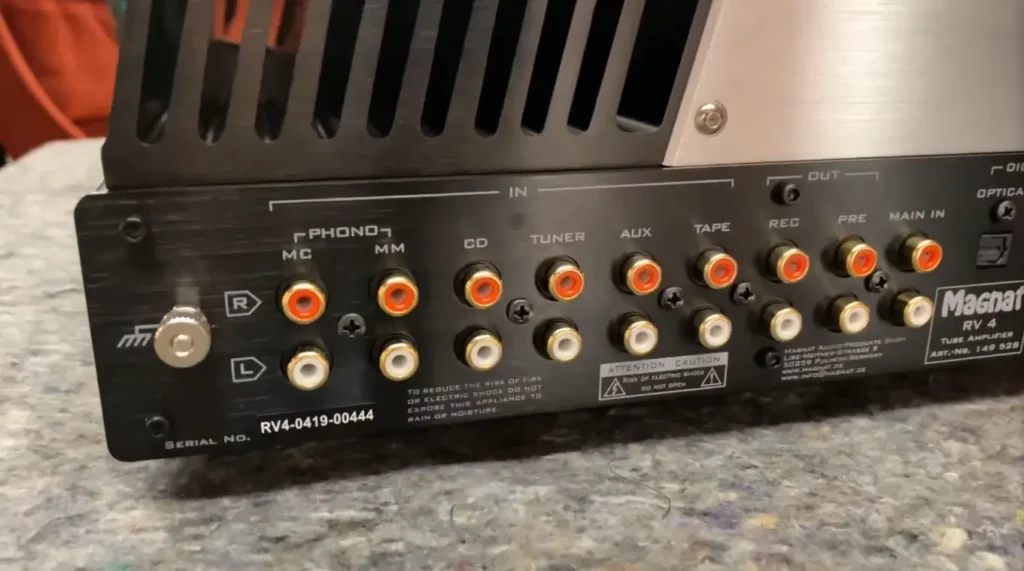
Most amplifiers in this price range offer one phono input, if any. The RV4 has two separate inputs for MM and MC cartridges, developed in collaboration with Walter Fuchs at Fink Audio Consulting, a specialist with deep roots in analogue circuit design. I tested it with three turntables in the €2,000 range (Elac Miracord 90, Rega Planar 6, Technics SL-1200GR), and each combination revealed genuinely distinct character. That kind of resolution from a phono stage is rare at this price.
Bluetooth That Actually Sounds Good
The RV4 uses Qualcomm’s aptX Bluetooth implementation. I was sceptical, Bluetooth claims are common, and the reality is usually disappointing. After several weeks of wireless playback from a computer source, I found it consistently clean and detailed. This is not a compromise feature bolted on for the brochure. It performs.
The Built-In DAC
Two digital inputs (coaxial and optical) feed a Burr-Brown DAC module capable of handling signals up to 24/192 kHz. That covers all practical high-resolution formats in common use.
How It Actually Sounds
The RV4 has a warm, composed character. Voices, particularly Tori Amos on Native Invader, had body and tonal richness that brighter amplifiers simply don’t deliver. Imaging remained spacious even at high volumes.
Against the Musical Fidelity M6si, the contrast is instructive. The M6si is a fully solid-state design delivering 220 watts per channel. It is faster, more neutral, and more clinical in its presentation. On demanding orchestral and rock material, it has a clear advantage in drive and control. But on voices, acoustic guitar, and jazz, the RV4’s hybrid character produced a more natural, relaxed tone that was consistently easier to listen to over long sessions. If you are deciding between the two, the M6si rewards listeners who want precision and power; the RV4 rewards those who want warmth and long-term musical satisfaction.
Against the Exposure 3010 S2D (earthier, punchier), it was a closer call — the Exposure felt more kinetic on orchestral and rock material, while the RV4 retained better tonal warmth on strings and voices.
One honest caveat: the RV4’s character can work against it with very laid-back loudspeakers. The Dynaudio Excite X18 pairing felt slightly too subdued. The better matches were the Magnat Quantum 720 series and the Heco Direkt Zweiklang, where the amplifier’s calm authority complemented a speaker with genuine dynamic range.
Who Should Buy the Magnat RV4?
The RV4 is the right choice if you prioritise long-term listening comfort in an undamped room, have a turntable and want a serious phono stage, or simply want a single component that handles analogue, digital, and wireless inputs without compromise. If outright power and neutrality are your priority, the Musical Fidelity M6si is a strong alternative worth reading about. But for the overall package at this price, hybrid topology, dual phono inputs, capable DAC, and genuinely usable Bluetooth — the RV4 is difficult to beat.
Magnat RV4 Specifications
- Type: Hybrid integrated amplifier (tube preamp/transistor power amp)
- Output power: 2 × 150W RMS (4Ω) / 2 × 110W RMS (8Ω)
- Peak power: 500W total
- Tubes: 2 × E88CC (Electro-Harmonix, Russian, SQ military grade)
- Power transistors: Sanken (Japan)
- Frequency response: 8Hz – 110,000Hz (−3dB) / 20Hz – 20,000Hz (±0.1dB)
- Signal-to-noise ratio: 110dB (line inputs)
- Volume control: Motorised ALPS potentiometer (Japan)