KEF LS50 Wireless II + KC62 Review: Big Sound from a Compact Package
Few speakers in modern hi-fi have built a legacy as strong as the KEF LS50. For more than a decade, the LS50 and the wireless family inspired by it have shaped what audiophiles expect from compact monitors. With the second generation of the LS50 Wireless, KEF didn’t just fine-tune an icon—they evolved it into a remarkably mature system that feels complete, confident, and surprisingly grown-up.
And yet, as I sat down with the LS50 Wireless II and the brand-new KC62 mini-subwoofer, something unexpected happened. I didn’t just admire the engineering; I felt the system disappear into the room. The sound opened into a full, rewarding landscape that I simply didn’t associate with speakers this small. But as magical as the combination is, two small annoyances reminded me that even brilliant products leave room for refinement.
Check Out: Klipsch Reference Premier RP-8000F II Review
A Short Leap Back in Time
Most hi-fi fans already know the story of the LS50, but revisiting its roots makes the LS50 Wireless II even more impressive. When KEF released the anniversary model in 2012, it wasn’t supposed to be the juggernaut it became. A compact, low-resonance cabinet, a single Uni-Q coaxial driver, and a price point around €1,000—this was KEF showcasing its engineering, not predicting a cultural phenomenon.
But the LS50 hit a nerve. Its uncanny imaging, holographic stage, and almost point-source precision won over reviewers and enthusiasts worldwide. It was the rare speaker that looked modern, sounded expensive, and felt like a piece of industrial art.
Naturally, KEF expanded the universe. The first LS50 Wireless arrived in 2017, bringing DSP, streaming, and purpose-built amplification. The LSX followed shortly after, essentially a playful mini-LS50. But KEF didn’t circle back to the passive LS50 until 2020, when they introduced the LS50 Meta—equipped with something groundbreaking: metamaterial absorption technology. That same MAT technology now sits at the heart of the LS50 Wireless II.
Where the Original Wireless Succeeded — and Where It Annoyed
The first LS50 Wireless was a breath of fresh air but not without issues: spotty wireless stability, an underwhelming app, slow responsiveness, and very limited streaming support. Anyone who lived with it learned to forgive it—but forgiveness is different from satisfaction.
This is why the LS50 Wireless II feels like KEF’s redemption arc.
The LS50 Wireless II: Familiar Shape, Dramatically More Mature
KEF kept the visual DNA intact: the compact, sculpted cabinet, the signature Uni-Q driver, and now a set of soft matte finishes that give the speakers a cleaner, more modern presence. They look like art, but they behave like serious hi-fi equipment.
Each speaker houses separate amplifiers for the tweeter and mid-bass driver, combining for 380 watts per cabinet. Streaming support has gone from “limited” to “exhaustive”—Qobuz, Tidal, Deezer, Spotify, Apple Music, Amazon, and more. Chromecast, AirPlay 2, UPnP, Roon Ready—everything is here, and everything works cleanly.
The new KEF Connect app is the biggest transformation. This time, the app feels like a genuine part of the product, not an afterthought. Setup is quick, firmware updates are smooth, and source switching is painless.
There are still annoyances, of course. The lack of a front display means volume level is guesswork unless you’re staring directly at the master unit. The IR remote cycles through sources blindly. Web radio still can’t be paused or resumed from the remote. But usability as a whole has taken a huge step forward.
MAT Technology and the New Uni-Q: Why It Matters
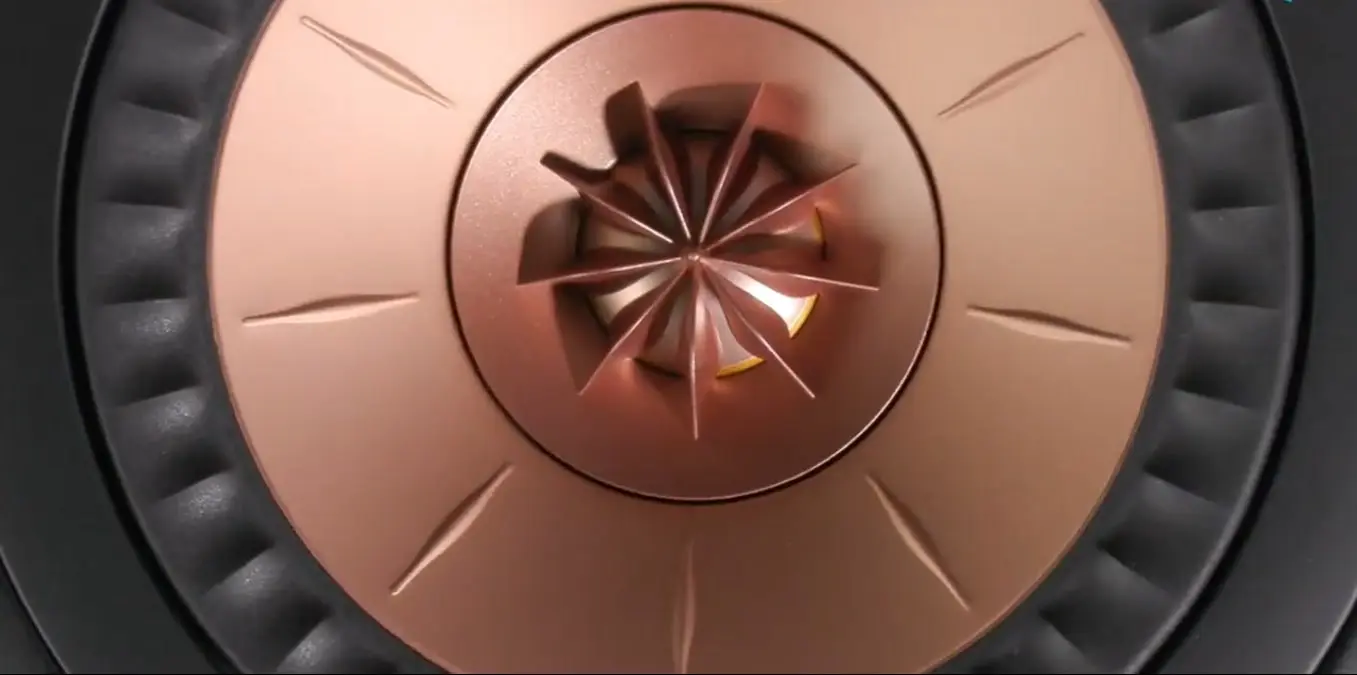
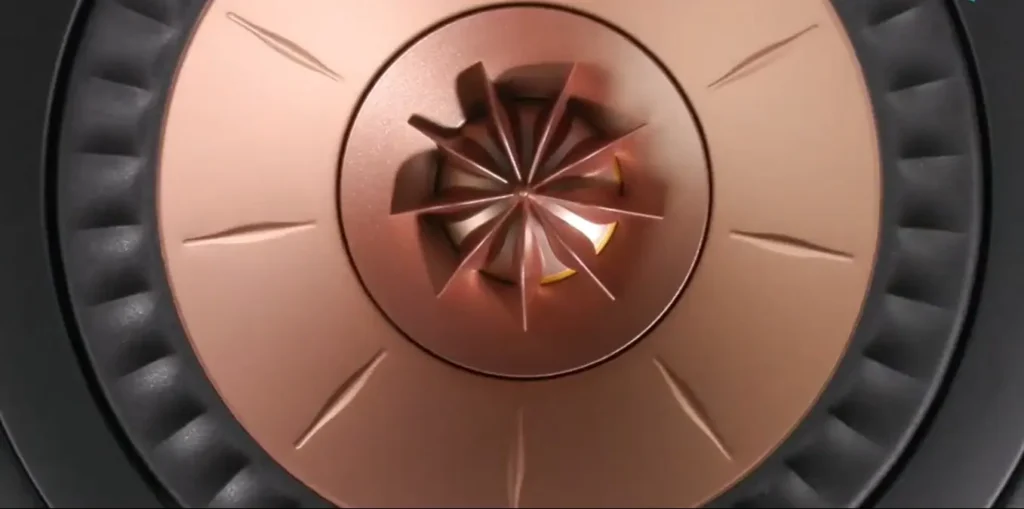
The 12th-gen Uni-Q driver is not just a revision—it’s a rethinking. MAT (metamaterial absorption technology) is essentially a precision-cut acoustic labyrinth placed behind the tweeter, each channel tuned to absorb specific frequencies. When you hear the speaker, what stands out most is lack of high-frequency haze. Cymbals are cleaner, transients sharper, and low-level detail more intelligible.
It feels like someone wiped a thin film off the tweeter dome.
KEF Adds HDMI eARC — And This Changes Everything
The removal of the USB input surprised me at first, but the addition of an HDMI eARC port is a major win. Suddenly, the LS50 Wireless II becomes a true TV sound system: volume via the TV remote, power syncing, and zero fuss. For anyone living in a modern apartment or studio, this alone elevates the LS50 Wireless II from “speaker system” to “multimedia hub.”
You may like: Wharfedale Elysian 4 Review
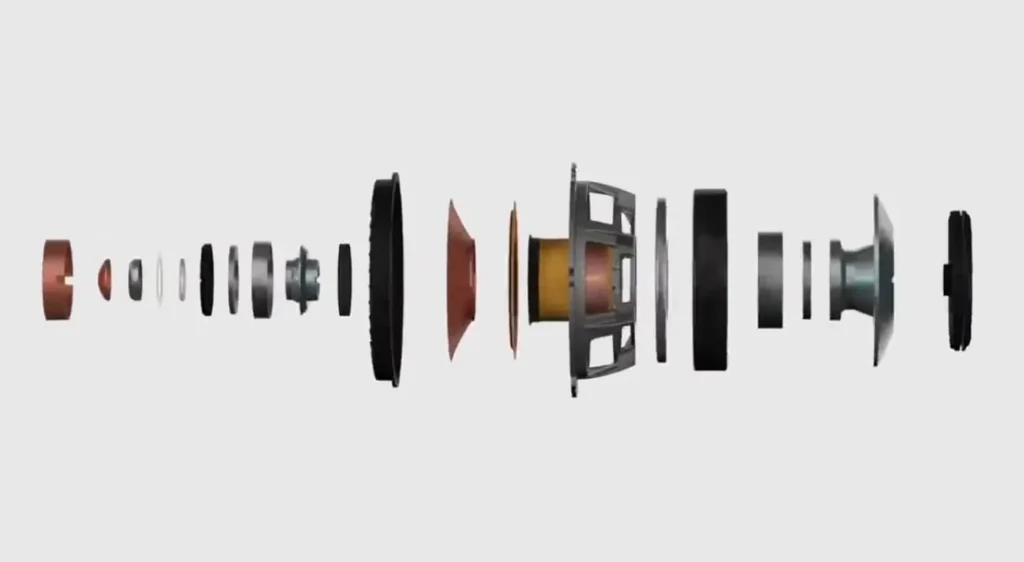
Enter the Miniature Monster: KEF KC62 Subwoofer
Subwoofers rarely excite me—most are big, heavy cubes that rattle your floorboards and dominate your living room. But the KC62 feels like a magic trick. It’s about the size of a football, weighs 14 kg, and claims low-frequency extension down to 11 Hz. Yes—11.
KEF achieves this through its Uni-Core force-cancelling system: two drivers mounted back-to-back sharing a single magnet assembly with overlapping voice coils. It’s wildly clever and wildly effective.
Inside the sealed aluminum enclosure, KEF’s P-Flex origami surround and Smart Distortion Control DSP work together to deliver bass that feels impossibly deep for something so small.
In small rooms where full-size subwoofers are overkill—or simply don’t fit—the KC62 is an absolute gift.
Real-World Listening: Sunshine With a Few Clouds
Setting up the LS50 Wireless II with the KC62 is straightforward. The KEF Connect app even includes presets for KEF subwoofers, automatically establishing optimal crossover points. With the KC62 preset, the speakers gently fade at 70 Hz while the sub picks up at 45 Hz—leaving just enough overlap to ensure a natural handoff.
Wireless between master and slave works, but I found the wired connection more stable. My wireless slave dropped connection a few times—never dramatically, but enough to remind me that a single cable remains the safer choice.
WiFi setup worked perfectly once I moved from the 5 GHz band to 2.4 GHz. Again, the LS50 Wireless II performs best when treated like a demanding hi-fi component, not a Bluetooth speaker.
The KC62 itself has two quirks. It can be slow to wake at low listening levels, and it emits a faint hum—slightly more noticeable when using the wireless KW1 adapter instead of a wired LFE cable. In fairness, once music is playing, you won’t hear it. But it’s there during silence.
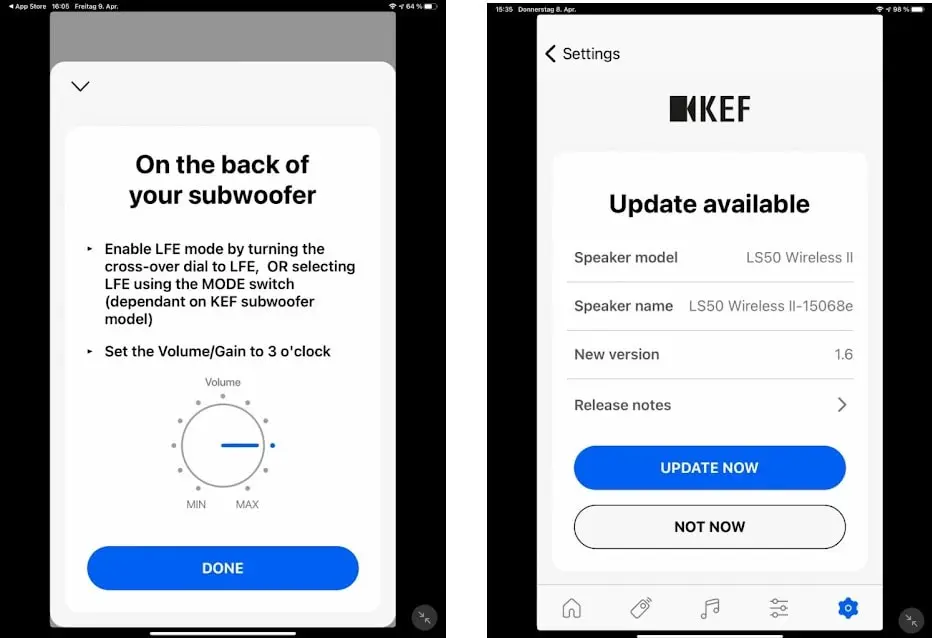
Listening Impressions: The LS50 Has Never Sounded This Complete
The LS50 Wireless II retains everything that made its predecessors famous: holographic imaging, pinpoint precision, and a soundstage that feels bigger than the cabinets have any right to produce. What has changed is the sense of refinement. The treble is cleaner. The dynamics breathe more freely. With a slight 0.75 dB lift in Treble Trim, the balance in my room became absolutely addictive.
Add the KC62, and the entire system shifts into another league. In my 20 m² listening room, the bass extended effortlessly, cleanly, and with real authority—never loose, never boomy, and never calling attention to itself. It simply allowed the LS50 Wireless II to behave like a full-range loudspeaker.
With music, the combo is stunning. With movies, it becomes shockingly capable—so long as you aren’t trying to recreate an IMAX cinema. Explosions, storms, rumbles—the KC62 handles them with texture, not just force.
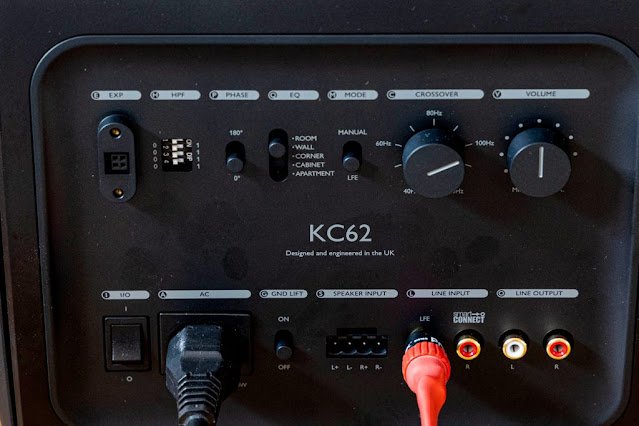
The Final Word
KEF has taken the spirit of the LS50 concept and pushed it into a place that feels complete. The LS50 Wireless II is no longer just a pair of pretty speakers with good imaging. It’s a mature hi-fi system, a multimedia hub, and an audiophile’s “set-and-forget” dream in compact form.
Paired with the KC62, the system becomes something far more impressive than the sum of its parts: deep, controlled, articulate, room-filling—and capable of disappearing the moment the music begins.
Yes, there are small annoyances. The sub’s auto-wake sensitivity, the faint hum, the imperfect remote control ergonomics. But none of these prevent the system from being one of the most refined, elegant, and musically satisfying compact hi-fi solutions available today.
If you want a system that fits anywhere, looks incredible, streams everything, and plays music with real soul and scale, the LS50 Wireless II with the KC62 is as close to a perfect small-room system as modern hi-fi has produced.
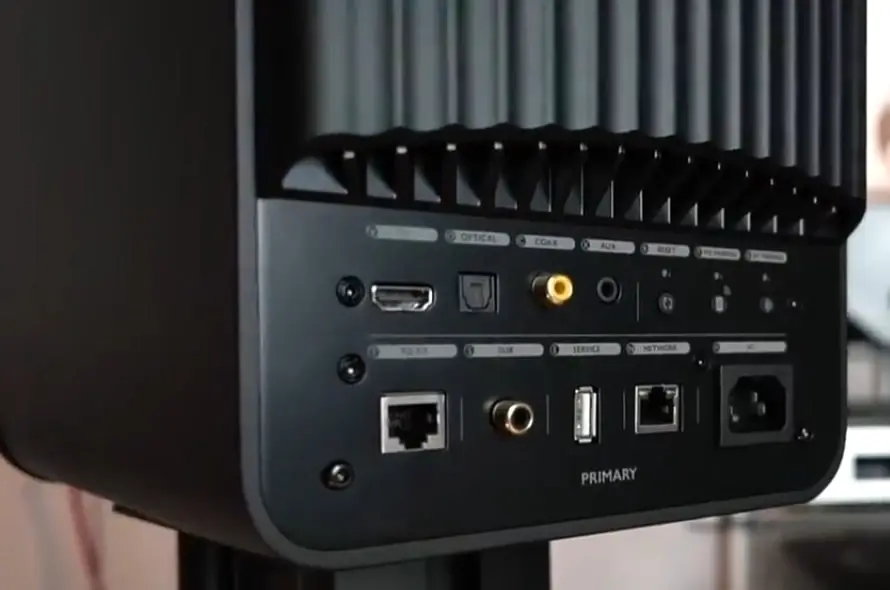
Pros And Cons
Pros
- Excellent imaging and soundstage
- streaming and connectivity support (Roon, AirPlay, Chromecast, HDMI-eARC, etc.)
- Powerful, detailed, and clean sound with strong bass when using with KC62
- KC62 achieves deep, room-filling bass despite its small size
Cons
- KC62’s automatic wake-up can be unreliable at low listening levels
- Subwoofer emits a slight hum when idle (though inaudible during playback)
- Remote/app has minor usability limitations, no volume display
KEF LS50 Wireless II Specifications
- Drive Units: Uni-Q array — 130 mm aluminium cone (LF); 25 mm vented aluminium dome (HF) with Metamaterial Absorption Technology
- Frequency Response (±3 dB): 45 Hz – 28 kHz (measured at 85 dB / 1m)
- Frequency Range (-6 dB): 40 Hz – 47 kHz (depending on EQ)
- Amplifier Power (per speaker): 280 W for LF (Class D), 100 W for HF (Class AB)
- Maximum Sound Pressure Level (SPL) at 1 m: ~108 dB
- Supported Streaming / Wireless: AirPlay 2, Google Chromecast, ROON Ready, UPnP, Bluetooth
- Supported File Formats: MP3, AAC, FLAC, WAV, AIFF, ALAC, WMA, Ogg Vorbis; Additional via network: MQA, DSD
- Source Resolution: Network up to 384 kHz / 24-bit; Coaxial up to 192 kHz / 24-bit; HDMI up to 192 kHz / 24-bit
- Inputs: HDMI eARC, Optical, Coaxial, 3.5 mm analog, Ethernet (network & interspeaker)
- Subwoofer Output: RCA
- Dimensions (per speaker): 305 × 200 × 311 mm
- Weight (pair): ~20.1 kg
- Power Input / Consumption: 100–240 V AC; ~200 W operating, <2 W standby
KEF KC62 Subwoofer Specifications
- Design: Uni-Core Force-Cancellation (two back-to-back drivers)
- Drive Units: 2 × 6.5″ woofers
- Frequency Response (±3 dB): 11 Hz – 200 Hz
- Maximum Output: 105 dB
- Amplifier: Built-in Class D, 1000 W RMS (2 × 500 W)
- Variable Low-Pass Filter: 40 Hz – 140 Hz (LFE)
- Line Output (High-Pass): RCA phono, 40 Hz–120 Hz or bypass
- Inputs: RCA (LFE) and speaker-level inputs
- Power Requirement: 100 – 240 V AC
- Dimensions (H × W × D): 246 × 256 × 248 mm
- Weight: ~14 kg