
B&W CM10 Review: Better Than the CM9? Why It’s Still Worth It
Bowers & Wilkins CM10 isn’t just a CM9 upgrade; it’s like having a slice of the 800 Series in your own room. From its decoupled tweeter to the triple-woofer design, it delivers transparency, control, and an effortless sense of scale that makes every track feel alive.
Something very deliberate happened when Bowers & Wilkins introduced the CM10. This wasn’t just an update to the well-regarded CM9—it was a quiet but meaningful step toward the company’s flagship philosophy. Without fanfare or bold marketing slogans, the CM10 subtly pulled the CM range closer to the revered 800 Series, borrowing not only technology but also design intent.
Check Out: Bowers & Wilkins 606 S2 Anniversary Edition Review: A Celebration of Sound
The result is a speaker that looks familiar at first glance, yet reveals its ambition the longer you live with it.

Design Philosophy: A Clear Nod to the 800 Series
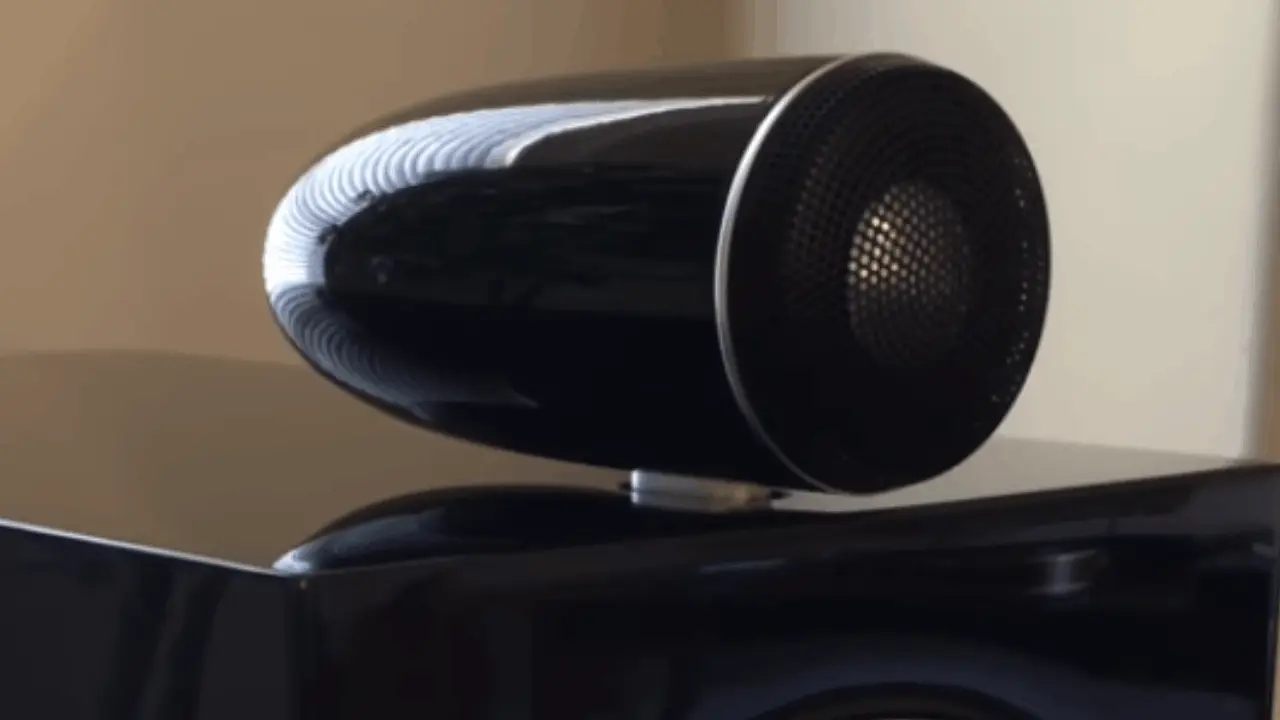
The most obvious sign of this shift is impossible to miss: the externally mounted, top-firing tweeter. Previously reserved for Bowers & Wilkins’ flagship models, this design choice alone signals a change in direction. Place the CM10 beside the CM9, and the evolution becomes clear—not only is the tweeter now isolated in its own enclosure, but the entire front baffle has been rethought.
Relocating the tweeter freed up valuable real estate on the front panel, allowing Bowers & Wilkins to add a third woofer. Despite this, the cabinet proportions remain elegant and familiar, with only a modest increase in depth. This adjustment wasn’t cosmetic—it allowed the low-frequency system to reach deeper and, more importantly, to move more air. The CM10 is clearly intended for larger listening rooms, offering higher sound pressure levels without strain.
Finish Options and Practical Design Choices
Bowers & Wilkins has always understood that loudspeakers are part of the living space, not just audio tools. The CM10 reflects this with a generous selection of finishes: rose walnut or wenge veneer sit alongside classic black and white piano lacquer. Integration into almost any interior is effortless.
The substantially lower plinth may divide opinion. Its purpose is not acoustic tuning but improved stability, increased cabinet mass, and additional vibration isolation. Technically, the speaker can operate without it, though doing so is very much at the user’s own discretion. Any deviation from the factory configuration naturally carries consequences—and responsibility.

Low-Frequency Design: More Than Meets the Eye
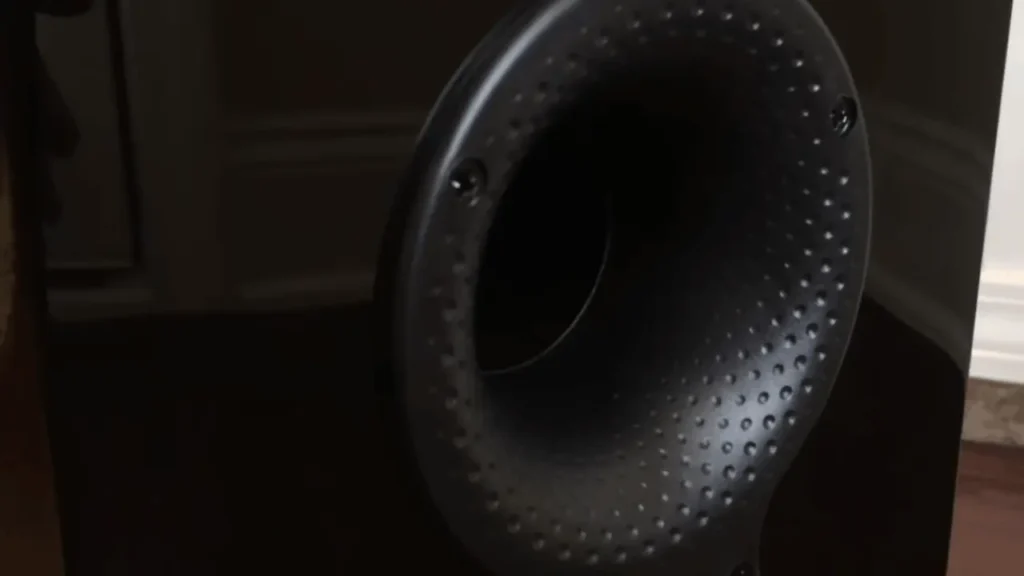
At the rear, Bowers & Wilkins’ proprietary Flowport bass reflex system handles low-frequency loading. All three woofers share a single acoustic volume, operating from approximately 28 Hz at –6 dB, while the official rated frequency response is 45–26,000 Hz at –3 dB.
The woofer cones themselves are deceptively sophisticated. They employ a dual-layer construction, combining a rigid Kevlar core with a paper surface layer. This pairing balances stiffness and low mass with a more natural tonal character—resulting in a bass that is not only powerful, but articulate and expressive.
Midrange Excellence: The Heart of the CM10
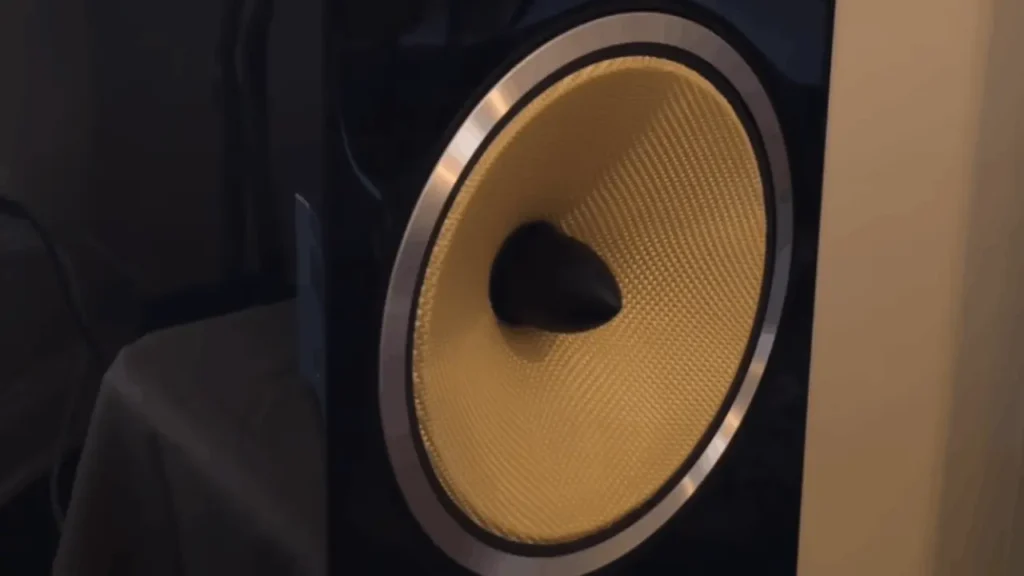
The midrange driver is instantly recognizable by its unmistakable yellow Kevlar cone. Measuring 150 mm in diameter, it uses Bowers & Wilkins’ FST (Fixed Suspension Transducer) foam surround. Unlike a traditional rubber surround, FST allows controlled cone movement while providing superior damping at the perimeter, reducing unwanted resonances.
You May Like: How I Finally Experienced a True Concert in My Living Room, Thanks to Klipsch
The driver is housed in an open-architecture cast aluminum basket designed to eliminate compression and internal reflections. More impressively, it is almost completely isolated from the cabinet. Mounted externally through a precision-machined aperture and anchored by a long rear pin, the driver avoids direct mechanical contact with the enclosure. Carefully placed damping materials at both mounting points prevent vibrational energy from feeding back into the cabinet structure.
During shipping, special locking screws secure the driver for transport. Once removed, the difference in sound—with and without full isolation—is clearly audible.
Tweeter Technology: Precision Without Compromise
The tweeter receives similar treatment. Once the shipping restraints are removed, it effectively floats on vibration-absorbing material within its own streamlined enclosure. This design dramatically reduces diffraction, as sound waves are no longer reflected off a flat front baffle. What reaches the listener is the tweeter’s output alone—clean, focused, and uncolored.
The tweeter itself is a 25 mm dual-layer aluminum dome, reinforced for higher rigidity and paired with a Nautilus-style tapered tube behind it. This configuration absorbs rear radiation during the dome’s return stroke, reducing distortion and extending usable bandwidth to an impressive 50 kHz at –6 dB.
Crossover Design: Less Really Is More
True to Bowers & Wilkins’ engineering philosophy, the drivers are designed to operate cleanly within their natural ranges, minimizing the need for aggressive crossover correction. As a result, the crossover network is remarkably simple and highly transparent.
In the tweeter section, this simplicity is taken to the extreme—effectively relying on a single high-quality capacitor, its value fine-tuned by ear during final voicing. The goal is minimal interference between the amplifier and the drivers, preserving signal integrity.
Installation: Not Just Plug and Play
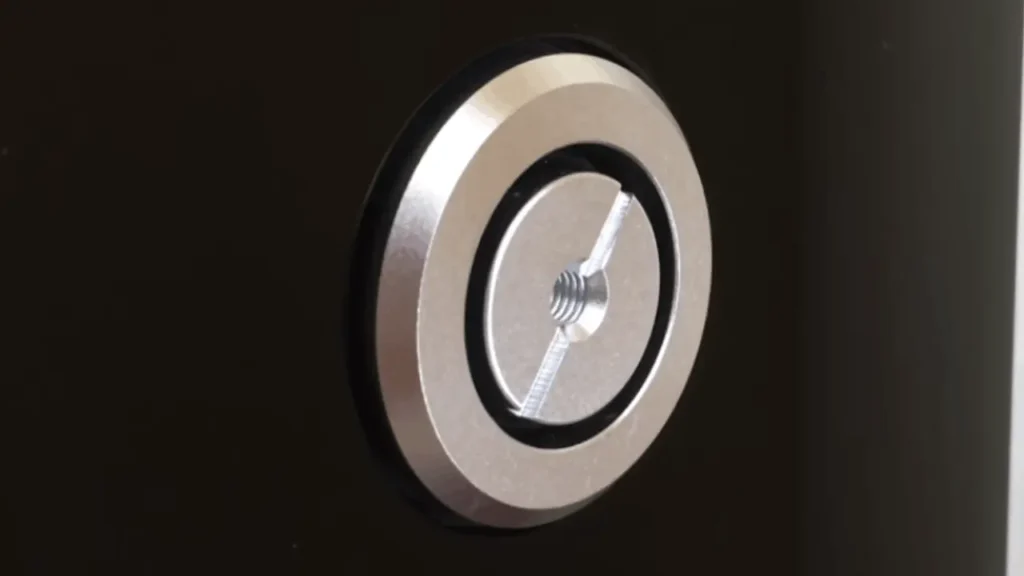
Installing the CM10 requires more attention than simply connecting speaker cables. Both the midrange driver and tweeter are secured with shipping brackets that must be removed before listening. Skipping this step significantly compromises performance, so careful reading of the manual is essential.
Listening Impressions: Transparency Above All
Every technical decision in the CM10—materials, isolation, cabinet mass—serves one goal: reducing distortion to an absolute minimum. And that intention is immediately audible.
The sound is strikingly transparent, particularly through the upper midrange and treble. When the listening position is aligned with the tweeters, the stereo image snaps into focus with remarkable precision. Spatial cues, air, and ambient detail are rendered effortlessly.
The midrange is clean, articulate, and tonally accurate. Timbres are clearly differentiated, and micro-details emerge naturally rather than being pushed forward. The lower midrange carries more density and weight than the upper midrange, lending body to vocals and fundamental tones without sounding thick or slow.
Bass performance is equally impressive. Despite its depth and authority, it remains controlled and free of coloration. There is no sense of overhang or exaggeration—just solid, well-defined low frequencies that support the music rather than dominate it.
Dynamics, Amplification, and Musical Versatility
The CM10’s high resolution and dynamic capability demand serious amplification. While sensitivity is rated at 90 dB (with a measured value of 89.16 dB at 1 kHz), the impedance curve includes notable dips, reaching a minimum of 3.36 ohms. Powerful, high-quality amplification is not optional—it’s essential.
When properly driven, the reward is exceptional. Classical recordings shine, with dramatic, dynamic swings unfolding against a backdrop of deep, silent pauses. At the same time, the CM10 handles virtually every genre with confidence. The only real limitation is recording quality—the speaker is as unforgiving of flaws as it is revealing of excellence.

Final Verdict: A Speaker for the Purist
The Bowers & Wilkins CM10 is not designed to impress with exaggerated bass or artificial sparkle. Instead, it offers purity, focus, and precision, bringing elements of the legendary 800 Series into a more accessible—but still uncompromising—package.
For listeners who value transparency, natural timbre, and honest reproduction above all else, the CM10 remains a compelling and deeply satisfying loudspeaker.
Bowers & Wilkins CM10 Specifications
- Frequency response: 45–26,000 Hz (–/3 dB)
- Configuration: 3-way
- Crossover frequency: 350 Hz, 4000 Hz
- HF driver: 25 mm, dual-layer aluminum dome
- Midrange driver: 150 mm, woven Kevlar cone
- Woofer: 3x 165mm, woven Kevlar cone
- Acoustic design of the low frequencies: bass reflex
- Sensitivity: 90 dB
- Impedance: 8 Ohms
- Nominal power: 30-300 W
- Dimensions: 1087x366x414 mm
- Weight: 33.5 kg