
Why These $1,600 Floorstanding Speakers Feel Expensive: My MartinLogan Motion Foundation F1 Review
Quick Verdict: The MartinLogan Motion Foundation F1 ($1,500/pair) is a high-speed, 5-driver floorstander that successfully trickles down the flagship Gen2 Obsidian AMT tweeter. It offers an airy, detailed soundstage and innovative Floor Bounce Compensation, making it a premier “entry-level reference” for listeners seeking electrostatic clarity in a traditional cabinet.
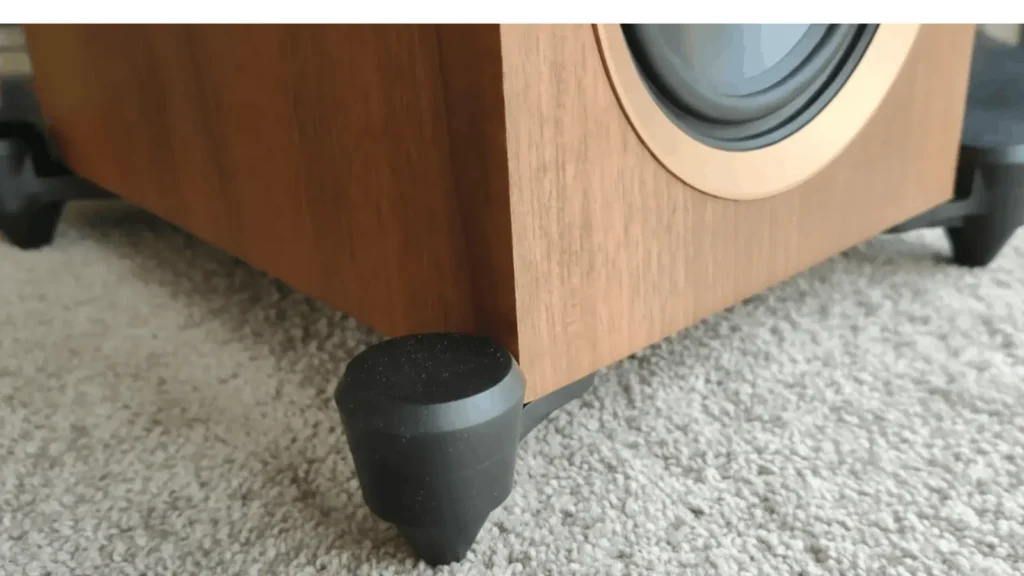
I’ve spent considerable time with the MartinLogan Motion Foundation F1, and one thought kept running through my mind: why can’t more budget-friendly speakers feel this satisfying? The capacitors, the drivers, even the spikes feel carefully crafted, but the sound still manages to surprise. The Motion Foundation F1 aims to bring listeners closer to the iconic MartinLogan electrostatic sound at a far lower price point.

Design & Build: Classic Looks with Modern Touches
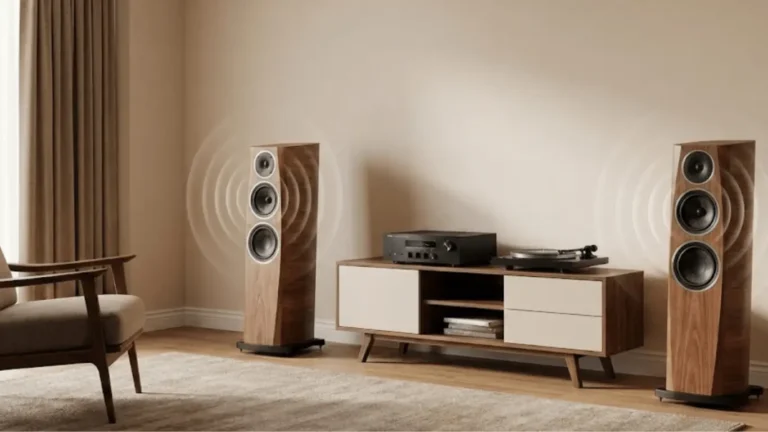
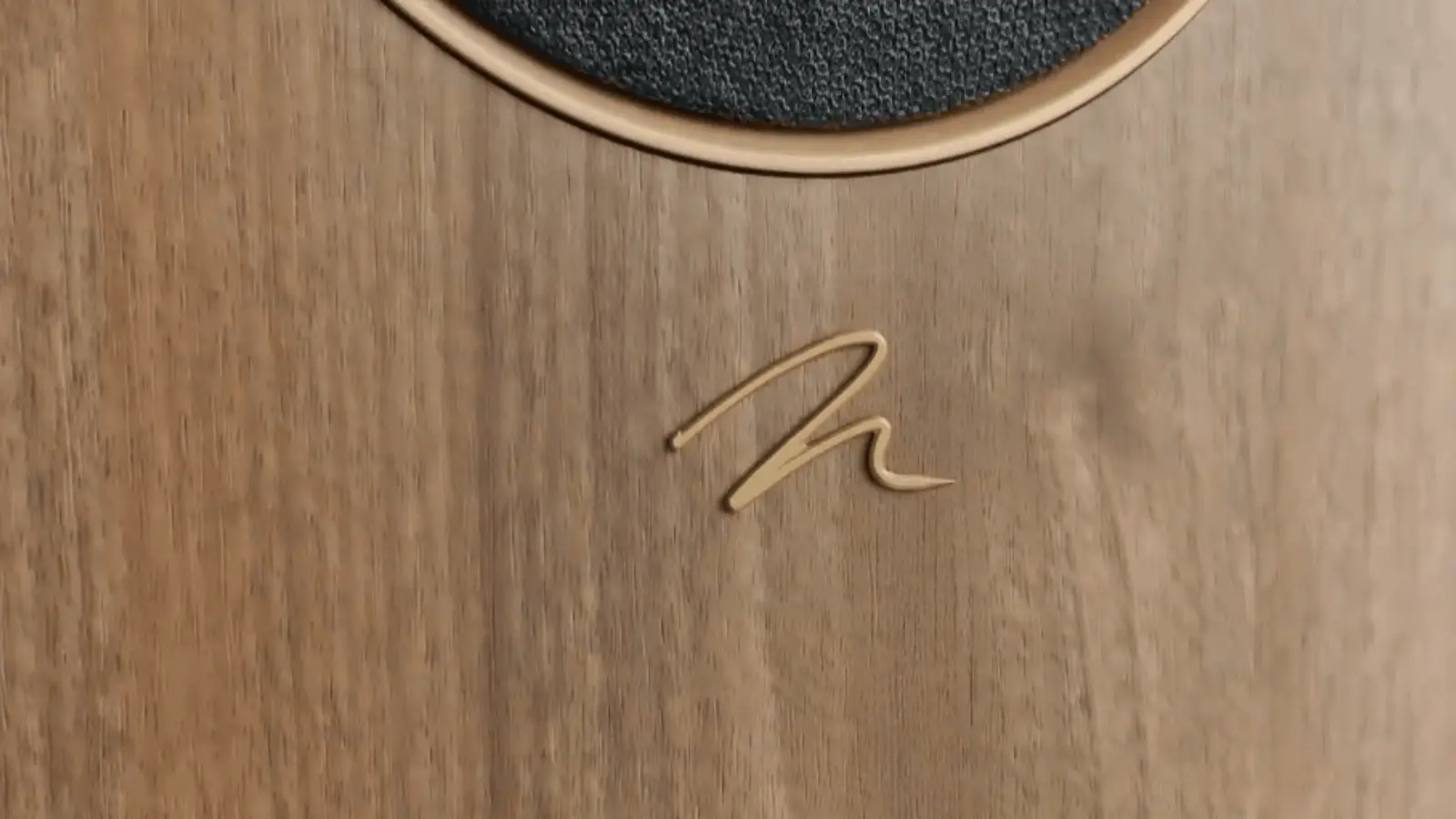
At first glance, the F1s are elegant and understated. They retain the pillar-style silhouette, with subtle offsets and a finish that feels high-end without being flashy. Available in satin white, matte black, and walnut, these speakers fit modern interiors or classic setups alike.
The attention to detail is clear: hidden fasteners, carefully shaped surrounds, and precision placement of the tweeter all contribute to the signature MartinLogan aesthetic.
Internal Technology: Proprietary Innovations
The Motion Foundation F1 is more than a pretty face. Behind the cabinet, several innovative technologies allow this speaker to punch above its weight.
Check Out: I Thought I Knew Klipsch: Then I Reviewed the Klipsch RP-6000F II
1. Unibody Aluminum Drivers & Motor Structure
All woofers and the midrange feature a concave, rigid aluminum cone. While the exterior is all elegance, the internals reveal where the real engineering happens.

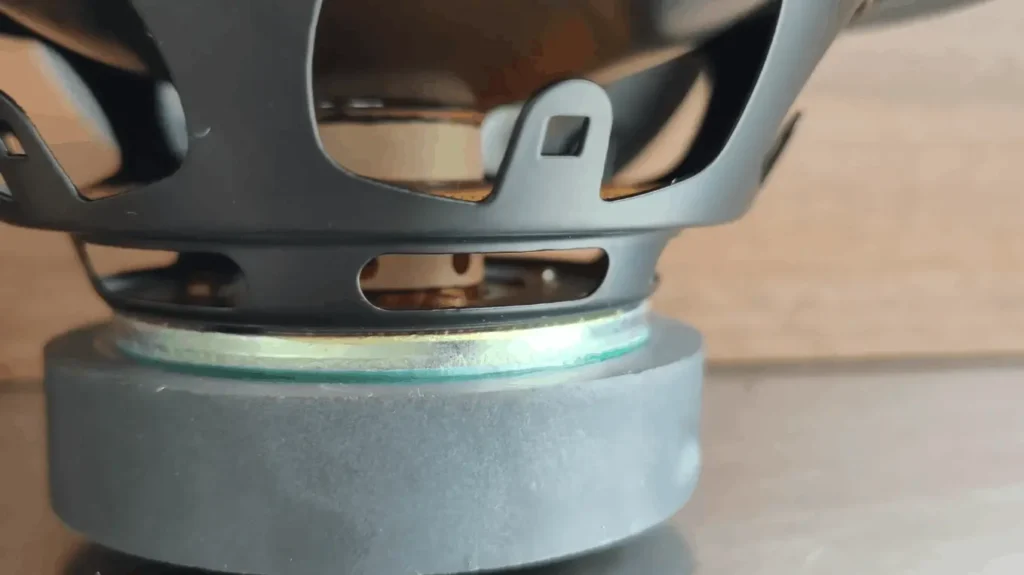
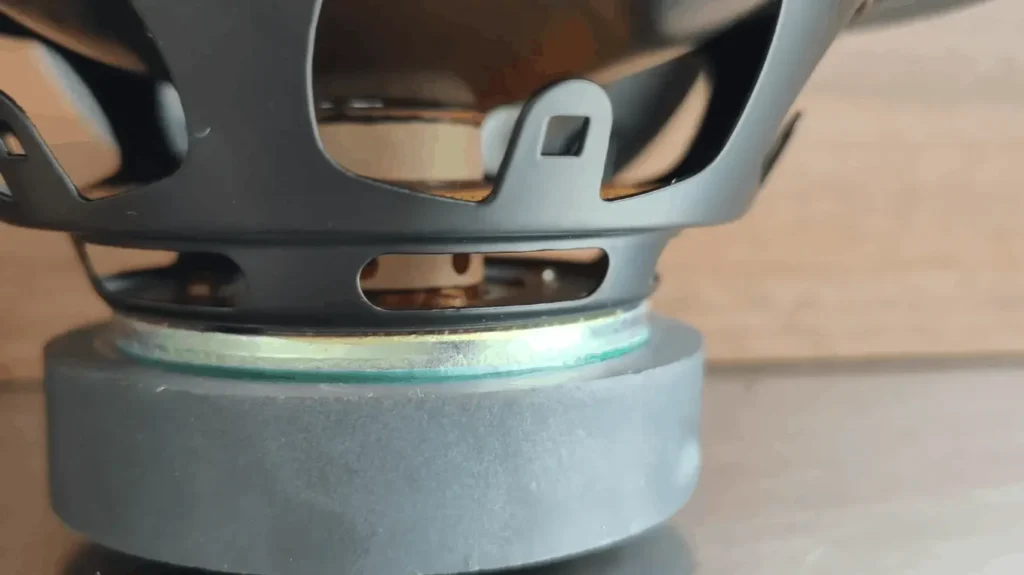
Technical Teardown: Looking at the side profile of the 5.5-inch driver, you can see a robust stamped steel basket and a substantial ferrite magnet motor. While higher-end MartinLogan lines use cast aluminum, this stamped steel implementation is exceptionally rigid for the Foundation price point.
Macro Detail: This close-up reveals the high-quality fabric spider and a vented voice coil structure. This venting is critical for thermal management, allowing the speaker to maintain its “punch and speed” during heavy dynamic swings without distortion.
2. Cabinet Construction & Damping
The “holographic” soundstage doesn’t just come from the drivers; it’s a result of how the cabinet handles internal energy.
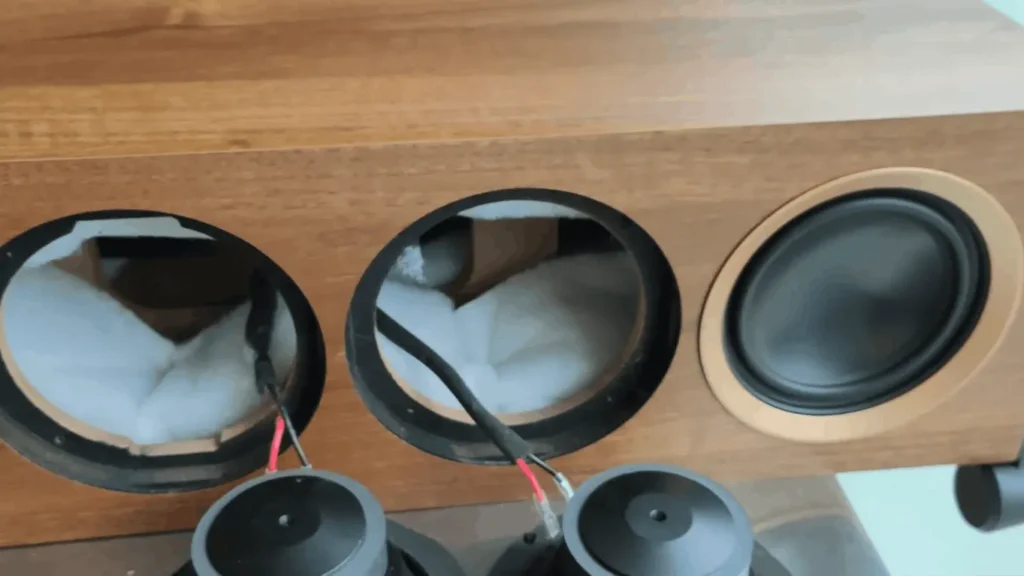
Inside the Enclosure: Peeking inside the cabinet reveals a generous use of white polyfill damping material. This is strategically placed to minimize internal standing waves and cabinet “honk.” You can also see the internal MDF bracing, which ensures the cabinet remains inert while the aluminum cones do their work.
3. AMT Folded Motion Tweeter
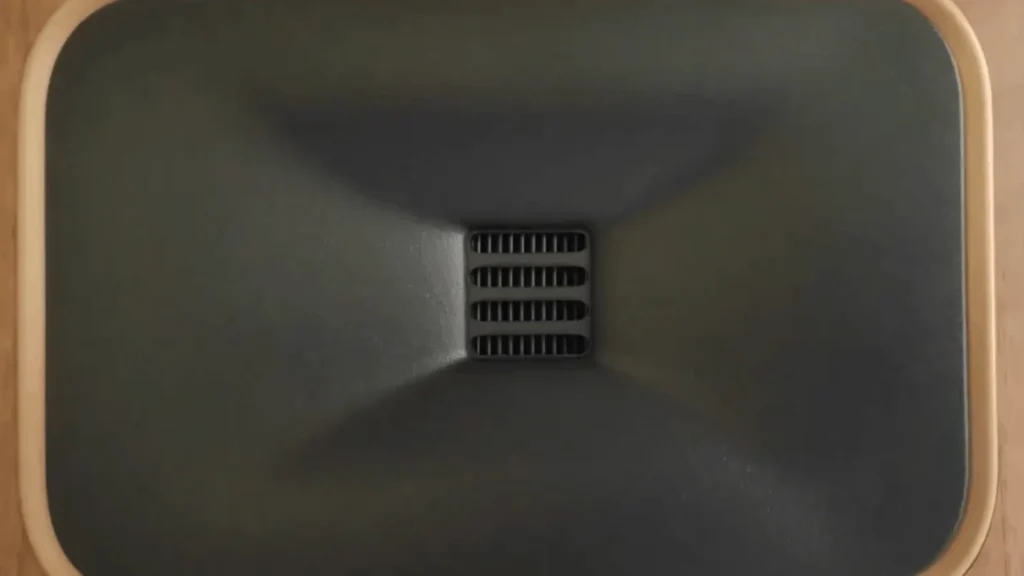
The 2.4 × 2.5 cm Gen2 Obsidian Folded Motion S tweeter is paired with a rectangular waveguide. The result: open, airy highs that capture the “spirit” of an electrostatic panel.
4. Floor Bounce Compensation & McCracken-Vojtko Crossover
By placing one woofer near the floor, MartinLogan uses early reflections to reinforce bass naturally. The phase-linear crossover divides the sound at 240 Hz and 3,700 Hz, ensuring all five drivers act as a single, focused musical unit.
Listening Experience: Versatility Across Genres
I evaluated the F1s using the Fezz Audio Torus 5060 (solid-state) and the Fezz Audio Alfa Lupi EVO (tube amp).
- Punch & Bass: Cheap Trick’s “Bad Blood” demonstrated surprisingly tight, subtle bass. Each guitar echo was distinct without ever overwhelming the mix.
- Vocals & Highs: Ella Fitzgerald’s “Clap Hands, Here Comes Charlie!” showcased the tweeter’s transparency. The F1 does not exaggerate; it reveals the recording honestly.
- Electronic Textures: RXEX’s “Phaze Thief” highlighted the F1’s ability to render complex phase relationships. Electronic effects remained coherent, with phantom imaging that gave the music incredible depth.
Price & Availability (2026 Update)
- U.S.: ~$1,500–$1,700 from authorized dealers
- U.K.: ~£1,200–£1,400 (~$1,500–$1,700)
- Bundle options: Available with subwoofers or center channels for small home cinema setups
These speakers are priced for budget-conscious audiophiles seeking reference-style clarity without paying flagship prices.
2026 Comparison: The Competitive Landscape
| Feature | MartinLogan F1 | KEF Q7 Meta | SVS Prime Pinnacle |
| Tweeter Tech | Gen2 Obsidian AMT | MAT™ Technology | Aluminum Dome |
| Sensitivity | 92 dB (Easy to drive) | 87 dB | 88 dB |
| Character | Airy / Fast | Precise / Neutral | Dynamic / Powerful |
Final Verdict
The MartinLogan Motion Foundation F1 captures the spirit of the brand’s legendary electrostatics. It offers speed, agility, and abundant micro-contrasts without being finicky about amplifier power. For anyone chasing high-end clarity on a budget, the F1 is a compelling bridge to reference-quality sound.
Pros:
- Cohesive sound with incredible detail.
- High-quality internal damping and motor structure.
- Versatile across genres; excellent with both tube and solid-state.
- Modern, elegant aesthetic.
Cons:
- High-frequency transparency can be unforgiving to poor recordings.
- Individual driver grilles are a polarizing design choice.
MartinLogan Motion Foundation F1 Specifications
| Specification | Details |
|---|---|
| Speaker Type | 3-Way Floorstanding Speaker |
| Tweeter | Gen2 Obsidian Folded Motion AMT (≈ 2.4 × 2.5 cm diaphragm) |
| Midrange Driver | 1 × 5.5″ Aluminum Cone |
| Woofer Drivers | 3 × 5.5″ Aluminum Cones |
| Frequency Response | 41 Hz – 23 kHz (±3 dB) |
| Sensitivity | 92 dB |
| Nominal Impedance | 4 Ohms |
| Recommended Amplifier Power | 15 – 200 Watts |
| Crossover Frequencies | 240 Hz / 2,700 Hz |
| Cabinet Type | Rear Ported MDF |
| Tweeter Dispersion | 90° × 90° |
| Speaker Terminals | 5-Way Binding Posts |
| Dimensions (H × W × D) | ~105.2 × 21 × 36.7 cm |
| Weight | ~21.1 kg (46.5 lbs) |
| Finishes | Matte Black, Satin White, Walnut |