Five Classic Preamplifiers That Still Sound Special Today
There was a time when owning some of the best preamplifiers in high-end audio was simply out of reach.
You could read the reviews, stare at the photographs in magazines, and wonder what they sounded like in a properly assembled system. The prices alone were enough to put them into another category. These were the preamps audiophiles dreamed about, not necessarily the ones they expected to own.
But the second-hand market has changed that.
A piece of high-end equipment that once cost $10,000 or more can now sometimes be found for a fraction of its original price. And unlike a smartphone or a television, a well-designed preamplifier doesn’t suddenly become obsolete because a newer model has appeared.
Musetec MH SA001 Preamplifier Review: Black Edition Flagship preamplifier
That raises an interesting question: which classic preamplifiers are still worth hunting down today?
I went back through some of the great names from the golden era of high-end two-channel audio and picked five that remain particularly interesting on the used market.
Hovland HP-100
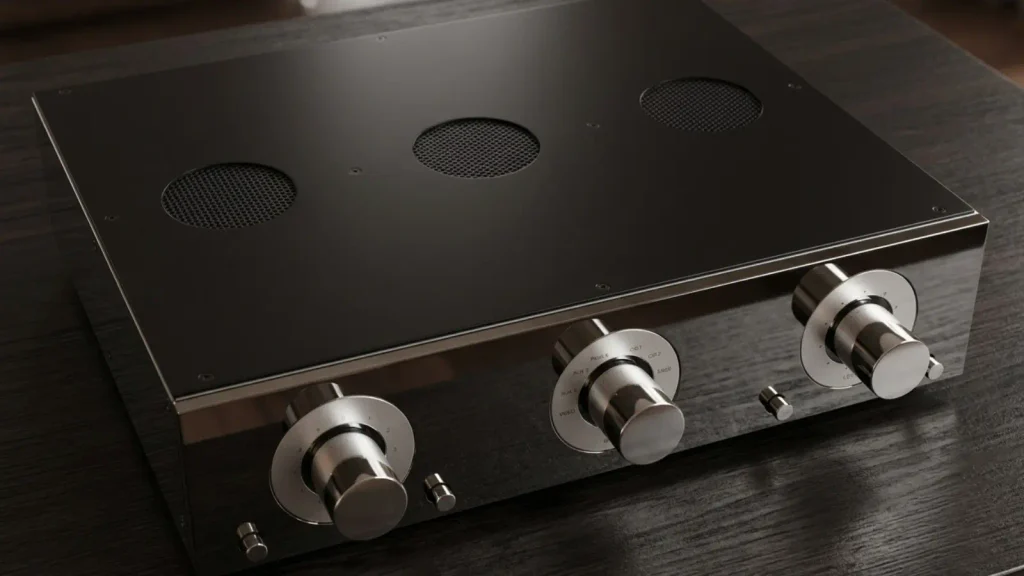
The Hovland HP-100 is one of those preamplifiers that immediately reminds you why vintage high-end audio can be so addictive.
It was never designed to compete on price. The HP-100 was built around a very particular philosophy of musical reproduction, with a tube-based design and the kind of attention to detail that made Hovland products so highly regarded among serious listeners.
When new, the HP-100 started at around $4,995 without a phono stage, with versions equipped for vinyl costing more.
Today, finding one in good condition can be a very different proposition.
Used examples have appeared around the mid-$2,000 range depending on condition and configuration, putting a preamplifier that once occupied serious high-end territory within reach of enthusiasts who could only dream about it when it was new.
And that’s the real attraction of the HP-100 today. You’re not simply buying an old preamp. You’re getting a piece of Hovland’s approach to analogue and tube-based hi-fi without paying its original price.
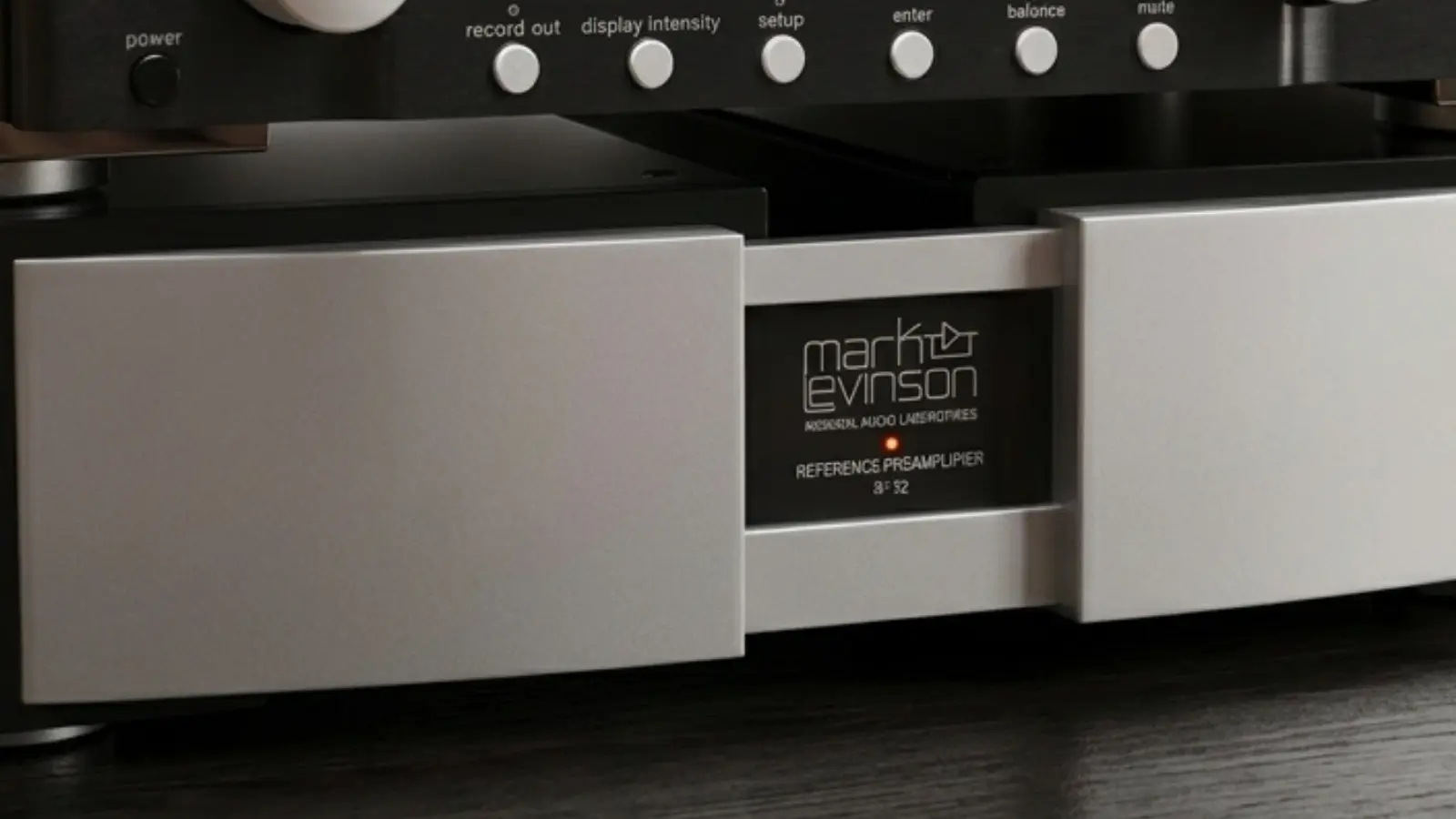
Mark Levinson No. 32 Reference
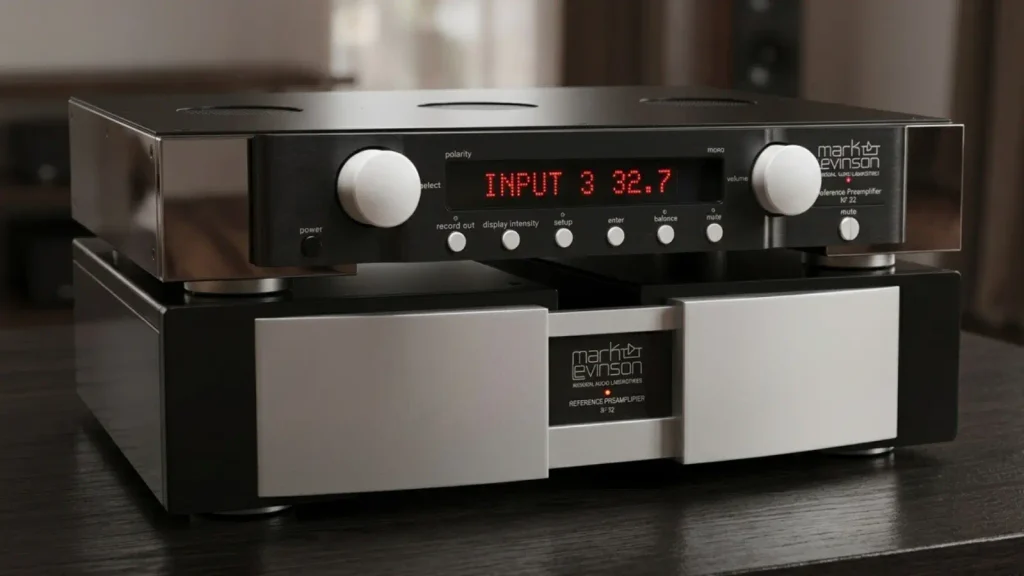
If there is one preamplifier on this list that still carries an almost mythical reputation, it is the Mark Levinson No. 32.
When it was introduced, this was not a casual purchase. The original price was approximately $14,950 without a phono stage and considerably more with one.
That placed the No. 32 firmly among the statement components of its era.
Today, the situation is rather different.
Depending on condition, configuration and the seller, used examples can sometimes be found in the $7,000 to $10,000 range.
That’s still serious money, of course. But compared with what this preamplifier represented when new, the second-hand market tells a very different story.
The No. 32 is also an interesting reminder that technological age and sonic relevance aren’t always the same thing. A great analogue preamplifier doesn’t become musically useless simply because the manufacturer eventually replaced it with a newer model.
For someone building a serious vintage or mixed-era system, the No. 32 remains one of those components worth investigating rather than dismissing because of its age.
Krell KCT
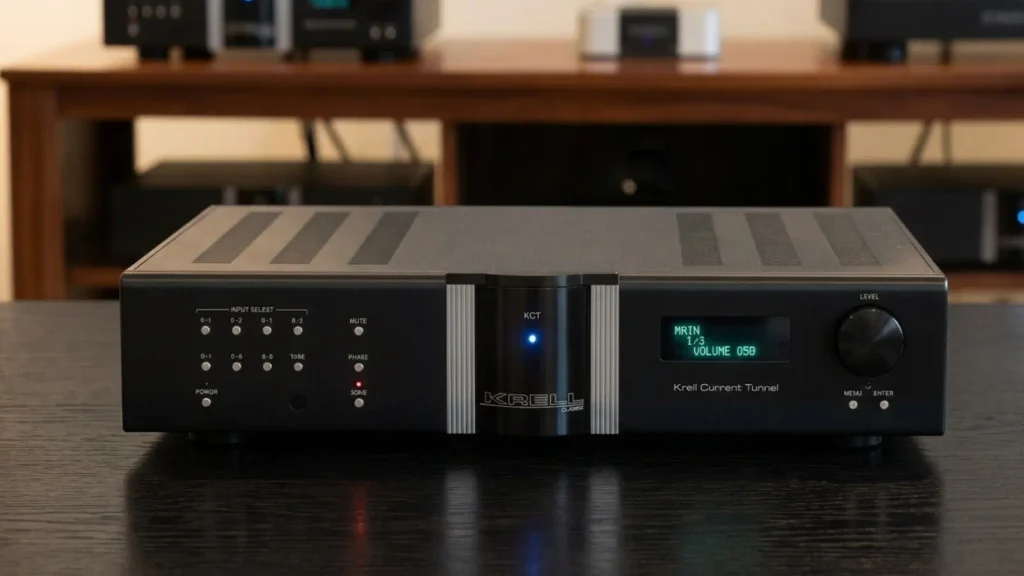
Krell has produced plenty of legendary electronics over the decades, and the KCT is one of the company’s more interesting preamplifiers for anyone exploring used high-end gear.
Originally priced at around $8,500, the KCT occupied a very different part of the market from ordinary preamplifiers.
Today, however, used examples can sometimes be found in the low-to-mid $3,000 range.
That’s where vintage high-end equipment becomes particularly tempting.
The KCT isn’t simply interesting because it is cheaper than it used to be. It represents a period when manufacturers were putting enormous amounts of engineering into dedicated analogue control components, long before streaming and digital processing became central to the modern hi-fi system.
For listeners who still build systems around serious power amplifiers and conventional analogue sources, a preamp such as the KCT can make a fascinating foundation.
Conrad-Johnson ART
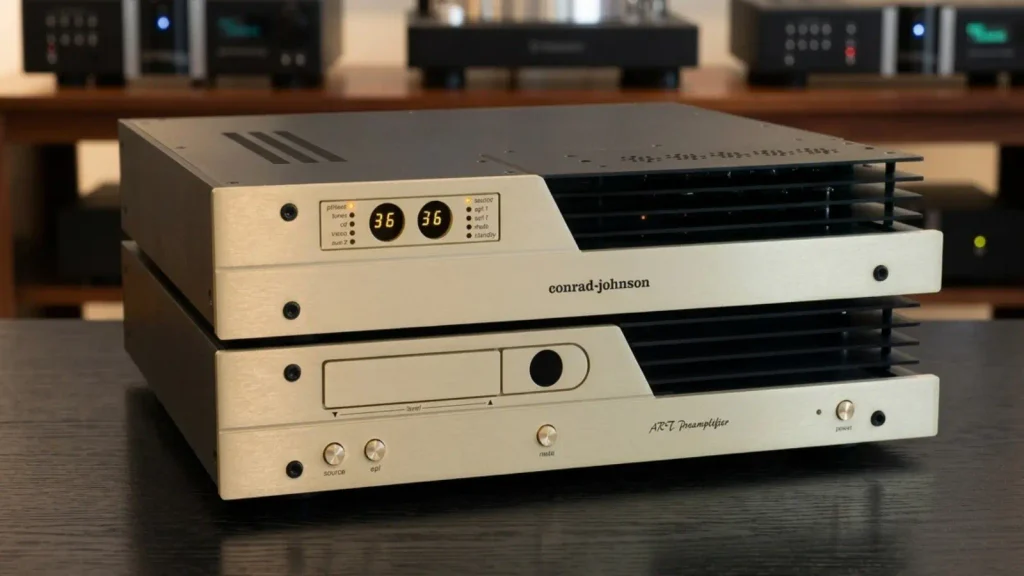
The Conrad-Johnson ART belongs to another category entirely.
With an original price of around $14,995, this was an aspirational component for most audiophiles. It sat firmly in the territory of reference-level equipment and was designed for listeners who were prepared to spend heavily in pursuit of better sound.
The interesting part today is what happens when that original price meets the used market.
Depending on condition, used ART preamplifiers can be found around $6,000 to $8,000.
That’s still expensive by normal hi-fi standards, but it is a very different proposition from buying one new.
Conrad-Johnson has always attracted listeners who value the character of carefully executed tube electronics, and the ART remains a fascinating example of that philosophy.
It also illustrates one of the biggest advantages of buying older high-end equipment: someone else has already absorbed much of the depreciation.
Audio Research Reference 1
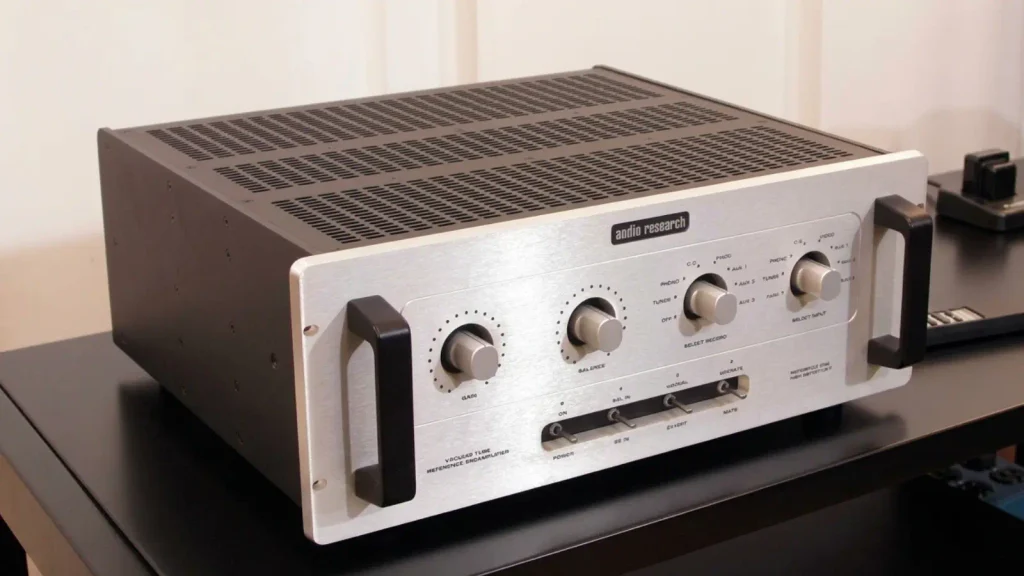
Then there’s the Audio Research Reference 1.
Audio Research has produced an extraordinary number of respected preamplifiers, but the Reference series has always represented something special within the company’s lineup.
The Reference 1 originally sold for approximately $8,495. Its replacement eventually moved the line forward, but that doesn’t automatically make the older model irrelevant.
On the used market, examples can sometimes be found for roughly $3,500 to $4,500 depending on condition.
That’s a substantial difference from its original price.
And for the right system, this is exactly where older high-end preamplifiers can become compelling. The Reference 1 was designed as a serious control centre rather than a disposable piece of electronics. If you find a well-maintained example and its particular sound suits your system, there is little reason to dismiss it simply because newer models exist.
The Best Part of Buying Yesterday’s High-End Gear
There’s something strangely satisfying about buying a component that was once completely unattainable.
You get the history, the engineering, and the character of a product that once represented the top end of the market, but without necessarily paying the original price.
Of course, buying vintage or discontinued equipment isn’t completely risk-free. Condition matters enormously. Tubes may need replacing, controls can wear, capacitors age, and servicing expensive electronics can quickly erase the savings.
That’s why buying the cheapest example you can find isn’t necessarily the smart move.
A clean, properly maintained preamplifier with a known history can be worth considerably more than a bargain unit that needs a major service.
But when the right example appears, the used market can open a door that was firmly closed when these components were new.
And that’s what makes these five preamplifiers so interesting.
They may no longer be the newest products in the catalogue, but good audio doesn’t always know what year it is.
If you’ve owned one of these preamps, or think there’s another classic that deserves to be on this list, let us know in the comments.