Argon Audio’s New Berlin Subwoofers Promise Deep Bass Without the Usual Subwoofer Delay
Argon Audio has introduced its new Berlin series of active subwoofers, and the Danish manufacturer is taking a different approach to one of the biggest challenges in integrating a subwoofer into a hi-fi system: keeping the bass perfectly in step with the main speakers.
The new range consists of the Berlin Sub 10 and Berlin Sub 12, which use 10-inch and 12-inch long-throw drivers, respectively. Both models share the same electronic platform, including Argon Audio’s Real Time Bass, Speakermatch and Matrix Wireless technologies.
The company’s biggest claim is perhaps the most interesting one. Argon says its Real Time Bass system can reduce the total signal delay through the subwoofer to just 0.19 milliseconds.
That is achieved using a 64-bit DSP processor that analyses the incoming signal and compensates for delays introduced by the electronics and the mechanical behaviour of the driver. The goal is straightforward: keep the subwoofer and main speakers better aligned in time, so bass sounds tighter, faster and more integrated rather than obviously coming from a separate box.
A subwoofer that knows what speakers it is working with
Argon Audio has also developed Speakermatch, a crossover system designed to make subwoofer integration easier.
I Didn’t Expect a Compact Subwoofer to Sound This Controlled: My JL Audio Dominion d110 Review
Instead of simply choosing a crossover frequency, the user enters information about the main speakers, including whether they use a bass-reflex, sealed or passive-radiator enclosure, along with their low-frequency extension. The Berlin subwoofer then applies the appropriate filter settings.
Argon is also preparing pre-defined Speakermatch profiles for selected Nordic hi-fi speakers, potentially making setup even simpler for owners of compatible models.

This is an interesting approach because getting the crossover and phase relationship right is often what separates a convincing two-channel system with a subwoofer from one where the bass simply sounds added on.
Wireless bass is coming too
The Berlin Sub 10 and Sub 12 are also equipped with Matrix Wireless, Argon Audio’s low-latency wireless audio system.
At launch, the subwoofers can be connected using their physical inputs, but a separate Matrix transmitter is planned to allow the Berlin models to receive the audio signal wirelessly. That means the subwoofer will only need a power connection, potentially making placement much easier in a living room.
For a hi-fi system where running a long signal cable to the subwoofer is inconvenient, this could prove to be one of the Berlin series’ more useful features.
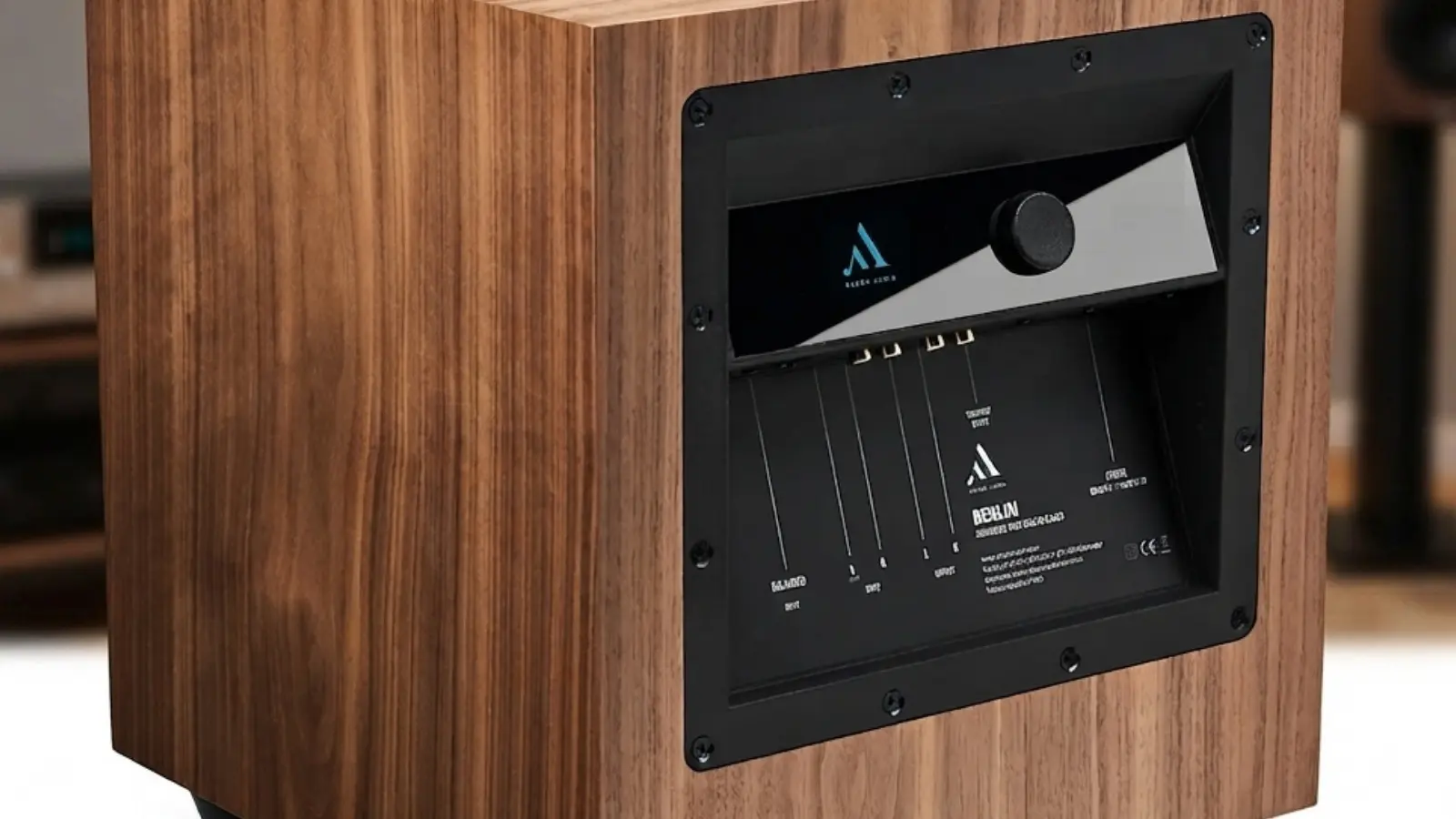
Both models use Pascal Class D amplification, with 500 watts RMS available and peak output reaching up to 1,200 watts. The connection panel includes a mono XLR input, stereo RCA inputs and Matrix Wireless, while an RCA output provides a through connection.
Berlin Sub 10 or Berlin Sub 12?
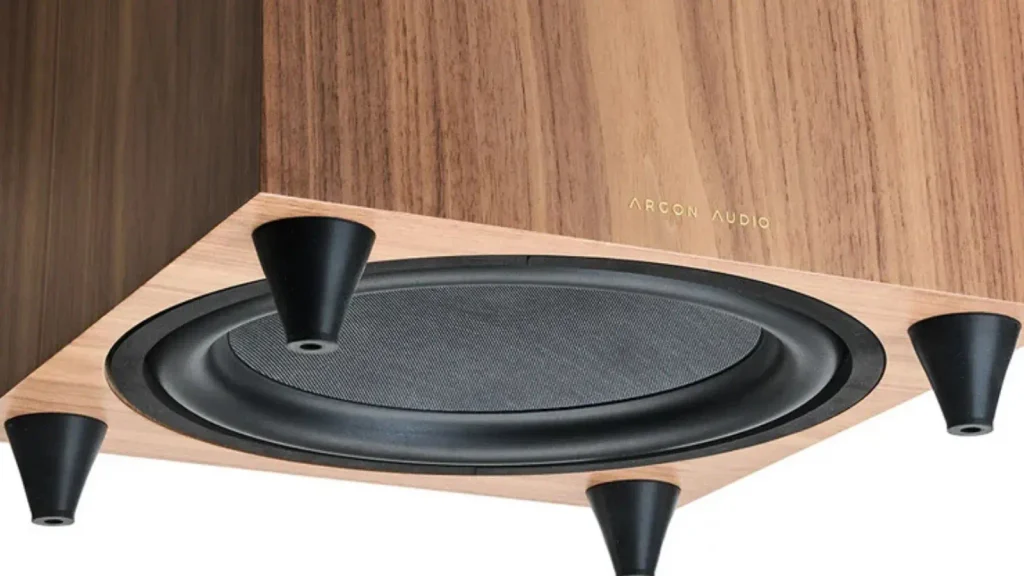
The smaller Berlin Sub 10 uses a 10-inch glass-fibre-cone driver and is rated from 14 Hz to 250 Hz (±6 dB). It measures 30 × 34 × 30 cm including its supports and weighs 13 kg.
The larger Berlin Sub 12 moves to a 12-inch driver and extends slightly deeper, with a claimed response of 13 Hz to 250 Hz (±6 dB). Its dimensions are 34.5 × 38.5 × 34.5 cm, and it weighs 15 kg.
Both models are available in matte black, matte white, and walnut veneer, giving them a more furniture-friendly appearance than many conventional high-output subwoofers.
The Berlin Sub 10 has already picked up an EISA Best Buy Subwoofer award, adding some recognition to Argon Audio’s new approach.
The Berlin Sub 10 costs just under €900, while the larger Berlin Sub 12 comes in at just under €1,100.
On paper, the Berlin range is not simply about producing more bass. Argon Audio is betting that very low processing latency, automatic speaker matching and the option of wireless connectivity can make the subwoofer easier to integrate into a serious two-channel system.
And with a claimed 0.19 ms total delay, the real question is whether Argon’s promise of bass that feels fast and properly connected to the main speakers translates into the listening room