I Compared the ATH-LS50iS and ATH-LS70iS Side by Side: The Results Were Unexpected
It is a common belief that in-ear headphones, due to their compact design, often lack low-frequency response. The assumption is that small speakers simply cannot deliver that juicy “punch” that full-size models are capable of. However, manufacturers refuse to lose hope and constantly cook up new technological solutions—and Audio-Technica is right at the forefront.
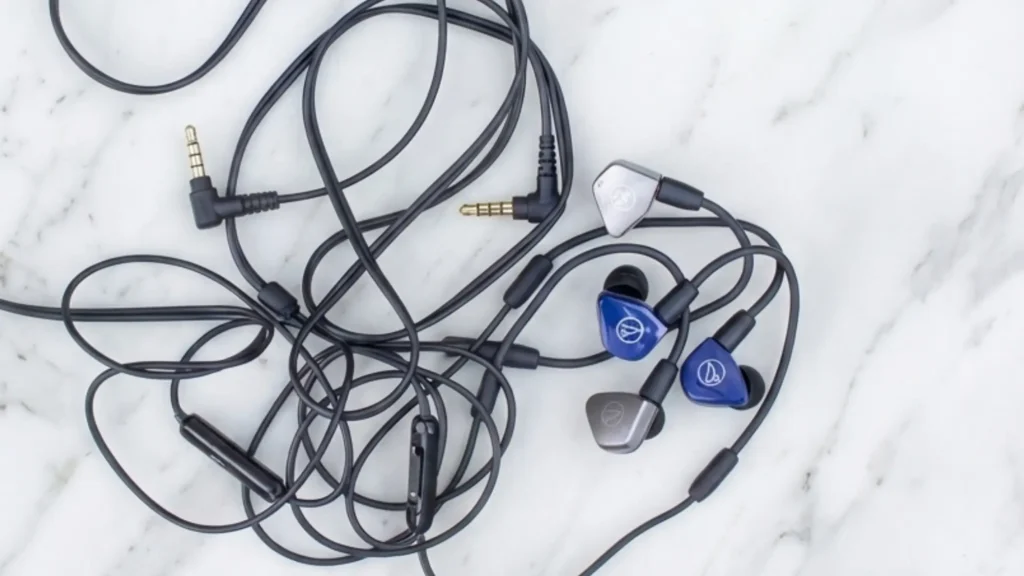
For this test, I got my hands on two models from the same line: the ATH-LS50iS and the ATH-LS70iS. These are wired, in-ear monitors (IEMs) designed with an over-the-ear cable fit. The cable itself is removable (using Audio-Technica’s proprietary A2DC connector), pleasantly thick, and features an inline remote control on the right channel, along with a right-angle L-shaped plug.
Design and Build
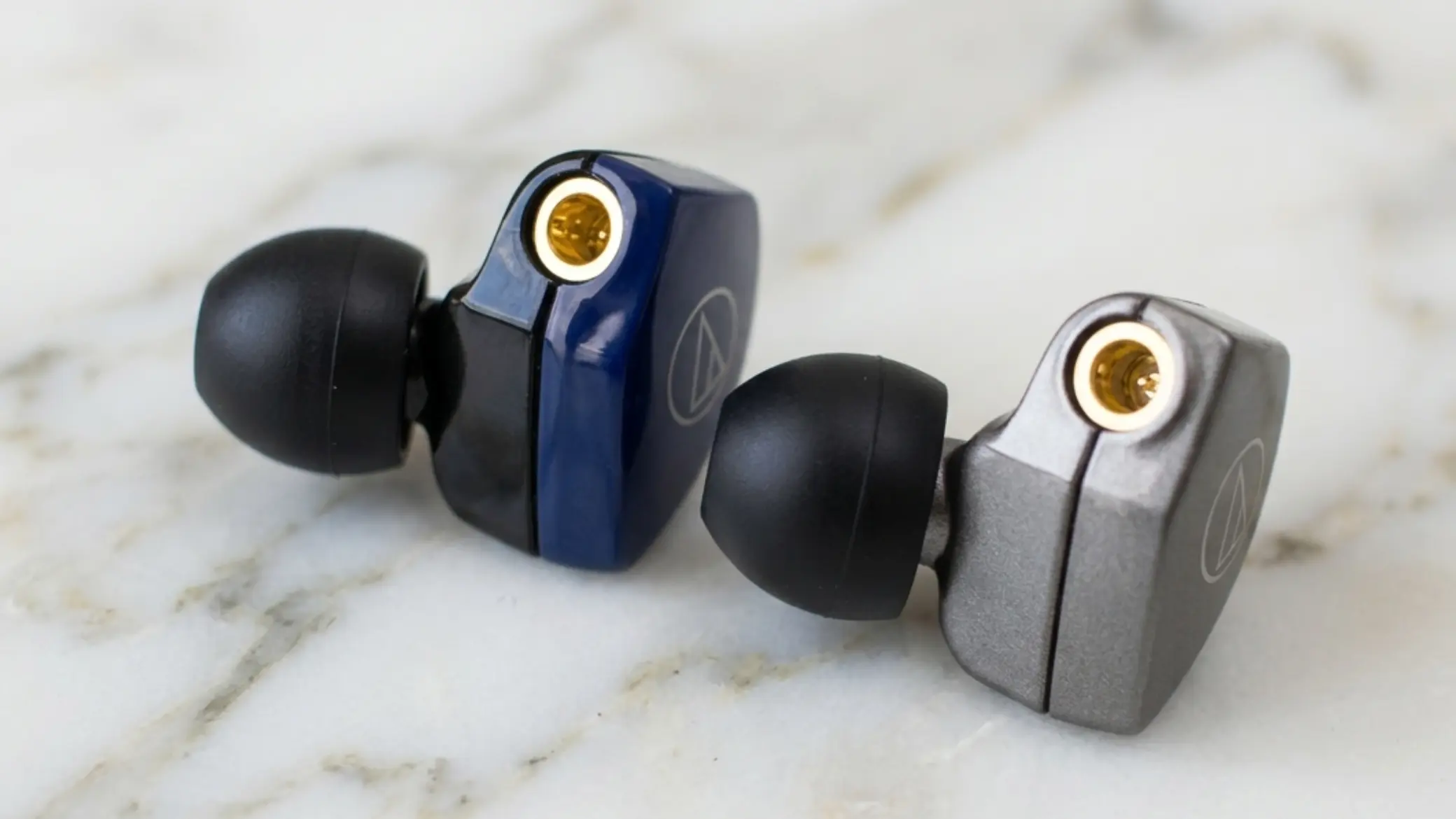
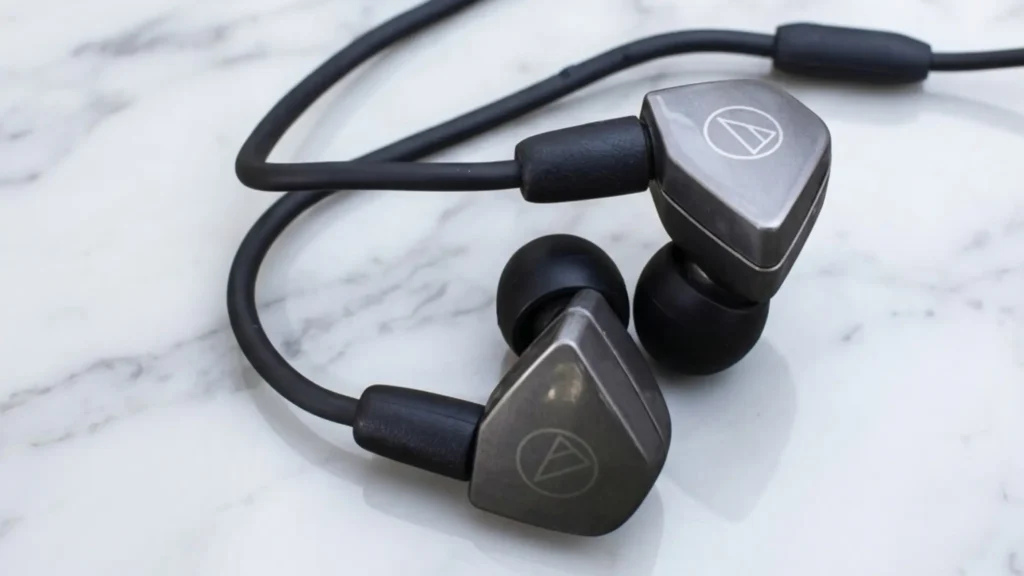
The older and younger models are identical in size, both sporting a fairly large, trapezoidal housing made of ABS plastic. The primary difference lies in the color options. While the LS70iS is offered exclusively in a sleek gray-silver, the LS50iS comes in black, blue, yellow, and red. The specific models I tested were the glossy dark blue and the gray-silver variants.
According to the spec sheet, the ABS plastic housing is specifically chosen to help reduce internal resonances. For a dual-driver system designed to maximize low-frequency response, this acoustic dampening is a vital feature.
The Dual Symphonic Driver Layout
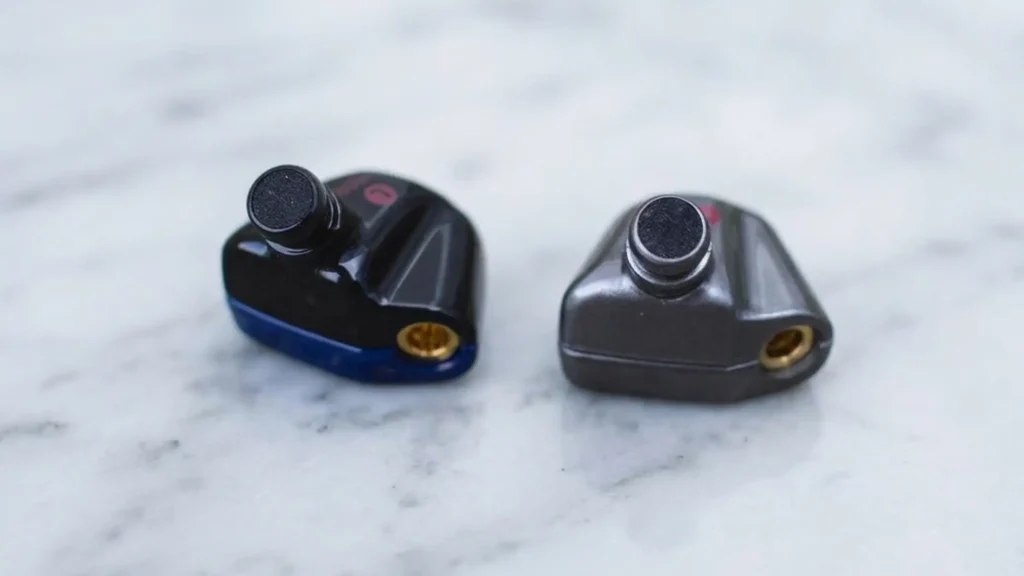
This unique driver configuration first appeared in the older ATH-IM50 and IM70 models. It places two diaphragms of the same diameter (8.8 mm) coaxially within the housing, moving them in-phase so they function like a classic isobaric subwoofer. This setup takes up very little space while allowing the earphones to squeeze out a seriously deep sub-bass.
There are usually two downsides to an isobaric configuration: sensitivity drops by about 3 dB, and wiring them in parallel cuts the impedance in half. Thankfully, Audio-Technica’s engineers managed to maintain perfectly reasonable specs for daily use. The sensitivity sits at 100 dB for the LS50iS and 101 dB for the LS70iS, while both share a 24.3-ohm impedance. This makes them incredibly easy to drive directly from mobile sources. Furthermore, they sit securely in the ear and offer excellent passive noise isolation, meaning you won’t need to crank the volume to block out the world.
The sound nozzles are identical and use a standard, widely compatible diameter. If the included stock tips don’t quite fit your ears, tracking down aftermarket earpads will be an absolute breeze.
The unboxing experience is relatively modest. Aside from the headphones, the box contains standard documentation, a soft storage pouch, and four pairs of silicone ear tips in total (sizes XS, S, M, and L, with one pair pre-installed). Given that these are positioned as budget-friendly options, you shouldn’t expect luxury packaging.
On paper, the technical specifications are nearly identical. Aside from the 1 dB difference in sensitivity, they only differ slightly at the very top of the frequency spectrum: the LS50iS caps out at 25 kHz, while the LS70iS extends just a bit further to 26 kHz.
Sound Quality: A Warm Buzz and a Neat Top End
To really test their low-end claims, I played a couple of new tracks from Voldemar Bibopovsky. His style of dark jazz, which is packed with thick, moody bass lines and a raw, lo-fi sound, is the perfect way to torture test the low frequencies.
The headphones handled it beautifully. Both models deliver a meaty, rounded, and wonderfully soft bass that blends seamlessly into the smoky atmosphere of dark jazz. The LS70iS definitely leans heavier into the lows; depending on your audio source, it can occasionally feel so prominent that you might want to tweak your equalizer to keep the lower registers from humming.
However, along with that enhanced low-frequency energy, the LS70iS manages to extract noticeably more detail in the mid and high frequencies, presenting them smoothly and accurately. Conversely, the LS50iS has a bit less bass, which makes its overall frequency response feel slightly more balanced, even if its treble comes across as a touch rougher around the edges.
Both models handle quick, rhythmic riffs really well and give you a punchy, fun groove. If you’re jamming fast guitar stuff from guys like Buckethead or John 5, it doesn’t turn into a muddy, out-of-control mess. So yeah, these monitors can handle most metal subgenres no problem, just maybe not the absolute craziest, most chaotic tracks out there.
Both pairs have a slightly warm sound overall. Chill, instrumental tracks with a strong low end, like jazz hop or brass bands, sound awesome on both. You really start to hear the differences on more complex tracks where the bass steps back and the vocals take the lead. In those cases, the older LS70iS sounds cleaner, more precise, and brings out way more detail.
Neither pair is what you’d call “analytical.” They’re not made to tear a recording apart piece by piece. Instead, they wrap the melody into a tight, super emotional package. Artists like Hopsin and Agnes Obel sound bigger and more lifelike on the older model. Electronic tracks reveal hidden layers, and jazz cymbals ring out with a juicier, crisper sound.
A Quick Touch of Nostalgia
My very first conscious headphone purchase years ago was a pair of Audio-Technicas. As a schoolgirl, the simple, inexpensive, on-ear ATH-SJ3 opened up a whole new world of audio for me. Funnily enough, they still work today; I periodically re-solder the wires using old phone headsets just so I can answer calls in the winter.
Looking back now, after hearing dozens of high-end models, I can easily spot their flaws: the frequency range is limited, the detail retrieval is selective, and the midrange feels a bit hollow. Yet, even after twelve years, they have a wonderfully perky, infectious energy. The beauty of the new LS line is that, despite using completely different dual-driver technology, Audio-Technica kept that same groovy, engaging character, while successfully adding modern detail retrieval and controlled bass.
One thing to note is that these earphones are surprisingly picky about their source. Out of my smartphone, the LS70iS played noticeably louder than it did out of my laptop, and the younger LS50iS revealed a slightly sharper, less refined edge. If you are looking for it, you can easily spot the difference between standard MP3s and high-res audio formats on both pairs.
Conclusions
Given the marketing hype surrounding the “super bass” capabilities of these headphones, I was half-expecting the acoustic equivalent of a cheaply tuned car with an obnoxious subwoofer vibrating the trunk. Fortunately, that wasn’t the case at all. The low end, while noticeably boosted, sounds remarkably intelligent. It refuses to devolve into a muddy mush; when the music calls for it, the bass is either wonderfully viscous and soft, or punchy and tight.
The practical differences between the LS50iS and LS70iS are straightforward: the older model gives you more bass and tighter details, while the younger model feels a bit more linear simply because it lacks that heavy downward bass tilt. However, considering the LS70iS costs nearly twice as much, I wouldn’t go as far as saying it performs “twice as well.”
Ultimately, both models are excellent budget-friendly options for tuning out the world on your daily commute. They offer that signature, engaging Audio-Technica soul wrapped in a rock-solid presentation.
Comparison Table
| Specification | Audio-Technica ATH-LS50iS | Audio-Technica ATH-LS70iS |
| Available Colors | Black, Blue, Red, Yellow | Silver (Gray-Silver) |
| Weight | 6.5 g | 6.5 g |
| Frequency Response | 5 Hz – 25,000 Hz | 5 Hz – 26,000 Hz |
| Driver Type | Dynamic (Dual Symphonic) | Dynamic (Dual Symphonic) |
| Driver Diameter | 8.8 mm (x2 per channel) | 8.8 mm (x2 per channel) |
| Impedance | 24.3 ohms | 24.3 ohms |
| Sensitivity | 100 dB/mW | 101 dB/mW |
| Cable Type | Removable A2DC (1.2m) with Mic | Removable A2DC (1.2m) with Mic |