Why Are Audiophiles Returning to CDs? This Bryston Player Makes a Compelling Case
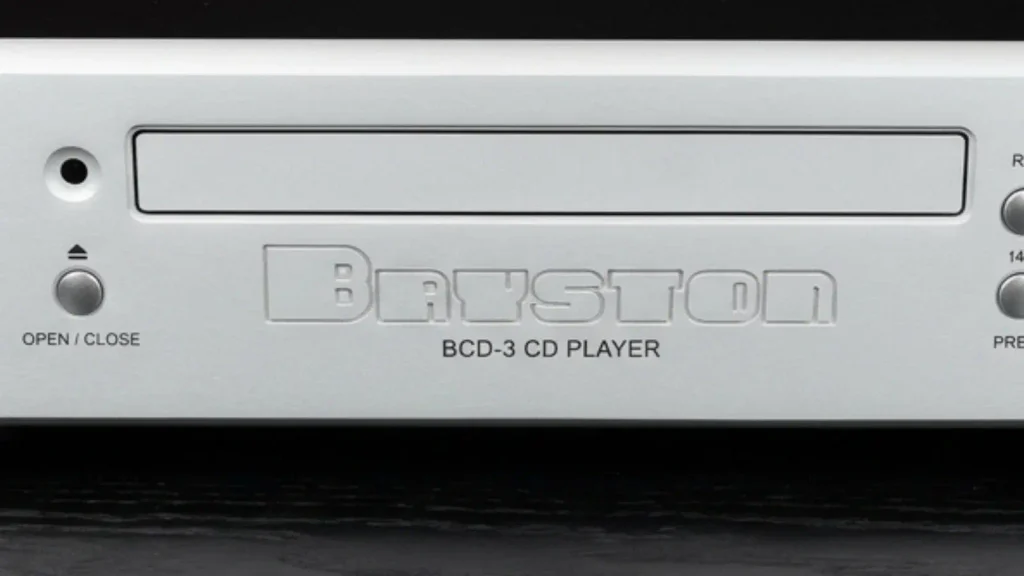
CD players were supposed to be yesterday’s technology. By 2016, streaming was taking over, music servers were becoming commonplace, and many audiophiles were moving their CD collections to hard drives. So why did Bryston introduce a high-end CD player priced at $3,495 when physical discs seemed to be on their way out? After spending time with the BCD-3, I found myself rediscovering something I thought I had left behind. And with CDs enjoying renewed interest today, Bryston’s decision looks more intriguing than ever.
Canadian hi-fi heavyweight Bryston surprised the audio world when it introduced its own line of loudspeakers. The company’s speakers quickly earned positive reviews, and the three-way Mini T monitor eventually became my reference speaker. But Bryston’s next move was arguably even more unexpected.
At a time when the conventional wisdom suggested that physical music formats were on their way out, Bryston introduced the BCD-3 CD player, priced at $3,495.
Why invest in an expensive dedicated CD player when music servers, computer audio, and streaming services were becoming increasingly popular? Hadn’t the industry already decided that optical discs belonged in the past?
Not quite.
For all the talk about the death of the compact disc, there are still plenty of audiophiles with substantial CD collections. Some have painstakingly ripped their libraries to music servers, while others continue to play their discs directly. And new CDs keep arriving, including carefully produced reissues, archival recordings and elaborate box sets that give collectors another reason to keep their disc players.
Bob Dylan’s The 1966 Live Recordings, a 36-CD collection documenting his famous tour, and Pink Floyd’s The Early Years: 1965–1972 box set, containing more than 20 CDs, illustrate why physical releases remain appealing to dedicated music fans.
Bryston understood that a dedicated CD player still had a place in a high-end audio system. The BCD-3 wasn’t designed to be an all-in-one digital hub. Instead, it took a more focused approach, concentrating on Red Book CD playback and leaving the additional digital inputs found on many competing products out of the equation.
That decision made the BCD-3 a rather unusual proposition. It was expensive, deliberately specialized and aimed at listeners who still cared about getting the most from their physical music collections.
But could a dedicated CD player costing $3,495 offer an experience compelling enough to bring a committed network-audio listener back to the disc tray?
Bryston BCD-3: A CD Player Built for One Purpose
The BCD-3 wasn’t Bryston’s first attempt at a high-performance CD player. Several years earlier, the company introduced the BCD-1, which enjoyed considerable success. Bryston had also spent years developing digital-to-analog converters and music servers, including its BDA and BDP product lines.
In other words, the company wasn’t entering digital audio for the first time. It was building on an established foundation.
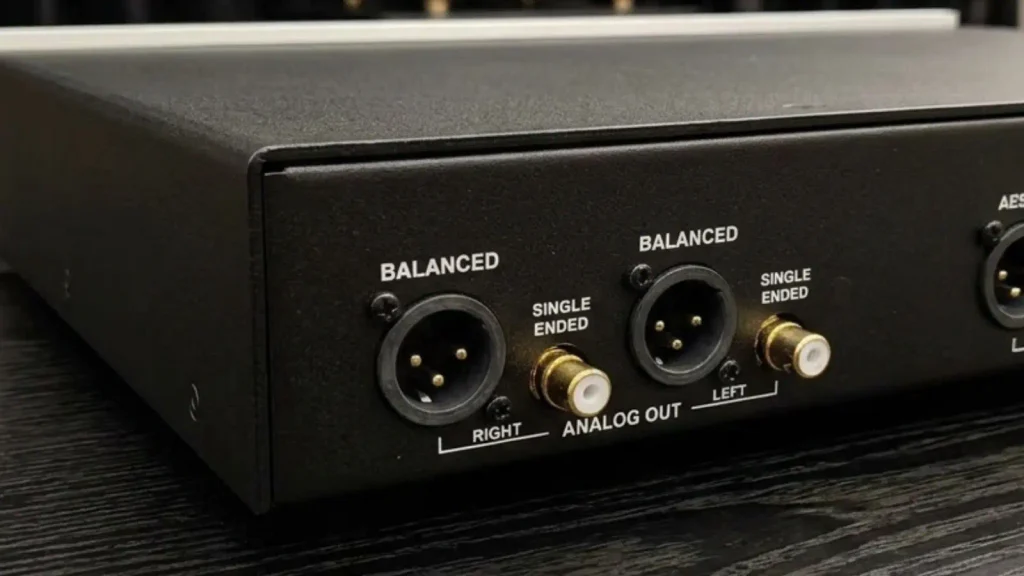
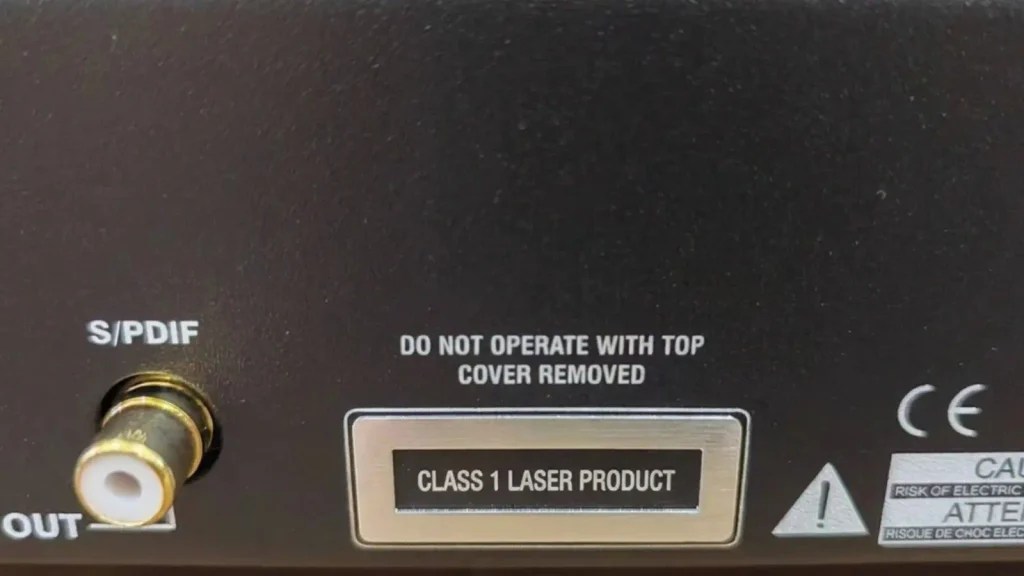
The BCD-3 offered balanced XLR and single-ended RCA analog outputs, alongside coaxial S/PDIF and AES/EBU digital outputs. An Ethernet connection allowed network-based control, access to the player’s IP address and firmware updates.
Buyers could choose a black or silver front panel, with either a 17-inch or 19-inch-wide faceplate. An optional metal remote control was available for those who preferred a dedicated handset.
The most controversial omission, however, was the absence of digital inputs.
Many modern disc players allow users to connect external digital sources, effectively turning the player into a combined disc transport and DAC. The BCD-3 took a different approach. Bryston deliberately designed it around the requirements of standard CD playback rather than attempting to accommodate every possible digital source.
According to Bryston’s James Tanner, the advantage of working with a known 44.1kHz sampling rate and 16-bit resolution was that the clocking and DAC circuitry could be optimized for that specific format. Accepting external digital signals at different sampling rates would introduce additional requirements for clocking and signal handling.
The reasoning was straightforward: rather than building a universal digital component, Bryston wanted a dedicated player optimized for Red Book CD playback.
That approach won’t suit everyone. Anyone looking for a single box to handle a CD collection, a computer, a television and multiple digital sources would need to look elsewhere or add separate equipment.
For listeners who already owned a DAC or music server, the BCD-3’s lack of digital inputs might also seem limiting. But for someone who wanted a dedicated CD player with a carefully focused design, it was a deliberate choice rather than an oversight.
Why I Returned to CDs After Years of Network Audio
Here’s the confession: I hadn’t had a CD player in my main system for quite some time.
I still owned several, tucked away in a closet, but my listening had shifted almost entirely to network playback. My main system used Bryston’s own BDP-2 music server and BDA-3 DAC combination, while my office system relied on the Sonore microRendu.
Yet I still maintained a collection of approximately 5,000 CDs. I also continued buying several discs every month, particularly when a release was available only in physical form.
So although streaming and music servers had become my preferred way to access music, the collection itself had never disappeared.
The BCD-3 gave me an opportunity to return to those discs and hear what a dedicated, high-end CD player could bring to the experience. I had set aside a substantial stack of albums in anticipation of the review, and the rest of the system was ready.
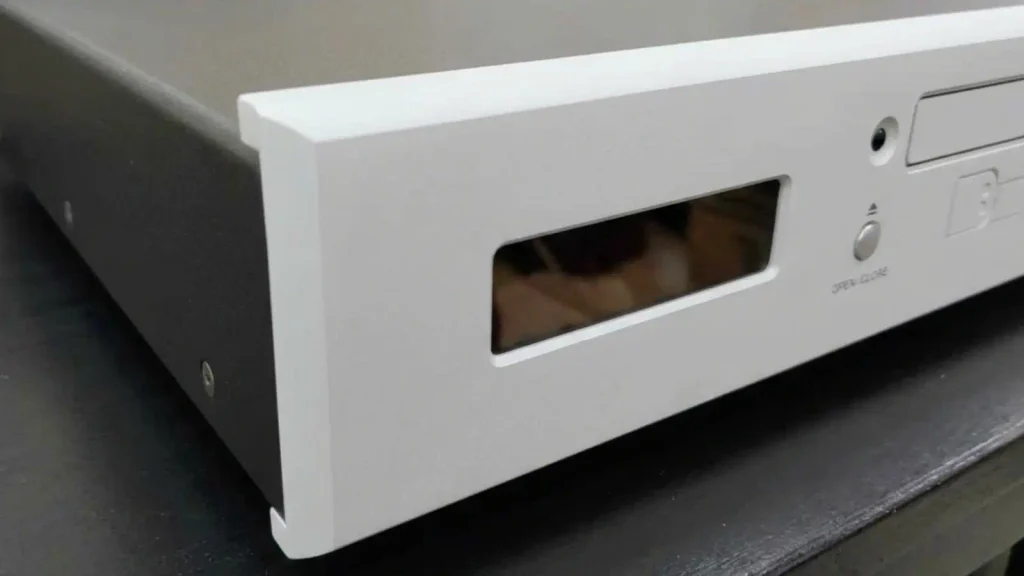
Before getting to the listening sessions, one thing about the BCD-3 was immediately apparent: its construction inspired confidence. The player felt exceptionally solid, and its substantial weight suggested the sort of robust construction expected at this price level.
Bryston also backed the player with its five-year warranty, adding reassurance for buyers investing in a component intended to remain in service for years.
Setting Up the Bryston BCD-3
I installed the BCD-3 in my main system, which consisted of an Aric Audio Unlimited tube preamplifier, an Audio Research VS55 power amplifier, Bryston Mini T loudspeakers and a JL Audio d108 subwoofer. I also briefly tried the player with the new Schiit Audio Freya preamplifier.
Black Rhodium interconnects and speaker cables completed the system. Other than an Acoustic Zen power cord, I made no special tweaks.
With the connections in place and the stack of CDs waiting nearby, there was nothing left to do but start listening.
It had been long enough since I last played CDs regularly that I wasn’t entirely sure what to expect. Would the experience feel like a step backward from my established network-audio setup, or would the dedicated player reveal something worth revisiting?
The first few albums provided an unexpectedly compelling answer.
Maddy Prior Reveals What the BCD-3 Can Do With Voices
Within five songs of Maddy Prior’s Bib & Tuck, I found myself paying much closer attention to the music than I had anticipated.
The opening tracks feature a cappella singing, with layers of voices suspended in space. Through the BCD-3, their natural tone and timbre were particularly convincing. The performance had an immediacy that made it easier to forget I was listening to a recording.
What stood out wasn’t an exaggerated sense of detail or a dramatic change in tonal balance. It was the way the voices came together while retaining their individual character. The layered harmonies felt natural, and the recording encouraged the sort of concentrated listening that makes a familiar album feel newly engaging.
That experience set the tone for the sessions that followed.
Luka Bloom Proves That Great CDs Still Sound Great
Luka Bloom’s 2014 album Head and Heart was an obvious next choice. I had listened to it many times for pleasure and during previous reviews, partly because it is exceptionally well recorded and partly because it combines thoughtful covers with several strong original songs.
The title track, originally written by John Martyn, establishes the album’s atmosphere with shimmering acoustic textures. Through the BCD-3, those textures had a greater sense of involvement, drawing me further into the performance.
Dylan’s “Every Grain of Sand” and Don McLean’s “And I Love You So” were equally affecting.
This was where the BCD-3 made its strongest argument for the continued appeal of CD. The presentation felt natural, detailed, and musically engaging without relying on obvious sonic fireworks.
It also reinforced a point worth remembering in the ongoing debate over digital audio: higher sample rates and greater bit depth do not automatically guarantee a better listening experience. The quality of the recording, mastering, and production remains crucial.
A well-produced Red Book CD can be a remarkably satisfying source, regardless of how many higher-resolution formats are available.
Can a Red Book CD Really Compete With High-Resolution Audio?
Two more recent arrivals provided another opportunity to explore that question.
I regularly buy music in FLAC format from Bandcamp, and occasionally a physical CD arrives alongside the digital download. Two such purchases came from the Portuguese neo-psychedelic group Beautify Junkyards and the British band Us And Them.
Both bands draw heavily on retro influences, combining psychedelic textures, pastoral arrangements and a sound that feels deliberately removed from much contemporary mainstream production.
Us And Them’s Summer Green and Autumn Brown was particularly enjoyable. The female lead vocals, open arrangements and use of harpsichord, bells and synthesizers created a spacious presentation, with stereo panning adding to the sense of depth.
The BCD-3 handled these elements beautifully. Individual instruments occupied their own spaces, while the vocals remained clear and naturally integrated into the arrangement.
There was a relaxed, intimate quality to the performance that suited the album’s character. The result was reminiscent of sitting down with a cup of tea in the English countryside, with the music unfolding at its own pace.
The experience also made it difficult to dismiss the fidelity of CD simply because higher-resolution downloads are available. When a recording is produced with care, Red Book playback can deliver an immensely satisfying combination of detail, tonal naturalness and musical coherence.
Beautify Junkyards’ The Beast Shouted Love took a similarly atmospheric approach, with Mellotron-like keyboards, psychedelic melodies and a mellow progressive folk-rock sensibility. Male and female vocals moved between English and Portuguese, adding further variety to the arrangements.
The BCD-3 navigated the layered instrumentation without making the music feel congested. The keyboard textures remained distinct, the vocals retained their character, and the overall presentation had a warmth that suited the material particularly well.
I found myself playing the disc repeatedly, which is perhaps the most telling response a music component can inspire.
These recordings also reminded me that the perceived limitations of digital audio often have more to do with how the music was recorded and mastered than with the format itself. A carefully produced CD can sound every bit as inviting as a well-made vinyl record, even if the two formats have different technical characteristics.
What About Ordinary CDs and Poorer Recordings?
Of course, a CD collection isn’t made up entirely of demonstration-quality recordings.
I worked through a large stack of discs, including some that were superbly produced and others that were considerably less impressive. The BCD-3 remained composed throughout, presenting the material with a strong sense of precision and depth.
It did not transform every recording into an audiophile showcase, nor should anyone expect it to. The quality of the source material still mattered.
What I appreciated was the way the player allowed the character of each recording to come through without making the listening experience feel mechanical or unnecessarily analytical.
I also had little incentive to use the BCD-3’s digital outputs during the review. Its analog output stage sounded so appealing in my system that I preferred to listen through it rather than introduce another DAC into the chain.
That is an important distinction. The BCD-3’s value isn’t simply that it reads a CD and sends digital data to another component. It is a complete playback component, and its analog output stage is central to the experience it offers.
The Little Details That Make Living With It Easier
Although the listening experience was the main attraction, a few practical details deserve mention.
The disc tray operated smoothly, and I could hear virtually no mechanical noise while a disc was loading unless I moved my ear to within approximately a foot of the player.
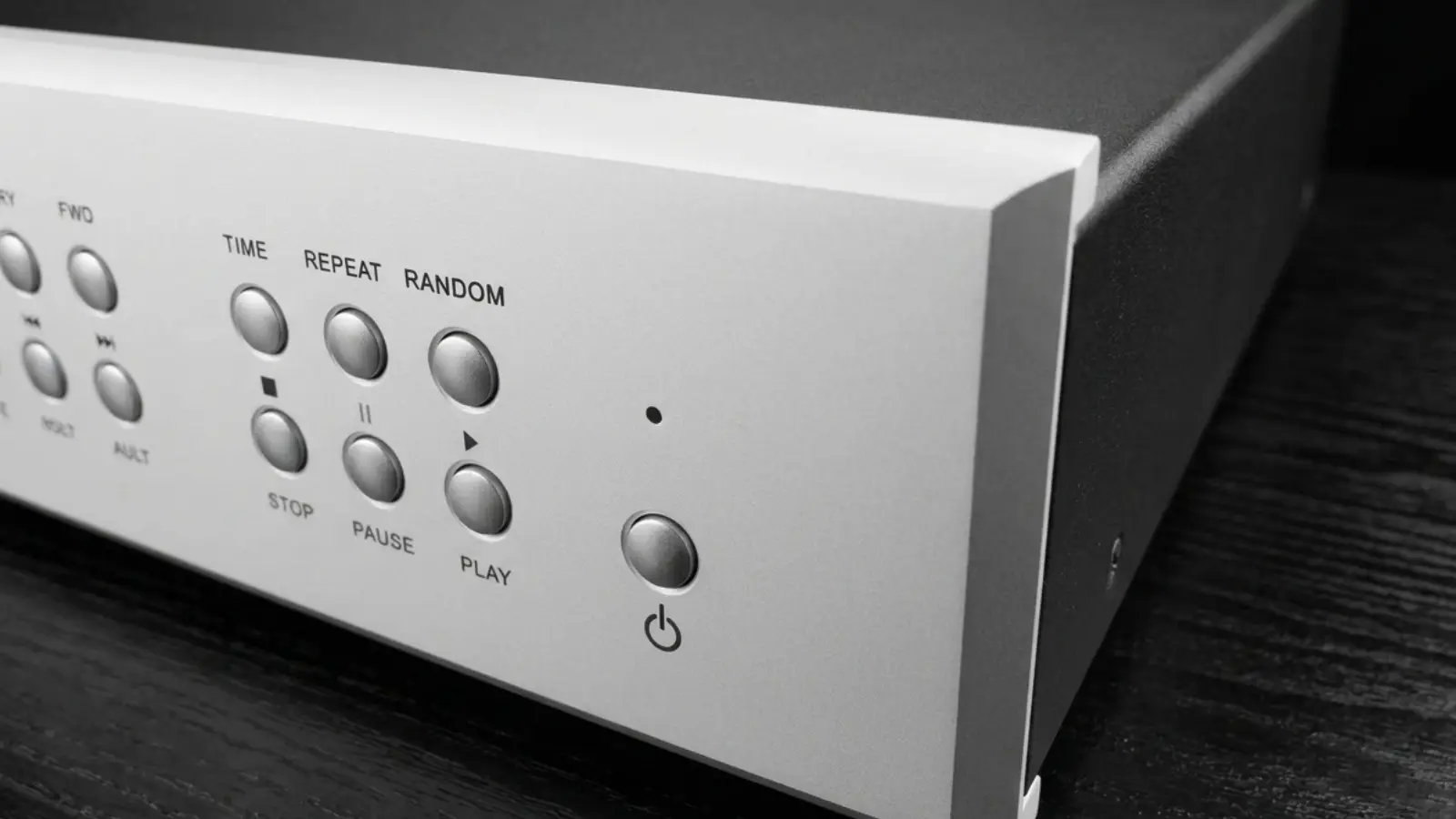
The front panel also offered more controls than are typically found on many contemporary components. I particularly appreciated having a dedicated scroll-ahead button for navigating to specific passages within a track.
Time, Repeat and Random buttons were welcome additions, too. They may not be glamorous features, but they make everyday operation more convenient, especially for listeners who prefer using the player directly rather than reaching for a remote.
Bryston’s optional metal remote was another choice, but it wasn’t the only way to control the unit. The player could also be controlled through a web browser or mobile device once connected to the network, and compatible third-party universal remotes offered another alternative.
The Ethernet connection therefore served a practical purpose without changing the BCD-3’s fundamental identity as a dedicated CD player.
Verdict: Was the Bryston BCD-3 Worth Bringing CDs Back For?
The Bryston BCD-3 was one of the most natural-sounding and musically convincing CD players I had encountered. Its presentation encouraged me to concentrate on the performances rather than the equipment, and several familiar albums revealed a level of involvement that made me appreciate my CD collection all over again.
The Maddy Prior recordings demonstrated the player’s ability to reproduce natural vocal timbres. Luka Bloom’s Head and Heart showed how a well-recorded disc could communicate intimacy and atmosphere, while the albums from Us And Them and Beautify Junkyards made a strong case for the continued musical appeal of carefully produced Red Book CDs.
The BCD-3 also made sense as a physical product. Its solid construction, five-year warranty, quiet transport and useful front-panel controls suggested a component designed for long-term ownership.
It isn’t for everyone, though. There are no digital inputs, no SACD or DVD-Audio playback, and no attempt to turn the player into a universal digital source. At its original $3,495 price, it was a serious investment in a single format.
But that specialization was also its appeal. Bryston wasn’t trying to replace a music server or compete with every streaming device on the market. It was building a dedicated CD player for listeners who wanted to enjoy their physical collections at a very high level.
If you have thousands of CDs, continue buying physical releases or simply prefer the experience of putting a disc in a tray and listening to an album from beginning to end, the BCD-3 makes a compelling argument for keeping a dedicated CD player in your system.
The compact disc may no longer dominate the way it once did, but the listening sessions reminded me that the format’s decline has never been proof that its best recordings stopped sounding wonderful.
For the right listener, the Bryston BCD-3 deserves a serious audition.
Bryston BCD-3 Specifications
| Specification | Details |
|---|---|
| Product type | Dedicated CD player |
| Supported disc format | Red Book CD |
| Digital audio format | 16-bit / 44.1kHz PCM |
| Analog outputs | Balanced XLR, single-ended RCA |
| Digital outputs | Coaxial S/PDIF, AES/EBU |
| Digital inputs | None |
| Network connection | Ethernet |
| Network functions | Remote control, IP access, firmware updates |
| Front-panel finishes | Black or silver |
| Faceplate widths | 17 or 19 inches |
| Remote control | Optional |
| Warranty | Five years, as stated in the original review |
| Original retail price | $3,495 |
Specifications and pricing refer to the original review-era product. The $3,495 figure is the historical retail price, not a verified current or used-market price.