Dynaudio Focus 260 Review: A Classic Floorstander With Remarkable Musicality
Some loudspeakers impress you with technical sophistication, while others simply make you want to sit down and listen to another record. The Dynaudio Focus 260 belongs firmly in the second category. At first glance, there is nothing particularly extravagant about its design, but spend some time listening, and it becomes clear why the Focus series has earned such a strong reputation among serious hi-fi listeners.
Despite its hefty price tag, the Focus series occupies a mid-range position in Dynaudio’s lineup and, unlike the technically complex High-End models, is a truly classic floorstanding speaker.
Narrow, deep cabinets about a meter tall, three front-facing drivers, and a bass reflex port. This is exactly how we imagine a classic floorstander, and this is exactly what the Focus series floorstanders look like, long considered absolute classics of the genre. The Dynaudio Focus 260 is the entry-level floorstander in the lineup and replaces the legendary Focus 220, which enjoyed a long life and underwent several improvements.
The new model’s appearance differs primarily in the size of the grille; on the Focus 260, it covers the entire front panel. The geometric dimensions and shape of the cabinet differ only slightly. A wide range of finishes is available—four types of natural veneers, plus black and white piano lacquer. The quality of the finish, as always, is impeccable.
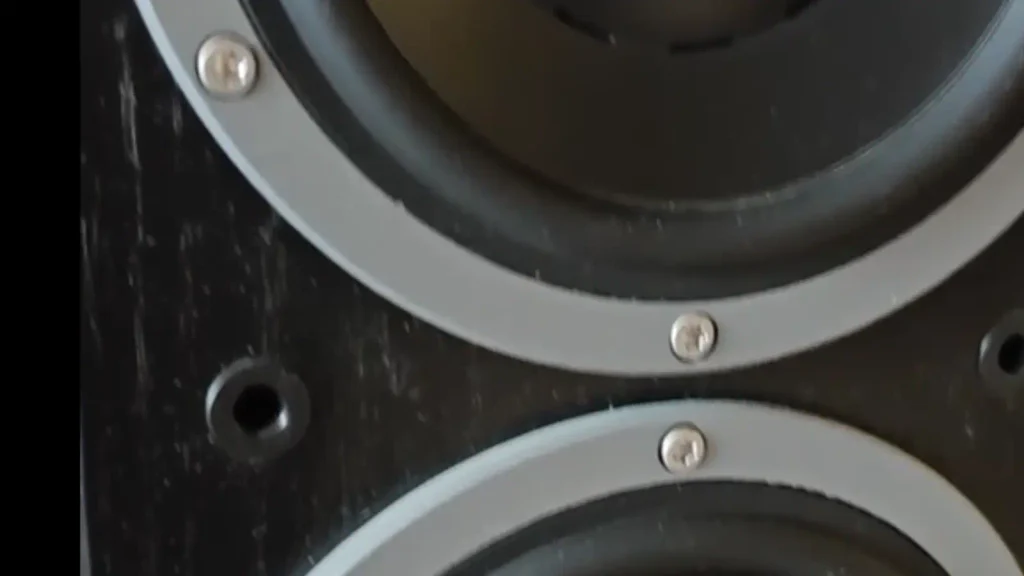
The simple and understated appearance of the Dynaudio Focus 260 speakers conceals several subtle engineering features. For example, the slight chamfers on the front edges reduce diffraction, and the distance between the centers of the drivers is not random, but calculated to ensure optimal interaction of the emitted sound waves.
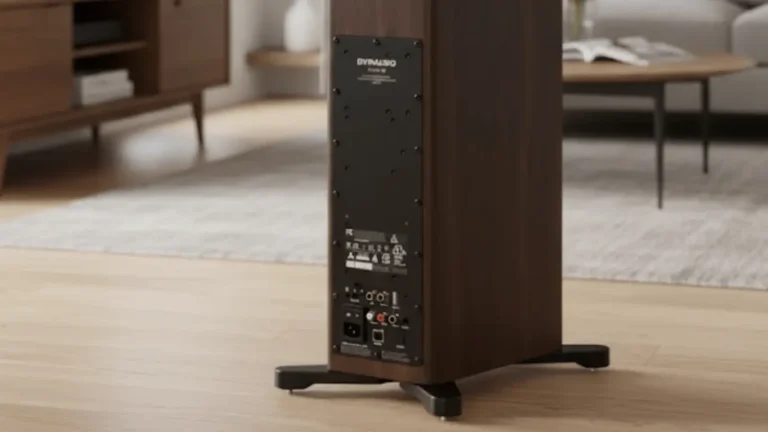
A single pair of high-quality WBT terminals is used for connection. Adjustable spikes are provided to ensure vibration isolation from the floor.
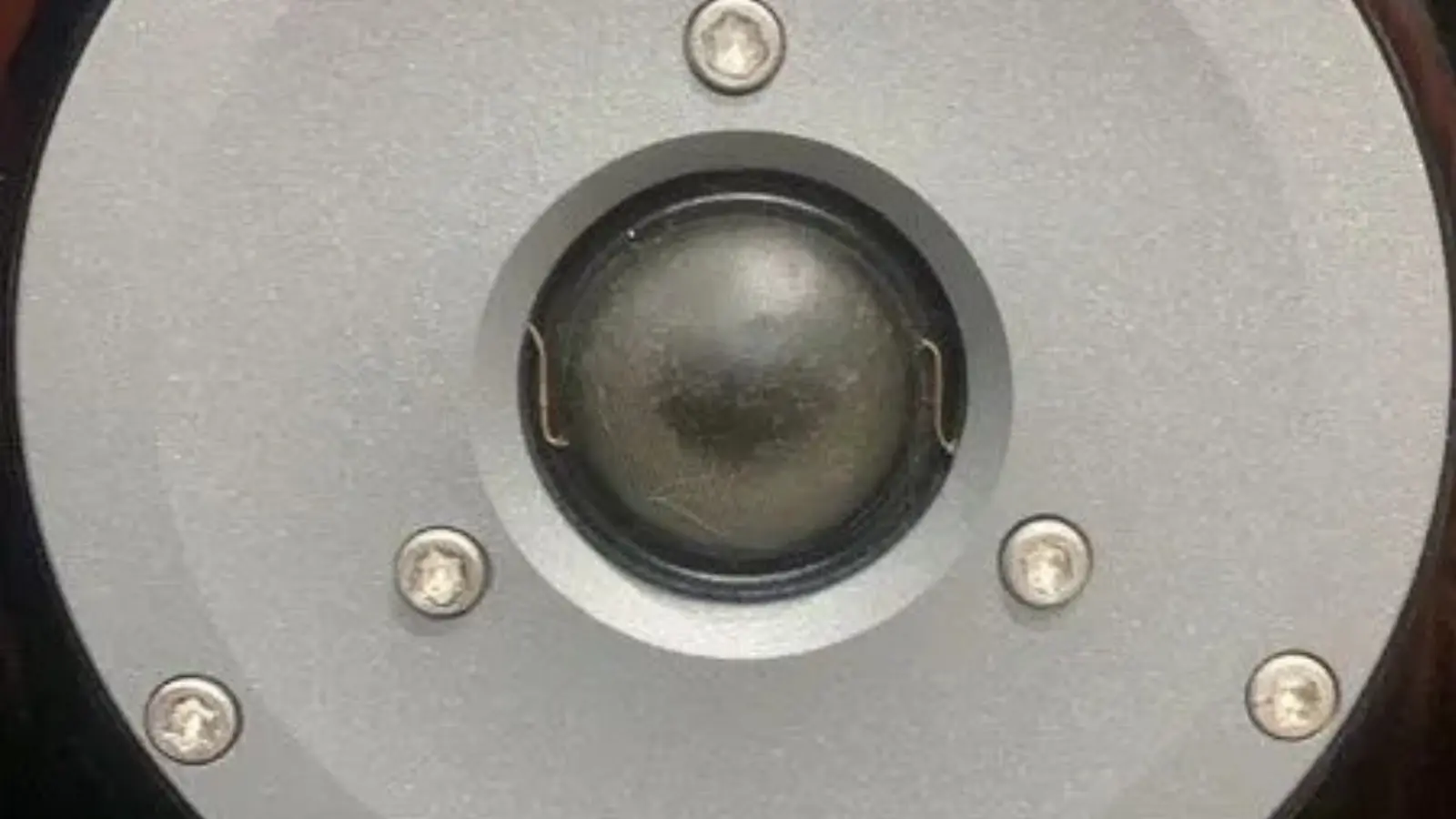
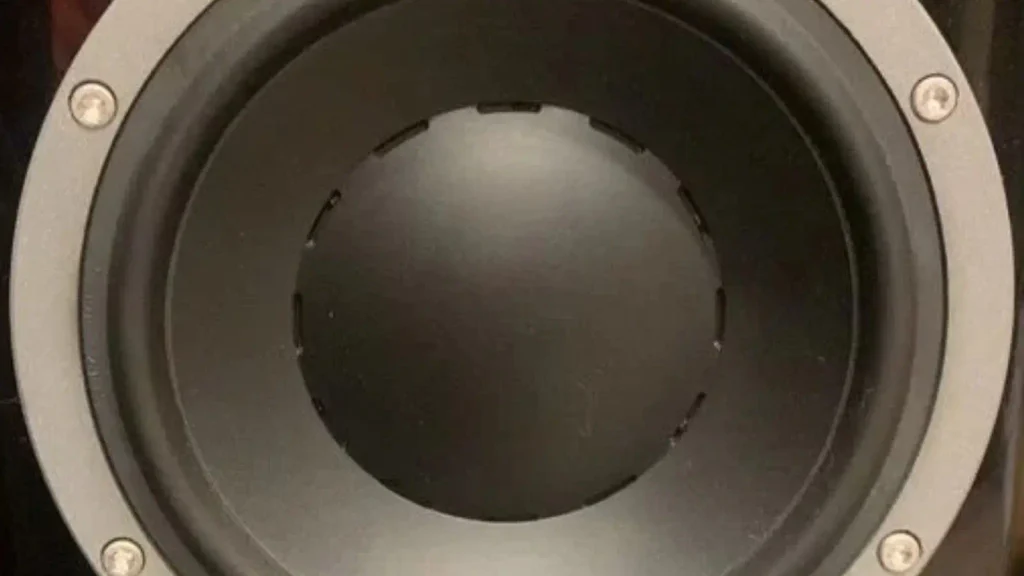
The Dynaudio Focus 260 uses new, improved transducers. The newly impregnated fabric dome tweeter has a larger diameter of 28 mm. The tweeter flange is not flat but features a complex surface shape to control sound dispersion. Two 170 mm midrange and woofer drivers are housed in lightweight, thin-profile, highly rigid aluminum baskets. Larger 75 mm voice coils are wound on a Kapton former. The speaker’s crossover is a two-way design, incorporating low-order filters and additional circuits that stabilize the phase response and impedance.
The speaker’s sensitivity is quite low, rated at 87 dB, and our measurements suggest even lower, so a fairly powerful amplifier will be required. However, the speaker itself is designed for medium- to large-sized rooms, so a relatively powerful amplifier is recommended.
Dynaudio Focus 260 Sound Quality
The Focus 260’s sound was a pleasant surprise. This was despite the initial expectation that such a renowned manufacturer and such a budget would deliver at least good sound. The speakers combine seemingly incompatible qualities: exceptional transparency, detail, and precision with equally exceptional expressiveness and integrity. It’s worth noting that the latter somewhat outweighs the former.
It’s extremely difficult to separate the sound into its components, and it’s equally difficult to focus on individual elements of a musical composition. The Focus 260s don’t lend themselves to analytical thinking; they present any material as a unified sonic image. Voices and instruments are conveyed with natural, vibrant timbres, and space is accurately and naturally rendered.
Interestingly, despite the absolutely flat high-frequency response achieved in laboratory conditions, the highs sound softer. There are absolutely no complaints about the midrange; everything is fully conveyed. The bass is simply superb. Despite the chosen acoustic design, there are no audible overtones or delays, which would seem inevitable with a bass reflex port. By using large-diameter voice coils, the developers achieved excellent control and bass clarity.
The Focus 260s don’t seem to have any genre preferences, but what they don’t like is playing at low volumes. At this level, microdynamics suffer, and as a result, fine details and subtle nuances in the music are lost. To bring the balance back, simply turn up the volume knob.
The overall sound can be described as dense, dynamic, and expressive. Credit where credit is due—Dynaudio manages to simultaneously maintain its own distinct sound signature while maintaining authenticity and balance.
Dynaudio Focus 260 Loudspeaker Measurements and Specifications
The frequency response is close to ideal. The midline is horizontal, with minor deviations. Distortion rises as frequency decreases, particularly toward the bottom of the speaker’s usable frequency range. The impedance curve is relatively benign, although the combination of low sensitivity and a minimum impedance of 4.52 ohms means the Focus 260 benefits from a capable amplifier.
Conclusion:
The Dynaudio Focus 260 may look like a conventional floorstanding speaker, but its performance is anything but ordinary. What impressed me most is the way it combines precision and transparency with a dense, expressive presentation that never feels clinical. The bass has excellent control, the midrange is natural and convincing, and the softer treble keeps long listening sessions enjoyable.
The Dynaudio Focus 260 is not a speaker for someone looking for a spectacular sound at first listen. Instead, its strengths become more apparent the longer you spend with it. It needs a capable amplifier and benefits from being played at a reasonable level, but when those requirements are met, it delivers the kind of balanced, coherent, and deeply musical presentation that makes it easy to forget you’re listening to individual drivers and a cabinet.
Dynaudio Focus 260 Specifications:
| Specification | Dynaudio Focus 260 |
|---|---|
| Type | Floorstanding loudspeaker |
| Design | 2.5-way bass reflex, rear-ported |
| Tweeter | 28 mm soft-dome |
| Midrange/Woofer | 2 × 17 cm MSP |
| Crossover Frequency | 2,000 Hz |
| Crossover | 1st/2nd-order |
| Sensitivity | 87 dB (2.83 V/1 m) |
| Nominal Impedance | 4 ohms |
| Power Handling | 250 W IEC |
| Frequency Response | 32 Hz–23 kHz (±3 dB) |
| Weight | 19.1 kg / 42.1 lbs |
| Dimensions (W × H × D) | 202 × 995 × 294 mm |
| Cabinet Volume | 36 litres |
| Finishes | Maple, Walnut, Rosewood, Black Ash, White Piano, Black Piano |