The Small Upgrades That Make The Biggest Difference In Audio Performance
You don’t always need a new amplifier, a more expensive DAC, or a completely different pair of speakers to make your system sound better. Sometimes the biggest improvement is already sitting in front of you, and it may not cost anything at all.
Many people assume that achieving exceptional audio quality requires replacing an entire sound system. While premium speakers or headphones certainly have an impact, some of the most noticeable improvements can come from smaller, carefully chosen changes.
These refinements work together to reveal greater clarity, detail, and balance, allowing listeners to experience music, podcasts, movies, and games in ways they may not have thought possible.
Whether you’re just beginning your audio journey or have spent years building a dedicated listening setup, understanding where small improvements can make the greatest impact can help you get far more value from your existing equipment.
Start With Better Source Material
Every audio system begins with the source. Even the world’s finest equipment cannot restore details that were never present in the recording.
Compressed music files can sacrifice information to reduce file size, while lossless streaming services and well-produced recordings preserve much more of the original performance. The difference will depend on the recording, the quality of the compression, and the rest of your system, but the source is still a good place to start.
Before spending money on new hardware, take a closer look at the quality of your music library. Upgrading your source material may provide a surprisingly noticeable improvement without changing any physical equipment.
Move Your Speakers Before Buying Anything
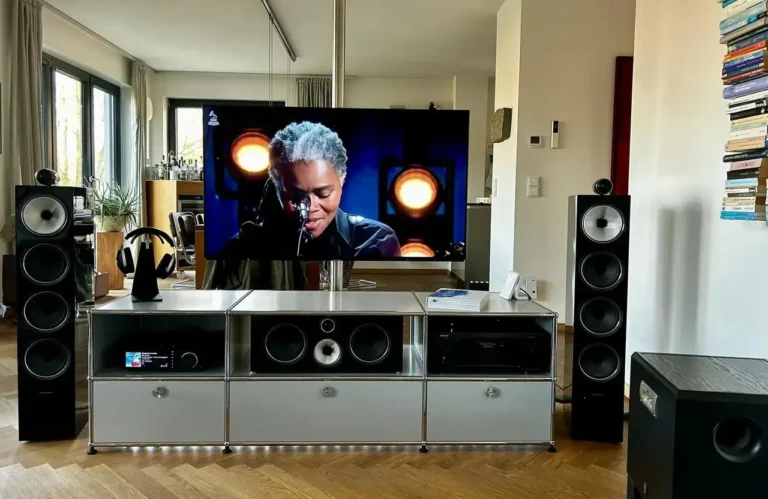
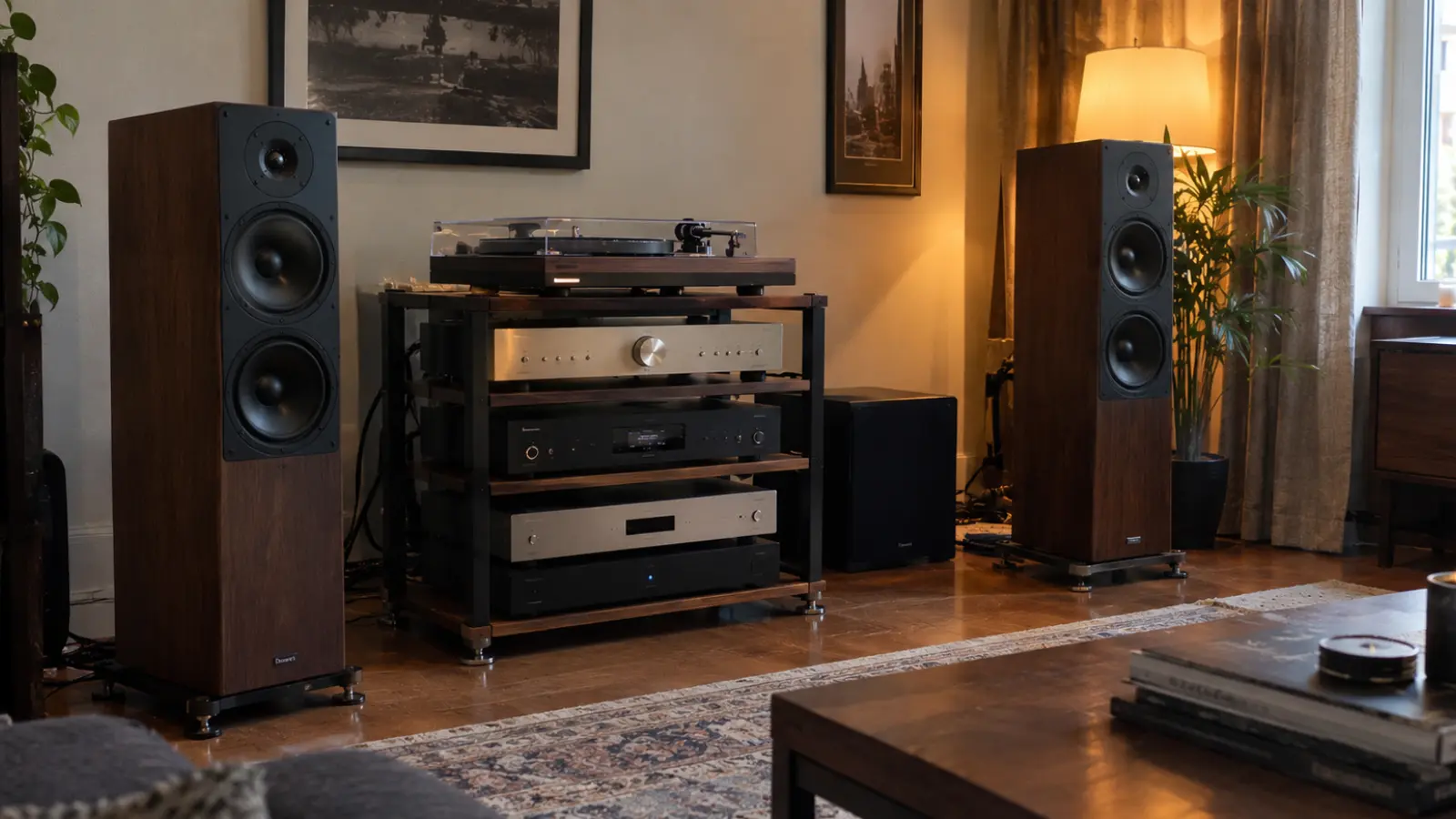
Speaker positioning plays an enormous role in overall sound quality. Before spending another dollar on your system, try moving the speakers. Even a small change in their position can affect bass response, stereo imaging, and tonal balance.
General guidelines include:
- Keep speakers symmetrical.
- Form an equilateral triangle between both speakers and the listening position.
- Angle speakers slightly toward the listener.
- Avoid placing them directly against walls.
- Experiment with spacing until vocals appear centered and instruments feel naturally positioned.
The exact placement will depend on your room and speakers, so don’t be afraid to experiment. Patience during setup can sometimes reward listeners with a bigger improvement than purchasing new equipment.
Improve Your Listening Environment
Even modest equipment can sound impressive in a properly arranged room, while expensive gear may struggle in poor acoustic conditions. Hard surfaces create reflections that can blur imaging and reduce clarity. Large empty spaces can exaggerate echoes, while poorly positioned furniture can interfere with sound dispersion.
Simple improvements include:
- Adding rugs to reduce floor reflections.
- Using curtains to soften reflective windows.
- Positioning bookshelves to help diffuse sound.
- Moving speakers away from walls where practical.
- Eliminating unnecessary vibrations.
These adjustments often cost less than hardware upgrades while producing immediately noticeable improvements.
Choose The Right Digital-To-Analog Converter
Most digital audio eventually passes through a digital-to-analog converter, or DAC. This component transforms digital information into the analog signal that your headphones or speakers can reproduce.
Many computers, smartphones, and budget music players include built-in DACs designed around cost, size, and efficiency. A good external DAC can provide cleaner conversion and lower noise, although the audible difference will depend heavily on the quality of the existing hardware and the rest of the system.
For listeners who stream music daily, a dedicated DAC can be a worthwhile upgrade when the existing digital-to-analog stage is genuinely limiting the system.
Don’t Underestimate A Quality Headphone Amplifier
Some headphones require more power than a phone or laptop can comfortably provide. Even efficient headphones may benefit from a capable amplifier, particularly when the built-in output is struggling with power, noise, or volume requirements.
A dedicated headphone amplifier can provide more consistent power and better control over the drivers. Depending on the headphones and amplifier, this may result in tighter bass, improved dynamics, and greater clarity.
The improvement is especially noticeable with hard-to-drive headphones or when listening to demanding recordings with wide dynamic swings and complex arrangements.
Replace Worn Ear Pads And Accessories
Headphone performance depends partly on maintaining the correct seal around your ears. Over time, ear pads can compress, crack, or lose their original shape. This changes the distance between your ears and the drivers while potentially reducing isolation and altering bass response.
Replacing worn ear pads can restore much of the headphone’s original fit and sound while greatly improving comfort during long listening sessions. Likewise, replacing damaged connectors or worn cables helps maintain reliable performance and prevents unnecessary interruptions.
It is one of those small upgrades that is easy to overlook simply because it isn’t as exciting as buying a new pair of headphones.
Match Components Carefully
One common mistake among new enthusiasts is assuming that buying the most expensive individual component automatically produces the best results. Audio systems generally perform best when their components work well together.
An outstanding amplifier cannot compensate for poor recordings. Exceptional headphones may reveal limitations elsewhere in the signal chain. Likewise, a premium DAC delivers its greatest benefits when the rest of the system is capable of taking advantage of it.
Building a balanced system often produces better performance than investing heavily in a single upgrade while neglecting everything else.
Keep Software And Firmware Updated
Audio quality is no longer determined solely by hardware. Manufacturers frequently release firmware updates that improve compatibility, fix bugs, optimize Bluetooth performance, and refine digital processing.
Streaming applications also receive updates that can improve playback stability and introduce higher-quality streaming options. Checking periodically for updates helps ensure that your existing equipment continues performing as intended without requiring additional purchases.
Upgrade Your Cables Thoughtfully
Audio cables remain one of the most debated topics among enthusiasts. While cables cannot compensate for poor equipment or low-quality recordings, well-built cables can provide better durability, reliable connections, and appropriate shielding for the application.
Rather than treating cables as magical solutions, think of them as finishing touches for an already capable system. A damaged, poorly fitting, or unsuitable cable is certainly worth replacing, but cables should rarely be the first place to spend money when more fundamental improvements are still available.
For listeners looking to refine their setup with carefully selected components, specialist audio retailers such as Moon Audio offer a wide range of equipment and accessories for enthusiasts.
Reduce Electrical Noise When There Is A Real Problem
Modern homes contain numerous electronic devices, and poorly designed or damaged equipment can sometimes introduce audible hum, buzzing, or interference into an audio system.
If you are actually hearing electrical noise, start with the basics. Separate audio components from problematic electrical loads, check connections, try a different outlet, and use appropriate surge protection. Cable organization can also make a system easier to troubleshoot.
However, there is no need to buy expensive power accessories simply because they are marketed as an audio upgrade. If your system is already quiet, spending money to eliminate a problem you cannot hear may provide little practical benefit.
Develop Better Listening Habits
One of the most overlooked upgrades costs absolutely nothing.
Focused listening allows you to appreciate nuances that background listening often misses. Instead of multitasking, dedicate some time to sitting comfortably, minimizing distractions, and listening actively to complete albums.
You’ll begin noticing subtle production choices, instrument placement, vocal harmonies, room ambience, and dynamic shifts that can transform familiar recordings into fresh experiences. As your listening skills improve, you’ll also become better equipped to identify which future equipment upgrades genuinely benefit your personal preferences.
Conclusion:
Outstanding audio performance rarely comes from a single expensive purchase. Instead, it develops through a series of thoughtful improvements that complement one another.
Better source material, careful speaker placement, improved room acoustics, appropriate amplification, fresh headphone accessories, updated software, and balanced system matching can all contribute to a richer and more engaging listening experience.
Before replacing everything, make sure you’ve extracted everything your existing system can already give you. In many cases, the biggest improvements come not from buying more equipment, but from refining the details that let your existing equipment perform at its full potential.