Stop Using Your KEF Q150s Wrong: 5 Simple Tweaks That Make Them Sound Shockingly Expensive
I’ve lost count of how many times I’ve heard the same sentence over the past few months. Since my recent post about why these are the budget kings of the year, people keep reaching out with the same line: ‘The KEF Q150s are good… but I expected more.’
And every single time, the speakers weren’t the problem.
During the Christmas holidays, with long evenings, no deadlines, and hours set aside purely for listening, I pulled the Q150s back into my main test room. These weren’t quick demo sessions. This was real listening: albums front to back, familiar tracks late at night, and that dangerous habit of saying “just one more song” at 1 a.m. What struck me wasn’t how limited the Q150s were—but how often people unknowingly hold them back.
The confusion usually starts before the speakers even arrive. Buyers jump between models, reading comparisons, chasing specs, and wondering if they should’ve stretched for the Q350 or jumped straight to a floorstander. But the truth is simpler—and far more encouraging: a correctly set up Q150 can sound far closer to a high-end system than most people realize.
The Listening Setup (Because Context Matters)
Before diving in, here’s how I listened—because tweaks only make sense in real rooms, not lab conditions.
- Room size: ~13 × 16 feet (medium-sized living room)
- Listening distance: ~7.5 feet
- Volume: Mostly moderate, occasionally pushing toward “concert realism”
- Sources:
- Qobuz (FLAC, 16/44 and 24/96)
- Vinyl via a mid-tier turntable
- Music: Jazz trios, acoustic singer-songwriters, classic rock, electronic, and orchestral film scores
No exotic gear. No audiophile voodoo. Just careful listening and deliberate changes.
Tweak #1: Get Them Off the Shelf (This Is the Big One)
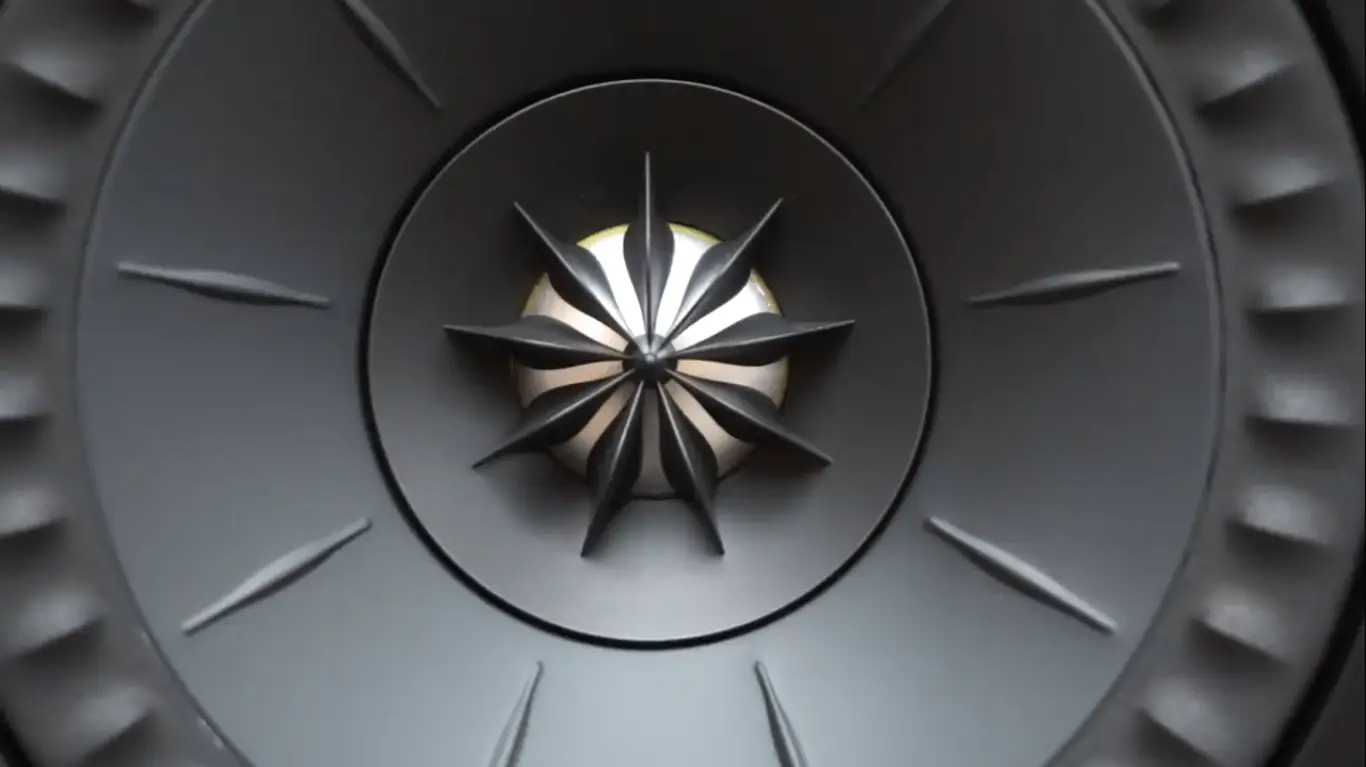
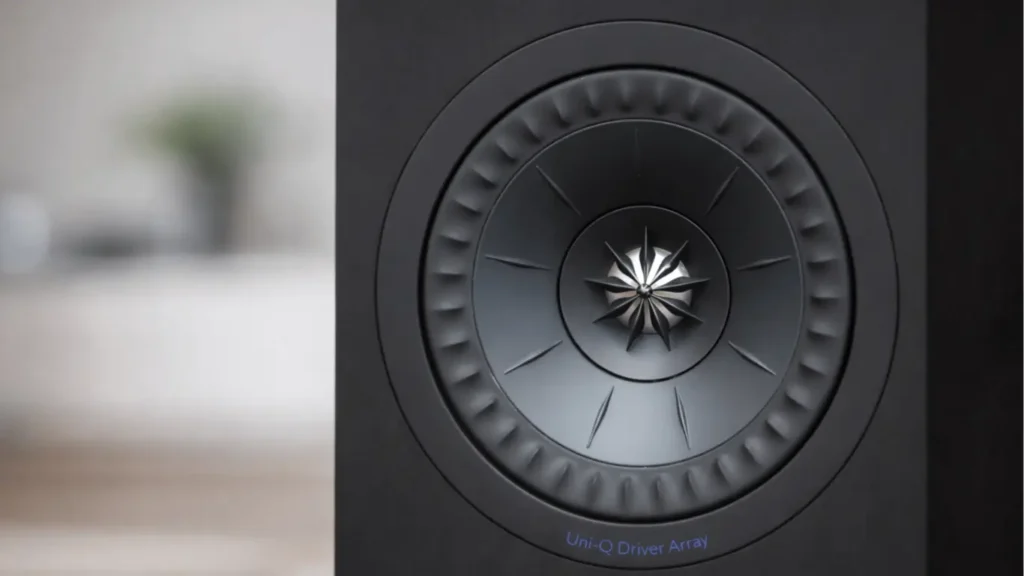
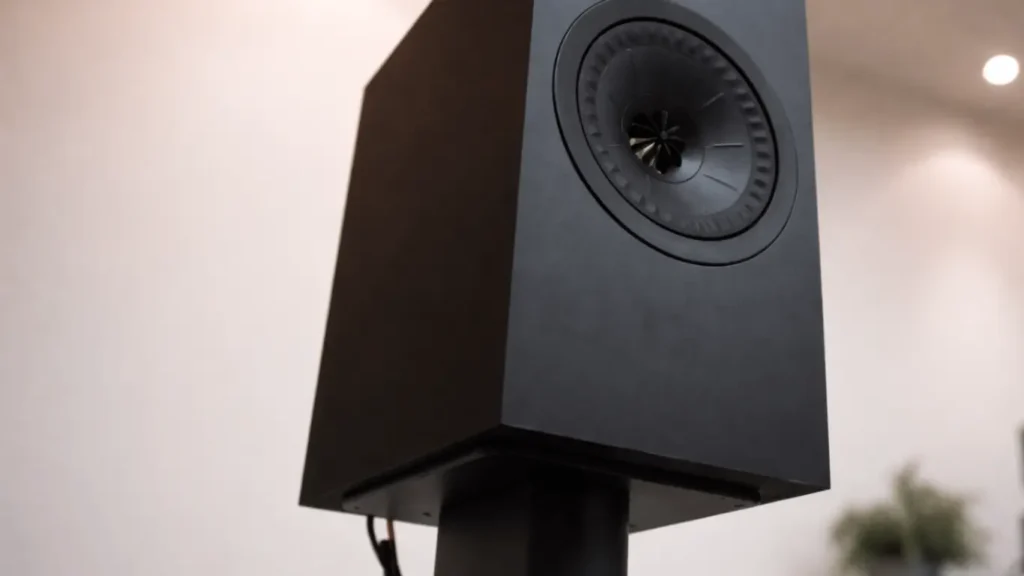
Let’s get this out of the way: bookshelf speakers don’t belong on bookshelves. When the Q150s are shoved into cabinets or pushed against the wall, the Uni-Q driver can’t do what it does best—project a coherent, three-dimensional soundstage. Bass becomes bloated, mids lose clarity, and suddenly people start blaming the speaker.
The moment I moved them onto proper stands, around ear height, with some breathing room behind them, everything snapped into focus. If you’re looking for the best gear to isolate your setup, I recently put together a list of the 7 Best Hi-Fi Isolation Manufacturers in the USA that pair perfectly with these stands.
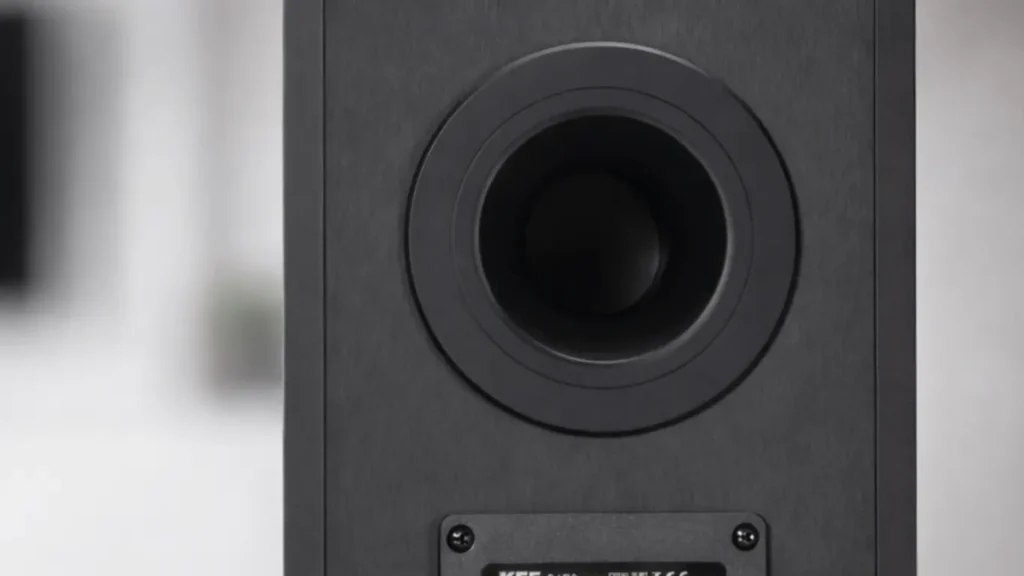
This alone can make the Q150 sound like it jumped an entire price bracket. Pro tip: If you absolutely must keep them close to a wall due to space, don’t forget the foam “port bungs” that came in the box. Stuffing those into the rear ports helps tame the “boominess” that happens in tight spaces.
Tweak #2: Toe-In Isn’t Optional—It’s Essential
This is where the Q150 genuinely surprised me.
A slight toe-in—nothing extreme—transformed the sound. With the speakers angled just enough toward the listening position, center imaging is locked in. Voices became eerily specific. Instruments stopped wandering and started existing in space.
This is the mistake most buyers make: they leave the speakers facing straight ahead and assume that’s “neutral.” With KEF’s Uni-Q design, a bit of toe-in isn’t a tweak—it’s part of the design intent.
I didn’t expect this from the cheaper model, but the soundstage depth after proper toe-in rivaled speakers I’ve heard at three times the price.
Tweak #3: Volume Discipline Changes Everything
The Q150 is honest—sometimes brutally so.
Push it too hard in a small or untreated room, and it can sound strained. But here’s the secret: at moderate volumes, it becomes far more refined than people expect.
Late-night listening sessions revealed the Q150’s real strength. Microdynamics, subtle reverb tails, the texture in vocals—this is where the speaker shines. Jazz recordings on Qobuz felt intimate, almost headphone-like, while vinyl playback gained a warmth that balanced the speaker’s natural clarity.
This one surprised me: the Q150 doesn’t need to be loud to sound big.
It needs to be comfortable.
Tweak #4: Give the Bass Some Help—But Do It Right
No, the Q150 doesn’t magically turn into a full-range speaker. Physics still applies.
But adding a subwoofer—and setting it correctly—changes the game. Crossing over gently, keeping the sub subtle rather than dominant, allows the Q150 to focus on what it does best: mids and highs.
Once relieved of deep bass duties, the midrange opened up. Vocals gained body. Complex mixes felt less congested. The system didn’t just sound bigger—it sounded more expensive.
The key is restraint. A subwoofer should disappear, not announce itself.
Tweak #5: Feed Them Better Music (Yes, It Matters)
The Q150 scales more than people give it credit for.
Compressed streams flatten their strengths. High-quality sources—especially well-recorded acoustic or live material—let the speaker breathe. On Qobuz, the difference was immediate. Vinyl added another layer of engagement, smoothing the edges without dulling detail.
This is where the Q150 stops sounding like a “budget speaker” and starts sounding like a serious hi-fi component.
The Verdict (No Fence-Sitting)
Here’s the truth: most people aren’t underwhelmed by the KEF Q150—they’re underusing it.
Set up carelessly, it sounds fine.
Set up thoughtfully, it becomes shocking.
This speaker taught me something important over the holidays: price doesn’t define musical satisfaction—attention does. When treated properly, the Q150 delivers imaging, tonal balance, and emotional engagement that feels completely out of sync with its asking price.
If you’re considering upgrading from the Q150, ask yourself one thing first:
Have you actually heard what it can do?
Because when you do, the urge to spend more money suddenly becomes a lot easier to resist.