My Hands-On Review: Wharfedale’s ‘Heavenly’ Elysian 2 Speakers (2025)
So, Wharfedale decided to call their flagship speakers “Elysian,” which literally means heavenly. That’s a bold move for a brand I’ve always known for being solid, musical, and high-value—not necessarily for chasing absolute audio paradise.
The big question for me was: Is this just a fancy name, or did they actually build something special? I spent a lot of time with the “smaller” model, the Elysian 2, to find out.
First Look & Feel: These “Bookshelf” Speakers are Beasts
Let’s be clear: calling these “bookshelf” models is misleading. When the boxes arrived, I was genuinely shocked by the scale. Each speaker is over two feet tall, nearly 12 inches wide, and incredibly deep.
Lifting one out, I felt its serious weight (about 30.5kg / 67 lbs each!). This is not furniture for a wobbly IKEA shelf. They demand heavy-duty stands. In fact, because of the unique downward-firing port, you practically have to use the matching Elysian stands (or a specialized open-frame alternative) to get the bass right.
Check Out: Wharfedale Elysian 4 Review
The finish on my review pair was Piano White, and wow—it’s stunning. It’s that deep, mirror-like gloss you usually only see on a concert grand piano. No bubbles, no orange peel, no imperfections. Tapping the cabinet doesn’t give you a hollow “thud”; it feels dense and dead, like marble. You know you’re holding a luxury item before you even plug it in.
What’s Inside? The Tech That Justifies the Price
Peeking behind the grille reveals the engineering. The cabinets use Wharfedale’s PROS tech—a complex sandwich of different wood densities to kill panel resonance. Inside, the walls are curved to stop internal standing waves.
But the drivers are the real story:
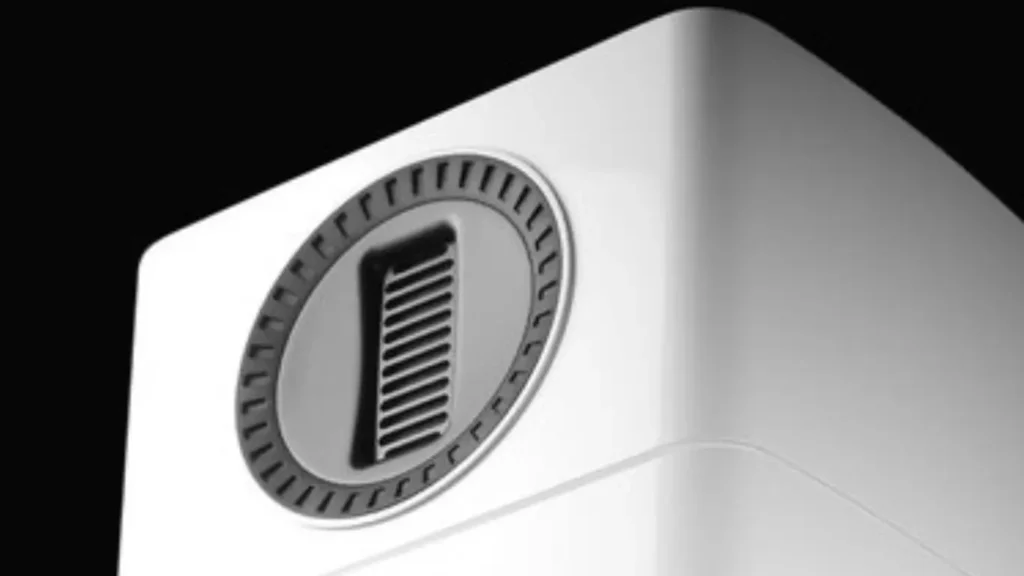
- The Tweeter: This is an AMT (Air Motion Transformer). Instead of a normal dome that pushes air, this is a pleated membrane that “squeezes” air out incredibly fast. It’s a larger, more refined version of the unit found in their EVO4 series, designed for effortless detail.
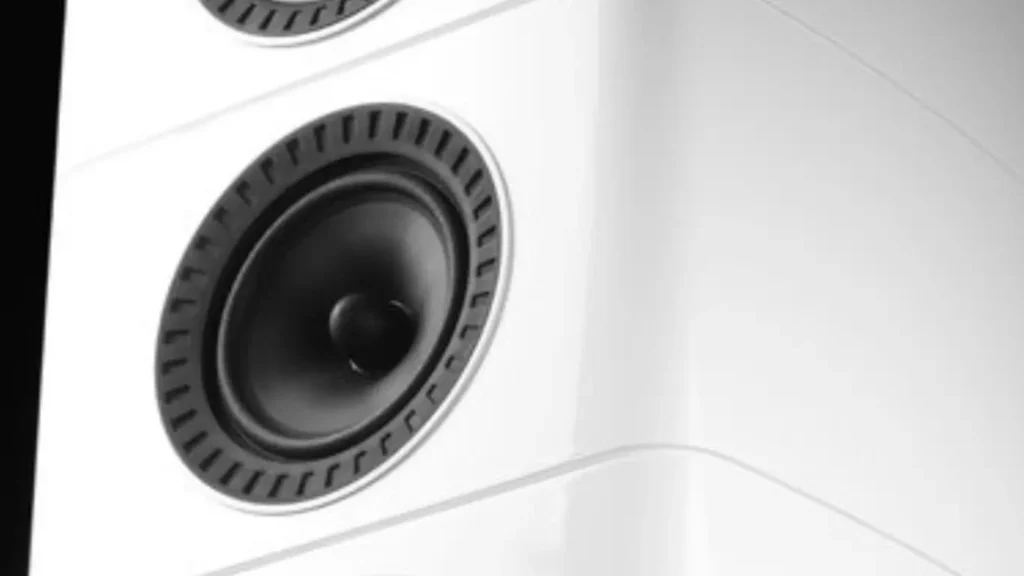
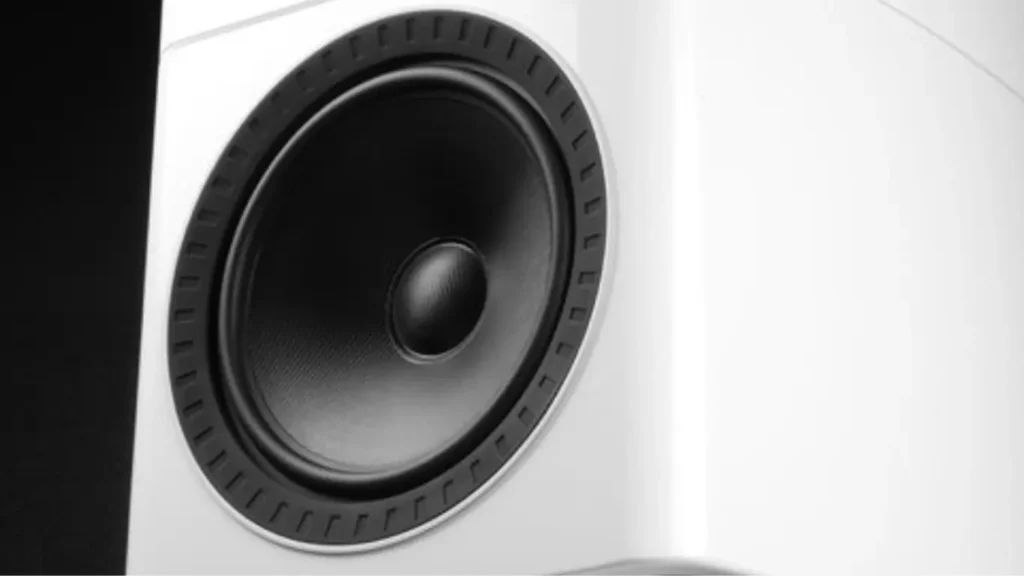
- The Mid and Bass Drivers: This is where the magic happens. While these drivers bear a striking resemblance to the famous Danish Scan-Speak Revelators (due to the slashed cones), they are actually Wharfedale’s own proprietary glass-fibre matrix cones. Peter Comeau and his team engineered these from the ground up to match the lightning-fast speed of the AMT tweeter. In the 2025 market, finding this level of custom engineering—rather than just buying off-the-shelf parts—is rare.
My Listening Sessions: The “Heavenly” Sound?
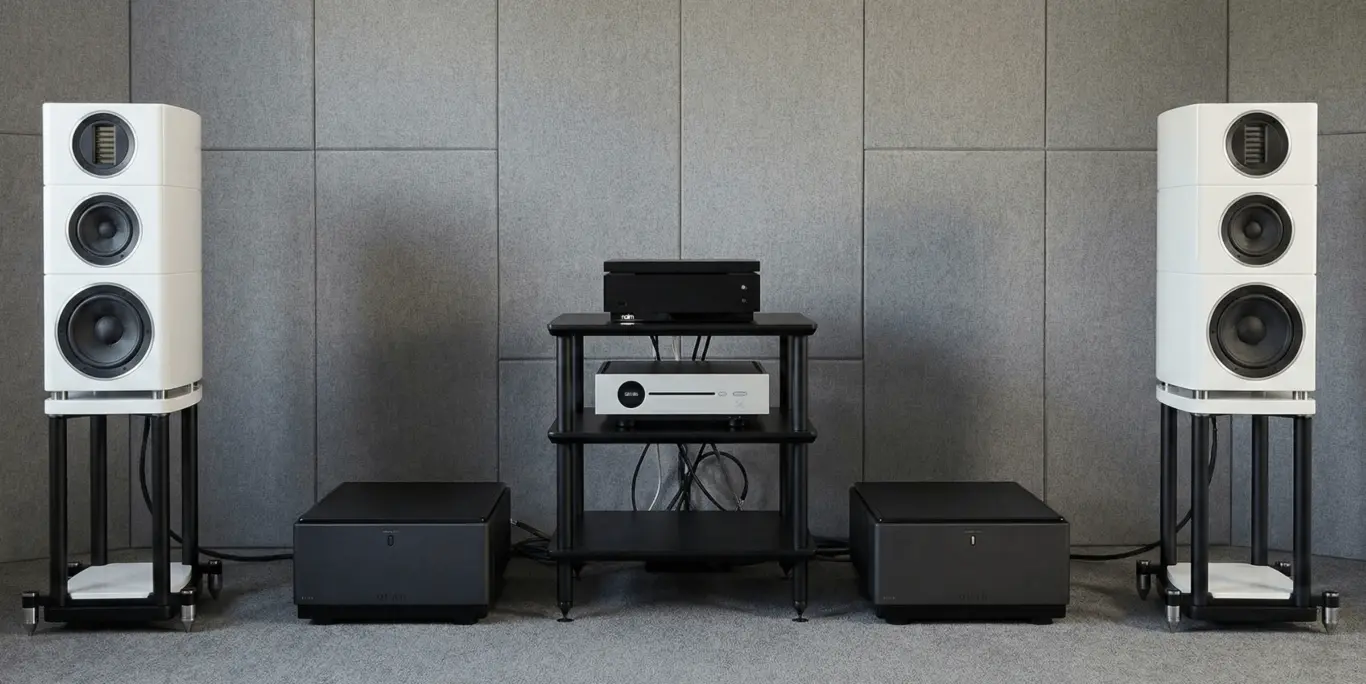
I hooked them up to a system that matches their pedigree: a Naim Uniti Core streamer into a Quad Artera Pre, driving a pair of Quad Artera Mono power amps. Note: These speakers are rated at 4 Ohms. Do not try to run them with a budget AVR; they need current and grip to wake up.
From the first track, the personality was clear: Refined, neutral, and incredibly big.
- The Highs (Treble): That AMT tweeter is spectacular. It reveals insane detail—the breath before a vocal, the subtle decay of a cymbal—but it’s never harsh. Some “detailed” speakers can sound bright or etched; these just sound airy and natural.
- The Mids (Vocals & Instruments): The crossover integration here is seamless. Usually, it’s hard to get a fast AMT to blend with a cone driver, but Wharfedale nailed it. Vocals are stunningly real. Listening to acoustic tracks, the singer feels present in the room, with genuine body and texture, not just a “floating head” effect.
- The Bass: For a standmount, the bass authority is shocking. Thanks to the SLPP (Slot-Loaded Profiled Port) system, which vents neatly between the speaker and the stand, the bass is evenly distributed throughout the room. It digs deep (down to 35Hz), but it’s tight and articulate. You hear the texture of the bass string, not just a one-note boom.
The Overall Vibe
The best word is “cohesive.” Everything blends perfectly. It’s not a “warm” speaker like the classic Lintons, nor is it a sterile “studio monitor.” It’s a transparent window into the music. It gets out of the way and lets the recording breathe.
My Final Verdict
Wharfedale built its reputation on giving you more sound for your money. The Elysian 2 does something brilliant: it enters the true high-end conversation while still honoring that value principle—it just operates at a much higher tier.
You may like: Wharfedale Diamond 12.1 Review
In today’s market, where you can spend a fortune on a brand name alone, the Elysian 2 feels like a steal. You’re paying for:
- Real Craftsmanship: That piano finish is world-class.
- Custom Engineering: In-house drivers that perfectly match the cabinet.
- A Benchmark Sound: A neutral, revealing performance that competes with speakers costing $10k+.
Are they “heavenly”? That’s subjective. But strictly speaking, they are a masterclass in high-end speaker design. If you have the room for them (and the right amp to drive them), the Elysian 2 isn’t just a good Wharfedale—it’s one of the most capable speakers I’ve heard at the five-figure price point.
Pros And Cons
Pros
- Sound Quality
- Build Quality
- Exceptional Clarity
- Deep, Controlled Bass
- Seamless Integration
Cons
- Amplification
- Heavy
Wharfedale Elysian 2 Specifications
| Feature | Specification |
| Type | 3-Way Standmount Speaker (Bass Reflex) |
| Tweeter | 27 x 90mm AMT (Air Motion Transformer) |
| Midrange Driver | 6.0″ (150mm) Coated Glass Fibre Matrix Cone |
| Bass Driver | 8.5″ (220mm) Coated Glass Fibre Matrix Cone |
| Frequency Response | 35Hz ~ 22kHz (±3dB) |
| Bass Extension | ~28Hz (-6dB) |
| Sensitivity | 89dB (2.83V @ 1m) |
| Nominal Impedance | 4Ω (Compatible with 8Ω output) |
| Minimum Impedance | 3.6Ω |
| Recommended Power | 25 – 250 Watts |
| Crossover Frequencies | 360Hz, 2.9kHz |
| Height (on plinth) | 700mm (27.6″) |
| Width | 334mm (13.1″) |
| Depth (with terminals) | 462mm (18.2″) |
| Weight | 30.5kg (67.2 lbs) per speaker |
| Finishes | Piano Black, Piano White, Piano Walnut |