Is Your Room Killing Your Bass? How the Paradigm Defiance V12 Fixes the Unfixable
There’s a moment with every subwoofer where reality sets in. You’ve placed it where it fits, connected everything, maybe even dialed in the crossover—and then you sit down expecting that satisfying, room-filling bass.
Instead, you get something uneven.
Too much energy in one corner. Not enough in another. A sense that the subwoofer is doing its job… but the room isn’t cooperating.
That’s usually where the real work begins.
When I set up the Paradigm Defiance V12, I expected the same process. Some experimentation, some compromise, and eventually a “good enough” result.
Paradigm’s Affordable Tower Speakers Sound Far Bigger Than Their Price Suggests
That’s not quite how it played out.
Not Designed to Impress in Five Minutes
The sub-$1000 category doesn’t lack options. If anything, it’s saturated with subwoofers that aim to impress quickly—elevated bass, aggressive tuning, and that immediate sense of impact during a short demo.
The Defiance V12 doesn’t follow that formula.
It doesn’t try to sound bigger than it is. It doesn’t exaggerate low-end weight to grab attention. Instead, it focuses on something less obvious, but far more important over time: consistency.
Because the real challenge with bass isn’t output—it’s control, and more specifically, how that bass behaves inside an actual room.
Understated Design, Thoughtful Execution
Physically, the V12 is about as straightforward as it gets.
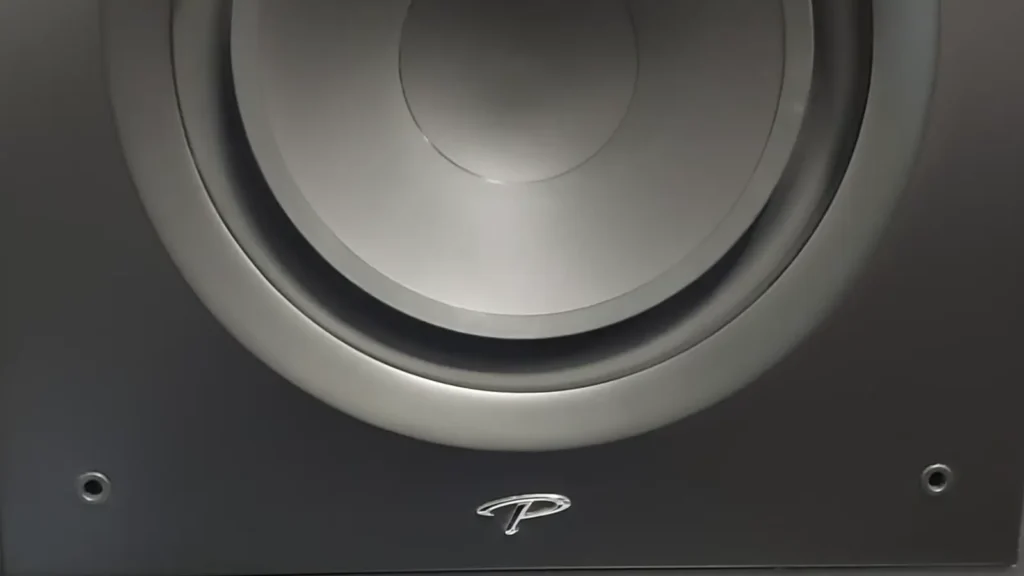
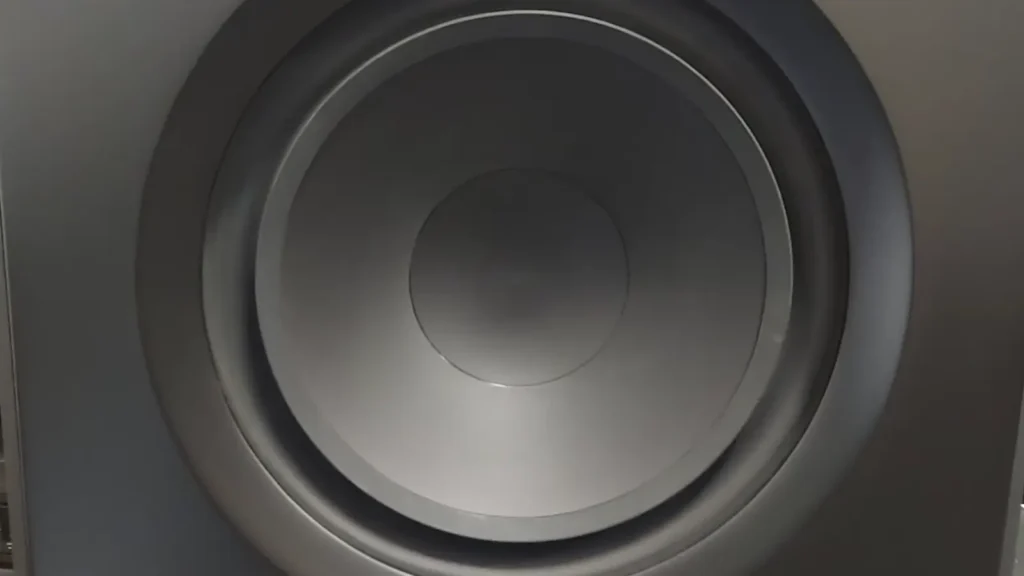
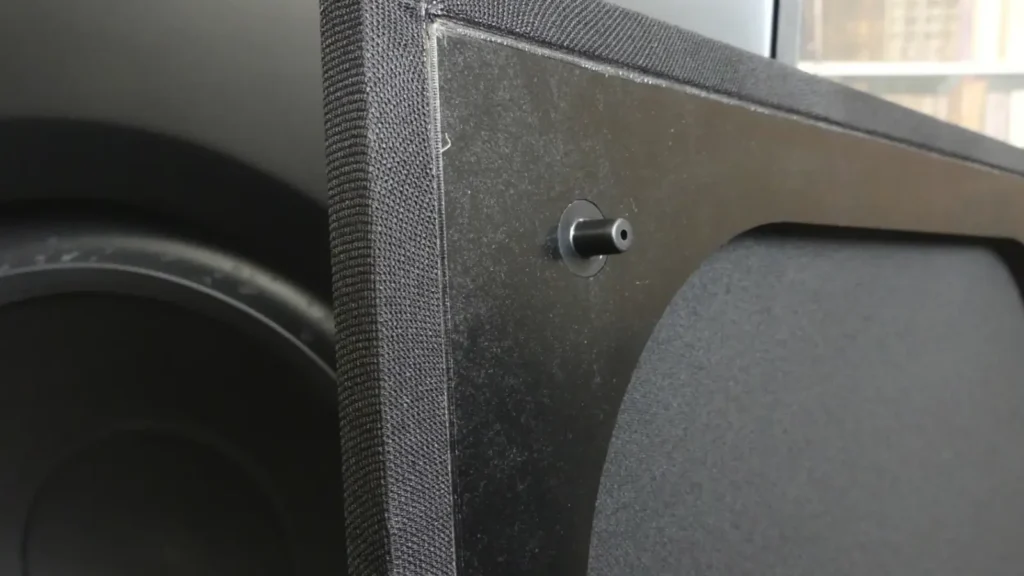
A clean, front-firing 12-inch driver, a full fabric grille, and a cabinet that avoids unnecessary styling. It leans more toward a traditional than a modern statement piece—and that works in its favor.
The build, however, tells a more detailed story.
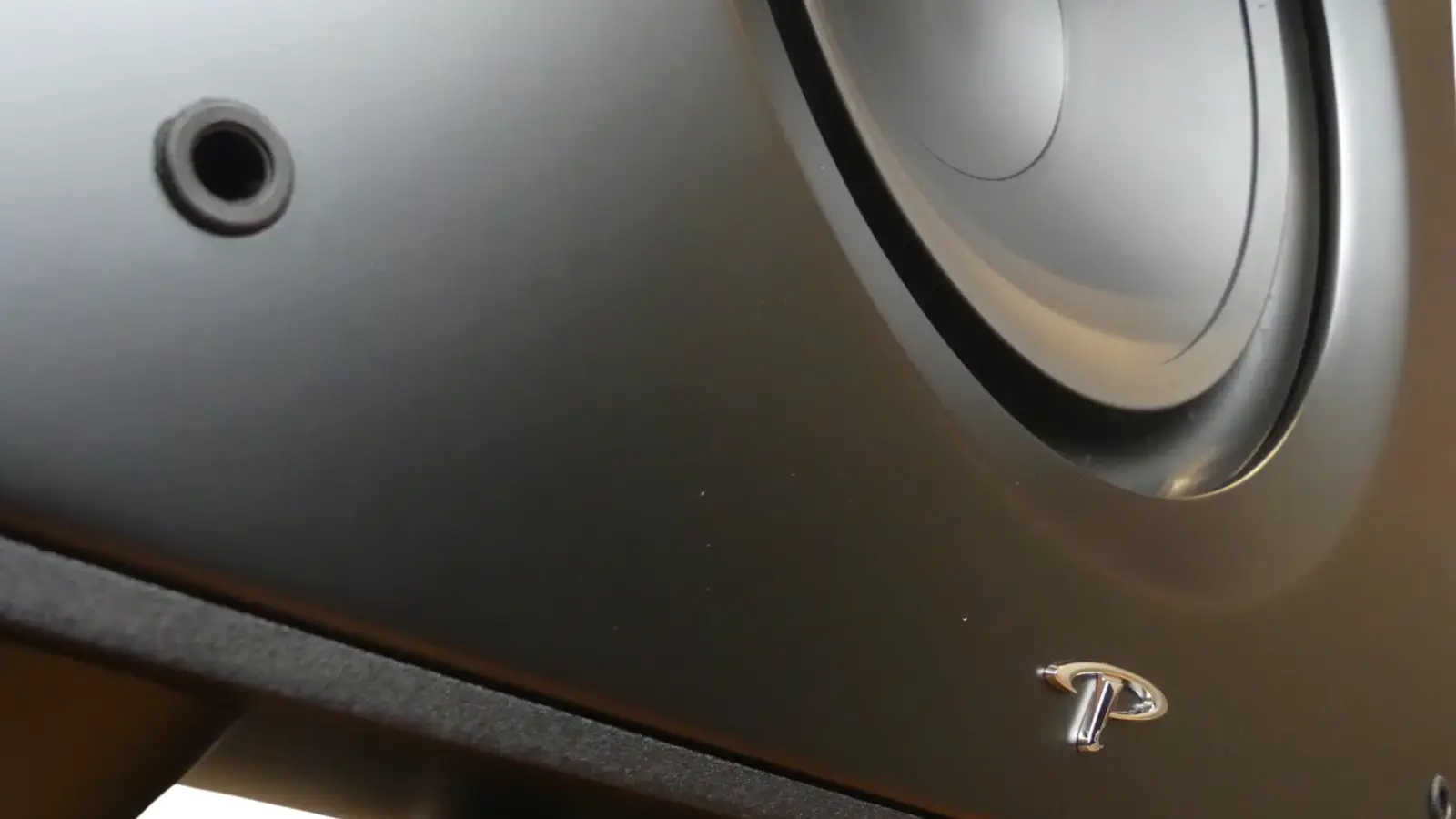
The cabinet feels solid, the finish has a subtle texture that holds up well under light, and the feet provide just enough elevation for the downward-firing port to operate without restriction. Nothing feels overdone, but nothing feels overlooked either.
At just over 19 kg, it’s substantial without becoming difficult to place—another small but meaningful balance.
Control Without Leaving Your Seat
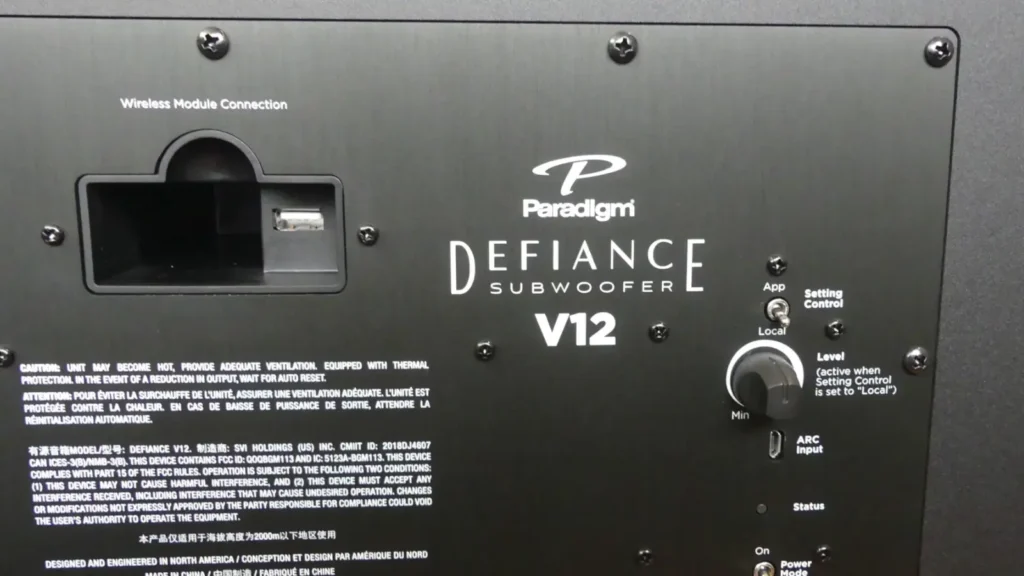
There’s almost no physical interface on the subwoofer itself.
At first glance, that feels like a limitation. In practice, it’s the opposite.
Using the Paradigm Subwoofer Control app, adjustments happen from the listening position—where they actually matter. Volume, phase, crossover behavior, listening modes—it’s all there, laid out in a way that doesn’t require guesswork.
What stands out most is the inclusion of a variable test tone.
Running a sweep across frequencies reveals exactly how the room is interacting with the subwoofer. Peaks, dips, resonances—they become obvious. And once you hear them, you start understanding placement and tuning in a much more precise way.
It’s a small feature, but it changes how you approach setup.
ARC: The Difference Between Good and Dialed-In
The defining feature here is Anthem Room Correction (ARC).
Room correction systems aren’t new, but their implementation at this level—and specifically for a subwoofer—is still relatively uncommon.
And it makes perfect sense.
Low frequencies are the most affected by room acoustics, so correcting them has the most noticeable impact on overall system balance. Using a mobile device, ARC takes measurements across multiple listening positions and applies targeted adjustments to the subwoofer’s response.
The process is quick. The effect is subtle—but meaningful.
With ARC engaged, the bass doesn’t call attention to itself. It integrates. It becomes part of the system rather than something sitting alongside it.
And that’s where the V12 starts to separate itself.
Setup Still Matters—But Less Than You’d Expect
Initial setup is simple: connect via LFE, set your baseline, and you’re up and running.
Placement, as always, plays a role—but here, it feels less punishing.
Using a basic “subwoofer crawl” method combined with the built-in test tones makes it easier to identify a balanced position. From there, ARC refines the result rather than trying to fix something fundamentally flawed.
The overall process feels less like trial-and-error and more like controlled adjustment.
Performance: Control First, Impact Second
The Defiance V12 doesn’t chase extremes, and that becomes clear within minutes of listening.
What it prioritizes instead is control.
With music, that translates into bass that supports rather than dominates. There’s weight when needed, but also definition—notes start and stop cleanly, without lingering or smearing into the midrange.
Tracks like Rewrite the Stars highlight this well. The low-end presence is there, but it never feels disconnected from the rest of the arrangement.
In film, the approach shifts slightly, but the foundation remains the same.
During more dynamic scenes—gunfire, engine noise, large-scale effects—the V12 delivers impact without losing composure. It doesn’t blur details in favor of sheer force. Instead, it maintains clarity, allowing different low-frequency elements to remain distinct.
It won’t reach the kind of sub-20Hz extension you get from larger, more powerful designs. But within its operating range, it’s consistent, controlled, and confident.
Living With ARC
Switching ARC on and off doesn’t produce a dramatic “before and after” moment.
What it does is remove small inconsistencies—the kind you notice over time rather than instantly.
Bass becomes more even across the listening area. Certain frequencies stop standing out. The overall presentation feels more balanced.
It’s less about transformation and more about refinement.
Final Verdict: A Subwoofer That Understands the Bigger Picture
The Paradigm Defiance V12 isn’t built to win spec comparisons.
It’s built to work in real rooms, under real conditions, with minimal friction.
And that’s what makes it compelling.
You get:
- controlled, well-integrated bass
- a genuinely useful room correction system
- app-based control that improves usability rather than complicating it
It doesn’t overwhelm. It doesn’t exaggerate.
It simply delivers bass the way it should be heard—balanced, consistent, and properly integrated into the system around it.
And in this category, that’s a rare thing.