I Didn’t Expect These Slim KEFs to Do This: After Weeks of Real Listening
There are moments in this hobby when expectations quietly collapse. You unbox a product thinking you already understand its limits—its price, its size, its position in the brand’s hierarchy. And then, a few notes into a familiar track, something shifts. That’s exactly what happened with the KEF Q550.
I’ve lived with KEF speakers for years. I’ve tested their entry-level models, admired their reference designs, and even reviewed the earlier Q500. So I thought I knew what the smallest floorstander in the Q Series could do. I was wrong.
Check Out: KEF Q150 Review: A Budget Speaker That Quietly Redefined “Real Hi-Fi”
This is not a “budget tower that tries its best.”
This is a speaker that quietly challenges how much scale, precision, and emotional connection you can realistically expect from a slim, living-room-friendly design.
The First Note: When the Speakers Disappear
The first evening with the Q550s was unplanned. No measurement mic. No checklist. Just a familiar system, dim lights, and a track I’ve heard hundreds of times.
Within seconds, the room stopped sounding like a room.
Instead of sound coming from the speakers, it opened up between them. Vocals snapped into focus, floating freely. Instruments occupied real, tangible space. That slightly artificial edge I often hear from affordable floorstanders—gone. What replaced it was something far rarer at this price: coherence.
Not excitement-for-five-minutes clarity.
Not showroom sparkle.
But an organic, human presentation that made me forget I was “reviewing” anything at all.
That’s when I knew this was going to be a different kind of review.
Design & Build: Quietly Confident, Intentionally Understated
KEF didn’t chase drama here. The Q550 is slim, clean, and deliberately restrained. At 926 × 299 × 310 mm, it occupies far less visual space than most floorstanders, making it ideal for real homes rather than dedicated listening bunkers.
The satin-finish cabinet—available in black or white—has a subtle brushed texture that feels far more premium than its price suggests. No flashy accents. No unnecessary curves. Just proportion, balance, and excellent fit and finish.
You May Like: How KEF Fixed the “Dry” Sound of the Q Series with the Q750
Remove the magnetically attached full-length grille, and the design suddenly reveals its intent:
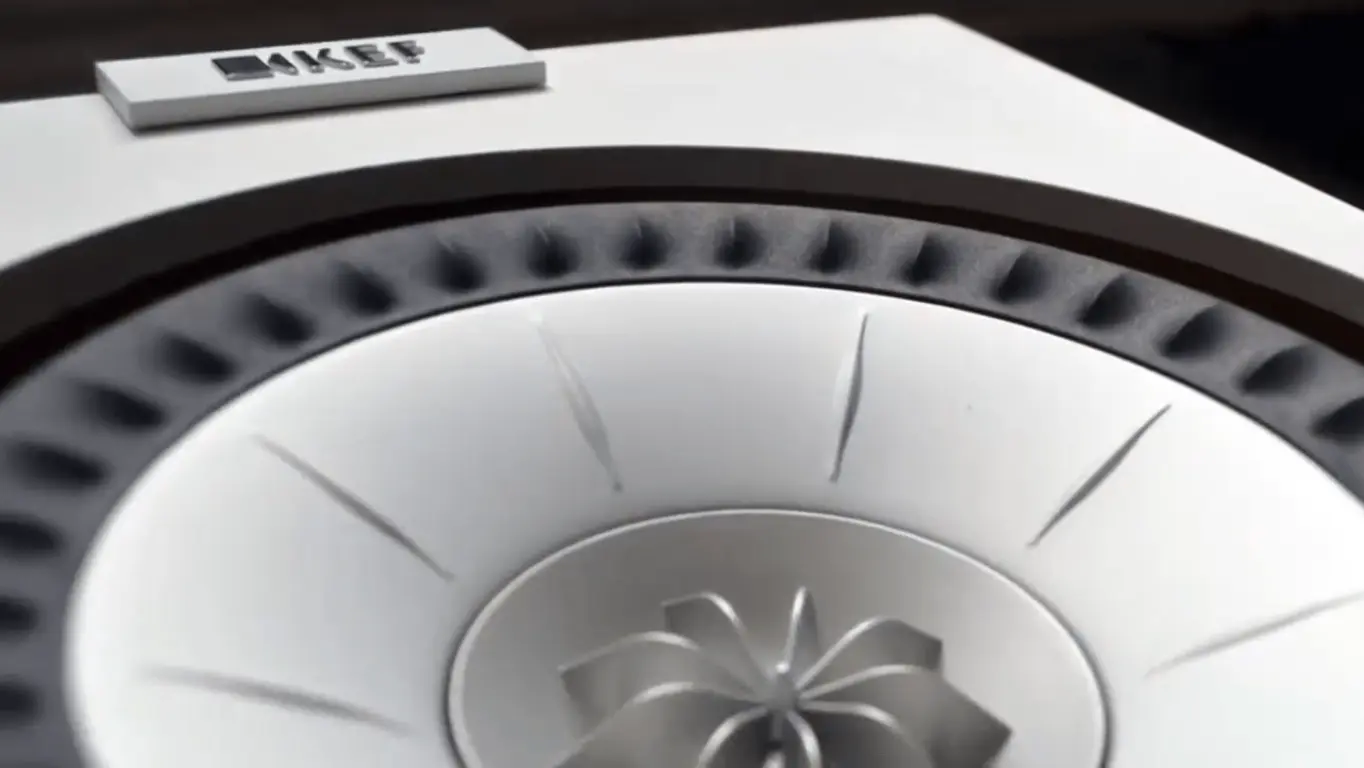
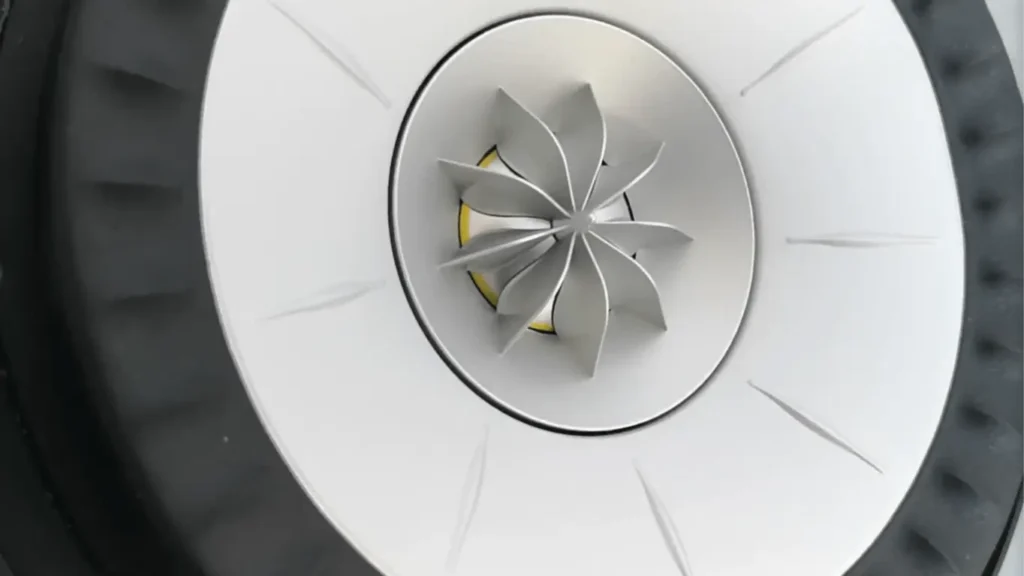
- The 12th-generation Uni-Q driver sits proudly at ear height
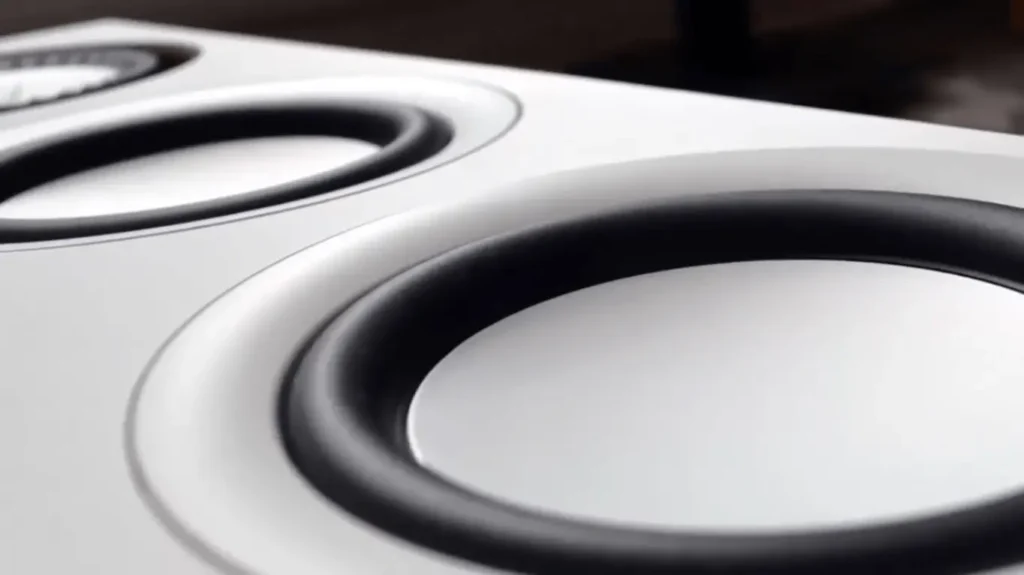
- Beneath it, a single active 5.25″ woofer
- Flanked by two 5.25″ Auxiliary Bass Radiators (ABRs) that replace traditional rear ports
This ABR approach is one of KEF’s smartest decisions. It allows deep, controlled bass without the room-placement nightmares of ported designs. No chuffing. No bloated low-end when placed closer to walls. Just clean pressure and speed.
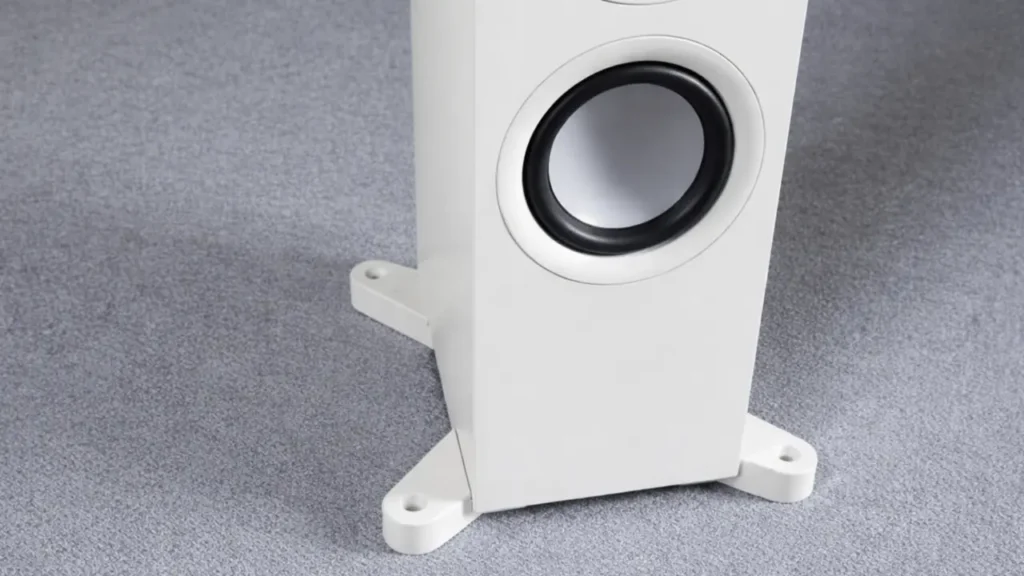
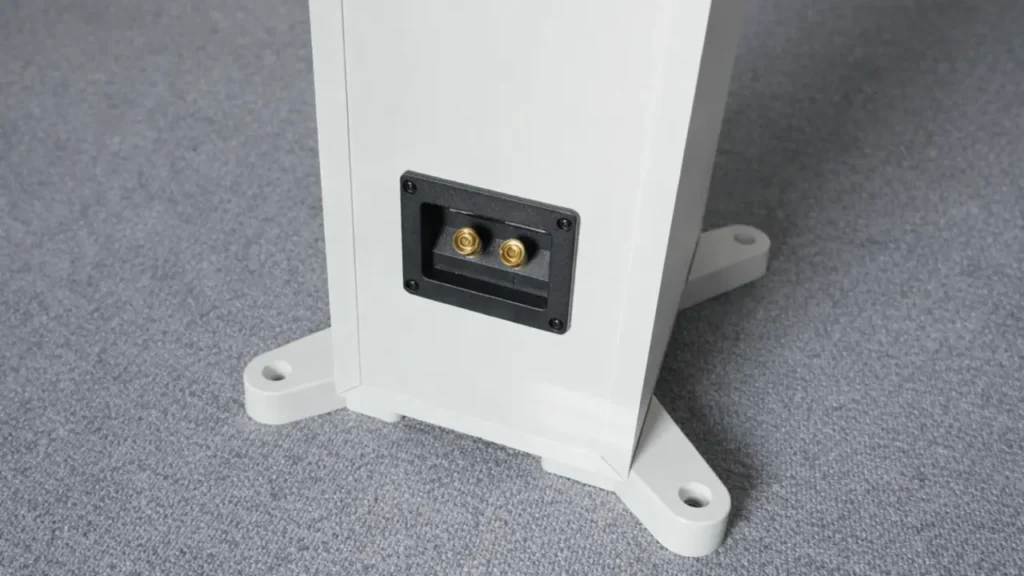
Around the back, you’ll find solid, gold-plated terminals that accept bare wire, spades, or banana plugs, and at the bottom, adjustable plinths with spikes ensure stability on uneven floors.
This is understated engineering confidence—and it works.
The Uni-Q Advantage: Why These Speakers Sound “Whole”
KEF’s Uni-Q driver isn’t marketing fluff. Placing the tweeter at the acoustic center of the midrange cone fundamentally changes how sound reaches your ears.
Instead of different frequencies arriving at slightly different times (as they do with conventional driver layouts), everything launches from a single point in space. The result?
- Seamless mid-to-treble integration
- Exceptionally stable imaging
- A soundstage that doesn’t collapse when you move off-center
KEF further refines this with its Tangerine waveguide, which smooths dispersion and reduces distortion, and a sealed midrange enclosure that lowers internal pressure and improves clarity.
On paper, it’s clever.
In practice, it’s transformative.
Sound Quality: Detail Without Fatigue, Precision Without Coldness
To stress the Uni-Q, I started with Yosi Horikawa – “Letter”. The micro-details—the pen scratches, spatial cues, transient attacks—were so tactile they felt physical. But crucially, none of it sounded forced or clinical.
Switching to Eagles – “Hotel California (MTV Unplugged)”, the opening guitar had real wood, real body. When the percussion entered, the Q550s delivered a tight, controlled impact that never bled into the midrange. Vocals stayed locked center, suspended effortlessly, while audience ambience expanded outward in a wide, believable arc.
This is where the Q550 excels:
It doesn’t spotlight detail—it reveals it naturally.
Bass is agile rather than dominant. You won’t get subwoofer-level slam, but what’s here is fast, textured, and rhythmically precise. In small to medium rooms, it’s more than satisfying. In larger spaces, pairing with a quality sub transforms these into serious full-range performers.
And yes—they play louder than their size suggests, without losing composure.
Movies & Home Cinema: Scale Beyond Their Size
I didn’t expect the Q550 to be this capable with film.
In Saving Private Ryan, the Normandy landing was brutal but controlled. Water splashes, distant artillery, metallic clatter—all rendered with startling clarity. Explosions hit hard, yet dialogue remained intelligible even at elevated volumes.
Then came Top Gun: Maverick.
Jet engines roared with weight and velocity, filling the room without turning into a muddy wall of noise. The ABRs effectively pressurized the space, while the Uni-Q kept cockpit dialogue razor-sharp amid the chaos.
Even in Dune: Part Two, during Zimmer’s dense, low-frequency crescendos, voices never disappeared—a weakness many speakers still struggle with.
Also Read: Can a Speaker This Slim Actually Be Hi-Fi? My 2-Week Holiday Test of the KEF on the wall Speaker
For a slim, affordable floorstander, this level of cinematic control is genuinely impressive.
Living With the Q550: Why They’re Easy to Love
One of the Q550’s biggest strengths is how forgiving it is.
- Wide dispersion means you don’t need a perfect sweet spot
- ABRs reduce placement anxiety
- Moderate sensitivity (87 dB) pairs well with quality integrated amps and AVRs
- Long listening sessions never become fatiguing
They don’t demand attention—but they reward it.
Final Verdict:
The KEF Q550 is not about fireworks or exaggerated specs. It’s about balance. About coherence. About letting music and film breathe naturally in your space.
It offers:
- The scale of a tower
- The imaging precision of a monitor
- A tonal balance that respects the artist’s intent
If your room is small to medium-sized and you value realism over hype, this speaker is definitely worth considering. And if you already think you know what affordable floorstanders can do, these might surprise you.
They certainly surprised me.
KEF Q550 Specifications
| Specification | Details |
|---|---|
| Design | 2.5-way floorstanding loudspeaker |
| Driver Configuration | 1 × 130mm (5.25″) Uni-Q midrange with 25mm aluminum dome tweeter 1 × 130mm (5.25″) aluminum bass driver 2 × 130mm (5.25″) auxiliary bass radiators (ABR) |
| Frequency Response (±3dB) | 58Hz – 28kHz |
| Recommended Amplifier Power | 15 – 130 watts |
| Sensitivity | 87dB (2.83V / 1m) |
| Nominal Impedance | 8 ohms (minimum 3.7 ohms) |
| Maximum Output | 110dB |
| Crossover Frequency | 2.5kHz |
| Cabinet Type | Sealed Uni-Q midrange chamber with dual passive radiators |
| Finish Options | Satin Black, Satin White |
| Grilles | Magnetic, full-length fabric grilles |
| Dimensions (H × W × D) | 926 × 180 × 299 mm (36.5 × 7.1 × 11.8 in) |
| Weight (each) | 14.5 kg (32 lbs) |
| Included Accessories | Plinths, adjustable spikes, rubber feet |