The $8,000 Upgrade That Shows Where High-End Home Theater Is Heading
There comes a point in a serious home theater system when an AV receiver starts to feel like a compromise.
You want more processing power. More amplification. Better heat management. More flexibility. And, perhaps most importantly, you don’t want every critical component of the system fighting for space inside the same chassis.
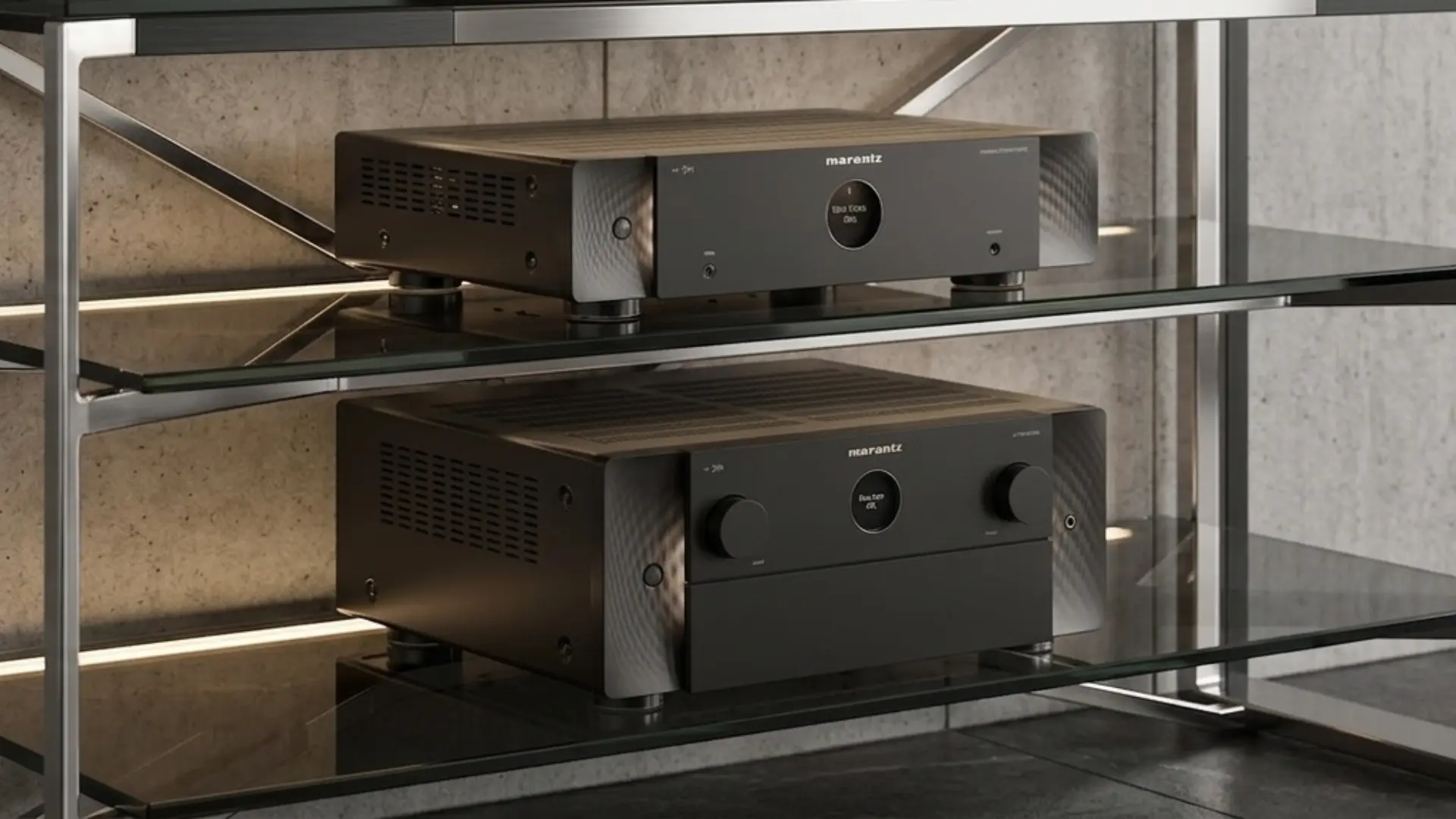
That is where Marantz’s AV 30 and AMP 30 combination comes in.
Introduced as a two-component flagship home theater solution, the system separates the processing and amplification stages into dedicated chassis. The AV 30 handles decoding, switching, and signal processing, while the AMP 30 supplies the power.
Is the Marantz Receiver the Ultimate Bridge Between Audiophile Stereo and 8K Home Theater?
It is a very traditional high-end approach.
But in an era when increasingly sophisticated AV receivers are trying to do almost everything from one box, Marantz’s decision to split the system into separates is worth paying attention to.
And this isn’t a modest home theater setup.
The two components are aimed squarely at enthusiasts building a serious multichannel system from individual components.
The AV 30 Is the Brain of the System
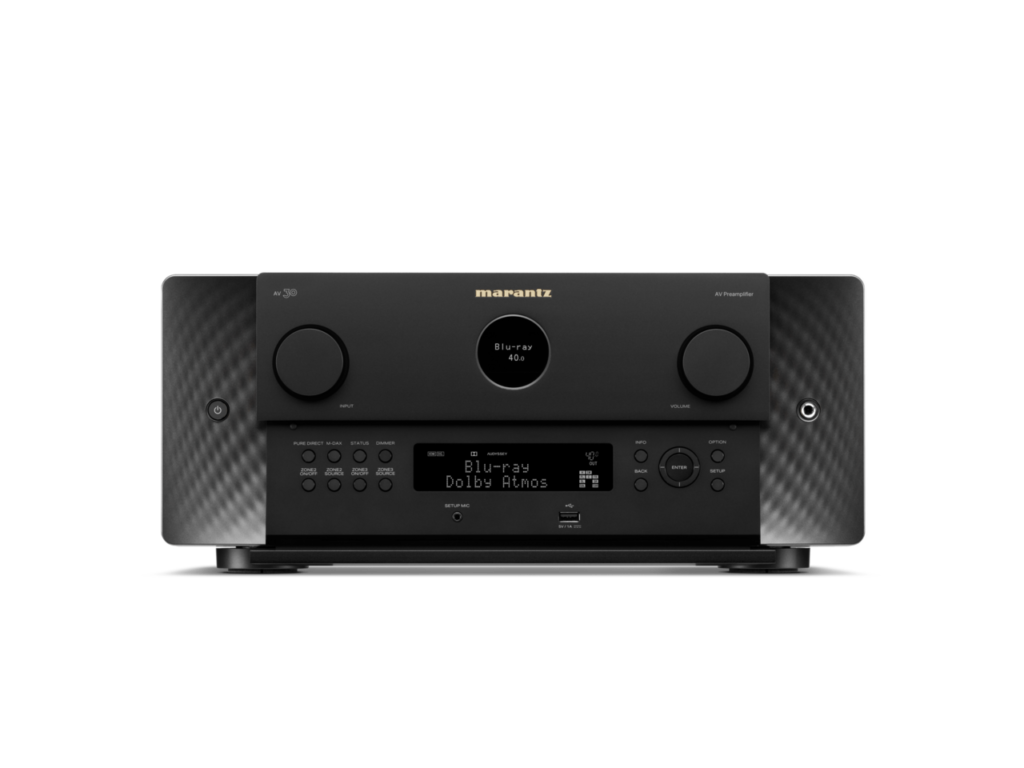
The AV 30 is an 11-channel AV preprocessor designed to handle the processing side of the home theater system.
That means it takes care of the decoding, switching, and signal processing while leaving amplification to external power amplifiers.
Marantz has equipped the processor with support for a wide range of immersive audio formats, including Dolby Atmos, DTS Pro, MPEG-H, Auro-3D and Sony 360 Reality Audio.
For anyone building a modern theater system, that broad format support is important.
The days when a high-end processor only needed to handle a handful of surround formats are long gone. Movies, games, and immersive music can arrive using very different technologies, and a flagship processor is expected to accommodate them.
The AV 30 is designed to do exactly that.
Eleven Channels Open the Door to Serious Theater Configurations
With 11 channels of processing available, the AV 30 has enough capability for sophisticated speaker layouts.
Configurations such as 7.4.4 become possible, combining multiple ear-level speakers, subwoofers and four overhead channels for immersive sound.
That’s where a dedicated processor starts to make more sense than a conventional all-in-one receiver.
The processor isn’t being asked to squeeze a large number of amplifier channels, power supplies and processing circuits into the same chassis.
Instead, the AV 30 can concentrate on the signal.
Power is handled separately.
Then Comes the AMP 30
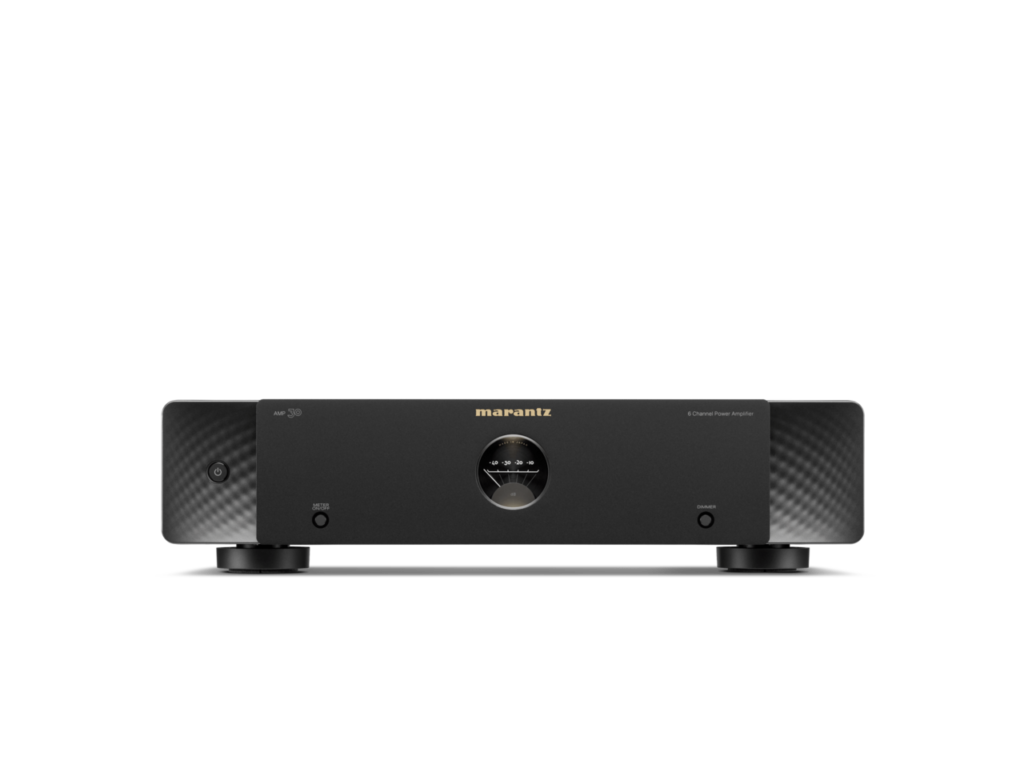
The other half of the system is the Marantz AMP 30, a six-channel power amplifier rated at 200 watts per channel into 8 ohms.
That gives the system a substantial amount of amplification for the main channels, while additional amplifiers can be added when a theater requires more channels than the AMP 30 provides.
This modular approach is one of the major attractions of separates.
You aren’t forced to replace the entire system simply because your next home theater project requires more amplification.
The processor can remain at the center of the system while additional power amplification is introduced as the speaker layout evolves.
For a high-end theater that may eventually grow beyond a basic multichannel configuration, that flexibility can be extremely valuable.
Why Split an AV System Into Two Boxes?
At first glance, an AV receiver seems like the obvious choice.
One chassis.
One power cable.
One purchase.
And plenty of power and processing in a relatively compact package.
So why go through the trouble of buying separate components?
The answer is largely about isolation, thermal management and flexibility.
An AV receiver has to accommodate its processing electronics, DACs, switching circuitry, power supplies and multiple amplifier channels inside one enclosure.
A separates-based system gives each component a more focused job.
The processor doesn’t have to share its chassis with a bank of high-power amplifier stages, while the amplifier doesn’t need to accommodate all of the delicate processing circuitry.
Heat management also becomes easier because the power amplification is physically separated from the processor.
For a high-end installation running multiple channels at demanding levels, that’s not a trivial advantage.
Marantz Is Keeping the Upgrade Path Open
Perhaps the biggest advantage of the AV 30 and AMP 30 combination is that the two components aren’t permanently tied together.
The AMP 30 provides six channels of amplification.
The AV 30 provides 11 channels of processing.
That leaves room to expand.
A theater owner can add another amplifier if the system eventually requires additional channels, rather than abandoning the original amplifier and starting over.
This is exactly the philosophy that has kept separates popular among high-end audio enthusiasts for decades.
You buy the component you need today and build around it over time.
The Numbers Tell Only Part of the Story
On paper, the specification sheet is straightforward.
AV 30: 11-channel AV preprocessor.
AMP 30: Six-channel power amplifier rated at 200 watts per channel into 8 ohms.
Immersive formats: Dolby Atmos, DTS Pro, MPEG-H, Auro-3D and Sony 360 Reality Audio.
Price: €4,000 per component.
That means the processor and amplifier together represent an €8,000 investment, before adding speakers, subwoofers, additional amplification, sources, cabling and the room itself.
This isn’t an attempt to compete with mainstream AV receivers.
Marantz is targeting enthusiasts who are already thinking beyond the all-in-one format.
This Is for the Home Theater Enthusiast Who Has Outgrown an AV Receiver
The AV 30 and AMP 30 make the most sense when the home theater itself becomes a long-term project.
If you’re building a dedicated room with multiple rows of speakers, several subwoofers, overhead channels and demanding loudspeakers, the attraction of separates becomes much easier to understand.
Instead of treating the AV receiver as the center of everything, the Marantz approach turns the processor into the command center and lets amplification become its own component.
It is also a more traditional high-end audio philosophy.
The system can evolve.
Amplifiers can be changed.
Additional channels can be added.
And the processor can remain at the heart of the installation.
Marantz’s Flagship Approach Makes a Statement
The interesting thing about the AV 30 and AMP 30 isn’t simply that Marantz has produced two expensive home theater components.
It’s that the company has chosen to put serious distance between its flagship separates and the convenience-oriented AV receiver.
That distinction matters.
An AV receiver is designed to make building a theater relatively simple.
A processor and separate power amplifier are designed for someone who has already decided that simplicity isn’t the priority.
For that listener, the extra box isn’t an inconvenience.
It’s part of the point.
The Marantz AV 30 and AMP 30 are aimed at the enthusiast who wants a home theater system that can grow, evolve and accommodate increasingly ambitious speaker configurations without being constrained by the limitations of a single chassis.
At €4,000 each, they certainly aren’t inexpensive.
But for a serious theater where the electronics are expected to remain at the center of the system for years, Marantz is betting that the flexibility of separates is worth paying for.
And for home theater enthusiasts who have already outgrown the traditional AV receiver, that may be exactly the point.