I Thought ELAC Had Simply Built a Smaller Concentro. I Was Wrong.
Some loudspeakers announce themselves before you’ve even connected the cables.
You see the cabinet, admire the finish, glance at the specification sheet, and immediately begin imagining how they’re going to sound. Usually, those expectations are confirmed within the first few minutes of listening. Sometimes they’re completely shattered.
The ELAC Concentro S 507 belongs firmly in the second category.
Before I heard a single note, I assumed I knew exactly what ELAC was trying to achieve. The original Concentro is one of those rare loudspeakers that almost transcends the traditional idea of hi-fi. Standing well over five feet tall and weighing enough to make positioning a two-person job, it wasn’t merely designed to reproduce music. It was built as a statement—a demonstration of everything ELAC’s engineers could accomplish when practicality became a secondary concern.
That approach earned enormous respect, but it also created an obvious problem.
Very few music lovers have rooms capable of accommodating loudspeakers that dominate both the space and the budget. The original Concentro demands careful positioning, serious amplification and a listening environment that allows it to breathe. Without those ingredients, much of its extraordinary capability simply remains untapped.
So when ELAC introduced the Concentro S 507, my first thought was predictable.
This would surely be the sensible version.
Smaller cabinet.
Lower price.
A few compromises hidden beneath familiar styling.
In other words, the sort of product many manufacturers build when they want to make a flagship range accessible to a wider audience.
The reality turned out to be considerably more interesting.
Within the first evening of listening, it became obvious that ELAC hadn’t attempted to shrink the original Concentro at all. Instead, the company had asked a far more intelligent question.
What if the goal wasn’t to make a flagship smaller?
What if the goal was to preserve everything that actually matters about the flagship while removing only the things that made it impractical for most enthusiasts?
That distinction changes everything.
Because great loudspeakers are rarely defined by the number of drivers they contain or how much they weigh. They’re remembered because of the way they make you interact with your music collection.
Some encourage analysis.
Others encourage admiration.
A very small number simply encourage another album.
The Concentro S 507 belongs in that final group.
I realised this almost by accident.
Whenever I begin evaluating a loudspeaker, I follow the same routine. I keep a notebook beside the listening chair and make constant observations throughout the session—notes about tonal balance, crossover integration, dynamics, bass extension, imaging and everything else that eventually becomes part of a finished review.
With the Concentro S 507, something unusual happened.
Several tracks into Muddy Waters’ I’m Ready, I looked down and realised the notebook was still almost empty.
Not because the speaker lacked character.
Quite the opposite.
I had simply stopped analysing it.
Instead of dissecting frequency response or wondering whether the tweeter was drawing too much attention to itself, I found myself following the musicians. Waters’ guitar had the familiar rough-edged texture that makes his recordings feel so immediate. The harmonica floated effortlessly above the rhythm section without becoming sharp or fatiguing, while every drum strike carried convincing impact without overwhelming the performance.
Nothing appeared exaggerated.
Nothing sounded restrained.
Everything simply belonged exactly where it should.
That may sound like faint praise until you consider how rare it actually is.
Many expensive loudspeakers impress spectacularly during the first ten minutes. The bass reaches deeper. The treble sparkles brighter. The soundstage stretches dramatically beyond the cabinets. Those demonstrations often work brilliantly in dealer showrooms because they immediately communicate that you’re listening to something special.
Hours later, those same characteristics can become surprisingly tiring.
The Concentro S 507 takes the opposite approach.
Its talents reveal themselves slowly.
The longer I listened, the more difficult it became to stop.
Albums I originally intended to sample quickly were suddenly playing from beginning to end. Familiar recordings encouraged one more track, then another. Before long, an evening planned around critical listening had quietly transformed into an evening spent simply enjoying music.
That’s an important distinction.
Exceptional loudspeakers shouldn’t constantly remind you how exceptional they are.
They should remove themselves from the experience altogether.
The Concentro S 507 does exactly that.
And that’s why, long before I explored its engineering, measured its placement sensitivity or experimented with its unique acoustic tuning rings, I already suspected ELAC had achieved something considerably more ambitious than building a smaller version of its flagship.
The company had built a loudspeaker that feels entirely comfortable in real homes while retaining the effortless refinement normally reserved for products costing significantly more.
That raises an obvious question.
How exactly did ELAC manage it?
Design & Engineering
ELAC Didn’t Shrink the Concentro. It Reimagined It.
One of the biggest mistakes you can make when looking at the Concentro S 507 is assuming it’s simply a smaller version of ELAC’s flagship.
It isn’t.
Yes, the family resemblance is obvious. The flowing cabinet, the sculpted aluminium base and the unmistakable concentric driver arrangement leave little doubt about where it came from. But after spending time with both the specifications and, more importantly, the speakers themselves, it becomes clear that ELAC approached the S 507 with a very different objective.
The original Concentro was designed without compromise.
The S 507 was designed without unnecessary compromise.
That might sound like clever marketing, but there’s an important distinction between the two.
Building the biggest speaker possible is relatively straightforward if money, weight and room size aren’t concerns. Building something that delivers much of the same sophistication while fitting comfortably into an ordinary listening room is considerably more difficult.
That’s exactly where the S 507 begins to justify its existence.
Standing 122 centimetres tall and weighing 37 kilograms apiece, these certainly aren’t compact loudspeakers, but neither do they dominate a room in the way their larger siblings inevitably do. Viewed from the front, they appear surprisingly slim. Walk around them, however, and you begin to appreciate how much work has gone into every curve.
ELAC Varro RS500 Reviewed: A Powerhouse of Clarity and Depth
Nothing about the cabinet feels accidental.
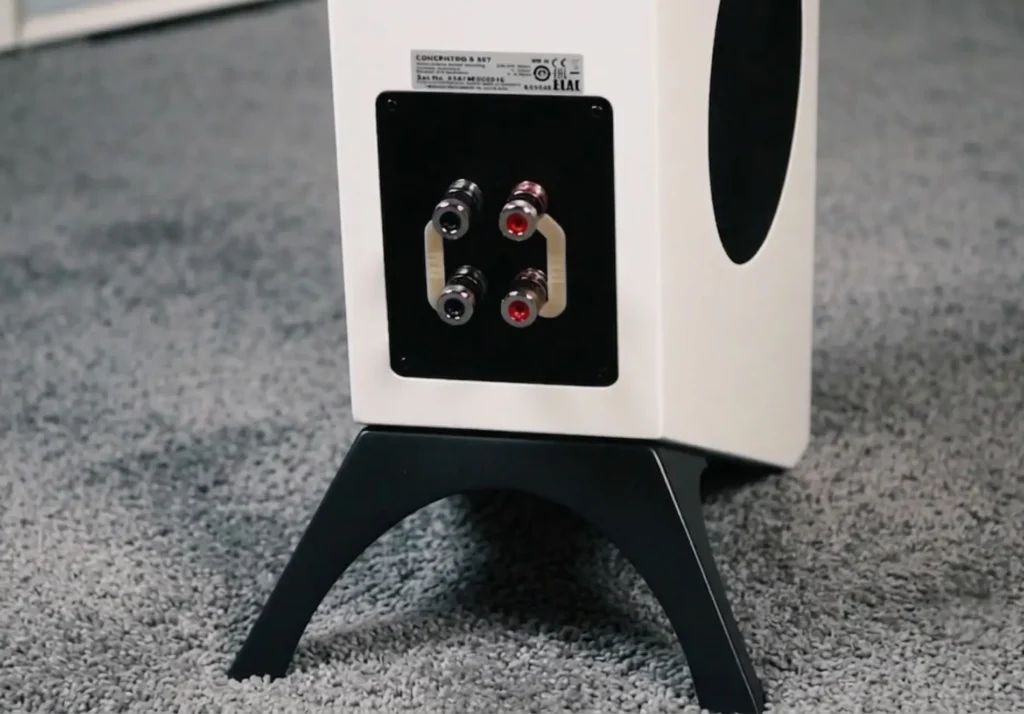
The front baffle leans gently backwards, aligning the acoustic centres of the drive units while giving the speaker an almost effortless stance. The side panels sweep elegantly towards the rear, eliminating large parallel internal surfaces that can encourage standing waves and unwanted colouration. Even the underside has been carefully considered, with the cabinet appearing to balance delicately on two slender aluminium outriggers.
Audiophiles affectionately refer to them as “heels.”
It’s an appropriate nickname.
From some angles, the S 507 looks less like a loudspeaker and more like a carefully designed piece of modern furniture.
Fortunately, ELAC’s engineers haven’t sacrificed function in pursuit of style.
Those beautifully sculpted cabinets perform several important acoustic tasks long before any driver begins moving air. The complex internal structure significantly increases rigidity, while the absence of parallel walls helps reduce internal reflections that can blur the midrange. Every unnecessary vibration prevented inside the enclosure is one less problem the drivers have to overcome.
The downward-firing reflex port is another thoughtful decision.
Many high-end floorstanders become frustratingly sensitive to room placement because of large rear-firing ports that interact unpredictably with nearby walls. The Concentro S 507 proved considerably easier to position than I expected. Small changes in placement still influenced bass balance—as they always will—but the speaker never became overly fussy or temperamental.
For anyone placing these speakers in a real living room rather than a dedicated listening studio, that’s a genuine advantage.
Remove the magnetic grilles and the engineering becomes even more fascinating.
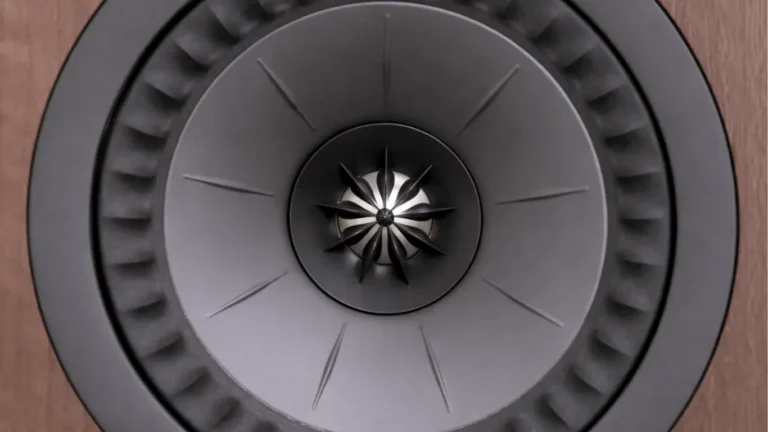
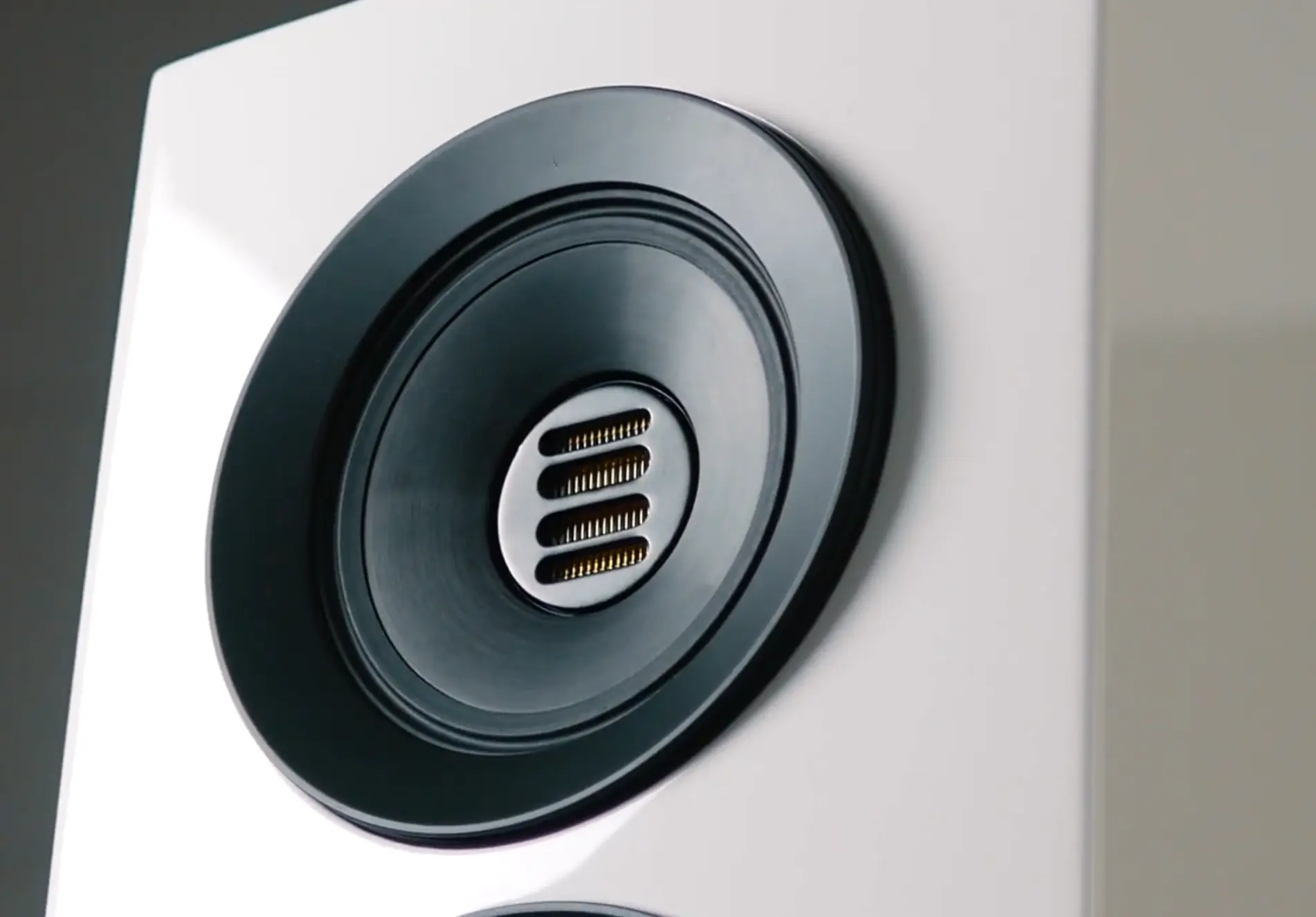
At the centre of everything sits ELAC’s StepX-JET coaxial assembly, combining the company’s renowned JET 5 tweeter with an aluminium midrange driver sharing the same acoustic axis.
Concentric driver arrangements aren’t new, but executing them well is extraordinarily difficult.
The goal is deceptively simple.
Rather than asking separate drivers to hand music from one to another across different physical locations on the baffle, both frequencies appear to originate from almost exactly the same point in space. Done properly, the transition becomes almost invisible to the ear.
Listening confirmed exactly why ELAC continues investing in this approach.
Vocals remained astonishingly stable regardless of volume, while instruments moved naturally across the stereo image without suddenly changing tonal character. Many loudspeakers create an impressive soundstage, but careful listening often reveals tiny discontinuities as notes travel between drivers. Here, those transitions felt remarkably seamless.
It’s one of those qualities you stop noticing precisely because it’s working so well.
The JET 5 tweeter itself deserves its reputation.
Unlike conventional dome tweeters, ELAC’s folded diaphragm works by squeezing air from carefully pleated material rather than pushing it with a dome. The moving mass is exceptionally low, allowing astonishing speed and precision.
Manufacturers often highlight the fact that it extends comfortably beyond 50kHz.
That number makes for impressive marketing.
What impressed me far more was the absence of effort.
There was no artificial brightness designed to create the illusion of detail. Cymbals shimmered with realistic metallic texture. Brushes on a snare drum retained their delicate softness. Harmonica cut through dense arrangements exactly as it should, yet never became fatiguing, even during lengthy listening sessions.
The tweeter wasn’t demanding attention.
It was simply refusing to lose information.
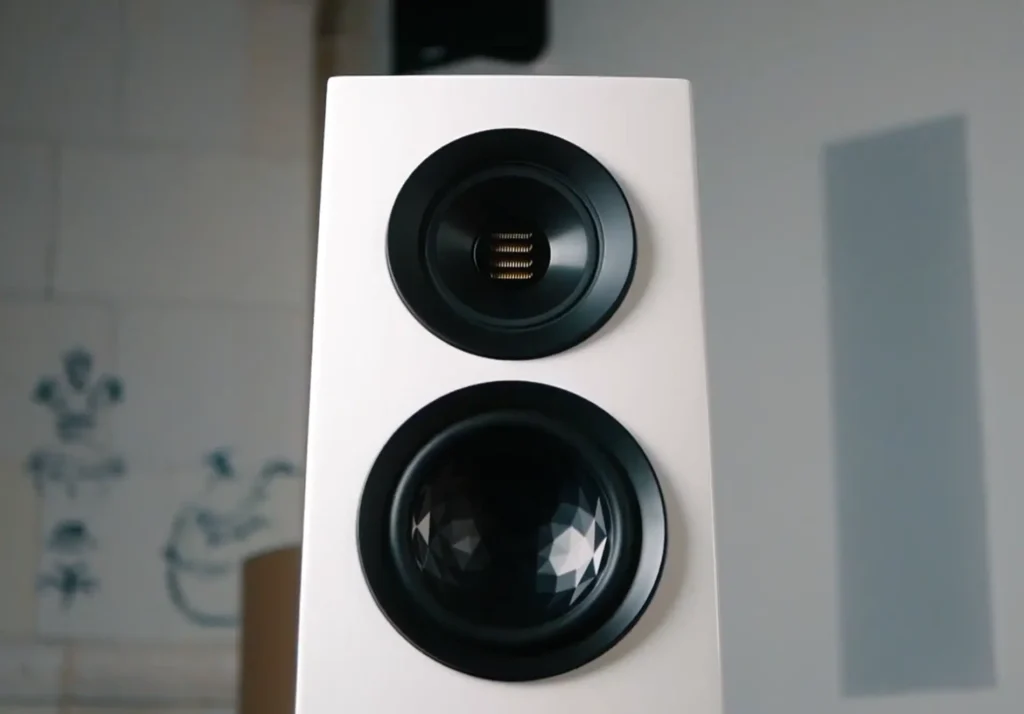
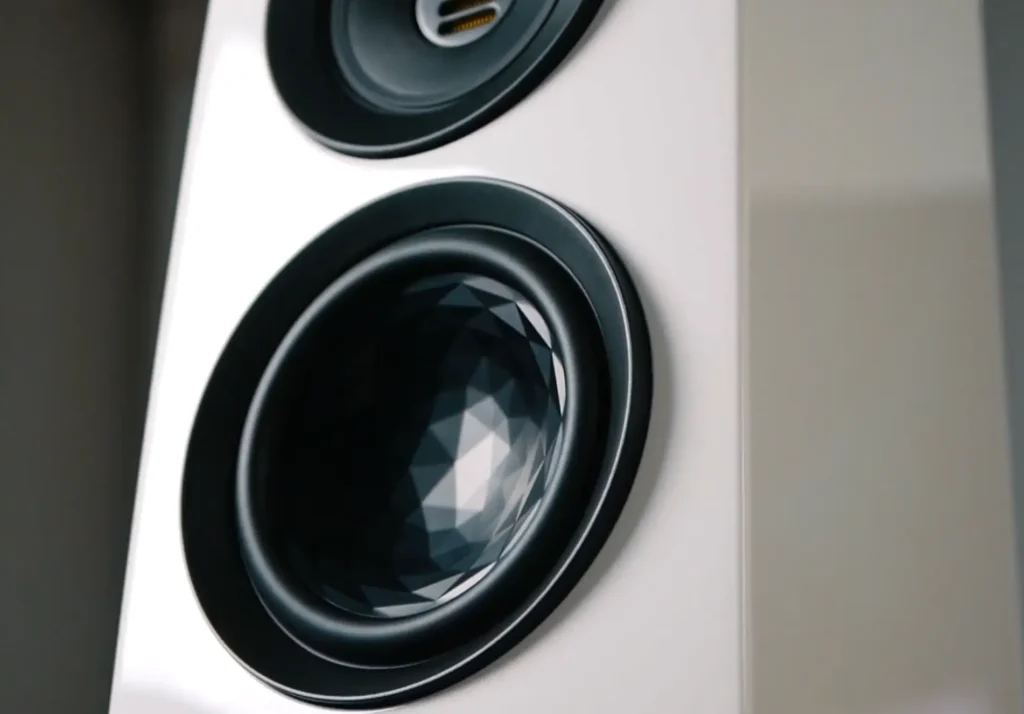
Supporting the coaxial assembly is an 180mm AS-XR Crystal Membrane mid-bass driver.
Photographs don’t really prepare you for how unusual this driver looks in person. Instead of a smooth aluminium cone, its surface resembles carefully cut crystal, covered in sharply defined geometric facets.
The design isn’t decorative.
Those ridges dramatically increase stiffness without adding unnecessary mass, allowing the cone to behave more like a perfectly controlled piston across its operating range. Less flex means fewer unwanted resonances, lower distortion and cleaner reproduction through one of the most critical areas of the audible spectrum.
The payoff isn’t something you immediately identify as “better midrange.”
It’s subtler than that.
Voices retain their individuality.
Acoustic guitars preserve the woody resonance surrounding each note.
Pianos maintain both the weight of the lower registers and the sparkle of the upper octaves without sounding as though different parts of the keyboard are coming from different loudspeakers.
Bass engineering is equally unconventional.
Rather than mounting large woofers on the front panel, ELAC positions four 150mm drivers on opposing side panels in a push-push, pull-pull configuration. This arrangement does far more than increase cone area. It also balances the mechanical forces generated by the drivers themselves, dramatically reducing cabinet vibration.
Place your hand gently against the side of the cabinet while substantial bass is playing and one thing quickly becomes obvious.
The cabinet remains impressively inert.
Instead of wasting energy shaking the enclosure, those four woofers devote their effort to moving air.
One detail I particularly appreciated is something many buyers might overlook.
ELAC includes three interchangeable acoustic contour rings surrounding the coaxial driver. These allow owners to subtly alter the speaker’s dispersion characteristics depending on room size, listening distance and personal preference.
Some manufacturers insist your room adapt to their loudspeaker.
ELAC quietly acknowledges that every listening room is different.
It’s a small touch, but one that reflects the engineering philosophy behind the entire project.
Nothing feels included simply because it looks impressive in a brochure.
Everything exists to solve a real-world problem.
By the time I’d finished examining the S 507, one conclusion had already formed.
This wasn’t a loudspeaker designed to impress someone walking through a hi-fi exhibition for five minutes.
It was designed for someone who plans to spend years living with it.
And once the serious listening began, that philosophy became even more apparent.
Listening Test
The Concentro S 507 Doesn’t Chase Detail. It Reveals It Naturally.
Some loudspeakers make their intentions obvious within the first thirty seconds.
They throw an enormous soundstage into the room, sharpen every leading edge and push vocals forward with almost theatrical confidence. It’s an effective way of convincing listeners they’re hearing something expensive, especially during a quick demonstration at a hi-fi show.
The ELAC Concentro S 507 plays a much longer game.
Nothing about its presentation screams for attention. In fact, during the opening minutes I almost wondered whether it was being slightly conservative. There was no exaggerated sparkle designed to highlight every cymbal strike, nor was there an oversized bass response trying to shake the room into submission.
Then something interesting happened.
The longer I listened, the less I thought about the loudspeakers themselves.
Instead of analysing what each driver was doing, I found myself concentrating on the musicians. That’s a surprisingly rare experience, even among very expensive loudspeakers.
It reminded me that genuine transparency isn’t about hearing more sound.
It’s about hearing less loudspeaker.
Muddy Waters – I’m Ready
Every reviewer has a handful of recordings they trust almost instinctively.
For me, I’m Ready has remained one of those albums for years because it immediately exposes whether a loudspeaker understands musical relationships.
Good systems reproduce instruments accurately.
Exceptional systems reproduce the conversation between musicians.
That distinction became obvious almost immediately.
The opening guitar had exactly the raw texture I’ve come to expect from Muddy Waters’ recordings. Every plucked string carried a slight roughness that reminded me these weren’t pristine studio performances assembled inside a computer. They were musicians reacting to one another in real time.
Then the harmonica entered.
This is often where tweeters begin to reveal their character.
Some make the instrument painfully sharp, exaggerating every transient until the performance becomes fatiguing. Others smooth it over so aggressively that much of its energy disappears.
The JET 5 tweeter somehow managed neither.
The harmonica remained expressive, energetic and unmistakably forward in the mix, yet never crossed into aggression. It possessed bite without hardness, detail without brightness.
That balance became one of the defining characteristics of the Concentro S 507.
Rather than adding excitement of its own, it trusted the recording to provide it.
More impressive still was the way every musician occupied believable physical space.
Bass guitar remained firmly anchored behind the performance, drums stretched naturally across the rear of the stage, while Waters himself stood confidently between the cabinets without sounding artificially enlarged.
Nothing appeared spotlighted.
Nothing sounded artificially recessed.
The performance simply unfolded with remarkable coherence.
I caught myself writing only four words in my notebook.
“Everything belongs together.”
Oddly enough, they became the most accurate description of the entire evening.
Resolution Without Exhibitionism
High-end loudspeakers often fall into one of two categories.
Some deliberately soften imperfections, making virtually every recording pleasant to hear.
Others expose absolutely everything—including flaws you’d probably rather ignore.
The Concentro S 507 occupies an unusually intelligent middle ground.
Listening to the 2004 remaster of I’m Ready made that immediately apparent.
The increased clarity of the remaster compared with earlier releases was obvious, but so too were its limitations. Waters’ voice carried the unmistakable character of an ageing ribbon microphone, sounding slightly compressed and less open than the surrounding instruments.
Many loudspeakers would either disguise that inconsistency or exaggerate it.
The ELAC did neither.
It simply presented it as part of the recording.
That level of honesty requires confidence.
The speaker never seemed interested in flattering poor recordings, yet it refused to become analytical for the sake of proving how revealing it could be.
That’s an incredibly difficult balance to achieve.
Turning Up The Volume
Every loudspeaker sounds composed at modest listening levels.
The real examination begins when the volume control moves well beyond comfortable background listening.
This is often where crossover integration starts to unravel.
Treble becomes edgy.
Bass thickens.
The soundstage collapses.
The music gradually transforms from effortless into exhausting.
The Concentro S 507 behaved almost as though someone had quietly removed those limitations.
Increasing the volume didn’t fundamentally alter its character.
It simply increased the scale.
Drums struck harder.
Vocals expanded naturally.
Bass developed greater physical authority.
Yet tonal balance remained remarkably consistent.
There was no sense that one driver had begun working harder than another. The speaker behaved like a single coherent instrument rather than seven separate drive units dividing the workload amongst themselves.
That consistency encouraged something I rarely do during reviews.
I stopped watching the volume display.
Normally I’m acutely aware of exactly how loudly I’m listening.
With the S 507 I simply kept increasing the level until I realised the music had reached genuinely live-like dynamics without ever becoming uncomfortable.
That speaks volumes about both distortion control and overall refinement.
It’s rather like driving a powerful grand tourer.
You’re never conscious of the engine working hard because it never sounds as though it’s working hard.
Alphaville – Prostitute
Switching from Chicago blues to electronic music often reveals an entirely different personality.
Alphaville’s Prostitute remains one of my favourite albums for evaluating spatial presentation because it’s packed with synthesiser layers, subtle electronic textures and tiny ambient details that lesser loudspeakers often compress into a single acoustic plane.
The Concentro S 507 approached it differently.
Instead of presenting an enormous but vaguely defined wall of sound, it carefully organised every element within three-dimensional space.
Electronic percussion appeared with startling precision.
Synthesiser textures floated well beyond the physical boundaries of the cabinets.
Small reverberation trails lingered noticeably longer than I expected, gradually dissolving into silence instead of disappearing abruptly.
Perhaps most impressive was the sense of depth.
Many loudspeakers can project width.
Far fewer convince you that instruments exist at genuinely different distances behind the front wall.
The Concentro repeatedly achieved exactly that.
Closing my eyes, I wasn’t imagining an exaggerated hi-fi soundstage.
I was visualising a recording studio.
That’s a subtle but very important distinction.
The best loudspeakers don’t create artificial spectacle.
They recreate believable spaces.
The ELAC consistently chose realism over drama.
By the end of the evening, I realised I hadn’t once thought about the seven drivers, the folded ribbon tweeter or the crossover network.
I’d simply spent several hours rediscovering albums I thought I already knew.
And in many ways, that’s the highest compliment I can pay any loudspeaker.
The Recording That Finally Revealed What the Concentro S 507 Was Really Doing
By the second evening, I had stopped asking the usual reviewer questions.
How extended is the bass?
How much detail is the tweeter retrieving?
Is the soundstage wider than its competitors?
Those questions still matter, but they no longer felt like the right way to judge the Concentro S 507.
Instead, another question kept returning.
Why do I keep listening longer than I planned?
Most loudspeakers reveal their strengths fairly quickly.
The Concentro S 507 seemed to do the opposite.
Every hour spent with it uncovered another reason to continue.
That became especially obvious when I moved from intimate recordings to much larger musical performances.
Bach’s Toccata and Fugue Isn’t About Bass. It’s About Scale.
Audiophiles often reach for organ recordings because they plunge effortlessly into the lowest octave.
That’s certainly useful, but it’s rarely the reason I use them.
The real challenge is scale.
A convincing performance isn’t simply about reproducing deep notes. It’s about convincing the listener that an instrument the size of a small building suddenly exists inside an ordinary listening room.
That’s an almost impossible illusion.
Helmut Walcha’s recording of Bach’s Toccata and Fugue in D minor (BWV 565) has remained one of my favourite references precisely because it asks every loudspeaker to achieve that illusion.
The Concentro S 507 never pretended my listening room had suddenly become a Gothic cathedral.
No loudspeaker realistically can.
What it did achieve was something arguably more impressive.
It preserved the instrument’s proportions.
Each register expanded naturally into the room without collapsing into a dense wall of low-frequency energy. Individual pipe ranks retained their own harmonic signatures, making it surprisingly easy to follow the interaction between the upper manuals and the enormous foundation created by the pedal division.
Many multi-driver loudspeakers begin to sound fragmented during music like this.
The listener becomes aware that different sections of the frequency spectrum are being reproduced by different drivers.
That never happened here.
Transitions between bass, midrange and treble remained almost invisible.
Instead of hearing crossover points, I heard one instrument.
Considering the complexity of a four-way loudspeaker carrying seven drivers, that’s an achievement deserving genuine recognition.
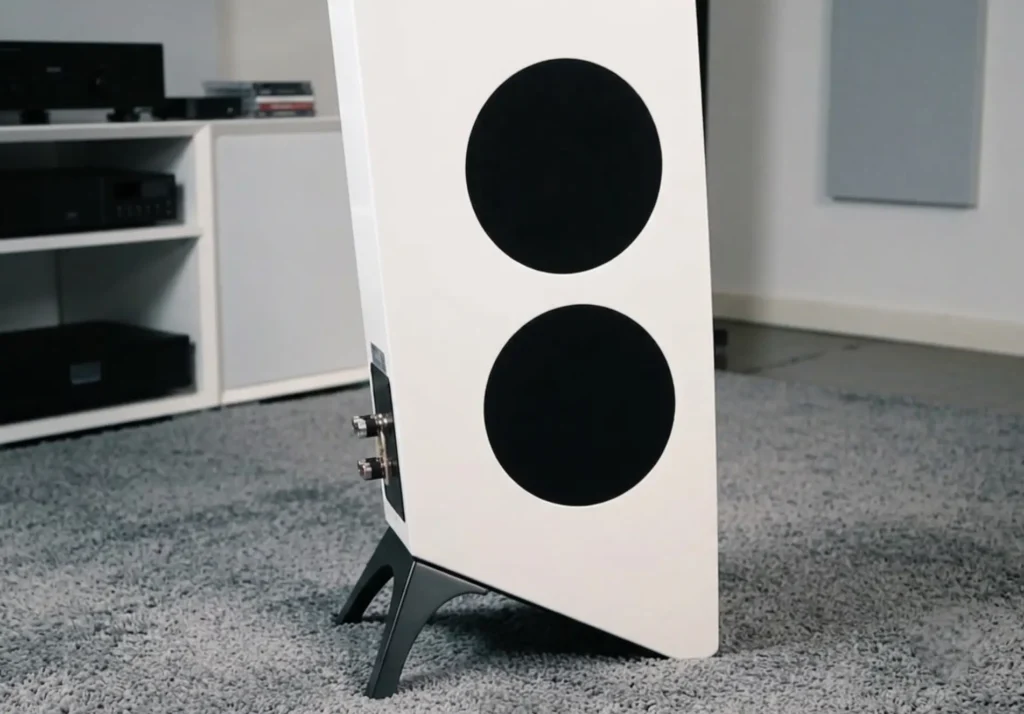
Four Woofers. One Voice.
When people first see the Concentro S 507, the four side-mounted woofers inevitably become the centre of attention.
It’s understandable.
Four bass drivers suggest one thing.
Power.
The interesting part is that ELAC never uses them to show off.
Modern loudspeakers often chase impact above everything else.
Play an action film soundtrack or an electronic dance track, and they’re determined to convince you they’ve reached impossible depths.
Initially that’s exciting.
Eventually it becomes exhausting.
The Concentro approaches bass with noticeably greater maturity.
Its low frequencies don’t dominate the presentation.
They support it.
Listening to acoustic bass revealed this almost immediately.
Each note possessed convincing physical weight, yet there was always enough texture remaining to distinguish the vibration of strings from the resonance of the instrument’s wooden body.
Kick drums carried genuine impact without becoming oversized.
Synth bass extended confidently into the room without obscuring everything happening above it.
Perhaps the greatest compliment I can give the bass performance is that I almost stopped thinking about it.
It simply behaved exactly as good bass should.
Fast when recordings demanded speed.
Weighty when music required authority.
Restrained when silence mattered more than impact.
That’s considerably harder to engineer than simply producing more low frequencies.
Living With the S 507
The biggest surprise wasn’t any individual sonic characteristic.
It was how little listening fatigue the speaker produced.
That’s something specifications will never tell you.
Many highly revealing loudspeakers encourage relatively short listening sessions.
They’re exciting.
They’re dramatic.
They’re astonishingly detailed.
Then, two hours later, you quietly decide you’ve heard enough.
The Concentro S 507 repeatedly produced the opposite reaction.
Even after several albums, I never felt the urge to reduce the volume or take a break.
Nothing in the upper frequencies became aggressive.
Nothing in the bass became oppressive.
Nothing in the midrange began drawing unnecessary attention to itself.
Instead, every part of the frequency range remained in balance with everything else.
That balance is probably the single greatest strength of this loudspeaker.
Not because balance sounds impressive in a brochure.
Because balance is what allows music to remain enjoyable long after technical demonstrations have lost their appeal.
I originally intended to spend one evening evaluating the ELAC.
Three evenings later, it was still connected.
That probably tells you more than another page of measurements ever could.
The Acoustic Tuning Rings Aren’t a Marketing Gimmick
Before using the S 507, I was slightly sceptical about ELAC’s interchangeable acoustic contour rings.
Manufacturers occasionally introduce adjustment systems that sound impressive but contribute very little once installed.
These proved rather different.
Changing the rings didn’t transform the loudspeaker into something new.
That isn’t their purpose.
Instead, they subtly altered how the speaker interacted with the room.
In my listening space, one configuration produced slightly sharper image focus, while another expanded the presentation enough to benefit larger orchestral recordings.
The differences weren’t dramatic.
They weren’t supposed to be.
Think of them as the final adjustment after positioning and toe-in rather than a substitute for either.
Owners willing to spend time experimenting will almost certainly find a setting that integrates more naturally with their own room.
That level of flexibility is unusual, particularly at a time when many manufacturers insist there is only one correct way to listen.
Choosing the Right Amplifier Matters
The Concentro S 507 is not an especially demanding loudspeaker, but it is an honest one.
Its 88dB sensitivity and nominal four-ohm impedance mean it appreciates an amplifier with generous current delivery rather than one that merely produces impressive numbers on paper.
During this evaluation, the Plinius Reference A-150 never gave the impression it was approaching its limits.
Its effortless control complemented the ELAC beautifully, particularly during complex orchestral passages where large dynamic swings can quickly expose an amplifier running short of reserve.
The reward was obvious.
Bass remained composed.
Dynamic contrasts retained their full scale.
Stereo imaging never collapsed during demanding passages.
Could the S 507 work with less ambitious electronics?
Certainly.
Would it reveal the limitations of those electronics?
Without hesitation.
Like every genuinely transparent loudspeaker, it reflects the quality of the entire system rather than attempting to disguise weaknesses elsewhere.
Criticisms
No loudspeaker is perfect.
Nor should reviewers pretend otherwise.
If your priority is overwhelming physical bass that can be felt as much as heard, larger loudspeakers—or those designed specifically with maximum low-frequency output in mind—will inevitably deliver greater authority below the lowest octave.
Likewise, listeners who enjoy an aggressively forward presentation may initially find the Concentro S 507 almost understated.
It refuses to exaggerate detail simply to create excitement.
Its refinement is something you gradually discover rather than immediately admire.
Some listeners may mistake that restraint for politeness during a brief demonstration.
Spend an evening with it instead.
I suspect your opinion will change.
At the end of the third evening, I realised something that rarely happens during a review.
I hadn’t once started wondering what speaker I wanted to listen to next. For a reviewer, that’s about as meaningful an endorsement as a loudspeaker can receive.
Verdict
By the time I disconnected the Concentro S 507, I realised something that hadn’t happened for quite a while.
I wasn’t already thinking about the next loudspeaker waiting to take its place.
Reviewing equipment inevitably changes the way you listen. After enough years, you become conditioned to search for weaknesses almost automatically. You notice a slightly uneven crossover, a hint of cabinet coloration or a tweeter that’s trying just a little too hard to impress. Those observations are part of the job, but they can also become a distraction.
The Concentro S 507 had an unusual effect on that process.
Instead of constantly analysing its performance, I found myself returning to albums I hadn’t played in months simply because I wanted to hear them again. One record became two. Two became an entire evening. Somewhere along the way, the notebook stayed closed more often than it normally does.
For me, that’s the difference between a very good loudspeaker and a truly exceptional one.
The very good ones demonstrate their strengths.
The exceptional ones quietly disappear.
That doesn’t mean the Concentro S 507 is flawless.
It won’t deliver the room-shaking authority of ELAC’s largest Concentro models, nor does it possess the instantly dramatic presentation that some listeners mistake for excitement during a short demonstration. If your goal is maximum impact in the first five minutes, some speakers will appear more spectacular.
The ELAC takes a different approach.
It earns your admiration gradually.
Its greatest strength isn’t the astonishing JET 5 tweeter, the beautifully integrated coaxial driver or the clever push-push bass system, impressive though all of those things undoubtedly are. Its greatest strength is how naturally everything works together. Nothing draws unnecessary attention to itself because every part of the design serves the music rather than competing with it.
That’s surprisingly rare, even at this level of high-end audio.
Some loudspeakers produce deeper bass. Others reveal even more microscopic detail. Some can play louder or create an even larger soundstage.
Very few combine refinement, coherence, tonal balance and long-term listenability as convincingly as the Concentro S 507.
After several days together, I stopped evaluating specifications and started looking for excuses to play one more album.
In the end, that tells me far more than any measurement ever could.
The ELAC Concentro S 507 isn’t a loudspeaker that constantly reminds you how sophisticated it is.
It reminds you why you fell in love with music in the first place.
ELAC Concentro S 507 Specifications: PASSPORT DATA
- Number of lanes: 4
- Number of speakers: 7
- Acoustic design: phase inverter brought to the floor
- Frequency response (according to IEC 268-5): 24 Hz – 50 kHz
- Impedance: 4 ohms (min. 3 ohms at 360 Hz)
- Sensitivity: 88dB/2.83V/1m
- Crossover frequencies: 120/400/2600 Hz
- Rated continuous power: 240W
- Rated peak power: 300W
- Recommended amplifier power: 60 – 500 W
- Dimensions (WxHxD): 270x1220x380 mm
- Weight: 37 kg (each)