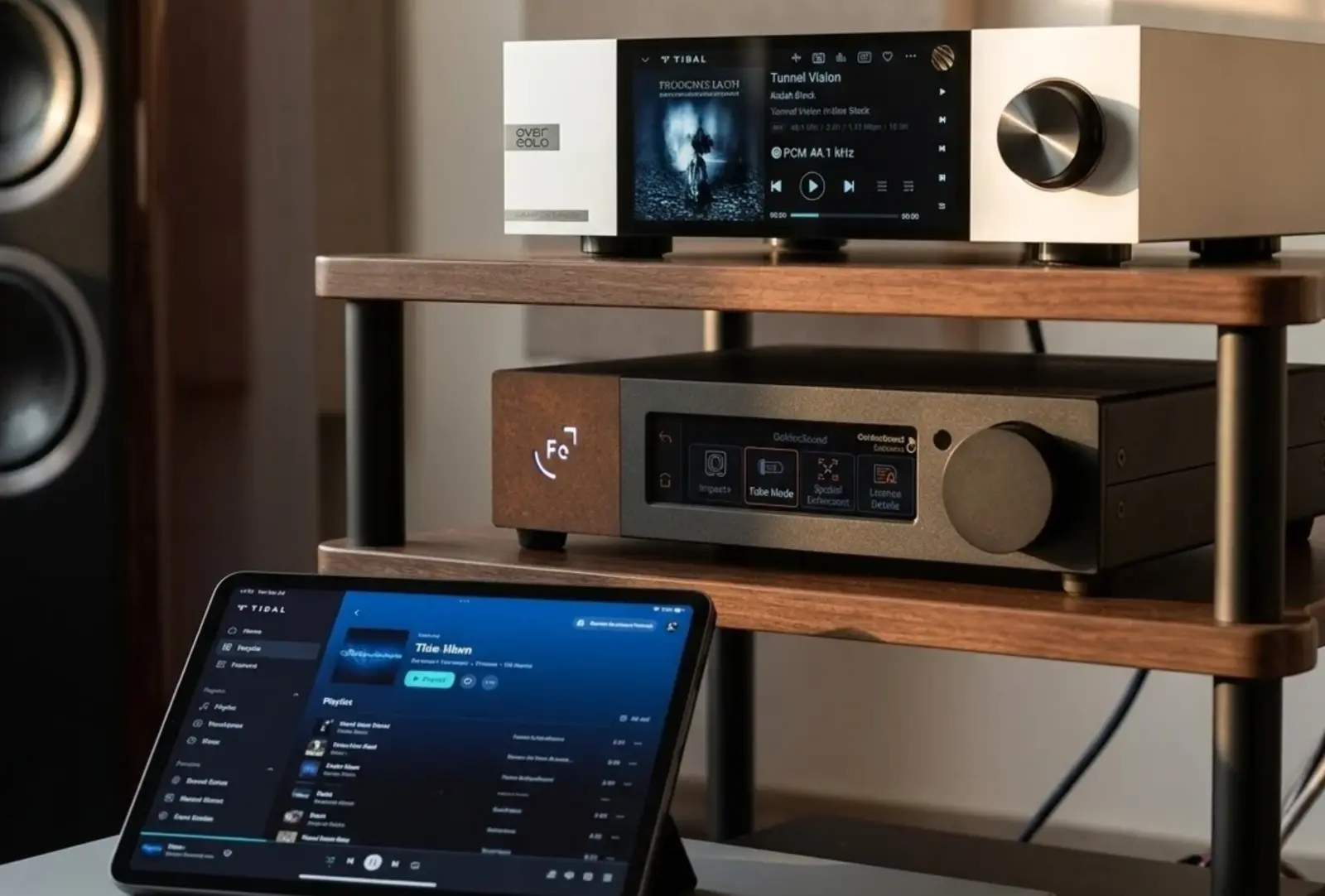
TIDAL and Qobuz Not Available in Your Country? Here’s What Audiophiles Can Do
Imagine spending thousands on a dedicated music streamer, a high-quality DAC, and a serious pair of speakers, only to discover that one of the music streaming services you want to use isn’t available in your country. It’s a frustrating situation, particularly when you’re interested in lossless and high-resolution audio but geographical restrictions prevent you from accessing certain platforms.
We’ve encountered this problem through conversations with readers from different parts of the world. After publishing our guide, I Tried 5 Music Streaming Services So You Don’t Have To, we’ve received numerous comments from audiophiles asking how they could access TIDAL and Qobuz in countries where these services aren’t officially supported.
It’s an understandable question. TIDAL and Qobuz have become popular choices among music enthusiasts who want more than standard compressed streaming. Both offer extensive music catalogues, lossless audio, and high-resolution options, making them attractive companions for dedicated listening systems.
Unfortunately, neither service is available everywhere. Licensing agreements, regional distribution arrangements, payment requirements, and local market restrictions can all affect where a streaming platform operates.
The good news is that there are several approaches worth understanding, depending on whether you’re an existing subscriber travelling abroad, trying to register for a service, or simply looking for another way to enjoy high-quality digital music.
Here’s what you should know.
Why Are TIDAL and Qobuz Not Available in Every Country?
Music streaming services don’t automatically have worldwide rights to distribute every recording in their catalogues. Record labels, publishers, and rights holders negotiate licensing agreements that can vary between countries.
This is one reason a streaming service might operate normally in the United States or United Kingdom but remain unavailable in Pakistan, India, or another market.
TIDAL publishes an official list of supported countries. Its availability list, updated January 9, 2026, covers selected markets across North America, South America, Europe, Asia, Africa, and Oceania. Pakistan is not currently included.
Qobuz operates in 27 countries according to its current availability information. These include the United States, United Kingdom, Germany, France, Japan, Australia, and several other European and international markets. Pakistan is not among them either.
For audiophiles living in unsupported regions, this creates an unusual situation. You might have a perfectly capable streaming system, a fast broadband connection, and equipment compatible with high-resolution audio, but the streaming service itself remains inaccessible through normal registration.
It’s important to understand that these restrictions aren’t necessarily related to your equipment or internet speed. They are primarily determined by the streaming company’s regional business and licensing arrangements.
Can You Use an Existing TIDAL or Qobuz Account Abroad?
This is one of the first things worth checking, particularly if you travel frequently.
There is a difference between accessing an existing subscription while travelling and attempting to create a new account from a country where the service isn’t officially available.
Qobuz specifically states that an account created in one of its supported countries can be used anywhere in the world once the user has signed in.
That is useful for existing subscribers travelling internationally. However, creating a new subscription is a different matter. Qobuz’s terms specify residency and qualifying payment requirements for subscription eligibility.
TIDAL also has geographical requirements. Its terms state that subscribers must reside in a country where the service is offered, and account registration information must be accurate. Therefore, having an existing account doesn’t necessarily mean you can register for a new subscription from any country.
If you’re already a subscriber, check the platform’s latest international-use policies before travelling. If you’re trying to register for the first time, pay particular attention to the country and payment requirements.
Using a VPN to Change Your Internet Connection.
One of the most commonly discussed options is a Virtual Private Network, better known as a VPN.
A VPN creates an encrypted connection between your device and a VPN server. Depending on the service and configuration, your internet traffic can appear to originate from the country where that server is located.
For example, someone connecting through a VPN server in the United States may appear to websites as though their connection originates there rather than from their actual location.
VPNs are useful for privacy, securing internet traffic on public networks, and certain location-specific network applications.
However, there is an important limitation when it comes to music streaming.
Changing your IP address doesn’t automatically change your account’s registered country, payment eligibility, or subscription status. Streaming services can use additional account and billing information when determining access. Consequently, a VPN shouldn’t be considered a guaranteed solution for registering for TIDAL or Qobuz in an unsupported country.
Another Option: Using a Premium Proxy on Your PC:
Another approach worth knowing about is using a proxy connection on a computer.
A proxy acts as an intermediary between your device and the internet. Depending on its configuration, it can route traffic through a server in another location, changing the IP address visible to websites and online services.
For Windows PC users, premium proxy providers offer different connection options, including residential proxies with automatic IP rotation.
One provider worth exploring is IPRoyal, which offers auto-rotating proxies. These allow the IP address to change automatically according to the selected rotation settings, without requiring users to manually switch addresses each time.
The general process involves choosing a suitable proxy service, selecting the desired connection location, and configuring the connection through compatible software or a browser. However, there’s something important to consider. Automatically changing IP addresses isn’t necessarily ideal for a continuous music-streaming session. A stable connection or sticky proxy session may be more appropriate for applications that rely on maintaining the same connection.
More importantly, using a proxy doesn’t guarantee that TIDAL or Qobuz will accept a new registration or subscription. Their account, residency, payment, and licensing requirements still apply. A proxy is therefore one networking option to understand, not a guaranteed way around a streaming platform’s regional restrictions.
What If You Want High-Resolution Music?
Not everyone needs to use TIDAL or Qobuz to enjoy excellent digital sound quality.
There are other services and listening methods worth considering, depending on your location, equipment, and music preferences. Apple Music offers lossless and Hi-Res Lossless audio in supported markets. Its integration with Apple devices also makes it an attractive option for listeners who already use the company’s ecosystem.
Amazon Music Unlimited is another service worth considering, with lossless and high-resolution streaming available in supported markets. Spotify has also introduced its Lossless listening tier, although availability depends on the country and subscription.
Check each service’s local availability before choosing a subscription. Having a high-resolution catalogue doesn’t necessarily mean every album is available in the highest supported format.
For listeners who prefer a more traditional audiophile approach, maintaining a local music library is another excellent possibility.
Build Your Own Digital Music Library
One advantage of owning a dedicated music server or network player is that you’re not entirely dependent on streaming subscriptions. A properly organised local music library can provide access to thousands of albums without relying on the availability of a particular streaming platform.
FLAC remains a popular format among audiophiles because it preserves the original audio data while using lossless compression. Depending on the recording, you can maintain CD-quality 16-bit/44.1kHz files or higher-resolution 24-bit recordings. You can store your collection on a computer, external hard drive, NAS, or dedicated music server and access it through compatible playback software.
Many network streamers also support local network playback, allowing you to enjoy your collection through your existing DAC and amplification system. This approach requires some initial effort to organise your music, but it gives you greater control over your library and reduces your dependence on the availability of individual streaming platforms.
For anyone who already owns a serious digital audio setup, it’s an option worth considering.
Does Your Music Streaming Service Really Matter That Much?
For some people, convenience is the most important factor. They want access to their favourite artists, playlists, and albums without having to manage a personal music collection. Others are more interested in sound quality, catalogue availability, metadata, album versions, and integration with dedicated network players. TIDAL and Qobuz both have their appeal, but neither is essential for building a high-quality listening system.
The DAC, amplifier, speakers, headphones, room acoustics, and quality of the recording all contribute to the final listening experience. A good local FLAC library played through a capable DAC can be just as rewarding as streaming a high-resolution album, provided the source recording and playback chain are comparable. The important thing is finding a solution that works reliably with your equipment and listening habits.
Final Thoughts:
Geographical restrictions can be frustrating for audiophiles, particularly when a service such as TIDAL or Qobuz isn’t available in their country. However, there are several things worth exploring before giving up on premium digital music.
Existing subscribers should understand the rules for international access, while anyone considering a new subscription needs to check regional registration and payment requirements. VPNs and premium proxies are additional networking options, but neither guarantees eligibility for a geographically restricted service It depends on how you listen.