
SVS SoundPath Ultra Speaker Cables & RCA Interconnect Review
Premium Performance Without the Premium Price?
There are very few companies in high-end audio that have managed to build the kind of reputation SVS enjoys today. While the brand first earned its following through powerful subwoofers, it has steadily expanded into loudspeakers and accessories without losing sight of the value-first philosophy that made it successful in the first place. Whether you’re putting together a serious two-channel stereo or a dedicated home cinema, SVS has become one of those rare manufacturers whose products are often recommended before buyers even reveal their budget.
I’ve had the opportunity to spend time with several SVS products over the years, including the Ultra Bookshelf loudspeakers and the SB-2000 Pro subwoofer. Both impressed me not simply because they sounded good, but because they delivered performance that comfortably exceeded their asking price. Build quality, engineering and customer support all left a similarly positive impression, making SVS one of the easier brands to recommend to enthusiasts looking for genuine value rather than marketing hype.
That same philosophy has quietly extended into the company’s SoundPath accessory range. Alongside isolation feet, bulk speaker cable and cable terminations, SVS also offers finished RCA interconnects and speaker cables aimed at enthusiasts who want quality construction without venturing into the often bewildering world of luxury cable pricing.
It’s a category that has become increasingly difficult to navigate. Spend a few minutes browsing specialist audio retailers, and you’ll quickly discover cables costing hundreds—or even thousands—of dollars, many promising dramatic improvements backed by increasingly elaborate technical explanations. SVS takes a noticeably different approach. Rather than relying on exotic materials or extravagant claims, the company focuses on solid engineering, sensible materials, and pricing that seems almost out of place in today’s high-end audio market.
That philosophy immediately caught my attention.
When SVS asked if I’d like to evaluate the SoundPath Ultra Speaker Cables alongside its RCA interconnects, I happily accepted. A few days later, a one-metre pair of RCA cables and an eight-foot pair of banana-terminated speaker cables arrived for evaluation. Having lived with several SVS products already, I was curious to see whether the same attention to detail would carry over into something as deceptively simple as cables.
Design & Build Quality
The first surprise came before a single note of music was played.
Considering their asking price, the SoundPath cables have no business looking this expensive.
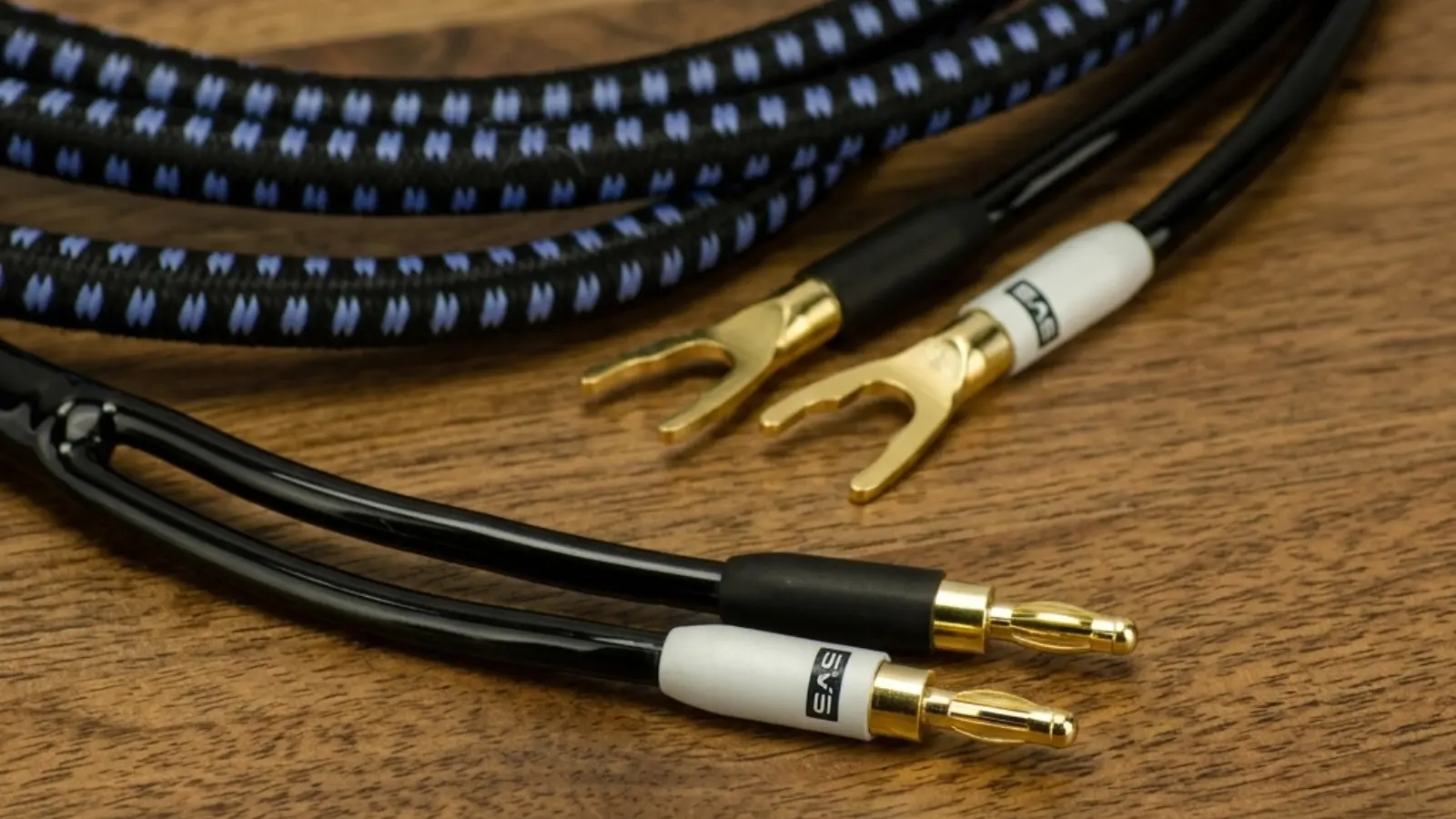
Presentation is clean and professional, with packaging that feels more premium than budget, but it’s once the cables are in your hands that the value becomes immediately apparent. The outer jackets feel reassuringly robust without becoming overly stiff, striking a balance between durability and flexibility that makes installation refreshingly straightforward. Whether routing them behind equipment racks or connecting closely spaced speaker terminals, the cables remain easy to manage without constantly springing back into awkward shapes.
The banana plugs deserve particular praise. Finished in attractive 24-karat gold plating, they fit speaker binding posts with reassuring precision, creating a secure connection that inspires confidence without requiring excessive force. After repeated installations across multiple systems, they never became loose or developed the slightly sloppy fit that cheaper connectors often exhibit over time.
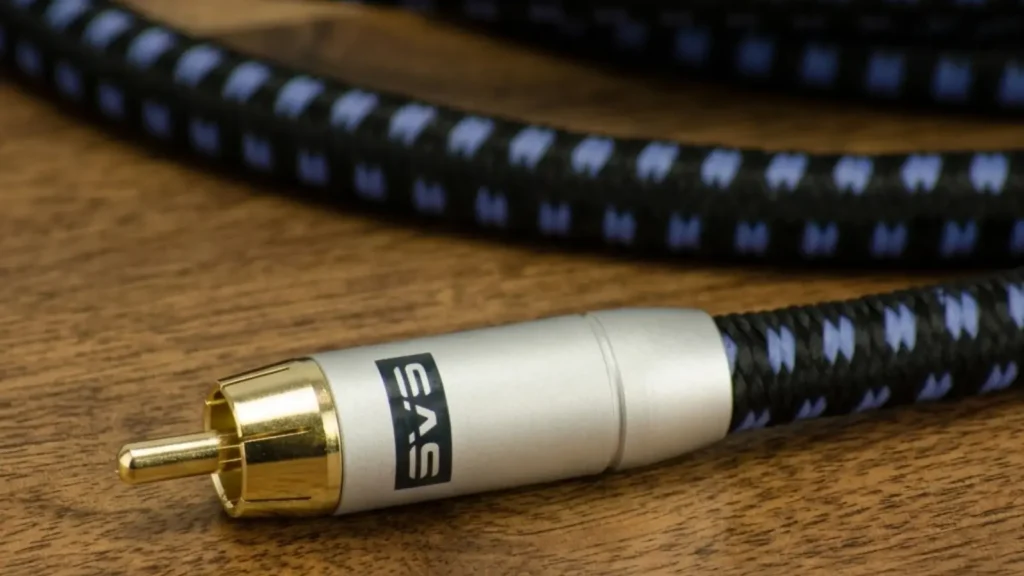
The RCA connectors leave an equally positive impression. Grip is firm, tolerances are tight, and each connector slides into place with just the right amount of resistance. They feel engineered rather than simply assembled.
Internally, SVS has deliberately avoided making extraordinary claims. Instead, the company focuses on proven engineering principles: high-purity copper conductors, five-layer dielectric insulation designed to minimise radio-frequency and electromagnetic interference, along with gold-plated brass connectors intended to provide long-term reliability.
It’s a refreshingly straightforward specification sheet.
There are no promises of revolutionary conductor geometries, quantum treatments or mysterious materials discovered somewhere deep beneath a Himalayan mountain range. SVS simply builds well-engineered cables using quality materials and lets the listening do the talking.
Perhaps the most remarkable aspect, however, remains the pricing.
Official SVS direct pricing typically lists the SoundPath Stereo RCA (1m pair) at ~$34.99 – $39.99, and single SoundPath Ultra Speaker Cables (8ft) at ~$64.99 each (or ~$129/pair). With the eight-foot version reviewed here selling for just $98.
In a market where cable prices can rapidly climb into four figures, those numbers almost seem like typographical errors.
System Matching & Listening Setup
Rather than evaluating the SoundPath cables in a single reference system, I rotated them between two very different setups over several months to see how consistently they performed across a variety of equipment.
My primary listening room paired Bryston Mini T loudspeakers with Bryston’s BDP-2 digital player and BDA DAC, partnered by Rotel’s immensely capable RB-1590 power amplifier and Rogue Audio’s RP-5 tube preamplifier. It is a revealing system that quickly exposes weaknesses elsewhere in the signal chain, making it an excellent environment for evaluating new components.
For contrast, the cables also spent considerable time in my office system, where Magnepan MMGs and Spendor S3/5R monitors alternated driving duties. Electronics included Aric Audio’s Expression preamplifier, the CLONES Audio 25p power amplifier and Simaudio’s excellent 280D DAC equipped with the Moon MiND streaming platform.
Living with the SoundPath cables across both systems proved valuable because it removed the possibility that their performance was simply flattering one particular combination of components. Whether connected to conventional dynamic loudspeakers or planar magnetic designs, solid-state electronics or valve preamplification, the overall character remained remarkably consistent.
After spending several weeks settling naturally into regular listening sessions, I began concentrating on critical evaluation.

What immediately stood out wasn’t a dramatic sonic signature, but rather the complete lack of one.
That’s exactly what good cables should do.
The SoundPath cables never attempted to brighten the treble, add warmth to the midrange, or artificially inflate bass response. Instead, they consistently stepped aside and allowed each system’s own personality to shine through. The presentation remained open, balanced and transparent, with excellent low-level detail retrieval that never sounded forced or analytical.
Dynamic swings arrived effortlessly, transient attacks remained clean, and bass notes started and stopped with convincing precision. Equally impressive was the sense of composure. Even during complex recordings with multiple instruments competing for attention, nothing felt congested or artificially sharpened in an attempt to create false detail.
That balance became increasingly obvious as I moved through a wide range of recordings, from classic pop and rock to modern vocal performances and acoustic material. Regardless of genre, the SoundPath cables maintained a neutral presentation that encouraged longer listening sessions rather than constantly reminding you that new cables had been installed.
Listening
The more time I spent with the SoundPath cables, the more I appreciated what SVS was trying to achieve. Rather than adding a distinctive character of their own, they simply allowed each system to perform without drawing attention to themselves. That may not sound particularly exciting on paper, but in practice it’s exactly what a well-engineered cable should do. I never found myself thinking about the cables during a listening session, only the music flowing through them.
One of the albums I returned to repeatedly was the 24-bit/96kHz remaster of Michael Jackson’s Off the Wall. Although this remaster is noticeably more compressed than the original vinyl and early CD releases, it remains one of the most enjoyable pop recordings of its era. Through the SoundPath cables, the title track carried an infectious rhythmic drive, while “Don’t Stop ‘Til You Get Enough” showcased exceptionally tight bass lines that remained agile and controlled throughout the song. Bass notes started and stopped with precision, never lingering longer than they should, and Quincy Jones’ famously layered production retained its remarkable sense of organization. The countless percussion details, rhythm guitars, backing vocals and brass arrangements all occupied their own space within the mix without sounding artificially separated. Jackson’s lead vocal remained firmly locked in the centre, delivering the clarity and energy that made the original recording such a classic.
Moving to something considerably more modern, Adele’s 25 demonstrated another strength of the SoundPath cables. Contemporary pop recordings often suffer from heavy dynamic compression, yet Adele’s voice remains beautifully captured throughout the album. On “Sweetest Devotion”, her vocal projected naturally between the loudspeakers with convincing body and scale, while the surrounding instrumentation remained smooth and well layered. “Million Years Ago” proved equally engaging, allowing subtle textures in her voice to emerge without becoming overly analytical. Piano notes decayed naturally, acoustic instruments retained their warmth, and the emotional weight of the performance never felt diluted by excessive brightness or artificial detail.
Classic rock benefited just as much. The Beatles’ 1+, featuring Giles Martin’s remixes created from the original multitrack recordings, is a wonderful demonstration of how modern technology can refresh familiar material while respecting its heritage. Songs that I’ve heard countless times revealed small production details that often disappear into the background on lesser systems. Vocal harmonies remained beautifully integrated, guitars carried satisfying bite without harshness, and Paul McCartney’s melodic bass lines worked seamlessly alongside Ringo Starr’s drumming. The SoundPath cables never exaggerated these elements; instead, they simply allowed the recording to breathe naturally, preserving the musical cohesion that makes these remixes so successful.
As the weeks turned into months, the listening sessions became increasingly varied. Jazz recordings, acoustic performances, orchestral works and electronic music all confirmed the same impression. The SoundPath cables maintained a consistently neutral balance regardless of programme material. They never attempted to soften bright recordings or artificially inject warmth into leaner systems, which is precisely the behaviour I’d expect from cables designed with engineering rather than marketing in mind.
Everyday Use
Beyond sonic performance, the SoundPath cables proved to be exceptionally easy to live with.
Some heavily constructed speaker cables can become frustrating during installation, particularly when working behind equipment racks where space is limited. That’s not the case here. Despite their substantial construction, the SoundPath speaker cables remain flexible enough to route cleanly without constantly fighting back. They feel robust without becoming cumbersome, making repeated equipment changes surprisingly straightforward.
The connectors deserve another mention because they consistently impressed throughout the review period. The banana plugs locked securely into every amplifier and loudspeaker I used, maintaining a reassuringly solid fit even after numerous swaps between systems. Likewise, the RCA connectors gripped firmly without requiring excessive force to remove, striking an ideal balance between security and practicality.
It’s a small detail, but one that reinforces the impression of thoughtful engineering throughout.
Value
Perhaps the most remarkable aspect of the SoundPath range isn’t its sound quality or construction—it’s simply the asking price.
The high-end cable market has long occupied a curious place within the audio industry. It’s a category where pricing often bears little obvious relationship to materials or manufacturing costs, and where increasingly elaborate claims frequently replace meaningful engineering discussion. SVS approaches the subject from an entirely different direction.
Rather than chasing extravagant luxury positioning, the company has produced cables that prioritise sensible design, quality materials and excellent workmanship while remaining accessible to enthusiasts building real-world audio systems.
That’s refreshing.
During this review, the SoundPath cables spent time connected to equipment costing many times more than they do. At no point did they feel like the weak link in either system, nor did they leave me wondering whether upgrading to significantly more expensive cables would unlock hidden performance. Instead, they quietly disappeared into the background and allowed the source components, electronics and loudspeakers to determine the character of the presentation.
That’s arguably the highest compliment I can pay any audio cable.
Verdict:
There remains an almost unquestioned assumption within parts of the audiophile world that serious systems demand increasingly expensive cables. It’s a belief that has fuelled one of the industry’s most controversial product categories for decades.
The SVS SoundPath Ultra Speaker Cables and RCA Interconnects offer a persuasive counterargument.
Rather than chasing extravagant claims or boutique exclusivity, SVS has focused on delivering excellent engineering, premium construction and honest performance at prices that remain refreshingly attainable. Throughout months of listening, they consistently demonstrated a balanced, transparent and composed presentation without imposing an identifiable sonic character of their own. Just as importantly, their superb build quality, secure connectors and everyday usability made them a pleasure to install and use.
Could you spend considerably more on cables? Of course.
The more important question is whether doing so would deliver proportionally greater musical enjoyment for most listeners.
After living with the SoundPath cables across multiple systems, I’m not convinced.
If you’re assembling a serious stereo or home cinema system and want cables that simply get out of the way of the music while offering exceptional build quality and outstanding value, the SVS SoundPath range deserves a place near the very top of your shortlist. They embody exactly what SVS has become known for: thoughtfully engineered products that consistently outperform their asking price.
Pros:
- Exceptionally balanced and transparent presentation
- Outstanding value for money
- Excellent build quality and premium connectors
- Flexible, easy-to-install cable design
- Available in multiple lengths at sensible prices
- Backed by SVS’s excellent customer support and generous trial period
Cons:
- Minimalist appearance may not appeal to buyers seeking ultra-luxury aesthetics
- Those expecting cables to alter system tonality may find them deliberately neutral
Overall Score: 5/5
Performance: ★★★★★
Build Quality: ★★★★★
Ease of Use: ★★★★★
Value: ★★★★★