
Klipsch WF-34 Review: Why You Should Never Judge a Horn Speaker on Day One
It’s hard to imagine high-end audio without the name Klipsch.
For more than half a century, Paul W. Klipsch’s loudspeaker designs have survived changing trends, changing technologies, and changing tastes. In an industry where yesterday’s breakthrough often becomes tomorrow’s forgotten experiment, very few products earn genuine legendary status. The Klipschorn is one of them, and even today it remains a benchmark for what horn-loaded loudspeakers can achieve.
The problem is that not everyone has the room—or the budget—for a pair of Klipschorns.
That’s where the WF-34 enters the picture.
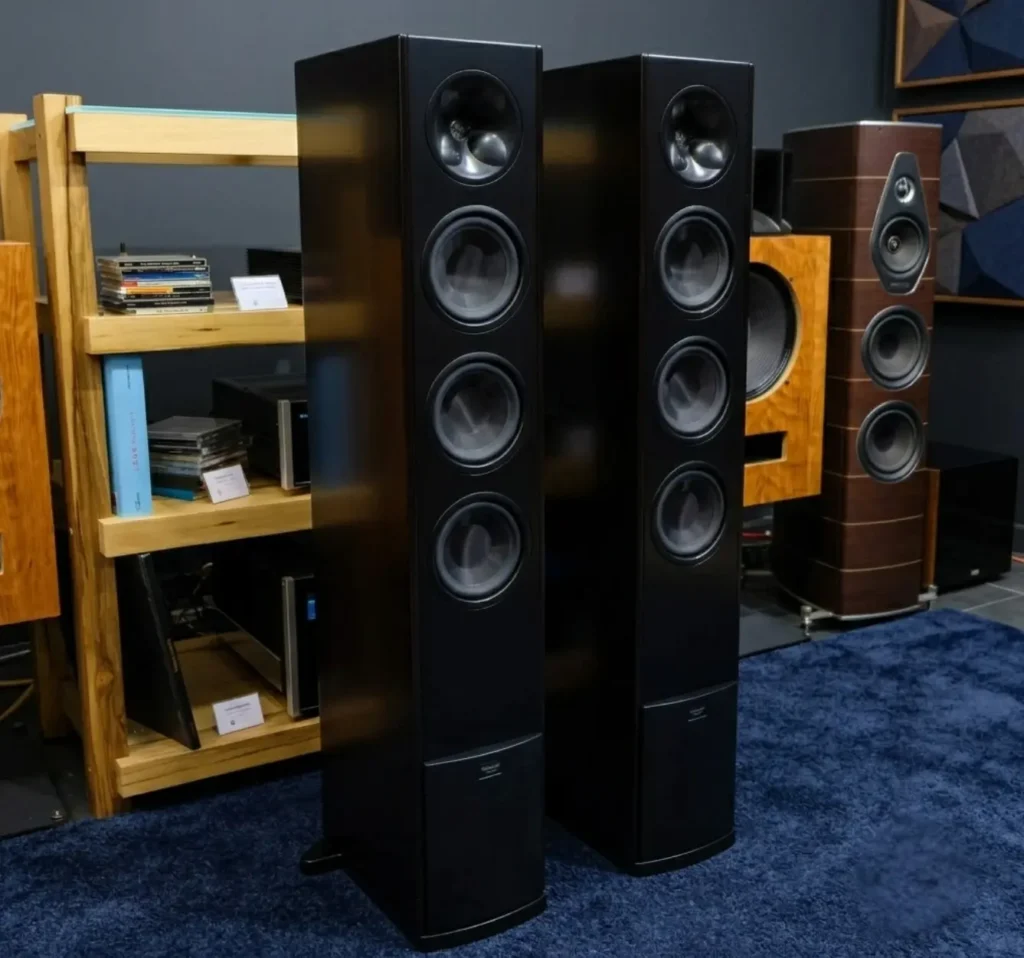
Part of Klipsch’s Icon W Series, the WF-34 promises much of the company’s trademark efficiency and dynamics in a cabinet that’s surprisingly slim and easy to accommodate. Standing 40 inches tall with a footprint just 6.5 inches wide and 9.5 inches deep, it’s designed for listeners who want a proper floorstander without sacrificing half their living room.
I Finally Experienced a True Concert in My Living Room, Thanks to Klipsch
On paper, it looked like an easy speaker to recommend.
In reality, it became one of the most surprising reviews I’ve ever written.

A Different Kind of Klipsch
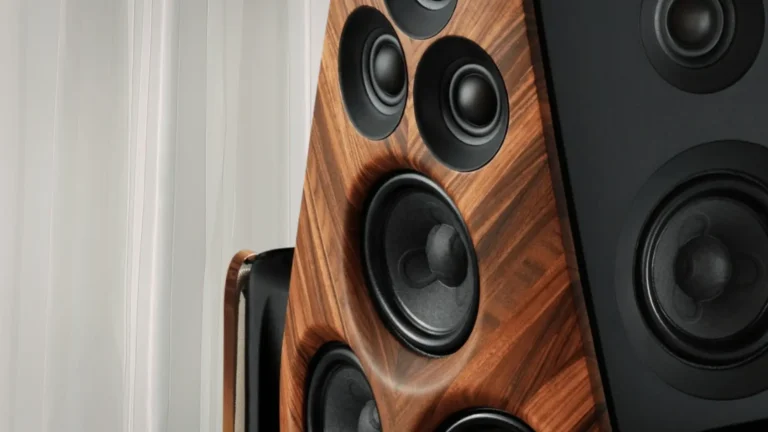
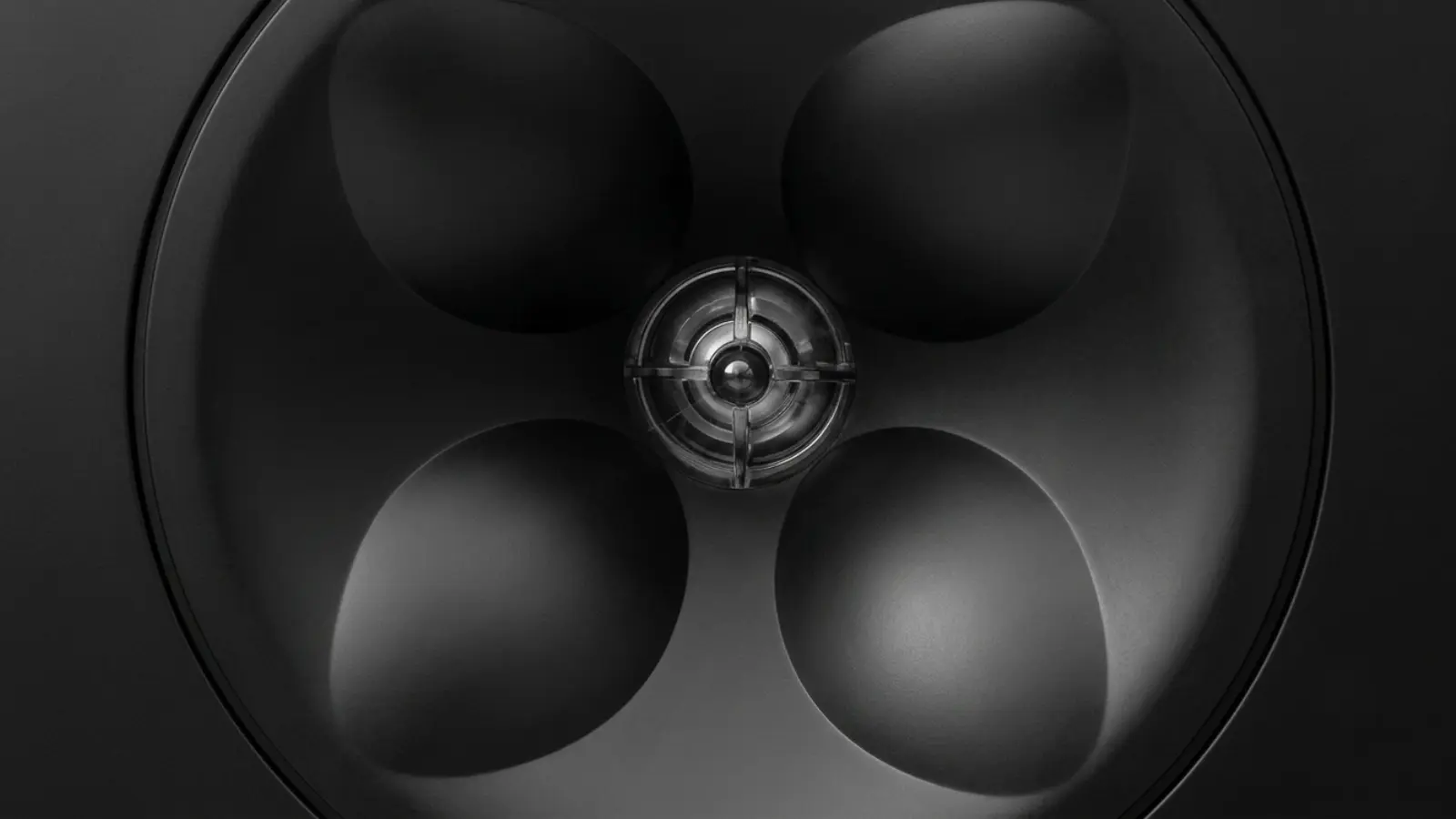
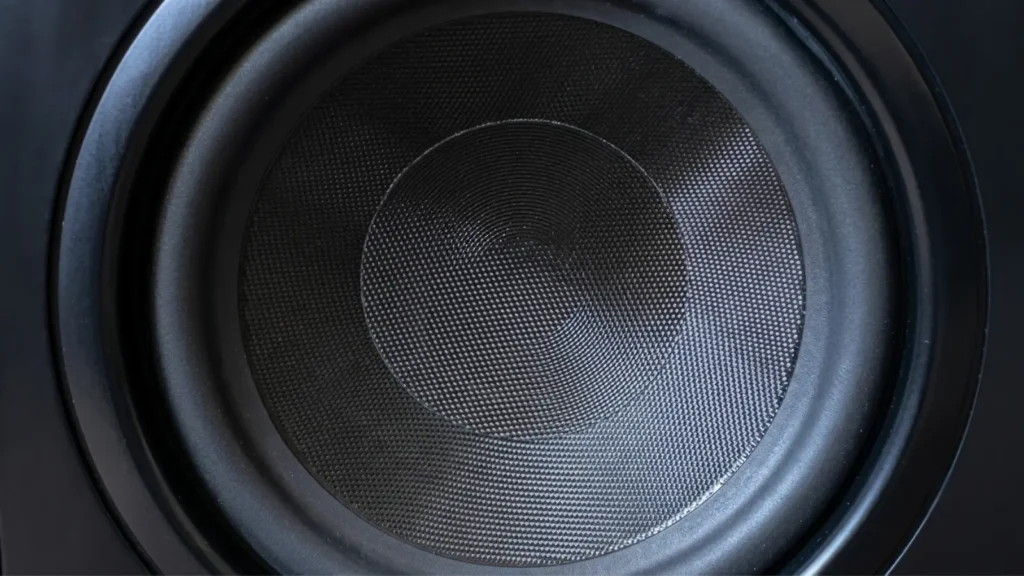
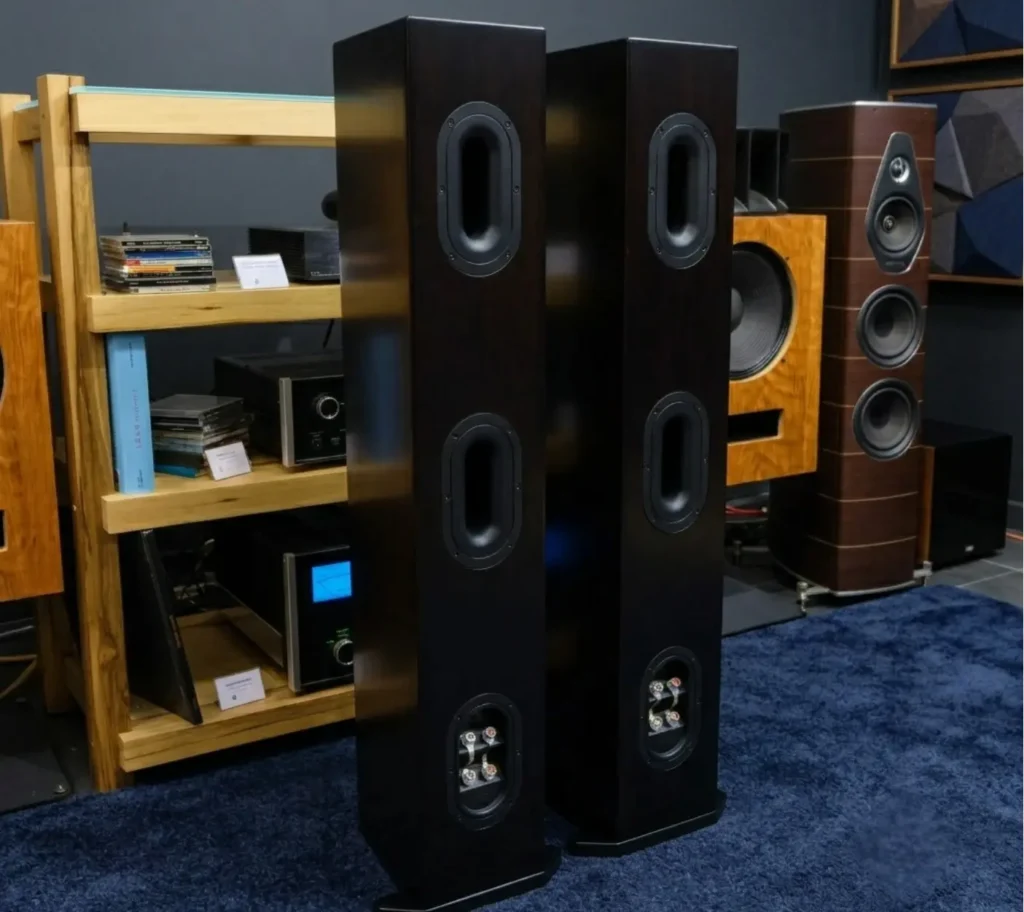
Klipsch has never hidden its love affair with horn-loaded loudspeakers, and the WF-34 proudly continues that tradition. At its heart is the company’s XT Tractrix horn, paired with a one-inch titanium compression driver designed to deliver the speed and efficiency that have long defined the Klipsch sound. Supporting it are three 4.5-inch triple-woven fiberglass woofers, paired with dual rear-firing ports, to produce bass that belies the cabinet’s modest dimensions.
The numbers are equally impressive. With a sensitivity rating of 95.5dB into an 8-ohm load, the WF-34 is exceptionally easy to drive, making it an attractive partner for everything from modest integrated amplifiers to lower-powered tube designs.
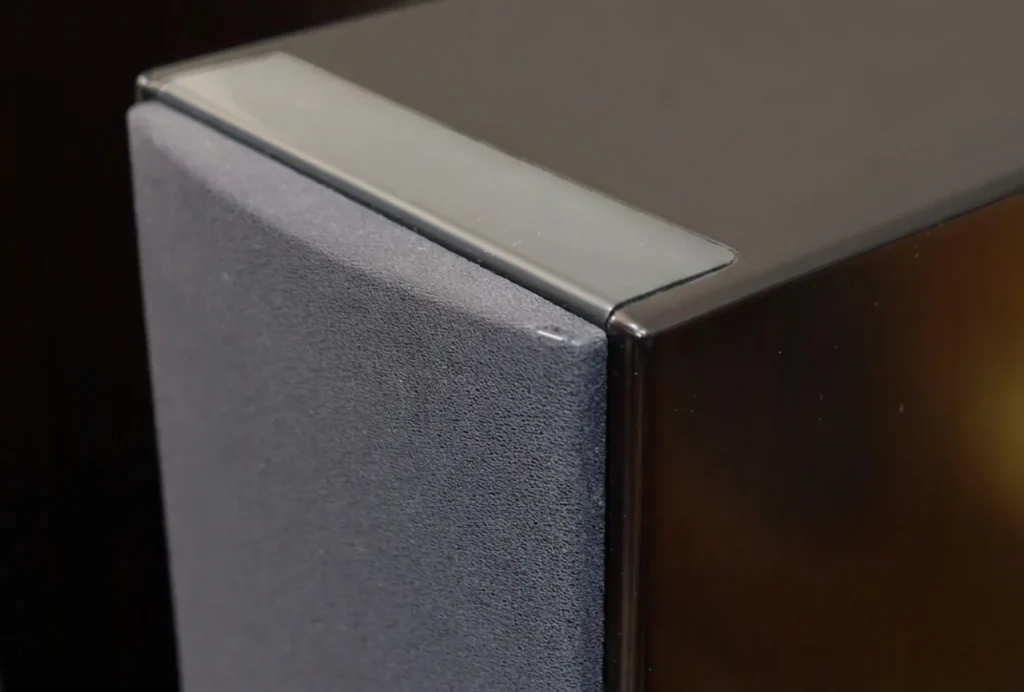
Klipsch has also resisted the temptation to make the speaker look purely functional. The beautifully finished Berlinia wood veneer, achieved through a process of ten coats of polyurethane with hand-sanding between each layer, gives the WF-34 a refined appearance. Available in Cabernet or Espresso, magnetic grilles and dual binding posts add the sort of practical touches owners appreciate over years of use.
Everything about the speaker suggested it should perform exactly as I expected.
It didn’t.

The Break-In That Changed Everything
Almost every loudspeaker manufacturer recommends a break-in period before serious listening, but in my experience, the improvements are usually subtle. The sound smooths out a little, the bass gains some weight, and everything settles into place.
When I spoke with Mark Casavant, Klipsch’s Vice President of Product Development, he was unusually emphatic.
“Don’t judge them too quickly.”
He insisted the WF-34 needed a full break-in before any meaningful evaluation, so I followed his advice and let the speakers play for several days before sitting down for critical listening.
Even then, my first reaction wasn’t encouraging.
The WF-34 sounded shrill and icy, with far too much emphasis on the upper frequencies. The speed was certainly there—no one could accuse the horn tweeter of sounding slow—but the overall presentation felt unbalanced. Instead of drawing me into the music, it constantly reminded me I was listening to a loudspeaker.
Why Is Everyone Suddenly Buying the Klipsch SPL-120 Subwoofer?
Wondering whether I was being overly critical, I invited a few music-loving friends over for an afternoon of listening. We compared the WF-34 with several other speakers that happened to be in for review, covering a wide range of designs and price points.
The verdict was unanimous. Every other speaker won.
That included the beautifully engineered Davone RITHMs, but also Athena’s long-discontinued AS-B1 bookshelf speakers—an overachiever that originally cost me just $150.

Conversations with others in the audio industry weren’t exactly reassuring either. One comment, in particular, stuck with me:
“Yeah… Klipsch will tear your head off.”
At that point, I was beginning to think they were right. I knew horn speakers could be incredibly fast, but speed alone isn’t enough. Without convincing midrange and bass balance, excitement quickly becomes fatigue, and I was struggling to enjoy longer listening sessions.
Then, one afternoon, after dozens of additional hours of continuous playback, something happened.
The speakers came to life.
It was like watching a butterfly emerge from its chrysalis. The aggressive top end simply melted away, replaced by a balanced, open, and remarkably natural presentation. Suddenly everything made sense. Recordings breathed freely, instruments found their proper place, and music emerged with an effortless coherence that simply hadn’t been there before.
The transformation wasn’t subtle. It completely changed my opinion of the WF-34. For the first time, I stopped analyzing the speakers and started enjoying the music.
Sound Quality & Listening Notes
Eager to see how the WF-34 would handle high-resolution reference material, I put it through a gauntlet of familiar audiophile test tracks across various genres.
I began with acoustic jazz and small-ensemble classical recordings to evaluate timbre and spatial accuracy. The WF-34 reveled in its exceptional transparency. Piano tones were natural, orchestral sweeps expansive and unconstrained, and the silences between notes as telling as the notes themselves. It was a masterclass in how these speakers could disappear from the listening experience entirely, leaving only the performance.
Turning to vocal-centric jazz tracks, including Patricia Barber’s Clique, the WF-34’s monitor-like neutrality was on full display. The speaker revealed the subtle brushwork on the drums, the delicate resonance of the upright bass, and the breathy, expressive quality of the vocals.
When fed large-scale orchestral pieces, the soundstage opened up dramatically in depth and width. The bass extension from the triple 4.5-inch woofers proved authoritative yet tuneful, maintaining distinct separation and dense imaging even during powerful orchestral crescendos. It captured the monumental scale and detail of a full ensemble without compression or strain.
A quick note on system matching: Because of the horn’s high efficiency and revealing nature, source component pairing matters. When hooked up to an overly clinical, hyper-analytical Class-D amplifier or DAC, the top end can lean slightly cool. Pairing the WF-34 with a warmer Class-A solid-state amp, a quality tube integrated, or a smooth digital front-end brings out the speaker’s natural warmth and richness.
That’s perhaps the biggest compliment I can pay the WF-34. It didn’t simply change my opinion—it completely changed my expectations.
Who Are These Speakers For?
The WF-34 isn’t the kind of loudspeaker that impresses within the first hour. If anything, it risks creating the wrong first impression. Straight out of the box, I found it bright, forward, and surprisingly difficult to enjoy. Had I packed it away after those first listening sessions, this review would have been very different.
Patience, however, proved to be the key.
Listeners willing to give the WF-34 the break-in time it genuinely requires will discover a loudspeaker that’s lively, detailed, and remarkably engaging. It’s especially well suited to anyone who wants the dynamics and efficiency that have made Klipsch famous, but doesn’t have the space for the company’s larger Heritage floorstanders. Its slim cabinet also makes it an excellent choice for apartments, smaller listening rooms, or home theater setups where floor space is at a premium.

On the other hand, if you’re looking for a naturally warm, forgiving loudspeaker from the moment it’s unboxed, there are easier alternatives. The WF-34 asks a little more of its owner—but in my experience, it rewards that patience.
Final Verdict:
The Klipsch WF-34 taught me a valuable lesson about judging loudspeakers too quickly.
Few products have ever changed my opinion so dramatically during the course of a review. What began as one of the most disappointing listening experiences I’d had in quite some time gradually evolved into one of the most enjoyable. Once fully broken in, the WF-34 delivered the speed, openness, and musical involvement I had hoped for from the very beginning, wrapped in a beautifully finished cabinet that’s easy to accommodate in almost any room.
If you’re searching for a competitively priced floorstanding speaker that captures the unmistakable character of Klipsch without demanding the space of a Klipschorn, the WF-34 deserves a place on your shortlist.
Just don’t judge it too quickly.
Pros And Cons:
Pros:
- Excellent dynamics and transient response
- Slim cabinet suits smaller rooms
- High sensitivity makes amplifier matching easy
- Wide, spacious stereo image
- Beautiful real-wood finish and premium build
Cons:
- Requires a lengthy break-in period
- Bright straight out of the box
- Less forgiving with poor recordings
- Careful system matching is recommended
Klipsch WF-34 Specifications:
| Specification | Klipsch WF-34 |
|---|---|
| Manufacturer | Klipsch |
| Model | WF-34 |
| Speaker Type | 2.5-Way Floorstanding Loudspeaker |
| Tweeter | 1-inch Titanium Compression Driver with XT Tractrix Horn |
| Mid/Bass Drivers | Three 4.5-inch Triple-Woven Fiberglass Cone Woofers |
| Enclosure Type | Bass Reflex with Dual Rear-Firing Ports |
| Frequency Response | 59Hz – 23kHz (±3dB) |
| Sensitivity | 95.5dB (2.83V/1m) |
| Nominal Impedance | 8 Ohms |
| Recommended Amplifier Power | 100 Watts Continuous / 400 Watts Peak |
| Crossover Frequency | 1,800Hz |
| Inputs | Dual Gold-Plated Binding Posts (Bi-Wire/Bi-Amp Compatible) |
| Cabinet Finish | Berlinia Veneer (Cabernet or Espresso) |
| Grille Type | Magnetic, Removable |
| Dimensions (H × W × D) | 34 × 6.8 × 9.5 in (864 × 173 × 241 mm) |
| Weight | Approximately 29 lbs (13.2 kg) Each |
| Launch Price (MSRP) | $1,199 per pair |