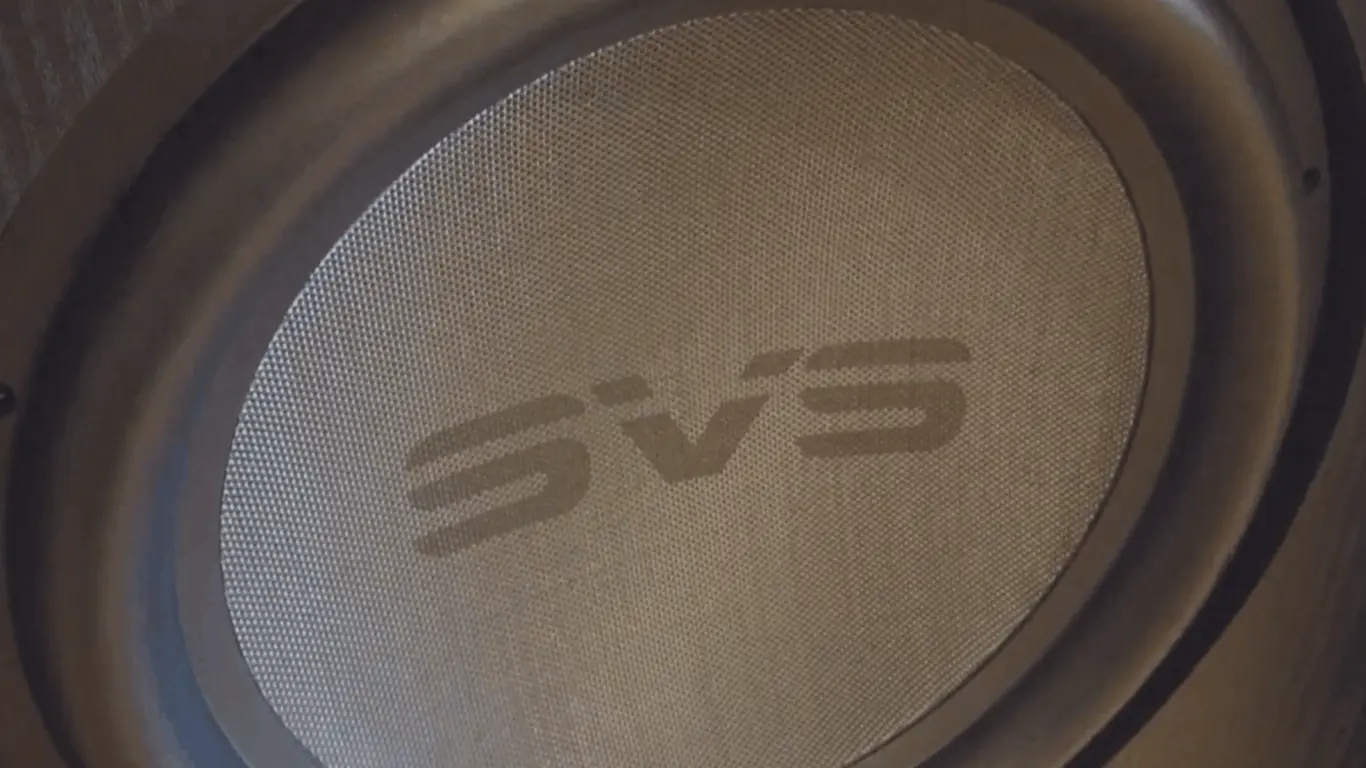
SVS PB-4000 Subwoofer Review: When Equipment Becomes Infrastructure
Quick Summary: A foundation-shifting subwoofer that stops being “equipment” and starts being room “infrastructure.” For large-room owners chasing true sub-20Hz experiential playback, the PB-4000 feels less like a purchase and more like a system milestone.
There’s a very specific moment in high-end audio where equipment stops feeling like gear and starts feeling like infrastructure. The SVS PB-4000 lives exactly in that space. It doesn’t present itself like a traditional upgrade; it presents itself like a foundation shift, the kind that quietly changes how every piece of content feels, from film soundtracks to low-frequency ambient layers in music you thought you already understood.
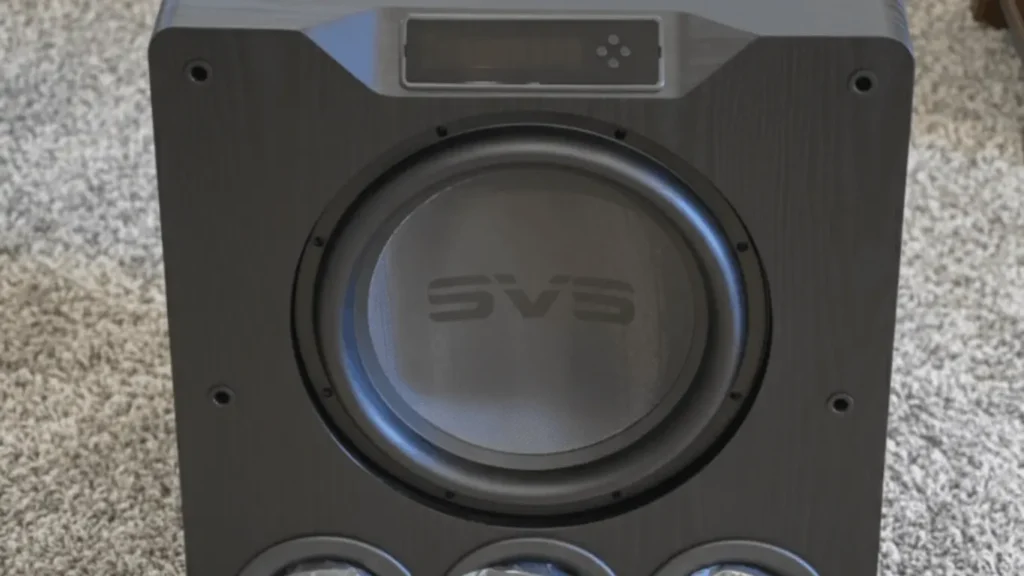
Replacing the outgoing PB13-Ultra, the PB-4000 borrows technology from the flagship PB16-Ultra but costs $100 less than its predecessor, a rare instance of better performance at a lower price. At $1,899.99 (black ash finish) or $1,999.99 (piano gloss black), it represents a compelling value proposition in reference-level subwoofers.
The Real-World Challenge: Glass & Scale
In real-world listening, inside a large 26-by-26-foot media space with one entire wall made of floor-to-ceiling glass. a scenario most subwoofers would politely struggle with, the PB-4000 immediately demonstrated what separates reference low-frequency design from high-output consumer bass. The difference isn’t just volume; it’s composure. It’s authority without strain. It’s the sense that the subwoofer is operating well inside its comfort zone while the room itself starts negotiating with physics.
The listening space presented two specific placement challenges: one position created a null at my seat centered around 45 Hz, while another led to a less egregious null a little above 80 Hz. Multiple subs would ultimately prove essential for even bass response across the entire sofa. (For context, organic acoustic treatments, strategically placed bookshelves, movie shelves, and draperies- helped tame the worst reflections.)
Calibration & Synergy
Paired with a Yamaha RX-A3080, a receiver respected for musicality but not known for aggressive LFE voltage output, the PB-4000 required only minor calibration finesse. A slight gain adjustment and running roughly eight decibels hot relative to the main channels unlocked the character that defines this subwoofer. Once dialed in, the integration stopped sounding like integration. Bass simply existed—spatially, structurally, and effortlessly—without drawing attention to itself unless the content demanded it.
Crossover points were set at 80 Hz for the main speakers and 100 Hz for the center channel to avoid slight resonances in the equipment credenza. The handoff from the GoldenEar Triton One towers to the PB-4000 proved utterly seamless.
The SVS mobile app deserves special mention: gain adjustments and parametric tweaks happen with immediacy, removing the intimidation factor typically associated with reference subwoofer calibration. The app communicates via Bluetooth, pairs in seconds, and offers:
- Preset switching between film and music profiles
- Room gain compensation
- Three bands of parametric EQ
- Volume, polarity, and high-pass controls
- Port tuning modes (standard/extended/sealed)
Check Out: SVS SB 4000 Review
Technical Authority: Stability Under Pressure
What immediately becomes clear is that SVS did not chase brute force at the expense of control. The sub reaches into sub-30Hz territory with a level of stability that feels almost casual. The PB-4000 never sounded like it was approaching a limit. If anything, it consistently felt like it was waiting for a more demanding signal.
The Listening Experience: Music
Going merely by conventional wisdom, most people would assume a ported sub of this size excels at action movie bass but might struggle with musicality. The PB-4000 dispels that notion immediately—across genres, across recording quality, across every test thrown at it.
Speed & Attack: Rage Against the Machine – “Take the Power Back”
Tim Commerford’s bass on this track is relentless, rapid-fire sixteenth notes delivered with aggressive slap technique that punishes slow subwoofers. The opening riff alone demands instantaneous starts and stops, with zero room for overhang or blur. Most ported subs in this size class would smear the transients, turning Commerford’s percussive attack into a muddy thud.
The PB-4000 tracked every note with startling precision. Each slap landed cleanly, each decay stopped exactly when it should. The breakdown section beginning around 2:30 features some of the most demanding rapid-decay bass in rock, which stack on top of each other with minimal separation, yet the sub never loses its composure. For a ported sub weighing 153 pounds, the agility borders on absurd.
What this reveals: The PB-4000’s motor assembly and voice coil design prioritize control, not just brute output. The eight-layer, edge-wound aluminum voice coil sheds heat efficiently, maintaining magnetic grip even during sustained assault.
Nuance & Decay: Esperanza Spalding – “I Know You Know”
Acoustic bass is the great revealer of subwoofer character. Electric bass can hide sins; upright bass exposes them mercilessly. Spalding’s playing on this track has extraordinary dynamic range—notes bloom with woody resonance, sustain naturally, then decay into silence. The space between notes matters as much as the notes themselves.
The PB-4000 rendered this with unexpected grace. The initial attack has appropriate bite, the body of each note carries the instrument’s natural warmth, and the decay trails off organically without artificial hang time. More importantly, the handoff to the main speakers at 80Hz was so seamless that the sub became acoustically invisible, bass was simply there, emanating from the instrument itself rather than a black box in the corner.
The passage around 1:45, where Spalding walks down the neck into lower registers, could expose port noise or compression in lesser designs. The PB-4000 absorbed it effortlessly, revealing only the music.
What this reveals: Ported subs don’t have to sound “boomy” or “one-note.” With proper tuning and DSP, they can match the musicality of sealed designs while retaining deeper extension.
Sub-20Hz Foundation: Hans Zimmer – “Why So Serious?” (from The Dark Knight)
This track is infamous among subwoofer enthusiasts, and for good reason. The sustained low-frequency tone that builds throughout the opening sequence descends well below 20Hz, hovering in that region where sound becomes less audible and more physical. Most ported subs begin to unload here: port noise emerges, distortion rises, or the amplifier simply runs out of headroom.
The PB-4000 transformed it into a pressure wave.
At moderate levels, you feel it in your chest before you hear it, a gradual pressurization of the room that builds tension independent of the visuals. At reference levels, the experience becomes visceral. The tone doesn’t waver, doesn’t modulate, doesn’t reveal its mechanical origin. It simply exists as an environmental force.
Around the 3:00 mark, when the tone reached its peak intensity, wall-mounted art began vibrating in my listening room. Glass panels showed visible sympathetic resonance. The sub, meanwhile, remained utterly composed, no chuffing, no mechanical noise, no sense that it was approaching any limit.
What this reveals: The PB-4000’s 1,200-watt RMS amplifier and dual-ferrite motor assembly deliver genuine sub-20Hz extension with authority. This isn’t “extension” in the marketing sense—it’s usable, measurable, feel-it-in-your-bones low frequency reproduction.
Electronic Bass Purity: James Blake – “Limit to Your Love”
This track has become a subwoofer benchmark for one simple reason: its bass drops are pure low-end. The synth bass that enters around 0:45 has almost no harmonic content above 50Hz. There’s nowhere to hide. Subwoofers with high distortion, port resonance, or group delay issues get exposed immediately—the bass sounds like a dull thud instead of a round, pressurized note.
The PB-4000 reproduced these drops as clean, tactile pressure. Each note has a definition; you can perceive its pitch, its duration, its shape. The space between drops is genuinely silent; the sub doesn’t introduce artifacts or self-noise. When the bass returns around 2:15 with added weight, the PB-4000 simply scales upward without compression or strain.
For listeners who assume electronic bass is “easy” for big subwoofers, this track provides an education. Sloppy subs turn Blake’s meticulous production into an undifferentiated rumble. The PB-4000 reveals it as music.
What this reveals: The DSP in the PB-4000 isn’t just for show. The 50MHz Analog Devices processor enables precise time-domain behavior, which translates to accurate reproduction of synthesized bass with complex harmonic structures.
Chest-Thump Authority: Kendrick Lamar – “DNA.”
The beat switch at 2:05 is one of modern hip-hop’s most punishing moments. The bass that enters isn’t particularly deep; it lives in the 40-60Hz region where impact is felt in the chest rather than the gut. But it’s fast, aggressive, and demands instantaneous response from the entire system.
The PB-4000 delivered chest-thump authority while maintaining articulation. Each kick drum transient lands with physical force, but they remain distinct; you can count the hits rather than feel a continuous blur. When the full production kicks in around 2:30, with layered 808s and rapid-fire snare, the sub never loses its grip on the foundational low end.
This is where “reference composure” becomes palpable. Lesser subs would either compress the dynamics (reducing impact) or smear the transients (reducing clarity). The PB-4000 does neither. It simply reproduces what’s on the recording, whether that’s a single hit or a barrage.
What this reveals: The PB-4000 isn’t just a “deep bass” specialist. Its mid-bass performance, the region responsible for punch and impact, rivals dedicated sealed subs while maintaining extension below 20Hz that sealed designs can’t match.
The Multi-Sub Effect: PB-4000 + PB-2000
Adding a secondary PB-2000 into the system revealed something seasoned multi-sub users already understand: output stacking is rarely the real story. The real story is spatial smoothing. The PB-2000 didn’t transform maximum SPL metrics. Instead, it quietly reinforced room uniformity, filling null zones (particularly that troublesome 45 Hz region) and creating that elusive “pressurized air mass” sensation where bass feels omnipresent rather than directional.
The PB-4000 remained the gravitational center; the PB-2000 became structural support. This hierarchical approach—one anchor sub plus reinforcement subs—proved more effective for room integration than chasing identical pairs.
Environmental Impact
Around 36 Hz, structural interaction inside the room became unavoidable. Wall-mounted frames began to rattle with aggression. Glass panels showed visible sympathetic vibration. At that point, the conversation shifts from “Is the sub distorting?” to “How is the room handling this much controlled energy?”
That’s a very different tier of performance discussion, and it’s one most subwoofers never reach. The PB-4000 isn’t distorting; it’s revealing the room’s limitations.
How It Stacks Up: Competition & Context
| Model | Price | Key Difference |
|---|---|---|
| SVS PB-4000 (this review) | $1,899-$1,999 | The sweet spot: PB16 technology at PB13 pricing |
| SVS PB16-Ultra | $2,499.99 | Larger cabinet, more output, $600+ more |
| SVS SB-4000 (sealed) | $1,499.99 | Smaller, punchier, better for music-focused systems |
| SVS PB12-Plus | $1,399.99 | Older technology, less consistent output |
| Hsu Research VTF-15H MK2 | $899-$1,049 + shipping | More output from 40-63 Hz; less below 40 Hz |
| Rythmik LVX12 | $699-$739 shipped | Direct servo technology; excellent linearity |
The PB-4000’s strength lies below 40 Hz, where its extension and control outperform most competitors. If your priorities live higher in the frequency range, alternatives may offer better value.
Conclusion:
What ultimately defines the experience isn’t the first bass drop. It’s the moment you realize the subwoofer isn’t the limiting factor anymore. The amplifier isn’t. The driver isn’t. The DSP isn’t.
The room is.
The PB-4000 is not designed for every space or every listener. Smaller rooms will never allow it to stretch fully. But for large-room owners and multi-sub architects chasing true sub-20Hz experiential playback, the PB-4000 feels less like a purchase and more like a system milestone.
SVS has another undeniable winner here—one that outperforms its predecessor while delivering improved aesthetics at a cheaper sticker price. Assuming it suits your needs in terms of output, extension, and overall design, it’s impossible not to give it a hearty recommendation.
Pros And Cons
| Pros | Cons |
| Reference Composure: Delivers massive output without mechanical stress or port noise. | Physical Presence: At 153 lbs, it is a permanent piece of furniture that requires two people to move. |
| DSP Precision: The SVS App makes parametric EQ and room integration accessible for enthusiasts. | Room Requirements: Overwhelming for small or untreated rooms; requires a “large-room” context to shine. |
| Effortless Extension: Reaches sub-20Hz levels with a stability that feels almost casual. | Power Hungry: Ideally deserves a dedicated 15A or 20A circuit for peak transient performance. |
SVS PB-4000 Specifications
| Feature | Specification |
|---|---|
| Driver | 13.5″ High-Excursion SVS Driver (49.6 lbs) |
| Amplifier | 1,200 Watts RMS / 4,000+ Watts Peak Sledge STA-1200D (Class D) |
| Frequency Response | 16Hz to 200Hz (+/- 3 dB, Standard Mode) |
| Dimensions | 23.4″ (H) x 20.5″ (W) x 30″ (D) |
| Weight | 153.2 lbs (69.5 kg) |
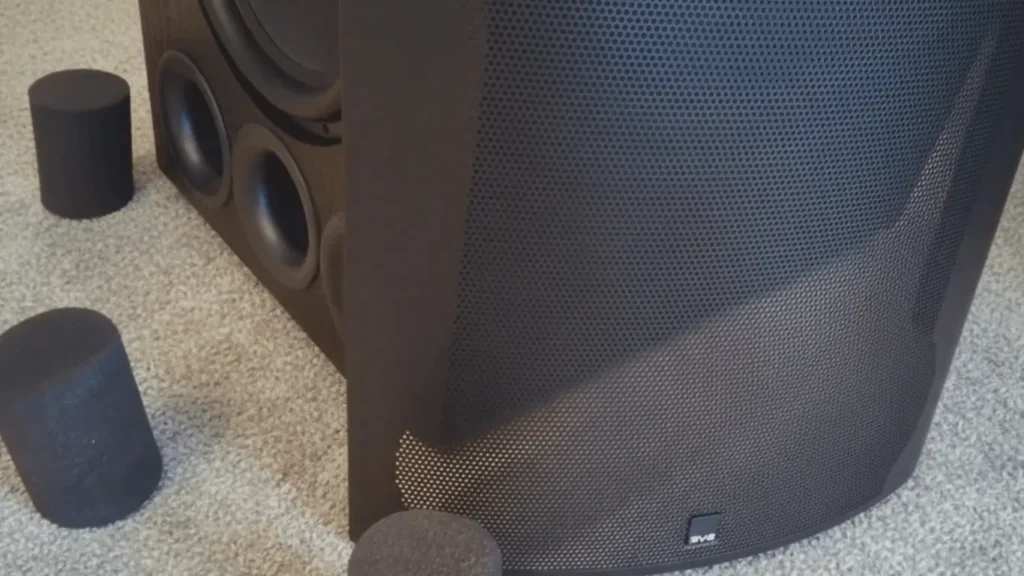
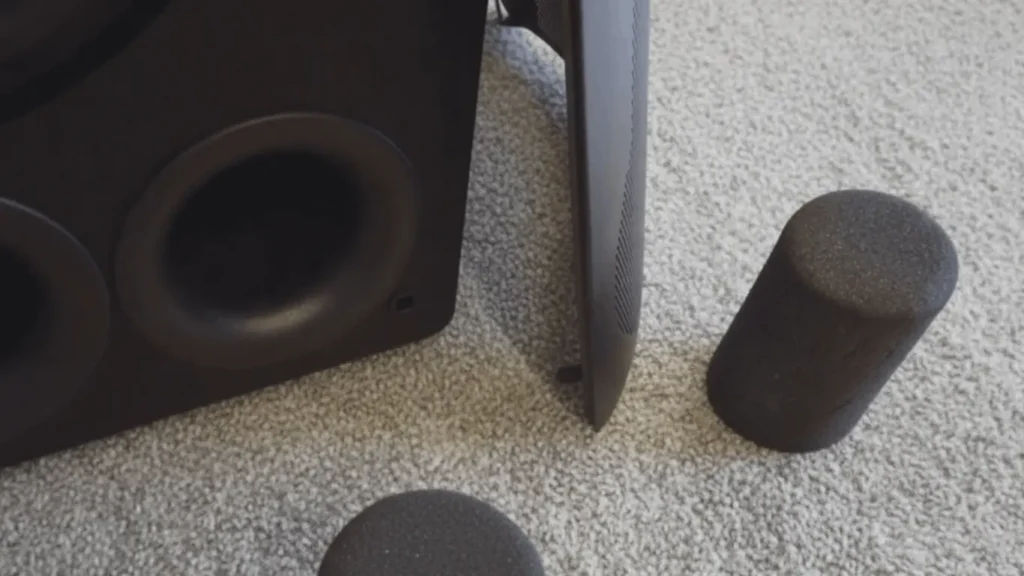
| Cabinet | Triple-ported Bass Reflex with Protective Steel Mesh Grille |
| Motor Assembly | Dual-ferrite magnet with eight-layer, 3″ edge-wound flat wire aluminum voice coil |
| Inputs/Outputs | Balanced XLR, Unbalanced RCA, 3V-12V trigger |