Still Buying CDs? Audiolab Has a New Reason to Keep Your Disc Collection
CDs are still finding their way into audiophile listening rooms, and Audiolab clearly isn’t ready to leave the format behind. The British hi-fi manufacturer has introduced the 6000CDT MKII, an updated version of its popular 2018 CD transport, bringing several important internal changes to a familiar design.
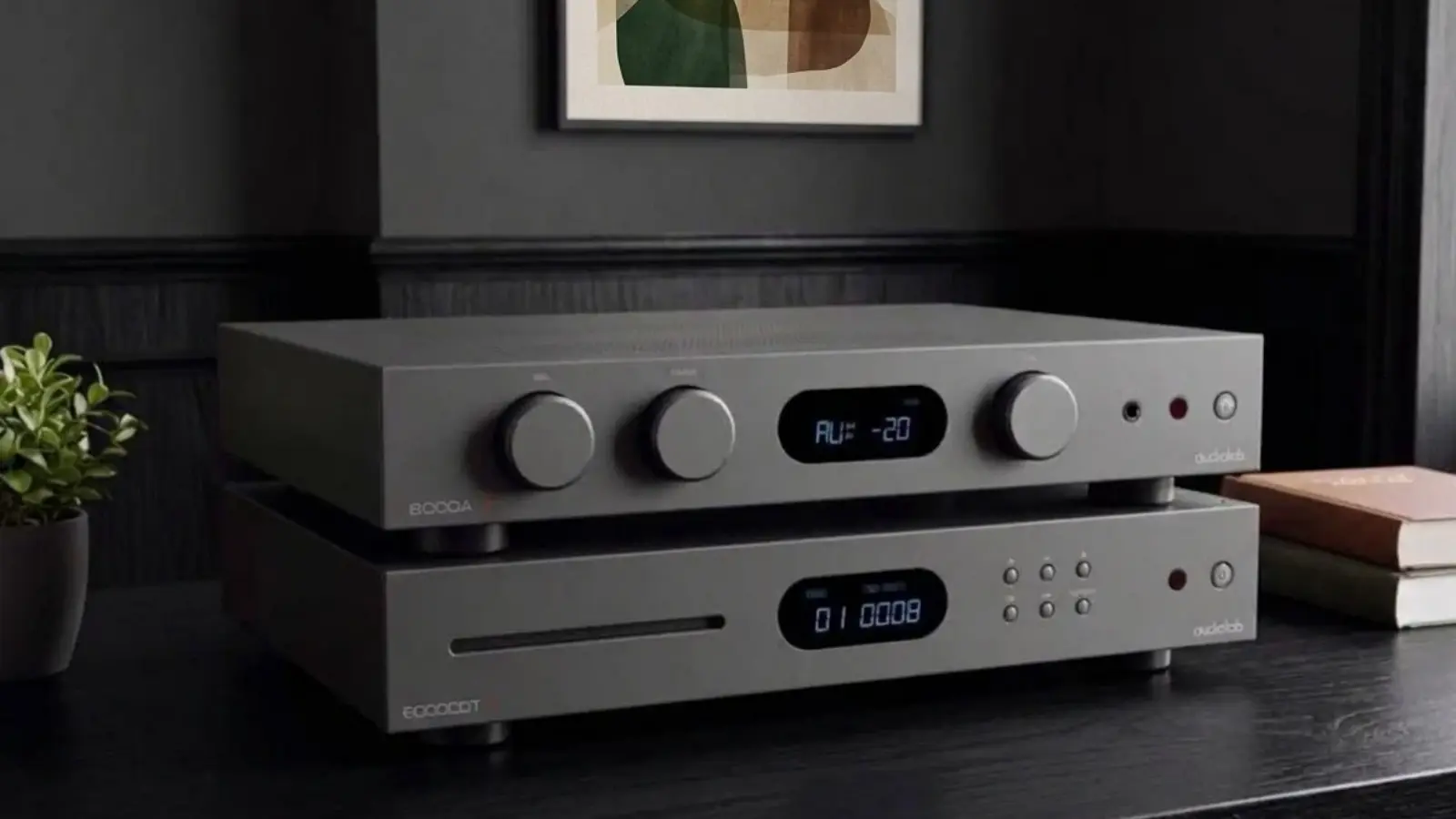
At first glance, you might struggle to distinguish the new model from its predecessor. Audiolab has retained the familiar exterior, but the changes underneath are more interesting. The 6000CDT MKII receives a new disc-loading mechanism, redesigned control circuitry, and an updated power supply, with development drawing on components and engineering from the company’s more expensive 7000 and 9000 series.
Audiolab 9000A Amplifier and 9000CDT CD Transport Review
The result is an updated CD transport designed to improve playback stability while retaining the straightforward approach that made the original 6000CDT an attractive choice for dedicated digital audio systems.
What’s New Inside the Audiolab 6000CDT MKII?
The biggest changes are hidden inside the chassis.
Audiolab has equipped the 6000CDT MKII with a new slot-loading CD mechanism and a servo control system responsible for managing focus, track tracking, and disc rotation speed. According to the manufacturer, this revised arrangement is intended to deliver quieter and more stable operation, including when playing scratched or less-than-perfect discs.
Power delivery has also received attention. A specially designed transformer supplies the transport mechanism and digital electronics, with the aim of reducing unwanted interference between the different sections of the unit.
Audiolab has also incorporated a temperature-compensated crystal oscillator to help maintain digital signal stability. This is particularly relevant in a dedicated CD transport, where the quality and consistency of the digital signal are central to its operation.
Interestingly, several elements of the development draw on engineering from Audiolab’s higher-end 7000 and 9000 families. That gives the new model a connection to technology found further up the manufacturer’s product range without changing its familiar appearance.
No Built-In DAC, and That’s the Point
Unlike a conventional CD player, the Audiolab 6000CDT MKII does not include a built-in digital-to-analogue converter.
Instead, it sends digital audio to an external DAC through optical or coaxial S/PDIF connections. This makes it particularly appealing to listeners who already own a dedicated DAC or prefer choosing their own digital conversion hardware.
Disc compatibility includes standard CDs, CD-Rs, and CD-RWs. The transport can also play data discs containing FLAC, WAV, WMA, MP3, and APE files, with supported sampling rates up to 96 kHz.
For anyone with a substantial CD collection, the ability to handle different disc formats adds some welcome flexibility.
OLED Display and Playback Features
The front panel retains a straightforward layout, with an OLED display providing playback information.
Audiolab has included repeat and random playback modes, alongside programmable playback supporting up to 99 tracks. Direct track selection is also available, making it easy to navigate discs without relying entirely on the usual play and skip controls.
These aren’t revolutionary features, but they cover the essentials expected from a dedicated CD transport.
Audiolab 6000CDT MKII Price and Availability
The Audiolab 6000CDT MKII is scheduled to arrive in late November 2026, finished in black and silver.
Its UK price is £399, positioning it within the company’s more accessible dedicated digital source range.
With a familiar exterior and a series of internal upgrades influenced by Audiolab’s more expensive components, the 6000CDT MKII looks like a considered update rather than a complete redesign.
For CD enthusiasts who prefer using an external DAC, it could be an interesting new option, particularly for those looking to build a dedicated digital playback system without moving into the company’s more expensive product families.