This Japanese Amplifier Changed How I Hear Solid-State Audio
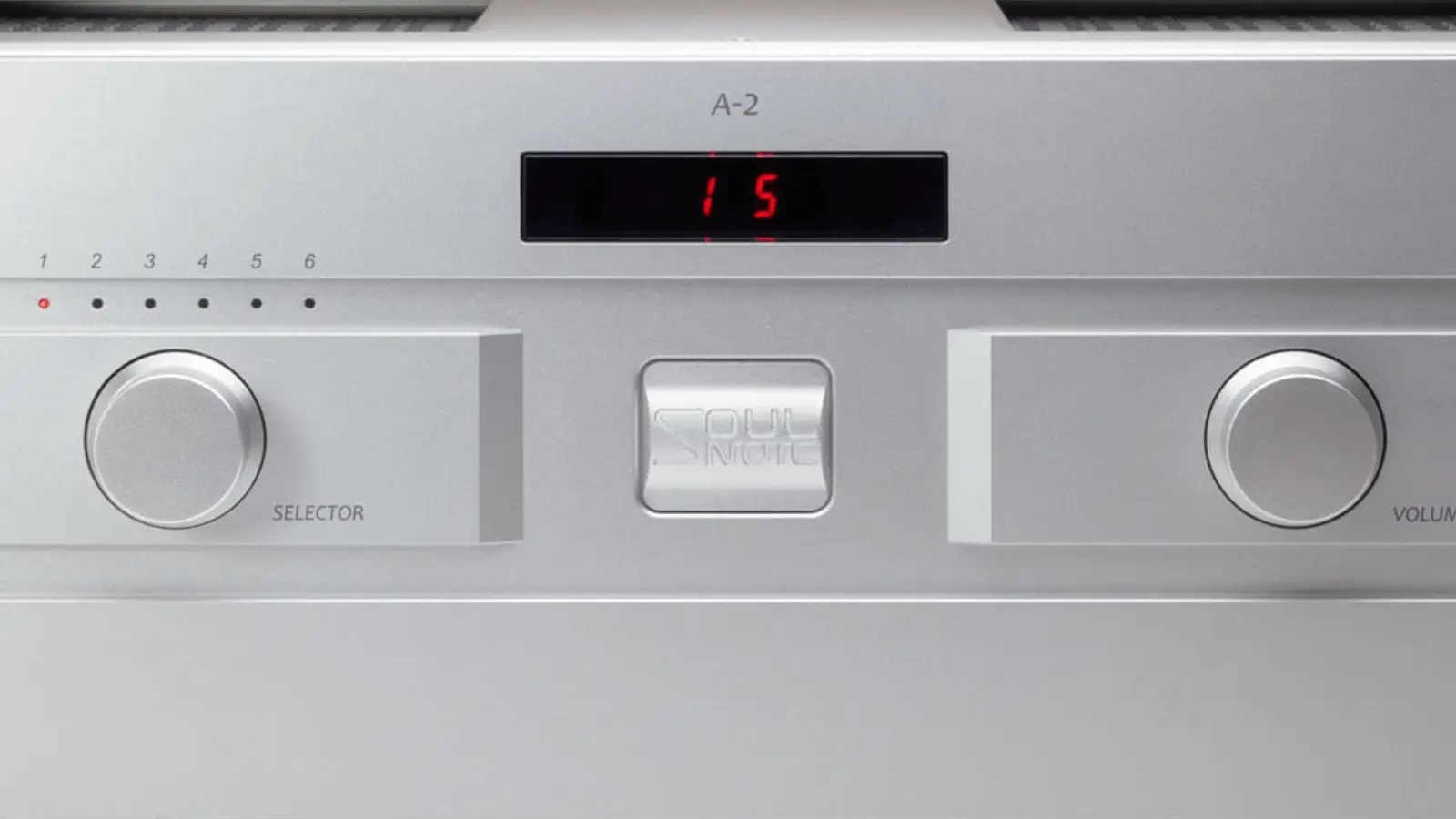
Veni, vidi, vici. That perfectly describes the impact the Soulnote A-2 made on us. It’s rare for a solid-state amp to captivate so completely and so quickly, especially under €10,000. But here we are.
Soulnote, a boutique Japanese brand that many in Europe and North America are just discovering, has delivered something genuinely special. Born from Marantz DNA and refined with a uniquely Japanese engineering philosophy, the A-2 challenges expectations of what a transistor amplifier can be.
Brand Origin: Born from Marantz’s Spirit
Soulnote isn’t a random startup. The company operates under CSR, Inc., based in Kanagawa, Japan — a firm founded by former Marantz engineers. This heritage is more than a nostalgic footnote; it underpins a design ethos rooted in clarity, musicality, and sonic integrity.
Check Out: Leak Stereo 230 Integrated Amplifier Review
From build quality to circuit topology, everything about the A-2 speaks to a Japanese obsession with craftsmanship that is refined, meticulous, and purposeful.
Key takeaway: Soulnote’s roots give it credibility. This is high-end audio built from experience, not hype.
Design & Engineering More Than Meets the Eye
No Global Negative Feedback
One of the A-2’s defining features is its avoidance of global negative feedback. Instead, it relies on local loop stability and pure circuit topology to achieve linearity.
Why it matters: Removing global feedback can improve immediacy, musical timing, and natural harmonic balance — especially in midrange-heavy material. This is a design choice often favored in high-end tube amps, and here it’s executed with solid-state precision.
Technical nuance: While the amp avoids overall feedback, local feedback and stabilization are still employed where necessary — a detail that ensures the design remains both stable and sonically articulate.
Inputs & Connectivity
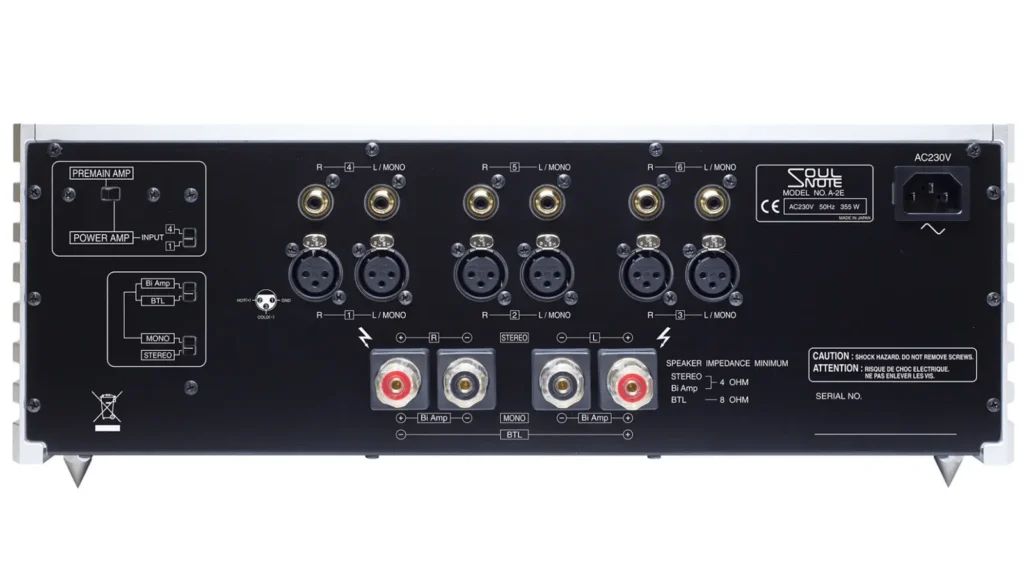
- Balanced (XLR) inputs
- Unbalanced (RCA) inputs
- No pre-outs (pure integrated topology)
This confirms the A-2’s role as a dedicated integrated amplifier, not a system hub. It’s a purist’s design — focused on amplification first and foremost.
Power & Flexibility
The A-2’s back panel hides some very thoughtful features:
- Mono bridged mode — unlocks up to ≈400 W into 8 Ω
- Bi-amping capability — ideal for speaker setups that benefit from separate low- and high-frequency amplification
You’ll need a second A-2 to use these modes, but audiophiles with serious systems will likely consider that an opportunity, not a limitation.
Cabinet Philosophy: Quirky or Genius?
Soulnote’s approach to chassis design is unorthodox and fascinating.
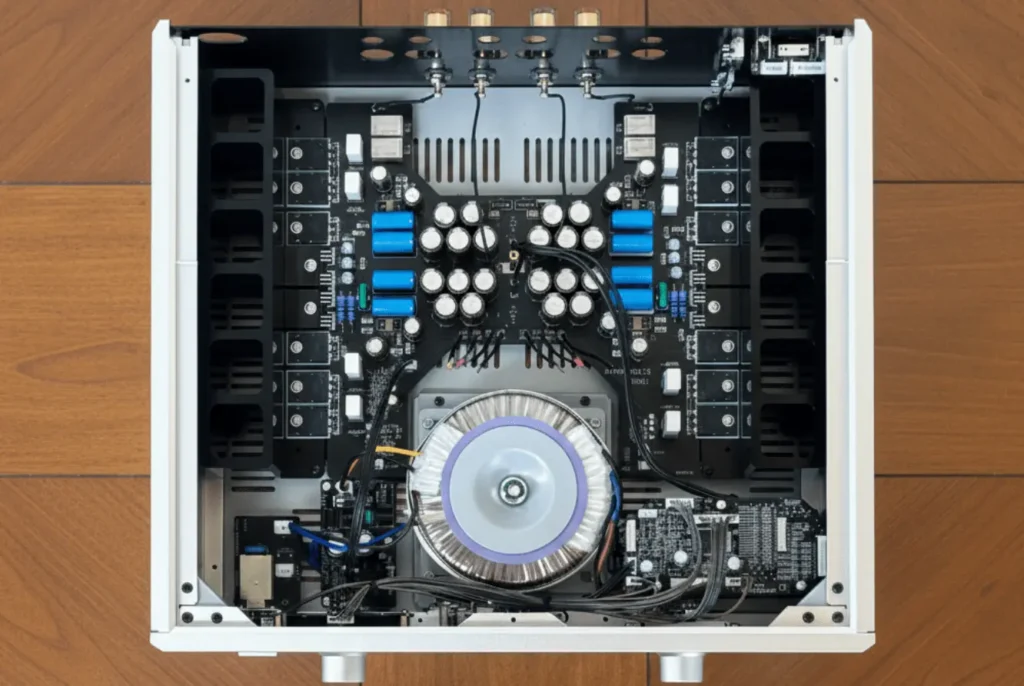
Rather than rigidly bolting the lid to the chassis, the A-2 uses a three-point mount system that allows the top cover slight mechanical freedom. Tap it, and it rings. Add mass on top (yes, like a wallet), and the resonance changes.
You May Like: Hegel H590 Review: A Class Integrated Amplifier
Soulnote claims this alters internal pressure dissipation. Whether that’s strictly engineering or partly metaphysical is beside the point — the result is an attention to mechanical vibration that most manufacturers simply ignore.
Insight: The housing isn’t just a shell it’s part of the sound.
Sound Quality: What It Does Better Than Most
From the first notes, the A-2 reveals itself as something rare in solid-state amplification: effortless musicality.
Dynamics & Tonal Integrity
Using the Dynaudio Heritage Special as our reference, the A-2 impressed us with:
- Tonal coherence that feels natural, not analytical
- Internal dynamics that make instruments breathe
- Midrange presence that feels intimate yet complete
Voice and acoustic instruments — notoriously revealing of amplifier flaws — emerged with harmonic richness without artificial warmth or sheen.
Comparisons & Competition
We matched the A-2 against some formidable contenders, including the Luxman L-507Z.
- Luxman: Brighter, more forward presentation with solid rhythmic drive
- Soulnote: More coherent tonal balance and deeper sonic realism
Both are excellent, but the A-2’s ability to create a three-dimensional soundstage with effortless focus sets it apart.
Is the Soulnote A-2 Worth It?
Absolutely. For €7,000 (or thereabouts), the A-2 punches well above its price class and up against rivals two tiers higher.
It delivers:
- Exceptional tonal naturalness
- Deeply musical dynamic flow
- Build quality worthy of high-end Japanese tradition
- Engineering that rewards repeated listening
Who Should Buy the A-2?
Classical and vocal lovers
Fans of natural, unforced presentation
Listeners who favor tonal realism over analytical brightness
System builders who appreciate thoughtful engineering
Final Score: Veni, Vidi, Vici
The Soulnote A-2 is more than an amplifier — it’s a statement.
Verdict: A rare solid-state design that feels alive, musical, and unerringly honest. If your budget circles €7,000 and you seek that elusive blend of heart and precision, this is one of the most compelling integrated amplifiers available today.