Remember the Hegel Röst? This Discontinued Amplifier Still Deserves Audiophile Attention
There was a time when buying an integrated amplifier meant choosing between sound quality, power and a handful of useful connections. Network streaming has changed those expectations considerably. Modern amplifiers are increasingly expected to handle digital music libraries, streaming services and wireless playback without requiring a collection of additional components.
The Hegel Röst arrived at an interesting moment in that transition. According to the German industry association GFU, Germany sold 1.7 million network-enabled audio components in 2017, about eight per cent more than the previous year. A similar increase was forecast for 2018. These figures reflected a growing appetite for connected audio equipment, and Hegel clearly wanted to be part of that movement.
The Röst is an integrated amplifier designed to bring traditional amplification and modern digital music playback together in one attractive package. It combines Hegel’s amplification technology with a built-in DAC, network streaming and Apple AirPlay support. There is plenty to like here, particularly if you value a powerful, controlled and detailed presentation.
However, there is one digital limitation that Apple Lossless users should understand before buying it. The Röst does not natively decode ALAC files through its UPnP/DLNA network streaming function. Fortunately, there are workarounds, and it doesn’t prevent you from enjoying ALAC music through the amplifier.
A Scandinavian amplifier with a distinctive personality
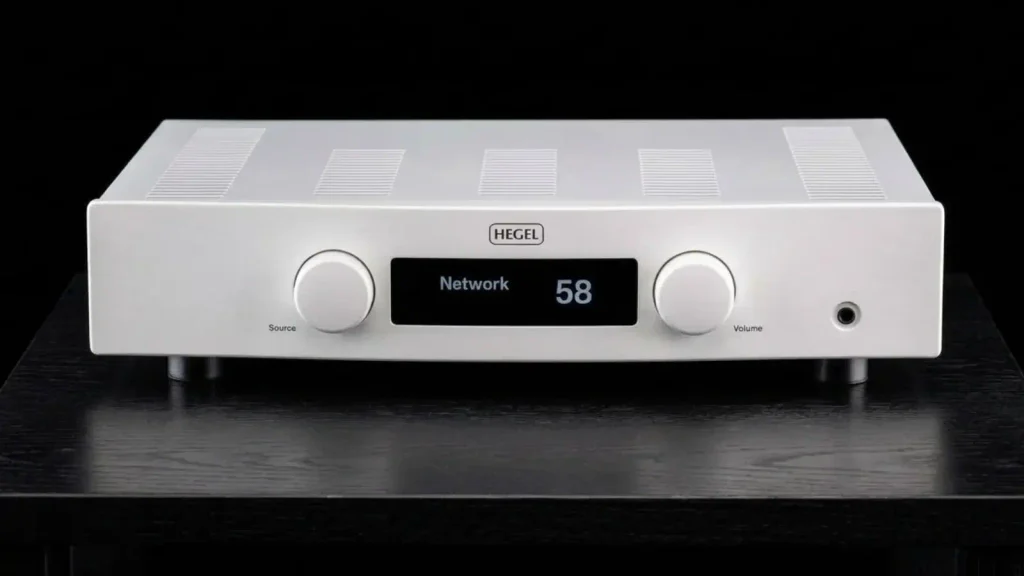
Hegel has always favoured understated Scandinavian design over unnecessary decoration, and the Röst follows that philosophy. Its name comes from Røst, an island in the Norwegian archipelago, and the amplifier’s appearance reflects the company’s preference for clean lines and functional simplicity.
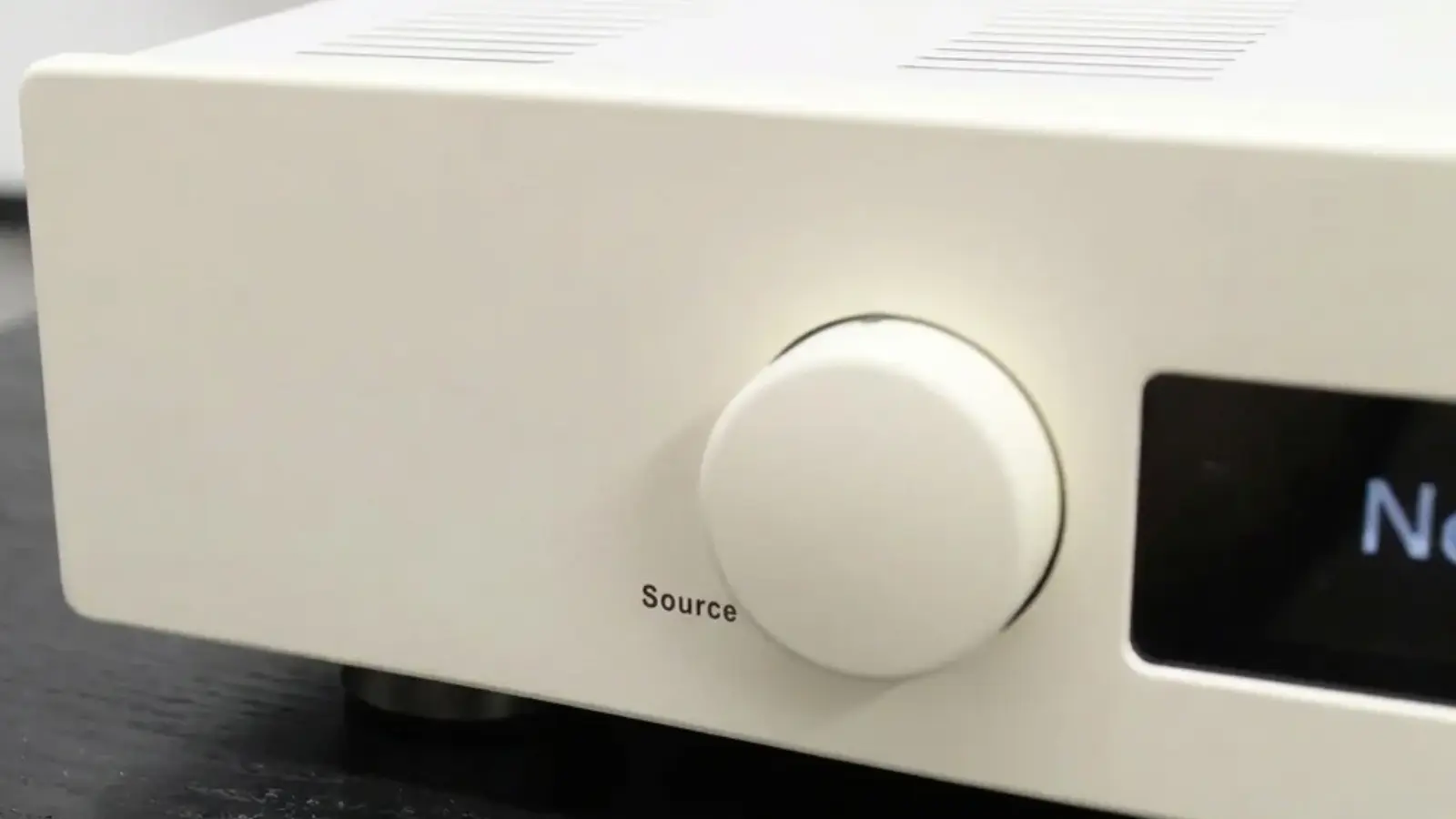
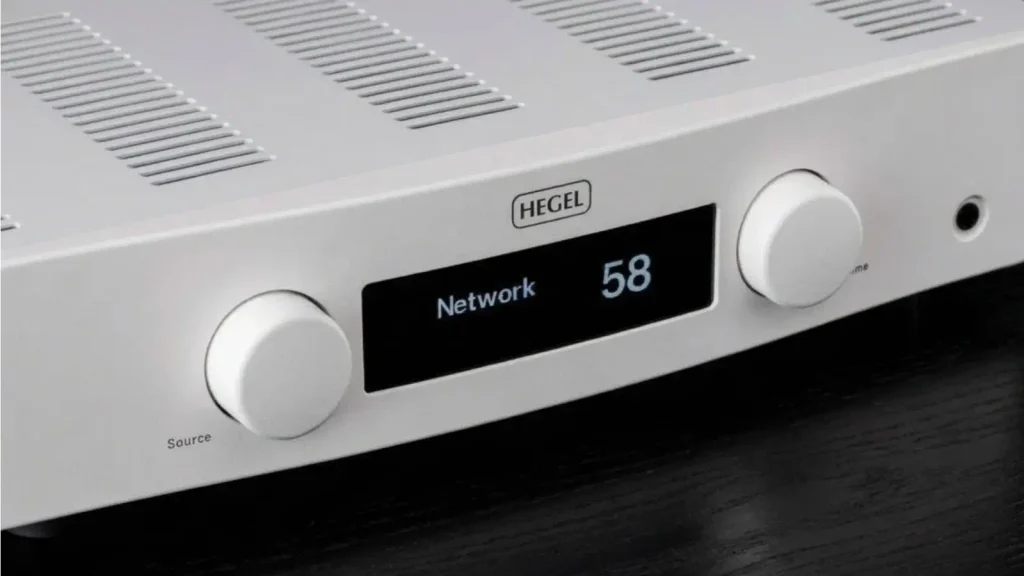
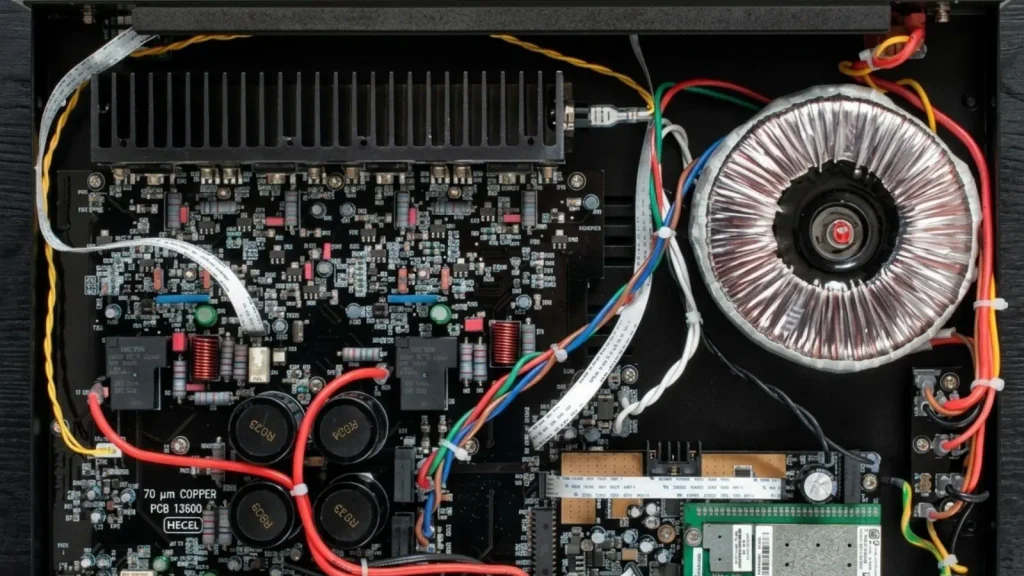
The chassis is made from steel, with an aluminium front panel that gives the amplifier a solid and refined appearance. It is not particularly extravagant, but the construction feels reassuringly substantial. The front panel is dominated by a clear OLED display, which provides useful information without making the amplifier look unnecessarily complicated.
The overall design is restrained enough to fit comfortably into a traditional hi-fi system or a more contemporary living space. There are no oversized displays or elaborate decorative touches. Instead, Hegel has concentrated on a straightforward appearance that should remain attractive for years.
The Röst is also reasonably compact for an integrated amplifier with this level of functionality. Its layout is familiar, and the controls are uncomplicated. It feels like a serious piece of hi-fi equipment rather than a lifestyle product trying to imitate an amplifier.
75 watts per channel and Hegel’s amplification technology
The Röst delivers 75 watts per channel into 8 ohms. That figure might not sound particularly impressive alongside some of the more powerful integrated amplifiers on the market, but power ratings alone do not tell the whole story.
Hegel has built its reputation around amplifier designs that combine control, current delivery and low distortion. The Röst benefits from the company’s SoundEngine technology, which is intended to reduce distortion in the amplification process while retaining the signal’s musical character.
Its quoted frequency response extends from 5Hz to 100kHz. That is a wide specification, although the more important question is how the amplifier behaves with real speakers and music.
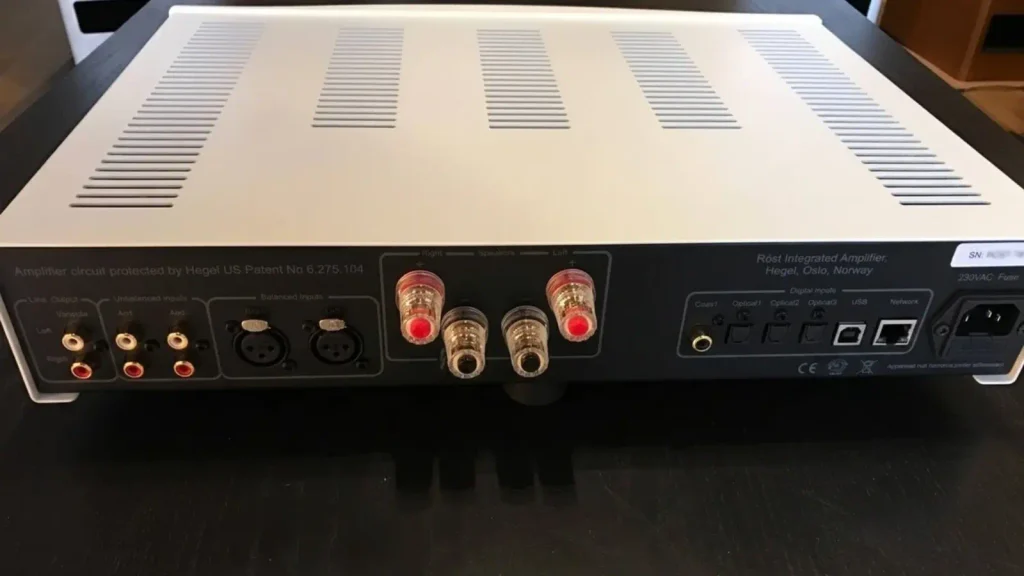
Connectivity is another strong part of the package. The Röst includes balanced XLR connectivity alongside its digital and analogue facilities, making it possible to build a system around a variety of sources. Its built-in DAC is based on the AKM AK4396 chip and supports high-resolution PCM playback, with digital capability extending up to 24-bit/192kHz through compatible inputs.
This gives the Röst more flexibility than a conventional integrated amplifier. You can connect a computer or external digital source, use its internal conversion stage and keep the system relatively simple.
Network streaming is convenient, but there is an important ALAC limitation
Network playback is one of the Röst’s most attractive features. It can operate as a DLNA Digital Media Renderer, allowing compatible UPnP/DLNA software to send music from a computer or network-attached storage device to the amplifier.
However, the supported file formats deserve a closer look.
The Röst’s user manual lists PCM (WAV/AIFF), FLAC, Ogg and MP3 as supported formats for UPnP/DLNA playback. ALAC, Apple’s lossless audio format, is not included in that list. This means that an Apple Lossless file stored on a NAS drive or computer cannot simply be sent to the Röst through its native network streaming function and expected to play.
That is a genuine inconvenience for anyone with an established library of ALAC files. It is particularly disappointing because the amplifier otherwise offers a useful selection of digital playback options.
There is, however, an important distinction: the Röst’s network renderer does not natively decode ALAC, but the amplifier can still receive audio originating from ALAC files through other playback methods.
Three ways to play ALAC files through the Hegel Röst
1. Use Apple AirPlay
The simplest option for many Apple users is AirPlay. The Röst supports AirPlay, allowing an iPhone, iPad or Mac to send music to the amplifier over the network. In this arrangement, the Apple device handles playback and decoding before sending the audio stream to the Röst.
AirPlay is a convenient workaround, although it should not be confused with native high-resolution UPnP playback. Standard AirPlay playback is generally associated with CD-quality 16-bit/44.1kHz audio, rather than the full resolution of a high-resolution ALAC library.
2. Let your music server transcode ALAC
Another option is to use a compatible music server or UPnP software that can convert ALAC files into a format the Röst understands. Applications such as Asset UPnP and MinimServer can be configured for compatible playback arrangements, while other media-server solutions may offer transcoding options.
The exact setup depends on the software and the way the server communicates with the amplifier. The important point is that the conversion takes place before the music reaches the Röst, so the amplifier receives a supported format such as WAV or FLAC.
3. Connect a computer or external streamer digitally
You can also connect a computer or external music streamer to one of the Röst’s digital inputs. In this arrangement, the computer or streamer decodes the ALAC file and sends digital audio to the amplifier.
This bypasses the Röst’s network-format limitation altogether. The available resolution will depend on the input used and the capabilities of the connected source, so check the relevant input specifications before building your system around a particular high-resolution format.
For anyone who already owns a large ALAC library, these alternatives make the Röst considerably more practical than its network-format list might initially suggest. Nevertheless, native ALAC support would have made the experience much simpler.
How does the Hegel Röst sound?
The Röst’s most convincing qualities become apparent when the music starts. It has the kind of presentation that makes you pay attention to the performance rather than the equipment. There is a reassuring sense of control, but it does not come at the expense of musical expression.
With demanding recordings, the amplifier maintains a composed and organised presentation. Instruments occupy their own space, and the overall sound has a pleasing sense of structure. It does not appear to struggle when the music becomes more complex, and its ability to keep the presentation together is one of its most appealing characteristics.
The 75-watt rating should not lead you to underestimate it. The Röst has enough authority to make its presence felt, and its dynamic performance gives music a convincing sense of energy. It is not simply about making recordings louder. The amplifier also manages to retain detail and separation when the arrangement becomes busy.
The combination of control and refinement is particularly appealing. There is sufficient weight to make music sound substantial, while the presentation remains open enough to reveal smaller details in a recording.
Strauss reveals the Röst’s sense of scale
Richard Strauss’s Elektra, performed by the Vienna Philharmonic under Sir Georg Solti, provides an excellent opportunity to explore the amplifier’s handling of demanding orchestral music.
This is not an especially forgiving recording. The arrangement can become dense, with multiple instruments competing for attention and dramatic changes in intensity. A good amplifier needs to preserve the organisation of the performance without making the music sound restrained.
The Röst handles the challenge with impressive composure. It gives the orchestral passages a convincing sense of scale and maintains a clear presentation as the music builds. The different elements remain distinguishable, while the performance retains its dramatic character.
What stands out is the amplifier’s ability to combine detail with authority. It does not make the recording sound artificially polite, nor does it allow the more forceful passages to become a confused mass of sound. There is a pleasing balance between energy and control.
That quality is important because an amplifier can sound impressive with simple recordings but become less convincing when asked to reproduce a complex orchestral performance. The Röst gives little indication of being troubled by the demands of this material.
John Lennon shows another side of the amplifier
Moving from orchestral music to John Lennon’s Mother and Cold Turkey provides a rather different test.
These recordings rely on atmosphere, vocal presence and the emotional character of the performance. The Röst does not lose its composure when the music becomes more intimate. It keeps the vocal presentation clear and gives the recordings the weight they need without making them sound unnecessarily thick.
There is also a good sense of timing and rhythmic drive. Cold Turkey benefits from the amplifier’s ability to maintain momentum, while Mother gives it an opportunity to demonstrate a more expressive side.
This is where the Röst’s overall balance becomes especially attractive. It has the control to handle demanding material, but it does not make every recording sound like a technical demonstration. The music remains the focus.
Hegel Röst versus the Magnat RV4
The comparison with the Magnat RV4 offers another perspective on the Röst’s character. These amplifiers approach music from different design directions, and the contrast helps illustrate what Hegel is trying to achieve.
The Röst’s presentation is particularly appealing for its control, organisation and clean handling of musical detail. It has a confident character that works well across different types of music, from large orchestral recordings to more direct rock performances.
The Magnat RV4 provides a different flavour, making the comparison interesting rather than simply a matter of one amplifier being better in every respect. The choice between them will depend on the rest of the system, the speakers being used and the kind of presentation the listener prefers.
The Röst makes a strong case for itself as a versatile integrated amplifier, especially for listeners who want digital connectivity without giving up the qualities expected from a dedicated hi-fi amplifier.
Where does the Hegel Röst sit in the Hegel range?
Hegel’s integrated amplifier range includes models with different power ratings and capabilities. The Röst occupies an interesting position for listeners who want a relatively compact amplifier with network functionality and a serious approach to amplification.
We have also reviewed the Hegel H120, another integrated amplifier that deserves consideration if you are comparing Hegel’s more accessible designs. It offers a different combination of power and features, so it is worth reading our [Hegel H120 review] before deciding which model better suits your system.
At the other end of the conversation is the Hegel H590, a considerably more powerful integrated amplifier designed for listeners seeking a more ambitious system. Our [Hegel H590 review] explores what that higher-end model brings to the table.
The Röst should not be judged simply by comparing its power rating with these amplifiers. Its appeal lies in the combination of its amplification, DAC, and network features, along with the sound quality that makes it an enjoyable component in its own right.
Verdict:
The Hegel Röst is an impressive integrated amplifier. Its 75 watts per channel are put to good use, and its presentation combines control, detail and dynamic energy in a way that makes it enjoyable with a wide variety of music. From the scale and complexity of Richard Strauss’s Elektra to the more direct performances of John Lennon, it demonstrates a reassuring ability to keep music organised without stripping away its character.
Its construction is equally convincing. The understated Scandinavian design, steel chassis, aluminium front panel and OLED display give it the appearance of a carefully considered hi-fi component. The built-in DAC, balanced connectivity and network streaming make it a versatile centrepiece for a modern stereo system.
The main disappointment is its lack of native ALAC decoding through UPnP/DLNA. That omission is particularly frustrating for listeners who have invested time in building an Apple Lossless music library. AirPlay, server-side transcoding and an external digital source provide practical alternatives, but none is quite as straightforward as native support.
That limitation should not overshadow what the Röst does well. It remains a highly capable amplifier with a confident, controlled, and musical presentation. If your music library is primarily FLAC or WAV, or you are happy to use one of the available ALAC workarounds, the Hegel Röst has plenty to offer.
**The Röst gets the important things right: it makes music sound engaging, powerful and beautifully organised. Its streaming compatibility is the one part of the package that could have been better.
Hegel Röst specifications
| Specification | Hegel Röst |
|---|---|
| Product type | Integrated amplifier |
| Power output | 75W per channel into 8 ohms |
| Frequency response | 5Hz–100kHz |
| DAC | AKM AK4396 |
| Digital audio support | Up to 24-bit/192kHz, depending on input |
| Network playback | UPnP/DLNA |
| Network formats | PCM (WAV/AIFF), FLAC, Ogg, MP3 |
| Apple AirPlay | Yes |
| Native ALAC playback over UPnP/DLNA | Not listed as supported |
| Balanced connectivity | XLR |
| Display | OLED |
| Chassis | Steel with aluminium front panel |