Is This 20-Year-Old Klipsch Icon Still the Ultimate Rock ‘n’ Roll Speaker?
In my early years of stereo, there were few brands of speakers that were coveted as much as Klipsch. At that time in my life, I felt it was the best speaker on the planet for playing rock ‘n’ roll. Every time I heard them, I knew that I would have to figure out a way to own a pair.
I managed to buy a new pair of the Heresies, which set me back a pretty penny, yet I was never disappointed with my purchase. When I found out that the new Klipsch RF-5s were coming my way for review, I was excited to see how far Klipsch had come in the 20 years since I called them my reference speakers.
The RF-5 ($1,500 a pair) is second from the top of Klipsch’s Reference Series, with the RF-7 ($2,200 a pair) at the top of the heap. The RF-5 sports some of Klipsch’s newer accoutrements, like their eight-inch Tractrix horn, the Cerametallic driver cone material, and the cast-polymer woofer frames.
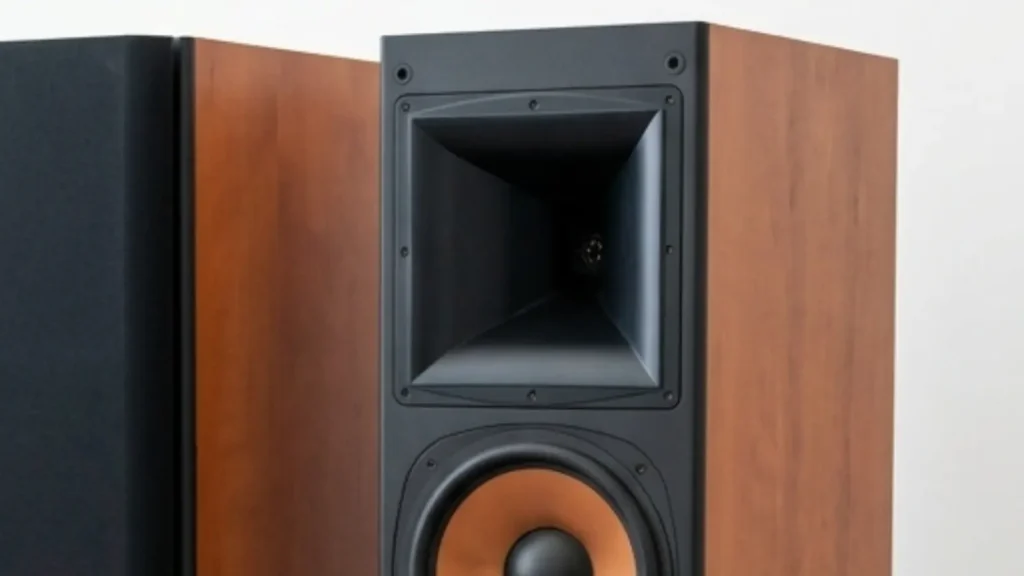
The RF-5 has an attractive two-way floor-standing design. The one-inch Tractrix horn is set above the two vertically arrayed eight-inch Cerametallic drivers in a rear-ported and internally braced MDF cabinet that measures 41.5 inches high, 9 inches wide, and 14 inches deep, weighing 60 pounds apiece.
The frequency response is 34 Hz–20 kHz ±3 dB, with a measured sensitivity of 99 dB @ 1 watt/1 meter. Power handling is 150 watts, 600 watts peak at 8 ohms. The review pair came in black satin, but Klipsch also offers a maple or cherry finish at no additional cost.
The Technology
Klipsch’s design philosophy is to minimize distortion by maximizing sensitivity, and their horn design has been the hallmark of their loudspeakers since the 1940s. A horn-loaded speaker utilizes a flared rectangular throat coupled to a driver—in the case of the RF-5, a one-inch titanium dome compression tweeter.
The compression tweeter increases the pressure of the sound wave to around 4:1, accelerating the sound through the smaller portion of the horn. This is where the efficiency of the Klipsch speakers originates.
As the sound exits the larger portion of the horn, the rectangular shape is designed to control dispersion—90 degrees in the horizontal, and 60 degrees in the vertical—which is said to minimize side wall interaction, one of the most offending situations a speaker owner may confront.
The eight-inch Tractrix horn uses a very large video-shielded 9.6-ounce magnet that fully encloses the rear portion of the motor, providing more magnet surface area than a hollow core magnet that surrounds the motor (the type found in my old Heresies). A hollow core magnet allows the motor to breathe, whereas in the case of the Tractrix horn, cooling is obtained through the spider assembly, so surface area surrounding the motor is maximized. This is said to increase the speed and accuracy needed to produce the speakers’ signature high-frequency presentation.
I Tested the Klipsch R-820F Speakers
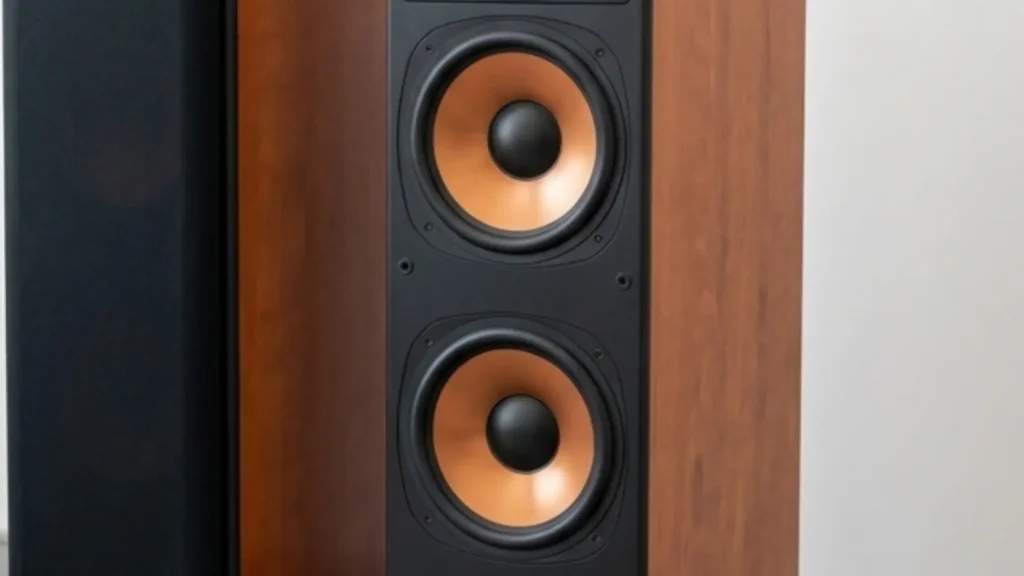
The two eight-inch Cerametallic bass drivers handle the lower octaves and utilize a motor assembly similar to the horn driver, with 28-ounce video-shielded magnets for horsepower. In the old days, Klipsch had enormous woofers to create the sound pressure levels that made them famous. But in today’s home environments, Klipsch recognizes that this approach isn’t size-practical, so they have to get more from less driver area.
The cone material for these drivers is aluminum, run through an anodization process—the aluminum surface is transformed into a thin layer of almost pure aluminum oxide, which is a ceramic, hence “Cerametallic.” This adds stiffness to the material for less deformation during high excursion, as well as providing a protective and decorative coating, which adds to the RF-5’s classy look with the grilles removed. Without question, the bass is better defined than what I remember hearing in my Heresies.
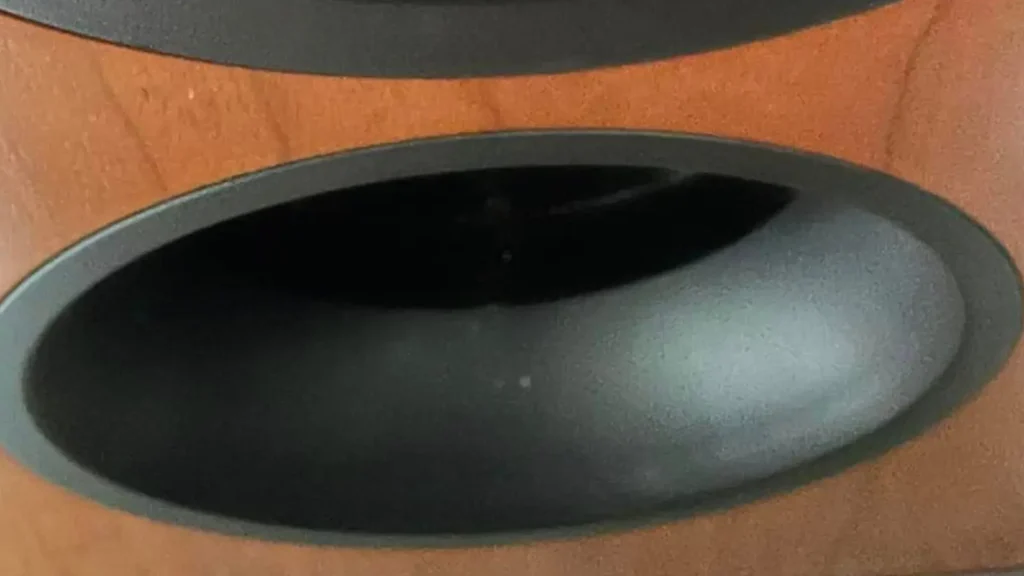
The cabinet’s rear port is larger than the customary size found on more traditional speakers. I was a bit concerned that a small animal might find refuge there, only to be rudely ejected when the music starts. However, there’s a reason for the added scope: the size is said to eliminate “chuffing” from the airflow, which can occur when air within the enclosure moves rapidly through too small a port.
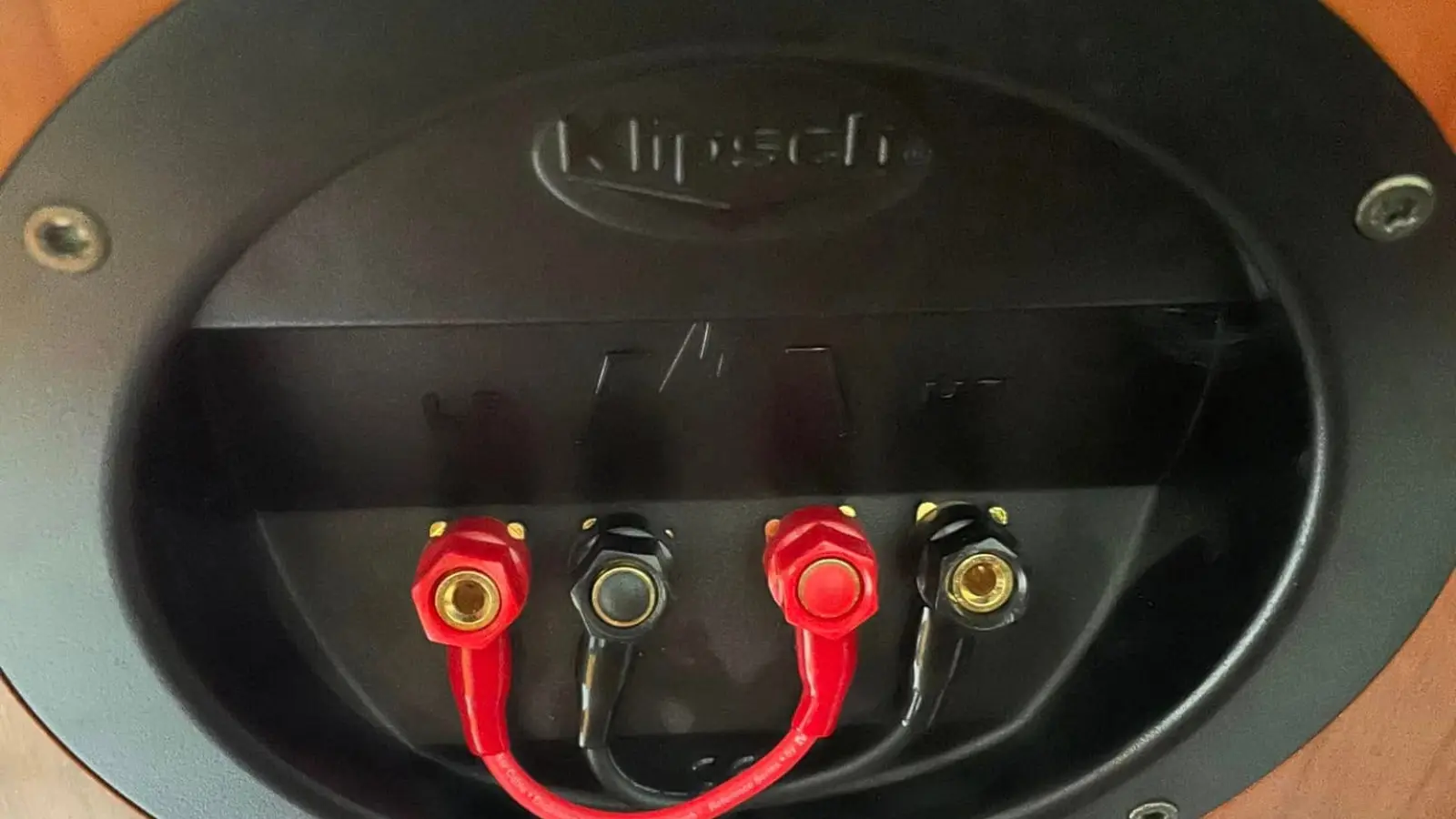
The internal electronics consist of a crossover network that’s a second-order high-pass and fourth order low-pass arrangement, utilizing film capacitors and air core inductors, all wired with Z-Series Monster Cable wire from the terminal posts to the drivers. The RF-5 has two sets of speaker terminals to bi-wire or bi-amp. Access to the terminals is adequate and will easily allow for spade lugs, bare wire, or banana jacks. It’s pleasing to see Klipsch uses Monster cable as jumpers instead of gold-plated stamped sheet metal—wire is a much better conductor.
The Music
I connected the RF-5s to a NAD 571 DVD-video player for the source, a Sunfire Theater Grand Processor II for the preamp, and an Anthem PVA 7 for amplification. I ran the RF-5s for approximately 50 hours of break-in before I seriously listened to them.
I Thought I Knew Klipsch: Then I Reviewed the Klipsch RP-6000F II
I started my testing with Train’s Drops of Jupiter (Columbia) to get a feel for male vocal harmonies, acoustic, and electric guitars. Pat Monahan’s voice has a distinct alto sound that carries well through the RF-5s. Tonal quality was good, as was the detail and smoothness of its transition from quiet moments to more dynamic sections. The bass reproduction, while not as visceral as the older Klipsch I remember hearing, was fast and possessed good control. Anything approaching 35 Hz did exhibit a small amount of bloat, but not to the point where you want to turn down the volume.
For a feel for the female side of things, I popped in Dido’s No Angel (Arista). Although no vocal virtuoso, Dido has a sultry, whispery quality to her voice that challenges a speaker’s ability to render the low-level detail of “My Lover’s Gone.” The vocal texture presented by the RF-5s was invitingly warm and almost passionate as Dido croons out her heartfelt emotion. On the cymbals in this tune, I did notice a slightly abbreviated decay.
The RF-5s showed their dexterity on “Thank You,” with the ability to give snap to the bongos and life to the picked strings of the acoustic guitar. The sound staging was pleasantly accurate in its positioning of instruments and voices—tambourine slightly right of the left speaker, Dido’s voice centered, guitar and tambourine left of the right speaker. Not bad.
Moving on to some serious rock, I pulled out the Red Album by Days of the New (Geffen). “Dirty Road” started off with the nice midrange bloom of an acoustic guitar and deep, smooth bass that was inviting and controlled, kind of like a warm cup of cocoa. Travis Meeks’ signature grunge acoustic sound soared on “Die Born.” It reminded me of good live concert sound, generating high volumes that don’t actually seem that high until you try to talk to someone over the music. The RF-5s seem effortless in their presentation. “Where Are You” began with thunderous bass, solid kick drum, and shredding guitar that gave the RF-5 an “iron fist in the velvet glove” presentation that couldn’t be ignored.
There were some small aspects of the RF-5s that didn’t come across as well as on the NHT ST4s ($1,000). The blending of the frequencies tended to be less coherent on the RF-5s—a slight, noticeable awkward transition from some lower frequencies to higher ones, kind of like a little gap, that was only detectable when I compared the RF-5s to the ST4s. This might be due to the difference between the three-way configuration of the ST4 and the two-way design of the RF-5, but the dynamic and effortless style of the RF-5 was more appealing overall.
To test the stamina of the RF-5s, I used Nickelback’s Silver Side Up to see how well the speakers held together under the punishment of Ryan Peake’s guitar assault on “Woke Up This Morning.” The RF-5s’ transient response and dynamic range really shone through on this track. Chad Kroeger was standing on stage with me in the front row, at least, that’s how it felt at high volumes with the RF-5. The high frequencies did tend to be a little etchy.
The Downside:
Although the RF-5 has very few faults for a loudspeaker at this price point, there are a few issues. First, at louder listening sessions, the slight harshness exhibited by the RF-5 tended to inspire me to back off the volume at times. It could be somewhat fatiguing with brighter recordings.
Best Klipsch Speakers of 2026: Every Model Ranked for Every Budget
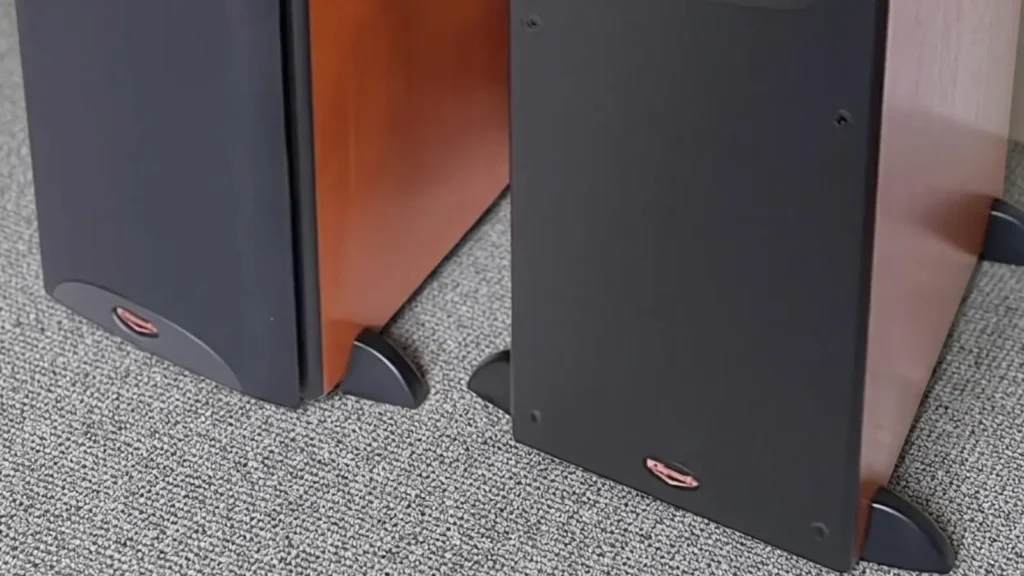
The build quality is very good and the fit and finish is handsome, but the plastic grille is quite fragile and doesn’t match up with the caliber of the speaker. The same goes for the plastic feet—I was afraid I’d break them when I was leaning the RF-5 back to move it and heard a small crack. After inspection I didn’t find any breaks, but the feet are a bit under-engineered.
Conclusion:
Klipsch did a great job at keeping their heritage alive with the RF-5. With the Tractrix horn driver, the Cerametallic woofers, and accompanying substantial magnet structures, the efficiency of these speakers brings out the best in your system. The build quality was as good then as it was on my original Heresies, which says a lot about the pride of the company in maintaining such high standards.
There were other loudspeakers at this price range worth considering, like the Paradigm Active 20s ($1,699 without stands), but it was hard to imagine not being happy with this Klipsch product. The RF-5s reminded me of being at a concert—maybe because at least a few of the over 200 shows I’ve been to probably had Klipsch products in their P.A. systems. It’s a sound that makes you want to air guitar or air drum till you pass out from bliss.
Looking back on it now, the RF-5 still holds up as a snapshot of Klipsch doing what Klipsch does best: horn-loaded efficiency and that unmistakable “live” energy, in a package that made sense for a real living room instead of a warehouse.
Klipsch RF-5 Specifications:
| Parameter | Specification |
| Model | Klipsch Reference RF-5 |
| Price (Launch) | $1,500 per pair |
| Design Type | 2-way floor-standing, rear-ported, internally braced MDF cabinet |
| High-Frequency Driver | 1-inch titanium dome compression tweeter coupled to an 8-inch Tractrix horn |
| Low-Frequency Drivers | Two 8-inch Cerametallic cone woofers with cast-polymer frames |
| Frequency Response | 34 Hz–20 kHz ±3 dB |
| Sensitivity | 99 dB @ 1 watt / 1 meter |
| Power Handling | 150 watts continuous / 600 watts peak |
| Nominal Impedance | 8 ohms |
| Horn Dispersion | 90° horizontal x 60° vertical |
| Crossover Network | 2nd order high-pass, 4th order low-pass |
| Internal Wiring | Z-Series Monster Cable |
| Inputs / Terminals | Dual binding posts (supports bi-wire / bi-amp) |
| Finishes Available | Black Satin, Cherry, Maple |
| Dimensions (H x W x D) | 41.5″ x 9″ x 14″ |
| Weight | 60 lbs apiece |