
AMC XIA150SE Integrated Amplifier Review
“Checkers or go?” — the choice between form and function isn’t limited to city streets. It’s just as relevant when selecting Hi-Fi components. Some listeners believe that great sound must come wrapped in beautiful design. Others trust their ears alone, unconcerned with appearance as long as the music satisfies. And then there are those whose equipment lives behind tinted rack doors, unseen and unapologetic.
The American brand AMC clearly belongs to the latter philosophy.
A Utilitarian Philosophy
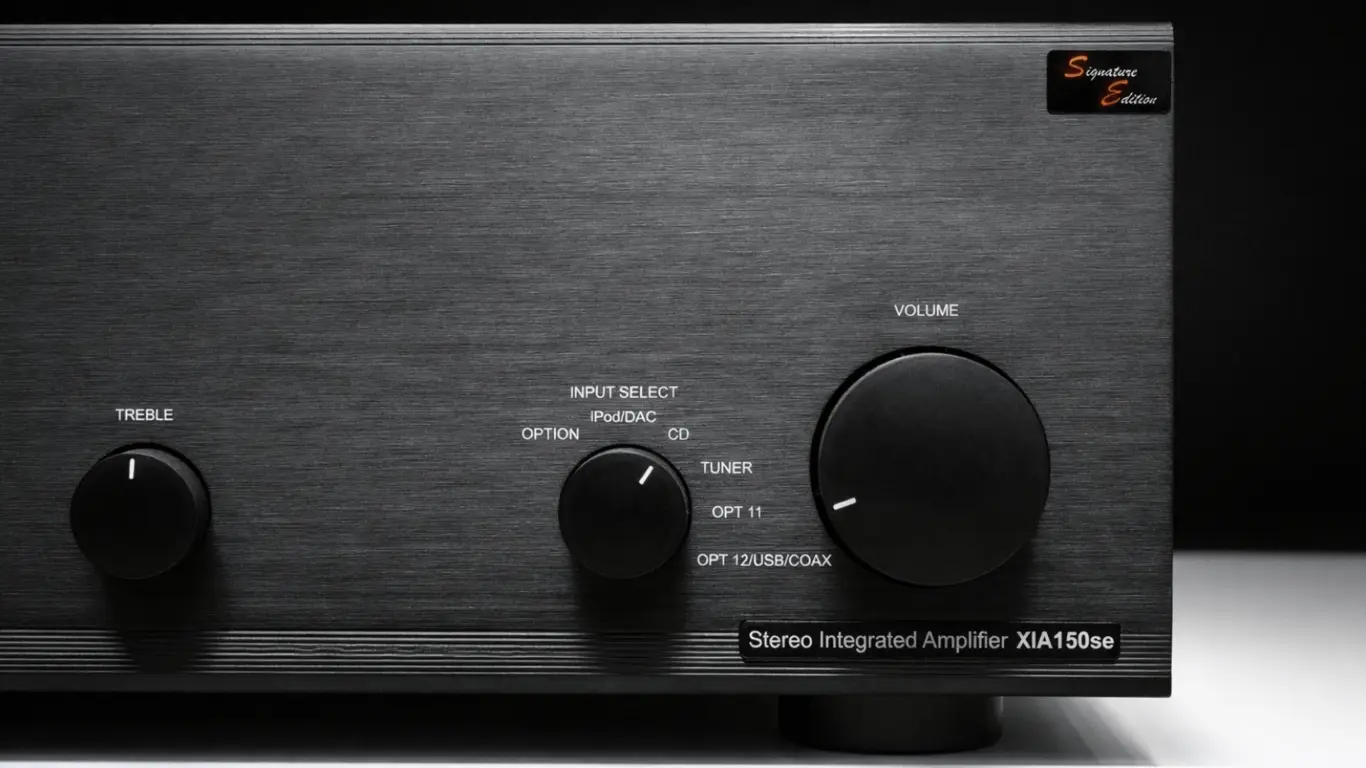
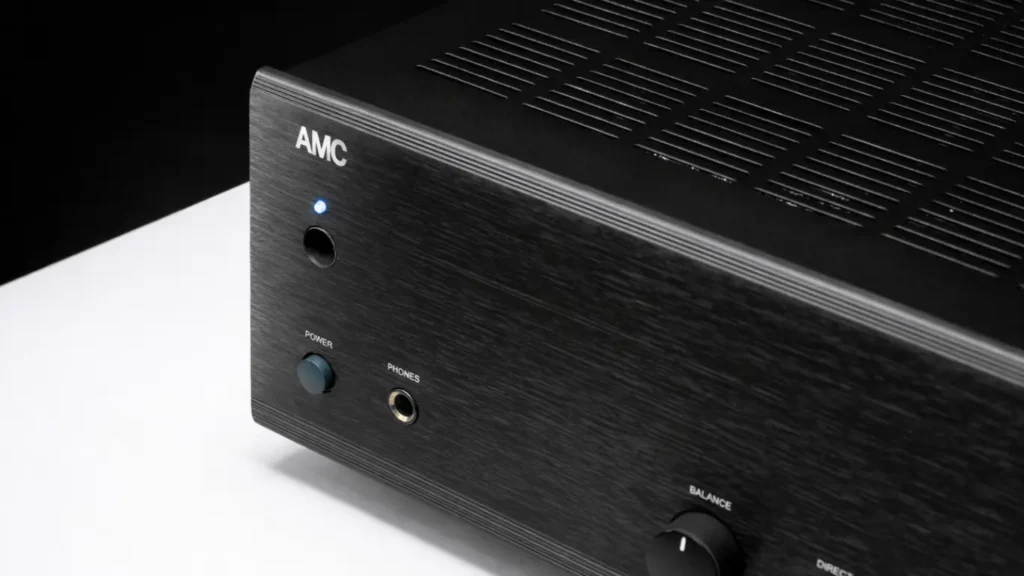
AMC has long specialized in professional-grade audio equipment for smart homes and home-theater installations — devices that typically reside in closed racks rather than on display. As a result, its Hi-Fi components have always favored function over flair. There are no decorative meters, no elaborate screens, no visual theatrics. The design philosophy seems to follow Henry Ford’s famous dictum: choose any color you want, as long as it’s black.
Thankfully, none of this affects the sound.
Correct Roots
For those unfamiliar with AMC, a fair question arises: Is installation-focused equipment worth considering when traditional Hi-Fi components are still widely available?
Check Out: Hegel H590 Review
Founded in 1970, AMC initially focused exclusively on automation systems — including early forms of home automation, decades before the concept became mainstream. In 1984, the company significantly expanded its home division and began producing Hi-Fi components in earnest. Amplifiers, CD players, FM tuners, and stereo electronics bearing the AMC logo quickly earned recognition among audiophiles in the late 20th century.


What’s fascinating is that the design language from that era has been carefully preserved. Compare a modern AMC amplifier to classic AMC or NAD components from the 1990s — the resemblance is unmistakable, right down to the green power button.
The AMC XIA150SE is not a retro homage or a cosmetic revival. It’s closer to a time capsule: a thoroughly modern amplifier built with contemporary components, yet philosophically rooted in the golden age of Hi-Fi. That era’s priorities — musicality, solidity, and engineering honesty — remain fully intact.
Design and Construction
The AMC XIA150SE does not attempt to impress visually, yet its internal construction commands immediate respect. Weighing over 12 kilograms, the amplifier feels substantial even before it’s powered on — an impressive figure for a unit rated at 150 watts per channel.
Peering through the ventilated top panel reveals a massive toroidal transformer, large banks of power-supply capacitors, thick internal wiring, and substantial aluminum heat sinks. Everything is built with confidence and generous headroom. There’s no doubt this amplifier can deliver its rated power effortlessly and sustain it without strain.
The output stages use transistor designs optimized for low-impedance loudspeakers, ensuring firm control over demanding loads. AMC also references proprietary circuit solutions intended to bring the tonal character closer to that of tube amplifiers while retaining the speed, grip, and reliability of solid-state designs.
This isn’t marketing fluff. AMC’s engineers have extensive experience with tube circuitry, and the company’s catalog even includes rare hybrid designs combining transistor preamplification with tube output stages.
Switching, Control, and Integration
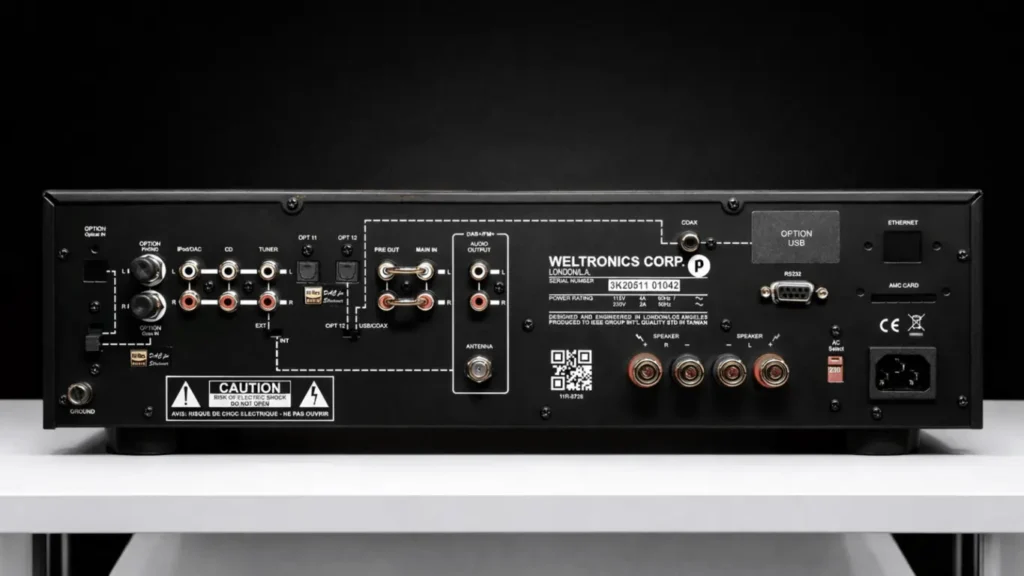
System integration is approached with an almost installer-grade pragmatism. Many of the inputs on the front-panel selector are dual-purpose, with corresponding switches on the rear panel that determine which physical connector is active.
For example, the digital input position can be assigned to either optical or coaxial, but this must be selected manually via rear-panel switches. At first glance, the back panel appears busy, with numerous switches, connectors, and blank slots for optional modules.
This reflects AMC’s modular design philosophy. Instead of frequently releasing new models, AMC extends the relevance of its products by allowing input modules to be added over time. Model names evolve with additional suffixes, while the core amplifier platform remains unchanged. Users can configure exactly the inputs they need — no more, no less.
External pre-out/main-in jumpers further expand system flexibility, making future upgrades or bi-amping configurations easy to implement.
Control options include the supplied remote (styled in unmistakable 1990s fashion), RS-232 integration, and front-panel controls. Both the volume knob and input selector are motorized. The volume control behaves conventionally, while the input selector offers a uniquely tactile experience: turn it manually, and the motor takes over, rotating the knob step-by-step with a deep mechanical whirr. Unusual, slightly theatrical — and oddly satisfying.
The tone controls use traditional potentiometers. AMC claims careful circuit design here, and the result is a subtle, transparent adjustment. Engaging or bypassing the tone section produces only minimal changes, suggesting accurate center detents and a well-implemented signal path.
Listening Tests and System Matching
To evaluate the amplifier’s sonic character, two very different loudspeaker designs were used: the modern ELAC Vela FS407 and the vintage-inspired KLH Model Three.
Digital source duties were handled by the Technics SL-G700. Both analog and digital connections were tested, with the analog output ultimately preferred. It delivered deeper bass, richer timbre, and a more grounded presentation, while the internal DAC sounded slightly lighter and more agile.
The difference was not dramatic, more a reflection of source redundancy than limitation. The Technics provided a neutral, reference-grade signal, allowing focus to remain firmly on the amplifier-speaker interaction.
Sound Character
From the very first listening session, the AMC XIA150SE reveals a distinctly old-school character — something increasingly rare among modern solid-state amplifiers. There is a sense of warmth and smoothness typically associated with tube designs, paired with precise image focus and authoritative bass control expected from high-quality transistor amplification.
You May Like: Technics SU-G700M2 Integrated Amplifier Review
Rather than dissecting recordings into isolated layers, the amplifier presents music as a cohesive whole. Detail is present, but never forced. Poor recordings are treated kindly, while pristine audiophile releases avoid sounding sterile or clinical.
With the ELAC Vela FS407, the presentation became balanced, spacious, and convincingly realistic. Ambient cues — such as the urban soundscape at the beginning of U2’s “California” — were rendered with excellent depth and perspective, creating a strong sense of immersion.
The system remained transparent yet deeply musical, allowing the nostalgic textures of late-20th-century recordings to shine without exaggeration. Genre versatility proved excellent, with classical recordings holding attention far longer than usual — always a telling sign.
Vintage Synergy
Paired with the KLH Model Three, the system leaned toward genre specialization — but what a specialization it was. Bass articulation, rhythmic precision, and dynamic punch became defining strengths.
The new Red Hot Chili Peppers album “Return of the Dream Canteen” was an absolute highlight. Flea’s bass lines demand speed, control, and rhythmic accuracy, all delivered effortlessly. Alternative rock, funk, reggae, jazz, and classic rock all benefited from this combination, especially recordings originating from the analog era.
Long-Term Listening Comfort
One of the most reliable indicators of system quality is listening endurance. In this case, sessions lasted nearly twice as long as usual, without any sense of fatigue or discomfort. These points are directly to tonal balance, natural dynamics, and low listening stress.
Given its dominant influence on both test systems, the AMC XIA150SE deserves most of the credit for this effect.
Verdict
The AMC XIA150SE is a thoroughly classic integrated amplifier — one that appears untouched by designers since the mid-1990s, and proudly so. It is ideal for listeners who prefer to invest their budget in sound quality rather than visual embellishment.
Everything that defines great old-school Hi-Fi is present here: warmth, density, dynamic authority, tonal authenticity, and musical coherence. At the same time, the amplifier avoids the pitfalls of vintage gear — offering excellent rhythm, stable imaging, and fine low-level detail.
The result is an expressive, engaging, and deeply musical presentation that invites long listening sessions and forgives imperfect recordings without masking musical intent.
Final Notes
If 150 watts per channel is more than you need, AMC offers smaller siblings with the same sonic DNA. The XIA50 and XIA100 provide similar sound characteristics in more compact and affordable packages. According to audition specialists, even the 50-watt version handles complex speaker loads with confidence.
Pros and Cons
Pros
- Lively, expressive, and fatigue-free sound
- Excellent compatibility with a wide range of loudspeakers
- Modular input configuration
- Transparent and well-implemented tone controls
Cons
- Strictly utilitarian retro design
- The input assignment scheme may confuse casual users
AMC XIA150SE Integrated Amplifier Specifications
Type:
Stereo Integrated Amplifier
Power Output:
150 W per channel into 8 Ω
(High current design, stable with low-impedance loads)
Amplifier Topology:
Solid-state transistor design
Low negative feedback architecture
High-current output stage
Frequency Response:
10 Hz – 50 kHz (±1 dB)
Total Harmonic Distortion (THD):
< 0.05%
Signal-to-Noise Ratio:
100 dB (Line inputs)
Inputs (Standard Configuration):
- Line-level RCA inputs (CD, Tuner, iPod/DAC)
- Optical digital input (TOSLINK)*
- Coaxial digital input*
- Optional USB / digital input modules*
*Input configuration depends on installed modules
Outputs:
- Speaker outputs (binding posts, A/B compatible)
- Pre-out / Main-in (external jumpers)
- Headphone output (6.3 mm)
Tone Controls:
- Bass
- Treble
- Balance
- Direct mode (tone bypass)
DAC Section (Optional):
Supports optical, coaxial, and USB digital inputs
High-resolution PCM playback (depending on module)
Control & Integration:
- Motorized volume control
- Motorized input selector
- IR remote control
- RS-232 control port
- Trigger/automation compatible
Power Supply:
Large toroidal transformer
High-capacity electrolytic capacitors
Linear power supply design
Construction:
Brushed aluminum front panel
Steel chassis
Heavy internal heatsinks
Finish:
Black (Signature Edition badge)
Dimensions (W × H × D):
Approx. 430 × 110 × 380 mm
Weight:
Approx. 12 kg
Country of Design:
USA (AMC / Weltronics)
Manufacturing:
Taiwan