Do You Really Need Separate Hi-Fi Components? Audiolab Has an Answer
There was a time when building a serious Hi-Fi system meant filling an equipment rack with separate components. A dedicated CD player, DAC, network streamer, preamplifier, and power amplifier were all considered essential ingredients of a proper audiophile setup.
But does it still make sense to buy all that equipment today? Modern amplifier designs and digital technology have changed considerably, making it possible to achieve impressive performance from a single component. And the Audiolab Omnia is a particularly interesting example of this approach.
Combining a CD player, network streamer, DAC, integrated amplifier, headphone amplifier, and phono stage in one enclosure, it promises to eliminate much of the complexity traditionally associated with building a serious stereo system.
Still Buying CDs? Audiolab Has a New Reason to Keep Your Disc Collection
All you need is a pair of speakers. But is that really enough to satisfy a demanding music lover?
One Box, Almost Everything a Music Lover Needs
Calling the Audiolab Omnia an all-in-one system is not an exaggeration. The only major source missing from its extensive collection of features is a turntable, although even that isn’t a problem if you have one equipped with an MM cartridge.
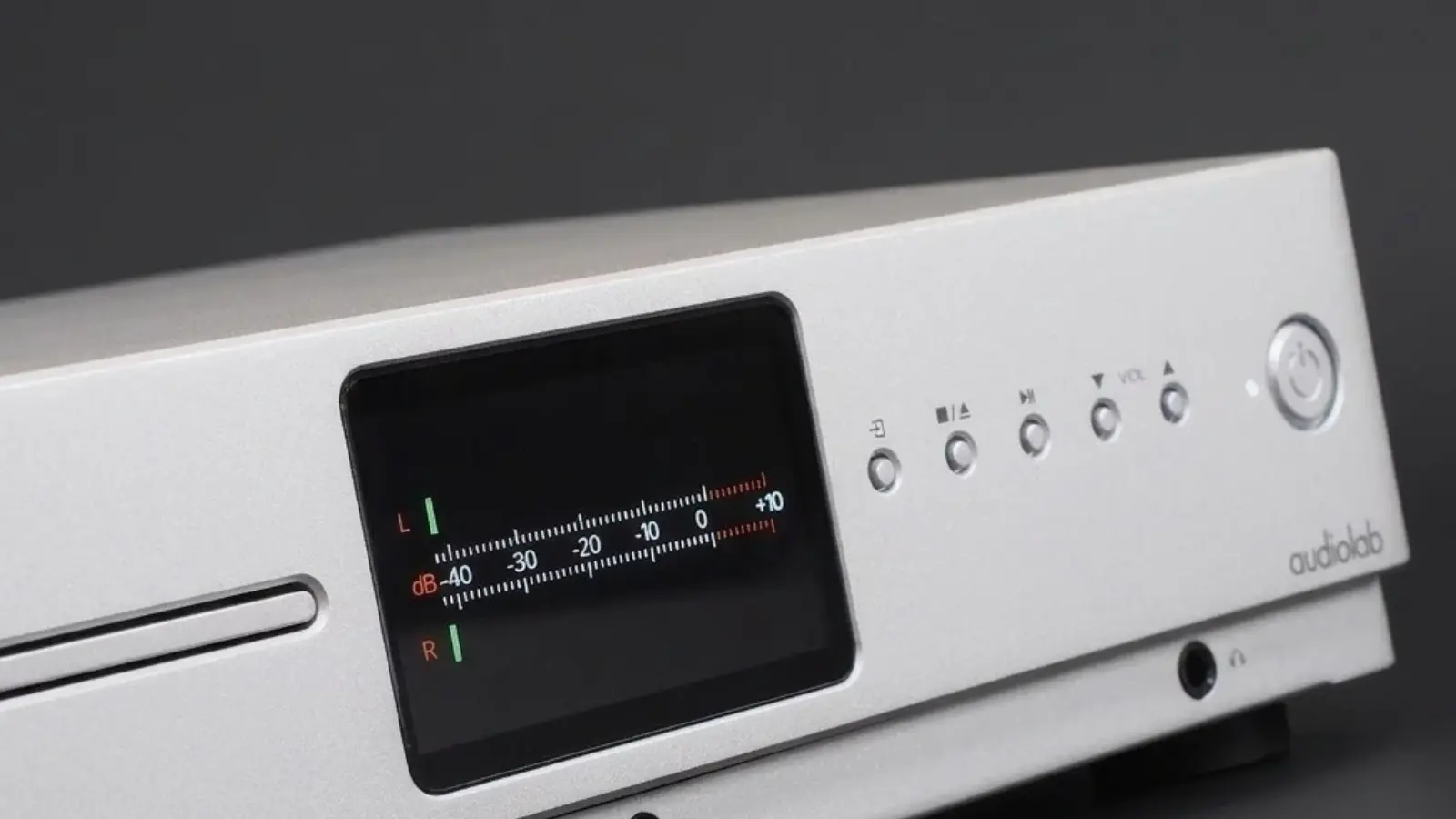
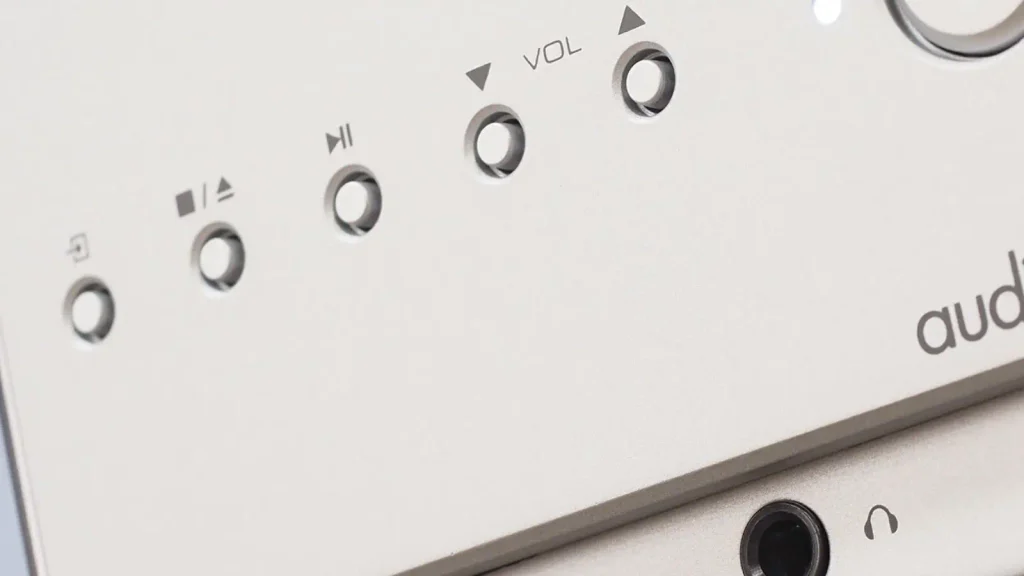
The Omnia comes in a full-width enclosure, although its appearance is quite different from Audiolab’s more traditional 6000 and 8000 series components. Despite dimensions comparable to an AV receiver, it doesn’t look particularly bulky. Rounded vertical edges and a stepped base give it a more contemporary appearance, while the absence of a conventional circular volume knob makes the front panel look unusually clean.
The most distinctive feature is the large display positioned in the centre. At first glance, it could easily be mistaken for an OLED panel, thanks to its deep blacks, high contrast and generous viewing angles. In reality, Audiolab has used a high-quality IPS display.
It’s more than a place to show track information and system settings, too. The display can be customised with several visual options, including directional indicators and horizontally moving track indicators. There’s also a simple Audiolab logo screen for those who prefer something more understated.
Naturally, the display can be switched off completely. That’s particularly useful if the Omnia is positioned beneath a television or used as the central component of a living-room entertainment system.
A CD Player, Network Streamer and DAC in One
One of the most convincing aspects of the Omnia is that its digital section isn’t simply an assortment of features added to make the specification sheet look impressive.
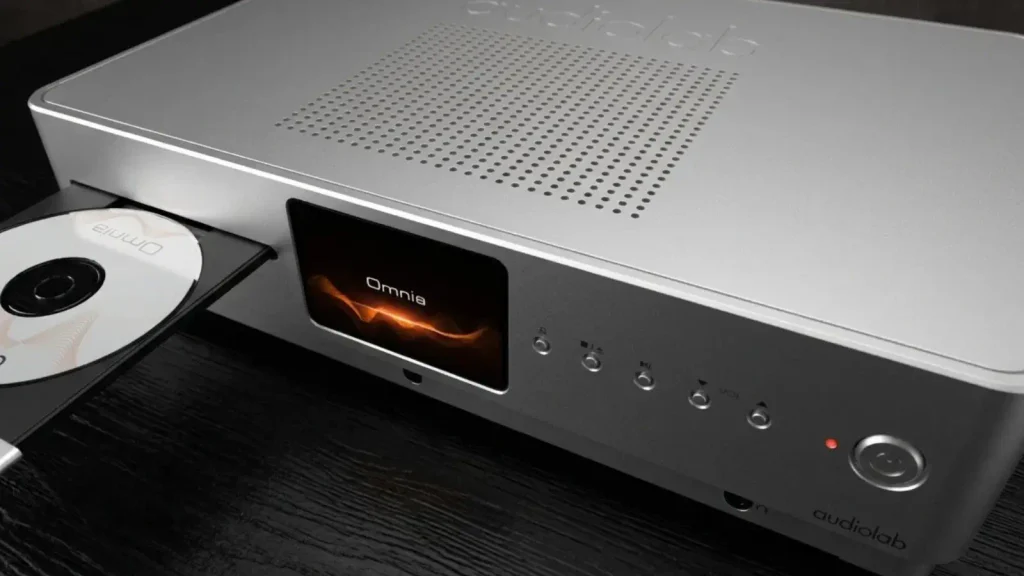
Audiolab has equipped it with a dedicated CD mechanism borrowed from the company’s 6000CDT CD transport. A digital buffer and carefully engineered reading mechanism are designed to maintain reliable playback, including with worn discs and self-recorded CDs.
For anyone with a substantial physical music collection, having a proper CD player built into an all-in-one component is a welcome addition. You don’t need to purchase a separate transport or occupy another shelf in your equipment rack.
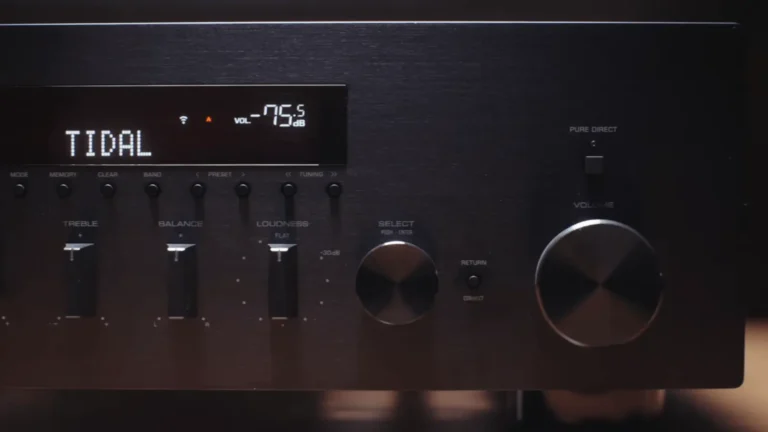
Digital streaming is equally well covered. Through DTS Play-Fi, the Omnia supports popular services including Tidal, Qobuz and Spotify, alongside internet radio and music stored on a home DLNA/UPnP network. Supported network playback reaches up to 24-bit/192kHz, giving it the capabilities expected of a modern Hi-Fi network player.
DTS Play-Fi also offers multi-room functionality, allowing compatible devices to be connected throughout the home. The platform can even form part of a multichannel home entertainment arrangement.
USB playback is less impressive. The Omnia supports FAT32-formatted flash drives and hard disks, but its directly supported file formats are limited to WAV, MP3, WMA and AAC. Fortunately, connecting a computer through USB provides another way to access a much wider music library.
At the heart of the digital section is ESS Technology’s ES9038Q2M DAC chip. Audiolab has considerable experience working with ESS Sabre converters, having used the technology in its M-DAC products since 2011.
The Omnia also incorporates hardware MQA decoding, allowing compatible MQA material to be fully decoded. It carries Roon Tested certification, making it suitable for integration into a Roon-based music system.
For simpler wireless playback, Bluetooth 5.0 with aptX support is included. It’s an easy way to connect a smartphone or tablet without having to configure a network streaming application.
A 50-Watt Amplifier That Means Business
A capable DAC and a collection of digital sources would already make the Omnia an attractive component, particularly for owners of active speakers. However, Audiolab has gone considerably further by incorporating a proper integrated amplifier.
The amplification section delivers 50 watts per channel into 8 ohms and 75 watts into 4 ohms, using a Class AB circuit built from discrete components.
Its design incorporates complementary feedback, intended to improve linearity and minimise the effects of temperature variations in the output transistors.
Power comes from a substantial supply featuring a 200VA toroidal transformer and a capacitor bank with a combined capacity of 60,000µF. These are encouraging specifications for a component of this type, suggesting that Audiolab has paid attention to the amplifier’s ability to handle demanding musical passages rather than concentrating exclusively on its digital features.
The amplifier section also shares much of its design philosophy with the company’s 6000A integrated amplifier.
Headphone listeners haven’t been forgotten either. The Omnia includes a dedicated headphone amplifier using current-feedback circuitry, designed to provide a wide frequency response and fast transient performance.
In other words, you can build a complete stereo system around the Omnia without needing a separate headphone amplifier, integrated amplifier or DAC.
More Than an All-in-One: Connectivity and Upgrade Options
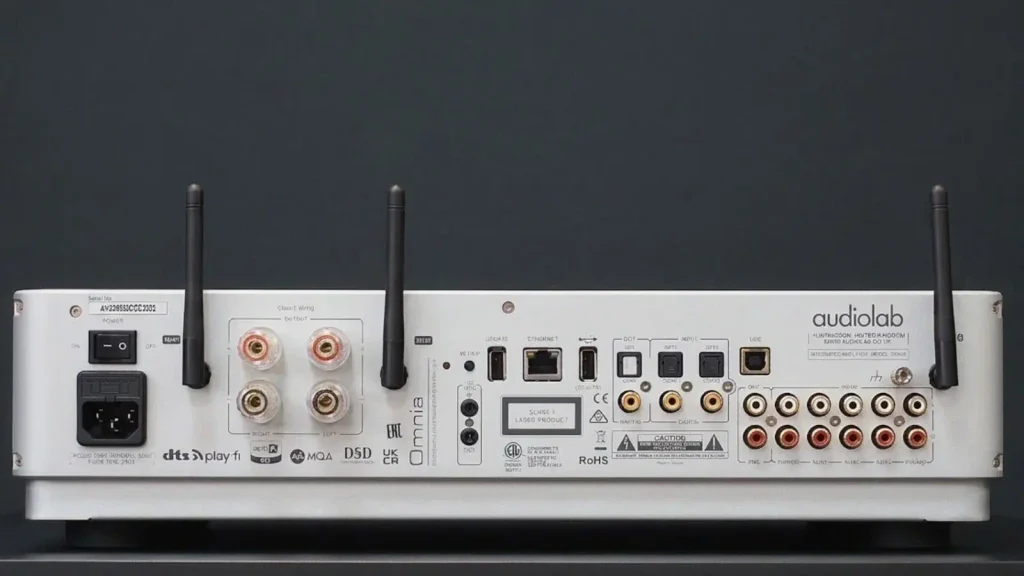
The rear panel reveals just how versatile Audiolab intended the Omnia to be.
It isn’t restricted to functioning as a complete stereo system. Depending on the equipment connected, it can also serve as a digital source, an external DAC, a preamplifier, a power amplifier or a headphone amplifier.
There are connections for external digital sources, including optical and coaxial inputs, alongside USB connectivity for a computer. Analogue sources can also be accommodated, and the built-in MM phono stage means a compatible turntable can be connected directly.
The preamplifier outputs provide additional flexibility, including the option of connecting an external power amplifier or a subwoofer.
This makes the Omnia particularly interesting for living-room systems. You could place it alongside a television and use it for music, films, television programmes and gaming, with the connected speakers handling all your audio requirements.
There is one notable omission: HDMI ARC. Audiolab instead relies on its digital inputs for connecting television equipment. That isn’t necessarily a deal-breaker, but buyers planning to use the Omnia as the centre of a modern television-based entertainment system should consider the available connections before purchasing.
The important point is that the Omnia doesn’t have to remain a one-box system forever. Its extensive connectivity leaves room for upgrades and changes as your requirements evolve.
Does the Audiolab Omnia Sound Like Separate Hi-Fi Components?
For our listening sessions, we explored two main playback methods. The first involved playing CDs through the Omnia’s built-in transport, with the component and a pair of speakers forming the complete stereo system.
The second used a computer connected through the USB-B input, with Tidal providing the music.
Interestingly, the comparison became something of a demonstration of the differences between digital formats. Tidal playback using MQA initially appeared to have a considerable advantage over CD, but switching to standard Hi-Fi quality largely eliminated the difference.
The distinction between 44.1kHz and 88.2kHz playback was noticeable almost immediately, although the result also highlighted just how revealing the Omnia’s digital section could be.
Ultimately, whether you prefer listening through the built-in CD transport or a streaming service will come down to personal preference and convenience. The important thing is that the Omnia offers both options without requiring additional equipment.
We also wanted to understand how well its relatively modest 50-watt amplifier would work with different loudspeakers.
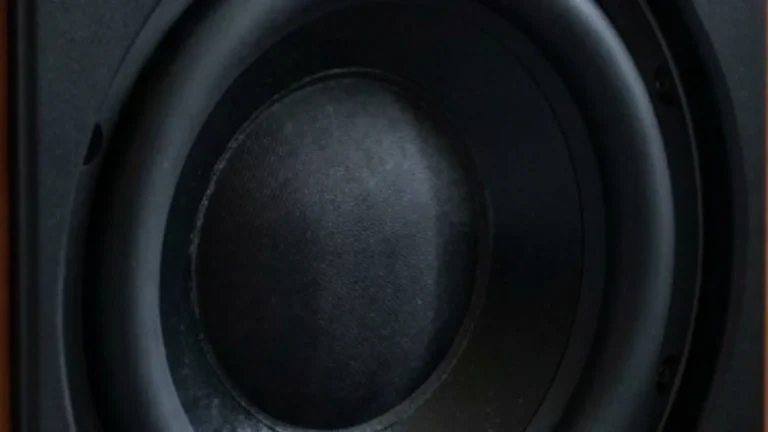
For this, we used two pairs of Mission speakers with distinctly different characteristics: the fairly substantial QX5-MKII floorstanders, featuring large 30cm woofers, and the more sophisticated ZX-2 bookshelf speakers from Mission’s higher-end range.
The results were consistently impressive.
With both pairs, the Omnia produced a controlled, focused and well-organised presentation. It didn’t artificially emphasise details or attempt to disguise weaknesses in recordings. Instead, it maintained an even tonal balance, with a detailed soundstage that conveyed a convincing sense of depth.
Dynamics were another strong point. The system could move from delicate musical passages to genuinely powerful and explosive moments without losing its composure. At the same time, quieter details and subtle changes in musical expression remained clearly audible.
Audiolab 9000A Amplifier and 9000CDT CD Transport Review
The overall presentation was neutral and informative, but never became excessively analytical or clinical. That’s an important distinction because some highly detailed systems can make music sound more like a technical demonstration than an enjoyable listening experience.
The Omnia avoided that problem.
Can 50 Watts Really Power a Serious Hi-Fi System?
The Mission QX5-MKII floorstanders presented a particularly interesting challenge. These are substantial speakers with large woofers, and their low-frequency section would ordinarily benefit from an amplifier with considerably more power.
Nevertheless, the Omnia handled them confidently.
Bass remained controlled, even when the music demanded substantial low-frequency energy. There was no obvious loss of composure, and the amplifier demonstrated an ability to maintain control over the speakers that its relatively modest power rating might not suggest.
This doesn’t mean that 50 watts will be sufficient for every loudspeaker or listening room. Speaker sensitivity, impedance and listening levels remain important considerations. However, the experience showed that the Omnia is more capable than its specifications might initially suggest.
Switching to the Mission ZX-2 bookshelf speakers revealed another side of its performance.
With the smaller speakers, bass was naturally less prominent, but the midrange and treble became particularly enjoyable. High-quality recordings displayed an impressive variety of tonal colours, subtle intonations and fine musical details.
There was a sense of openness and refinement that made familiar recordings sound fresh without exaggerating their characteristics.
The difference between the two speaker combinations also demonstrated the importance of choosing the right loudspeakers. The Omnia’s relatively neutral character leaves considerable room for the speakers to influence the final sound.
A Neutral Sound That Works With Almost Any Genre
In terms of overall performance, the Omnia comfortably held its own against Audiolab’s 6000 series components, from which it borrows much of its underlying technology. In certain respects, its presentation was even more transparent and precise.
What makes the Omnia particularly appealing is its ability to remain consistent across different musical genres.
Classic rock sounded engaging, heavier metal retained its energy, and orchestral recordings benefited from the system’s ability to convey scale and dynamics. More intimate jazz recordings, meanwhile, revealed the subtleties of instruments and performers without making the presentation feel artificially detailed.
Its character is best described as neutral, balanced and informative, but with a comfortable quality that encourages longer listening sessions.
Of course, the final result will depend considerably on the speakers you choose. Pair the Omnia with speakers that have a more forward and analytical presentation, and you can build a system with a more studio-like character. Choose something warmer and more relaxed, and the overall sound can become considerably more forgiving.
That’s one of the advantages of an integrated system with a relatively neutral amplifier: you have the freedom to shape the final presentation through your choice of loudspeakers.
Is the Audiolab Omnia Really All the Hi-Fi System You Need?
The Audiolab Omnia makes a convincing argument for the modern all-in-one Hi-Fi component.
It combines a CD player, network streamer, high-quality DAC, integrated amplifier, headphone amplifier and MM phono stage in a single enclosure. More importantly, these aren’t simply features included to make the product look versatile. The listening experience demonstrates that the Omnia has the performance to justify its extensive functionality.
Its 50-watt amplifier is more capable than the specifications might suggest, the digital section is impressively accomplished, and the extensive connectivity provides plenty of opportunities to expand the system later.
There are compromises. USB storage playback is limited, and the absence of HDMI ARC may disappoint some television users. Nevertheless, neither limitation changes the fundamental appeal of the product.
For someone building a new stereo system, the Omnia offers an unusually convenient starting point. You can purchase the component, connect a pair of suitable speakers and have almost everything required for serious music listening.
And if your requirements change, you aren’t locked into that arrangement. External amplification, additional sources and a subwoofer can all become part of the system.
The Audiolab Omnia ultimately challenges the idea that a satisfying Hi-Fi system needs an entire rack of separate equipment. For many listeners, one well-designed component and the right pair of speakers may be all they ever need.
Pros:
- Well-balanced, detailed and engaging sound
- Impressive connectivity and extensive functionality
- Built-in CD player and ESS Sabre DAC
- Capable 50-watt Class AB amplifier
- Attractive colour display
- Excellent versatility and price-to-performance proposition
Cons:
- Limited USB storage playback formats
- No HDMI ARC connectivity
The bottom line: The Audiolab Omnia isn’t merely a convenient collection of Hi-Fi components squeezed into one enclosure. It’s a genuinely capable stereo system that makes you question whether buying separate equipment is always worth the extra expense and space.