CMF Speaker S vs Speaker M: Which of Nothing’s New Bluetooth Speakers Is Worth Buying?
When a new speaker arrives, I usually look beyond its design and ask a more important question: how much useful sound can it deliver for the money? That question becomes particularly interesting with the new CMF Speaker S and Speaker M, two portable Bluetooth speakers that take a rather different approach to the familiar wireless speaker market.
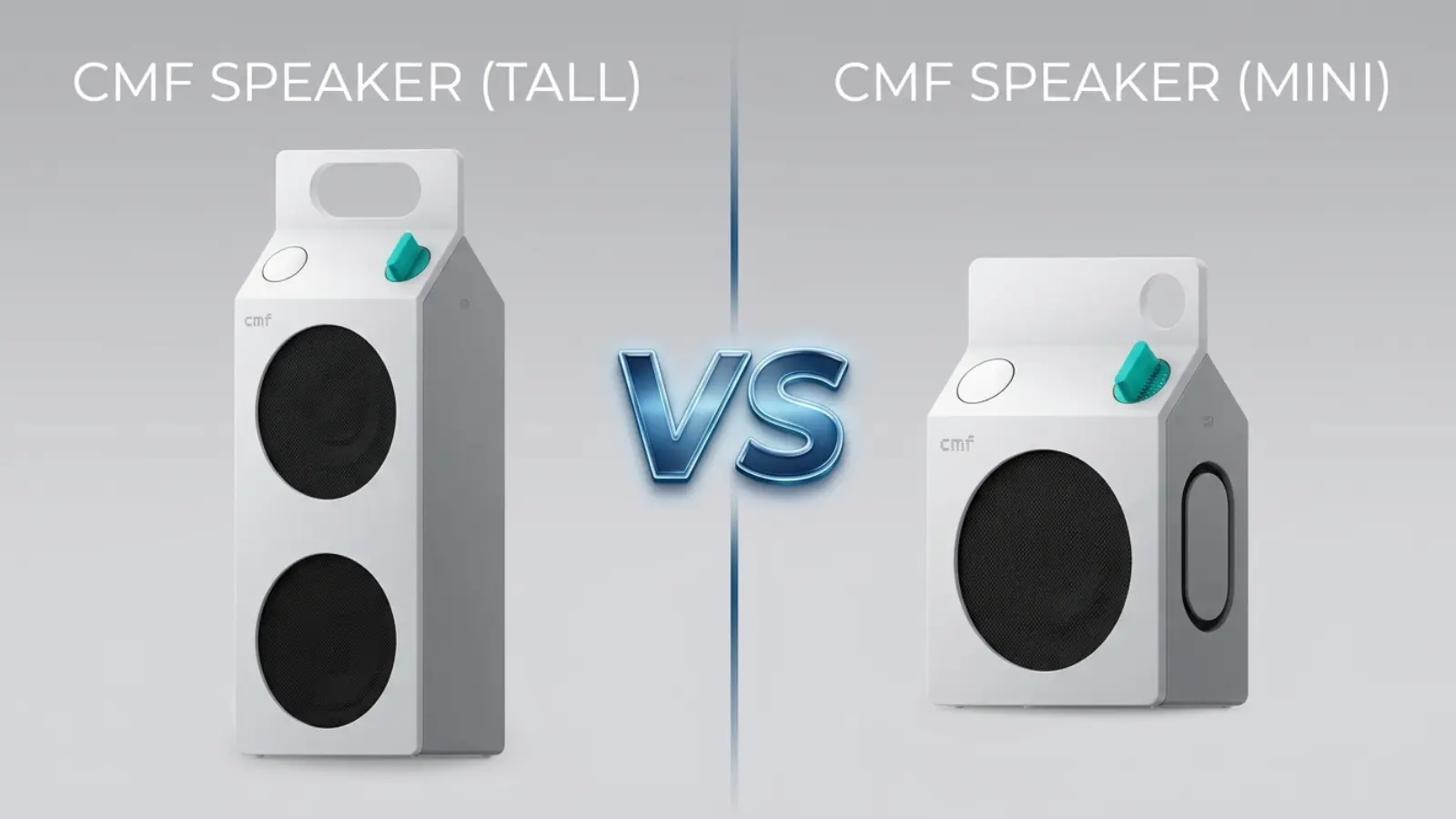
CMF, the audio and lifestyle brand associated with Nothing, has introduced its first portable speakers in two sizes. Both have a distinctive, milk-carton-inspired design, physical controls, customizable front panels and a feature set that goes well beyond basic Bluetooth playback. However, the difference between them is more substantial than their names might suggest.
The smaller CMF Speaker S delivers 10W RMS through a 45mm full-range driver supported by two passive radiators. The larger CMF Speaker M steps up to a dedicated woofer and tweeter, with a combined output of 35W RMS. Both promise up to 18 hours of battery life, IP68 protection and a range of modern wireless and wired connectivity options. Official specifications and Speaker M specifications
So, is the compact Speaker S the sensible choice for everyday listening, or does the larger Speaker M justify its higher price? Here is how the two compare on paper, what their specifications mean in practical use, and which one deserves a place on your shortlist.
CMF Speaker S vs Speaker M: What’s the Difference?
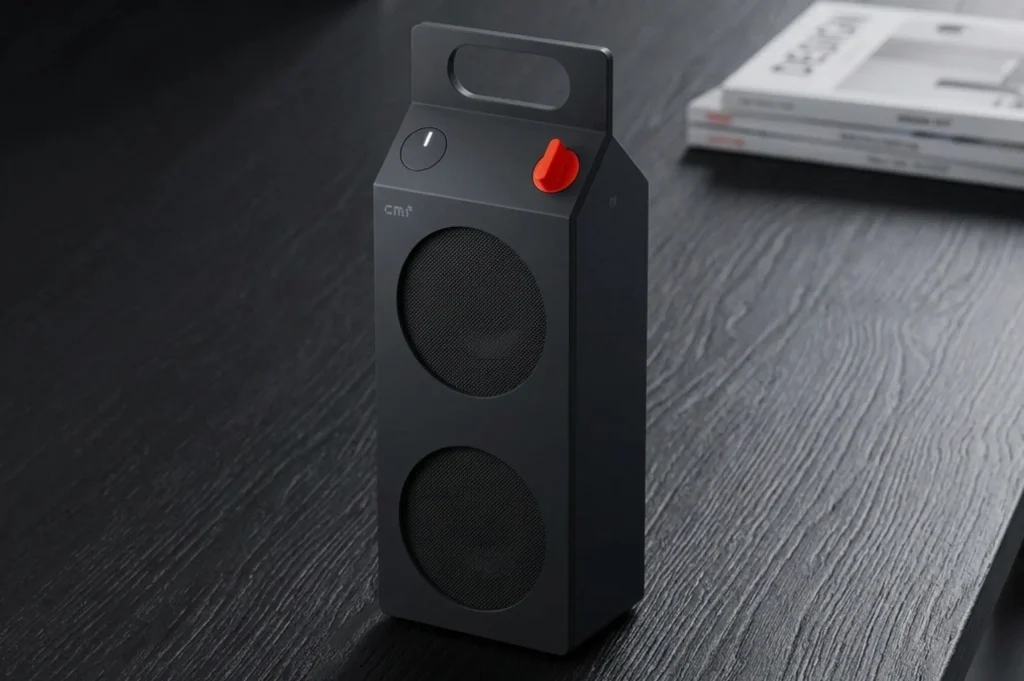
At first glance, these speakers share the same design philosophy. Both use an upright enclosure, a prominent physical control knob and a removable front panel that can be customized. The real differences appear when you look at their drivers, power output, dimensions and intended use.
| Specification | CMF Speaker S | CMF Speaker M |
|---|---|---|
| Design | Compact portable speaker | Larger portable speaker |
| Audio configuration | Single full-range driver with two passive radiators | Dedicated woofer and tweeter |
| Driver size | 45mm full-range | 70mm woofer and 16mm tweeter |
| Rated output | 10W RMS | 35W RMS |
| Frequency response | 70Hz–20kHz | 60Hz–20kHz |
| Dimensions (H × W × D) | 130.5 × 85 × 44mm | 220 × 85 × 54mm |
| Weight | 334g | 602g |
| Battery capacity | 2,600mAh | 4,900mAh |
| Claimed battery life | Up to 18 hours | Up to 18 hours |
| Full charging time | Approximately 2.5 hours | Approximately 3 hours |
| Bluetooth | Version 6.0 | Version 6.0 |
| USB-C audio | Yes | Yes |
| Stereo pairing | Yes | Yes |
| Auracast Party Mode | Yes | Yes |
| Water and dust protection | IP68 | IP68 |
| US launch price | $59 | $109 |
Specifications are based on published product information. Battery life is a manufacturer’s claim under specified test conditions, not a guarantee of everyday performance.
The main distinction is straightforward. The Speaker S prioritizes portability and a smaller footprint, while the Speaker M offers more power and a dedicated two-way driver arrangement. The larger model costs $50 more at the announced US prices, so the question is whether its additional hardware makes sense for your listening habits.
CMF Speaker S: A Compact Speaker Built for Everyday Listening
The CMF Speaker S is the smaller of the two, measuring just 130.5mm tall, 85mm wide and 44mm deep. At 334g, it is light enough to carry in a bag without feeling like another substantial piece of equipment you have to make room for.
Its design also includes an attachment point for carrying it with a strap or carabiner. That makes the S a natural candidate for travel, picnics, outdoor gatherings and casual listening around the house.
A 45mm driver with passive bass reinforcement
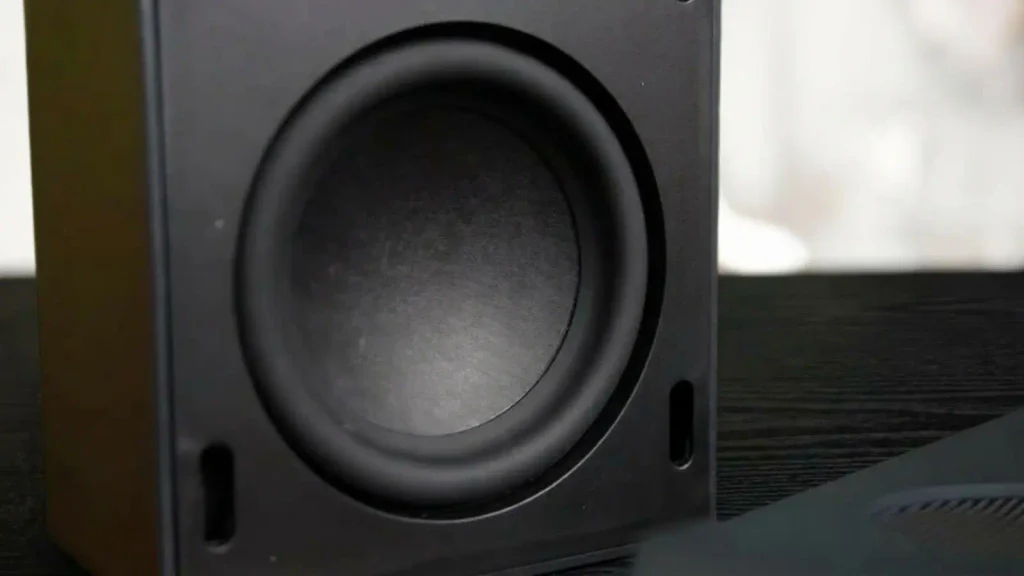
CMF has equipped the Speaker S with a custom-tuned 45mm full-range driver rated at 10W RMS. Rather than relying on the main driver alone to reproduce the lower frequencies, the speaker uses two passive radiators to help reinforce bass output.
This is a familiar approach to compact speaker design. Passive radiators can help a small enclosure produce more convincing low-frequency output than its dimensions might otherwise suggest. They do not, however, turn a small portable speaker into a substitute for a dedicated subwoofer.
The published frequency response is 70Hz to 20kHz. That gives readers a useful starting point when comparing the two models, although frequency-response figures alone cannot tell us how evenly the speaker reproduces those frequencies or how much distortion it produces at high volume.
For podcasts, radio, background music and casual streaming, the Speaker S has the specifications of a practical everyday companion. Listeners who enjoy electronic music, hip-hop or bass-heavy recordings should keep their expectations realistic: a compact enclosure still faces physical limitations when reproducing deep bass.
Small enough to take almost anywhere
Portability is where the Speaker S makes its strongest case. It is considerably shorter and lighter than the M, and its attachment point makes carrying it easier when heading outdoors.
Its IP68 rating is another advantage. The speaker is rated for dust and water protection, making it more suitable for outdoor use than a typical indoor wireless speaker. That does not mean it should be treated carelessly, particularly around its charging port. Follow the manufacturer’s instructions before charging it after exposure to water.
The S also retains the physical control knob found on its larger sibling. You can adjust volume, control playback and toggle Ultra Bass without having to reach for your phone every time you want to change something.
At $59 in the US, the Speaker S is the more accessible entry point into CMF’s new speaker range. It is the model to consider if compact dimensions matter more to you than maximum output or the prospect of filling a larger room with sound.
CMF Speaker M: More Power and a More Serious Speaker Configuration
The CMF Speaker M takes the same concept and gives it considerably more room to work with. It measures 220mm tall, 85mm wide and 54mm deep, with a weight of 602g.
That is still portable, but it is a different proposition from the S. The M is better suited to a desk, kitchen counter, bookshelf or outdoor table where you want a speaker that can remain in place for longer listening sessions.
It also has an integrated carrying handle, giving it a different approach to portability from the smaller model’s attachment point.
A dedicated woofer and tweeter make the difference
The most significant upgrade is the driver arrangement. Instead of the S’s single full-range driver, the Speaker M uses a 70mm woofer rated at 25W RMS and a 16mm tweeter rated at 10W RMS. The combined rated output is 35W RMS.
This arrangement allows the two drivers to concentrate on different parts of the audible frequency range. The woofer handles the lower frequencies, while the tweeter reproduces the higher frequencies. In principle, this gives the M more flexibility in balancing bass, vocals and treble than a single small full-range driver.
CMF specifies a frequency response of 60Hz to 20kHz. Compared with the S’s published lower limit of 70Hz, the M is specified to reach 10Hz lower.
That difference is worth noting, but it should not be exaggerated. A published frequency-response range does not tell us the output level at its lowest frequency, the tolerance used for the measurement or how the speaker performs when pushed hard. Independent measurements and listening tests will be needed to establish how much bass the M actually delivers in a room.
Nevertheless, the dedicated woofer, tweeter and higher rated output give the M a more ambitious specification sheet. If you frequently listen to music at higher levels or want a speaker for a shared living space, those are meaningful advantages to consider.
Does 35W make it three and a half times louder?
Not necessarily. The M’s 35W RMS rating is three and a half times the S’s 10W rating, but that does not mean it will sound three and a half times louder.
Perceived loudness depends on several factors, including driver sensitivity, enclosure design, distortion, frequency response and the distance between the listener and speaker. Power ratings alone cannot settle the question.
What the figures do establish is that CMF has given the M a substantially more powerful amplifier and a more elaborate driver arrangement. Whether that translates into a worthwhile improvement in sound quality is something that deserves proper listening evaluation rather than a conclusion based on wattage alone.
Both Speakers Offer More Than Basic Bluetooth
One of the more interesting aspects of the CMF Speaker S and M is that the smaller model does not lose out on the core connectivity features.
Bluetooth 6.0 and USB-C audio
Both speakers support Bluetooth 6.0, along with AAC and SBC audio codecs. They also support LC3 for Auracast audio, which is a specific use case rather than a general replacement for every Bluetooth audio codec.
CMF lists a wireless connection range exceeding 100 metres in free space. Treat that as a best-case specification: walls, interference and other obstacles can reduce the range considerably in a typical home.
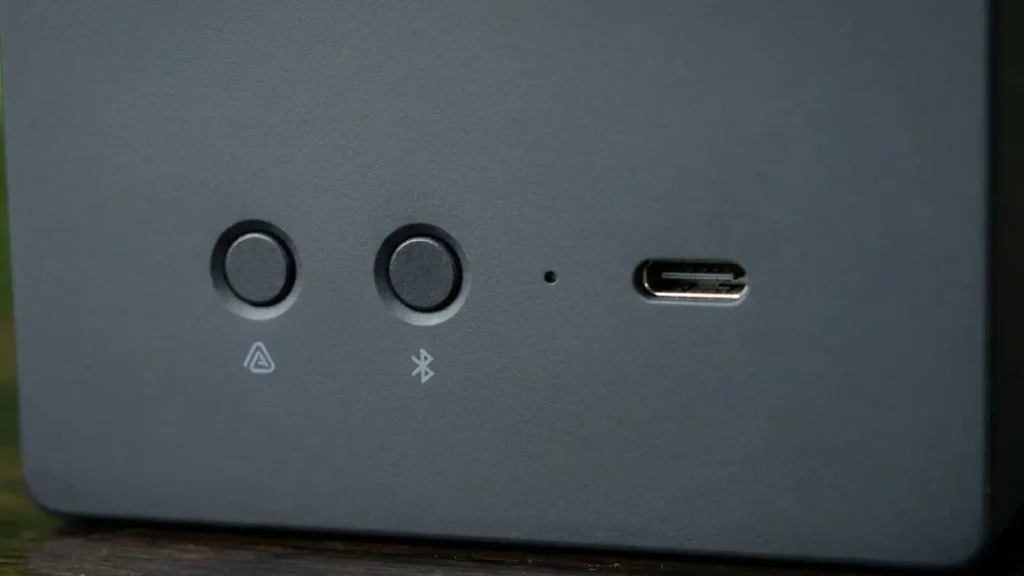
USB-C is used for charging, but it also supports audio playback. CMF lists latency below 60 milliseconds for USB-C audio playback, making the wired option worth considering when low latency is important.
For people who mainly stream from a phone, Bluetooth remains the convenient choice. The USB-C audio connection provides an alternative for compatible devices, including certain computers and phones.
Stereo Mode and Auracast Party Mode
Both speakers support Stereo Mode and Auracast Party Mode. These features serve different purposes.
Stereo Mode allows compatible speakers to be paired for separate left and right channels, creating a more conventional stereo presentation than a single speaker can provide. This could be particularly useful at a desk or in a small listening area where you can position two speakers appropriately.
Auracast Party Mode is designed to synchronize playback across multiple compatible speakers. It is the more useful option when the priority is spreading music around a gathering rather than creating a left-right stereo image.
The distinction matters. Two speakers playing in sync do not automatically create a properly arranged stereo system. If stereo imaging is your priority, you need the appropriate stereo pairing mode and sensible speaker placement.
Adaptive Tuning and custom EQ
CMF also includes Adaptive Tuning, which is designed to adjust the speaker’s output in response to the audio being played. Both models offer sound adjustments through the Nothing X app, including the published Balanced, More Bass, More Treble and Voice presets.
Ultra Bass is available for listeners who want stronger bass emphasis, while Wide Soundstage is intended to give the presentation a greater sense of space. Night Mode is another listed feature.
These options are useful because portable speakers rarely sound their best in every situation with one fixed tuning. A voice-focused setting may make spoken content easier to follow, while a bass-enhanced setting may be more enjoyable for certain musical styles.
However, equalization cannot overcome every physical limitation of a small driver or enclosure. Turning up bass emphasis can also affect headroom and battery consumption, so the best setting will depend on the music, volume and room.
Customizable Panels Give the CMF Speakers Their Own Identity
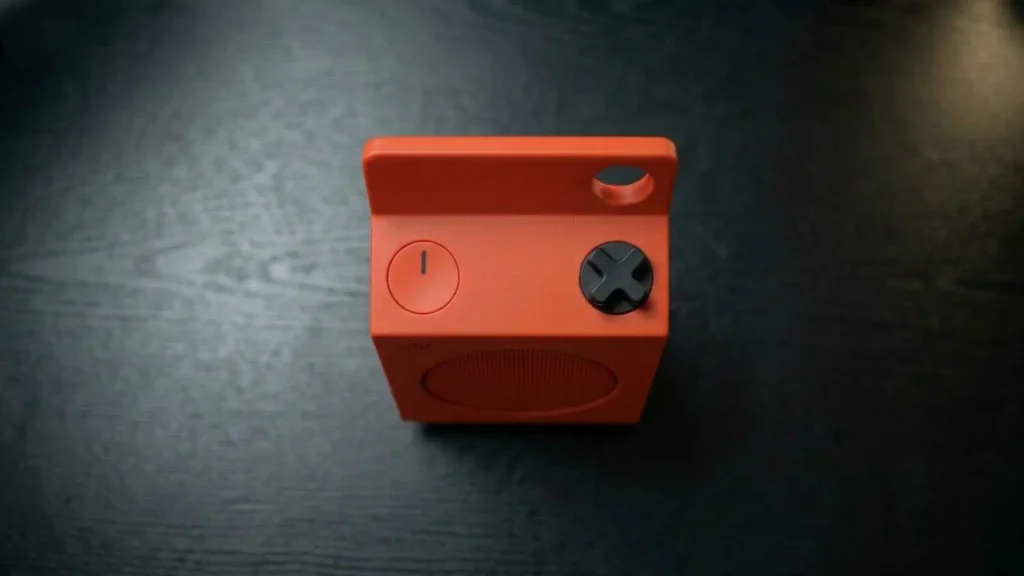
CMF has made the design a central part of the experience. Both speakers have a milk-carton-inspired silhouette, removable front panels and physical knobs that can be customized.
The available colors include White, Dark Grey, Orange and Turquoise. The contrasting panels and controls give the speakers a playful appearance that differs from the fabric-covered cylinders and rectangular boxes common in this category.
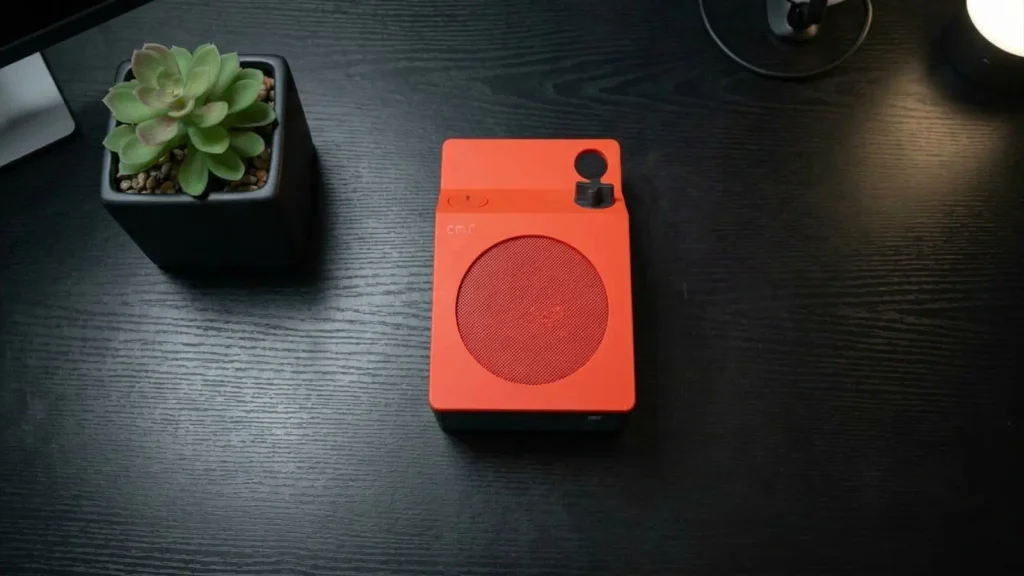
There is also a more unusual feature for people who like to personalize their equipment: CMF provides guidance and design files that allow users to create compatible custom panels and knobs using 3D printing.
That does not mean every custom part will fit perfectly or that all replacement designs are sold as accessories. It does, however, make the speakers more interesting to owners who enjoy modifying the appearance of their equipment.
For a speaker likely to sit on a desk or kitchen counter for years, this flexibility could be more than a cosmetic novelty. It gives owners a way to change the appearance without replacing the entire product.
Battery Life: Both Promise Up to 18 Hours
Despite their differences in size and power, CMF claims up to 18 hours of playback for both models.
The Speaker S has a 2,600mAh battery, while the Speaker M uses a larger 4,900mAh battery. The published charging times are approximately 2.5 hours for the S and three hours for the M using the specified USB-C charging conditions.
CMF also advertises fast charging, claiming that a 10-minute charge can provide up to one hour of playback.
The important qualification is that the advertised 18-hour figure is based on AAC playback with Ultra Bass enabled and the volume set to 50%. Real-world battery life will vary with volume, source material, connection conditions and other settings.
Still, the matching claimed endurance is an appealing feature. Buyers choosing the M for its higher output do not have to accept a lower advertised playback time, at least according to the published figures.
CMF Speaker S vs Speaker M: Which One Sounds Like the Better Buy?
Specifications can help us understand what each model is designed to do, but they cannot replace a proper listening comparison. Without independent measurements and direct listening to both speakers under the same conditions, it would be premature to declare a winner on sound quality alone.
There are, however, some useful distinctions.
The Speaker S has one full-range driver supported by passive radiators. Its compact enclosure and 10W rating make portability its central strength. It is the more convenient option for listening close to the speaker, taking music outdoors or keeping something small on a desk.
The Speaker M has a dedicated woofer and tweeter, a 35W combined RMS rating and a lower published bass-frequency limit. Those specifications give it the more ambitious hardware configuration, particularly for listeners who want a speaker for a room rather than simply something to carry around.
The M’s extra output may be valuable when listening from farther away or in a larger space, but the actual difference in maximum clean volume, bass extension and tonal balance still needs to be established through testing.
For audiophiles, one other point deserves attention: neither model should automatically be treated as a replacement for a conventional stereo setup. A single compact Bluetooth speaker is designed around convenience. A pair of properly positioned stereo speakers can offer a more convincing soundstage and better separation, depending on the equipment and listening environment.
Which CMF Speaker Should You Buy?
Choose the CMF Speaker S if:
- You want a lightweight speaker that is easy to carry.
- You mainly listen to music, podcasts and radio at a desk or nearby.
- You want a speaker for picnics, travel and casual outdoor use.
- You prefer spending $59 rather than $109.
- You value compact dimensions more than maximum output.
Choose the CMF Speaker M if:
- You want the more powerful of the two models.
- You prefer a dedicated woofer-and-tweeter arrangement.
- You want a portable speaker for a living room, kitchen or shared space.
- You expect to listen at higher volumes or from farther away.
- You are willing to pay $50 more for the larger enclosure and upgraded audio hardware.
Both models retain the same main connectivity features, advertised battery life, IP68 protection and customization options. The decision therefore comes down primarily to size, audio hardware, intended listening environment and budget.
Verdict: The CMF Speaker M Has the More Ambitious Hardware
CMF’s first portable speakers are interesting because they do not rely on appearance alone. The Speaker S and Speaker M share a distinctive design, but the larger model makes a substantial step up in driver configuration and rated output.
The CMF Speaker S looks like the more practical choice for anyone who wants a small, lightweight Bluetooth speaker that can travel easily between rooms and accompany them outdoors. Its 10W output, 45mm driver and passive radiators are sensible choices for a compact product, and the $59 US launch price makes it the less expensive entry point.
The CMF Speaker M is the more intriguing option for listeners who place a higher priority on audio hardware. Its dedicated 70mm woofer, 16mm tweeter and 35W RMS output give it a stronger specification sheet, while its larger battery and integrated handle maintain its portable appeal.
If I were comparing the two purely on their published specifications, the M would be my choice for a room-oriented speaker, while the S would make more sense for travel and casual everyday use. That is not the same as declaring the M the better-sounding speaker. A proper verdict on sound quality will depend on how both perform in listening tests.
For now, the biggest question is whether the M’s more substantial driver arrangement delivers a clearly audible improvement in bass, dynamics and clarity that justifies its higher price. That is the comparison worth paying attention to when independent reviews and measurements become available.