
Polk Audio RT3000P Review: The Forgotten American Speaker That Was 20 Years Ahead of Its Time
The Polk Audio RT3000P is a late 1990s powered modular floorstanding speaker featuring a dedicated 300W bass amplifier, 18Hz extension, and Dynamic Balance driver technology. Available only on the used market today, and still worth hunting down.
There are loudspeakers that quietly disappear into history, remembered only by collectors who happened to own them. Then there are products that become milestones — designs that capture a manufacturer’s ambitions at a particular moment in time. The Polk Audio RT3000P firmly belongs in the latter category.
During the late 1990s, the high-end loudspeaker market was undergoing a noticeable transition. Home theater was rapidly becoming mainstream, yet serious two-channel enthusiasts still demanded speakers capable of delivering convincing musical realism. Many manufacturers responded by simply making their floorstanders larger or adding more drivers. Polk took a different approach. Instead of asking one cabinet to perform every task, the company developed a modular loudspeaker that divided responsibilities between a dedicated powered bass enclosure and a compact monitor responsible for the midrange and treble.
Looking back more than two decades later, that decision seems remarkably forward-thinking.
Even today, many premium loudspeaker manufacturers separate bass amplification from the rest of the frequency spectrum through active designs. Polk accomplished much of that philosophy long before powered towers became fashionable.
9 Best Vintage Speakers That Still Turn Heads
The RT3000P wasn’t designed as a lifestyle speaker. It wasn’t intended to disappear into a room or impress buyers with futuristic styling. Instead, it was engineered around one fundamental objective: deliver effortless dynamics while maintaining the refinement expected from a serious hi-fi loudspeaker.
That objective remains surprisingly relevant today.
Design Philosophy
At first glance, the RT3000P appears unconventional. Rather than arriving as a single tower speaker, each channel consists of two separate cabinets.
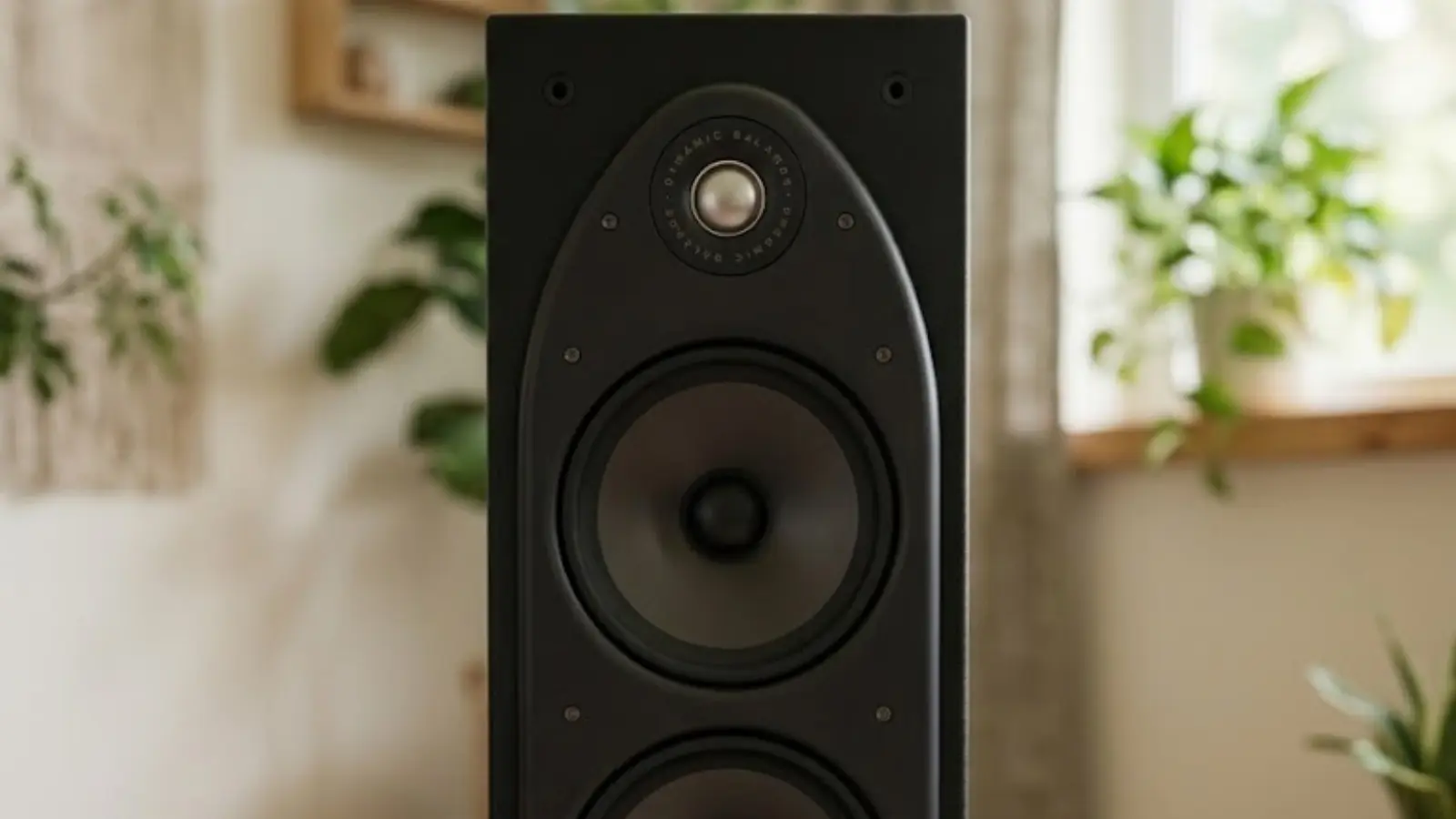
The upper enclosure houses the midrange and tweeter, while the lower cabinet contains a powered bass system driven by its own internal amplifier. Although this arrangement increases the number of components during installation, it offers several acoustic advantages over a traditional floorstanding loudspeaker.

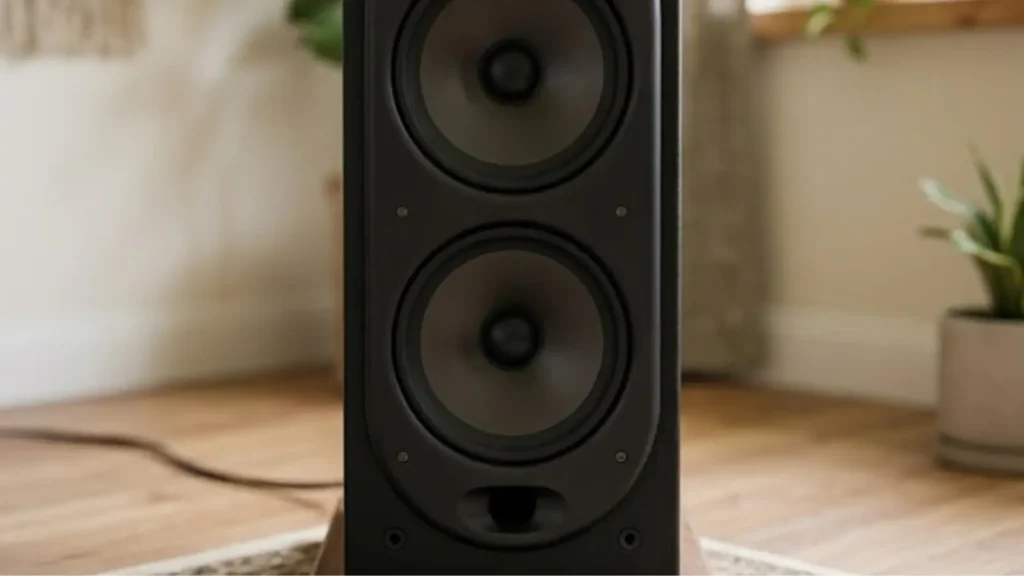
Separating the bass enclosure from the upper cabinet significantly reduces the mechanical vibration that can color midrange performance. Large woofers generate enormous cabinet pressure, and even heavily braced towers inevitably transfer some of that energy into the enclosure walls. By physically isolating the bass section, Polk allowed the midrange drivers to operate in a quieter environment.
Vintage Polk RM6500 5.1 Review
The result is immediately apparent when examining the cabinet construction. The upper enclosure feels rigid and well damped, while the powered bass cabinet is engineered specifically to handle the substantial forces created by deep low-frequency reproduction.
This modular approach also provides flexibility that conventional floorstanders simply cannot match. Owners can experiment with placement, adjusting the bass modules independently if necessary to achieve smoother room response while maintaining optimal stereo imaging from the satellites.
Although most users naturally stack the satellites directly on top of the bass cabinets, the design leaves room for experimentation in more challenging listening environments.
Even by today’s standards, that level of flexibility remains impressive.
Build Quality
Polk has always balanced engineering with affordability, and the RT3000P reflects that philosophy exceptionally well.
Rather than pursuing extravagant cabinetry or luxury veneers, the company invested where it mattered most — structural integrity, driver integration, and long-term durability.
The cabinets exhibit excellent rigidity, with thick panels that minimize unwanted resonance. Internal damping is substantial, giving each enclosure a reassuring solidity when handled.
The finish may not possess the handcrafted elegance associated with boutique manufacturers, but it is durable, understated, and purposeful. Decades later, many surviving examples continue to look remarkably presentable despite years of regular use.
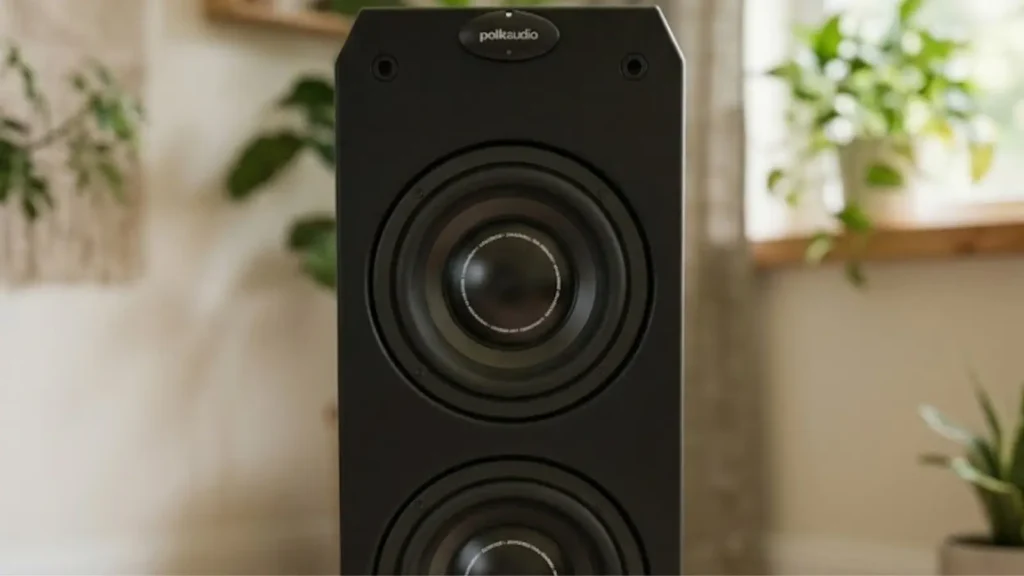
Driver fitment remains precise, and the front baffles are cleanly executed without unnecessary ornamentation. Every design choice reinforces the impression that Polk prioritized acoustic performance over visual extravagance.
This restraint has aged well.
Where some loudspeakers from the same era now appear stylistically dated, the RT3000P retains a timeless, functional appearance that fits comfortably into both dedicated listening rooms and traditional living spaces.
Polk Audio RT3000P Powered Bass System — Engineering Explained
The defining feature of the RT3000P is undoubtedly its active low-frequency section.
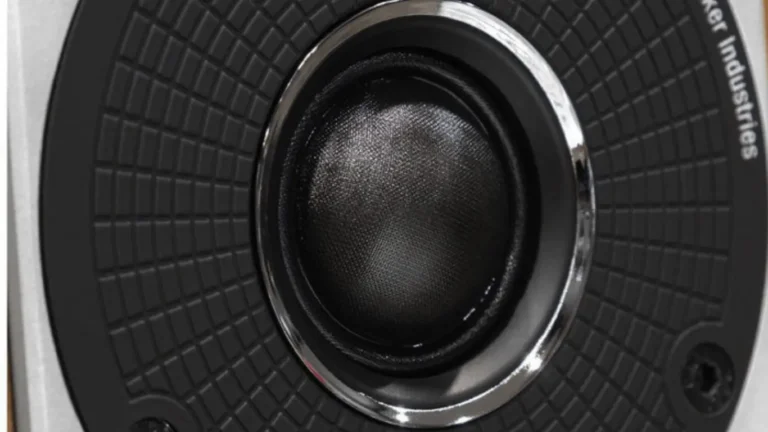
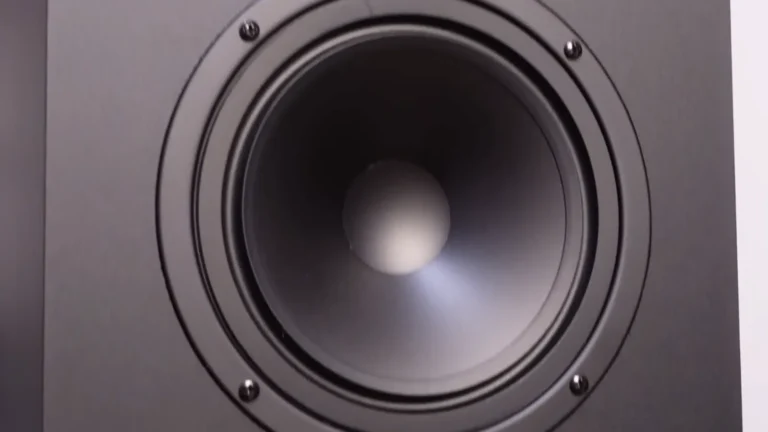
Each bass module incorporates its own dedicated 300-watt amplifier, allowing the two 8-inch Dynamic Balance woofers to operate independently from the external amplifier driving the satellite speakers. Each channel uses two 8-inch Dynamic Balance subwoofers in the powered bass cabinet, while the satellite handles a 6.5-inch mid/bass driver and a 1-inch tri-laminate dome tweeter.
This architecture delivers several significant advantages.
First, the main amplifier no longer bears responsibility for reproducing demanding low-frequency content. Bass requires enormous amounts of current, and relieving the external amplifier of that burden allows it to concentrate on the frequencies where clarity, imaging, and harmonic accuracy are most critical.
The practical consequence is that surprisingly modest amplifiers can produce results that would normally require substantially more expensive power amplification when driving a fully passive loudspeaker.
Second, Polk engineers were able to optimize amplifier behavior specifically for the bass drivers themselves. Instead of designing around countless possible amplifier combinations, they controlled the entire low-frequency system from amplifier to crossover to driver. A 4th order Butterworth low-pass filter variable between 60Hz and 120Hz gives the listener precise control over the crossover point to the satellite.
That integration contributes to the RT3000P’s effortless sense of scale.
Rather than sounding strained when dynamic passages arrive, the loudspeaker remains composed. Bass notes emerge with authority, yet never feel disconnected from the rest of the frequency spectrum.
Modern active loudspeakers frequently advertise this concept as cutting-edge engineering.
The RT3000P quietly implemented much of the same philosophy decades earlier.
Polk Audio RT3000P Driver Integration
One of the greatest challenges in loudspeaker design lies not in building excellent individual drivers but in persuading them to behave as a single coherent source.
The RT3000P succeeds remarkably well in this regard.
Transitions between the powered bass system and the satellite speaker occur naturally, avoiding the disjointed presentation that often affects poorly integrated subwoofer systems.
Instead of hearing obvious hand-offs between drivers, instruments occupy stable positions within the soundstage.
The Magnificent Nine: 9 Best Vintage Amplifiers
Acoustic bass retains its natural body without becoming bloated. Kick drums possess satisfying impact while maintaining realistic texture. Piano fundamentals extend downward convincingly, yet individual notes remain clearly articulated rather than dissolving into excessive warmth.
This sense of cohesion contributes enormously to the speaker’s long-term listenability.
Many loudspeakers impress during short demonstrations through exaggerated bass or elevated treble. The RT3000P chooses a more mature path, favoring balance over spectacle.
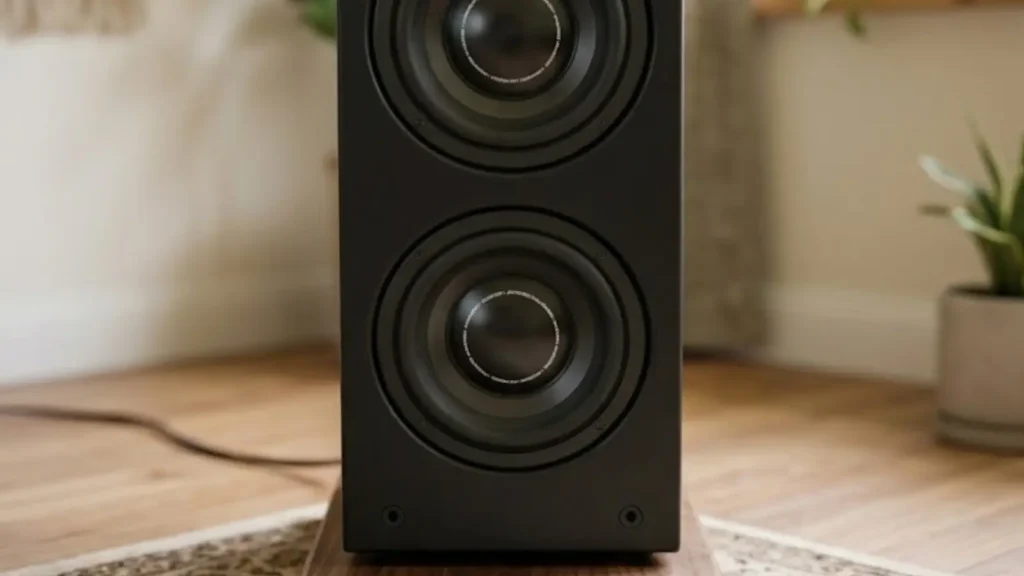
Polk Audio RT3000P Installation and Room Placement
Although the RT3000P proves relatively forgiving compared to many large loudspeakers, careful setup rewards the listener with substantial improvements.
Initial positioning is straightforward, but the speaker responds audibly to changes in spacing and toe-in.
Allowing generous distance between the left and right channels expands the soundstage dramatically without weakening center image stability. Likewise, moderate toe-in improves focus while preserving a broad listening window.
The modular architecture also opens possibilities unavailable to conventional towers. Listeners dealing with difficult room acoustics can experiment with bass module positioning independently, reducing problematic room modes while maintaining ideal stereo geometry.
This flexibility makes the RT3000P surprisingly adaptable across rooms of varying sizes.
Even today, few passive loudspeaker systems offer comparable placement freedom without introducing additional subwoofers into the system.
Polk Audio RT3000P First Listening Impressions
From the very first listen, one thing about the RT3000P really stands out: confidence. Not big, boomy bass, not super sparkly highs, and not that overwhelming detail that some speakers shove in your face — just pure, quiet confidence. Music flows out of these things with such an easy, natural authority that you end up wanting to keep listening for hours, not just for a quick demo. You get this clear sense that the speakers are totally in their comfort zone, never breaking a sweat. Big dynamic shifts happen without any squeezing or strain, busy passages stay clean and organized, and those massive orchestral climaxes never turn into a muddy mess.
What really stands out is that the RT3000P does not fall into the overly analytical trap that so many speakers from the late 1990s seemed to favor. Instead of picking apart every single detail of a recording, they focus on the bigger picture — the flow of the music and the emotional punch that makes you actually feel something. That approach makes them forgiving with less-than-perfect recordings without losing real resolution or clarity.
Sound Quality and Listening Experience:
If the RT3000P impresses on paper because of its modular architecture and powered bass system, it earns its reputation during extended listening. This is not the sort of loudspeaker that attempts to wow listeners with an exaggerated showroom sound. Instead, it gradually reveals its strengths over hours and days, proving itself remarkably versatile across different genres and listening levels.
Rather than emphasizing one particular frequency range, the RT3000P presents music as a coherent whole. Its tonal balance leans slightly toward warmth, but not at the expense of detail or transparency. There is enough resolution to expose differences between recordings, amplifiers, and source components, yet it never crosses into the analytical territory that can make some speakers fatiguing over long sessions.
Polk Audio RT3000P Bass Performance
The powered bass system remains the defining characteristic of the RT3000P, and even today it stands apart from many conventional passive floorstanding loudspeakers.
Unlike speakers that create the illusion of bass by boosting the upper bass region around 80–120Hz, the RT3000P reaches confidently into the lower octaves — all the way to 18Hz in room. The difference becomes immediately apparent on recordings containing genuine low-frequency information.
Electric bass possesses convincing weight without becoming thick or sluggish. Each note maintains its individual pitch, allowing complex bass lines to remain intelligible even during demanding passages.
On well-recorded jazz albums, upright bass sounds appropriately woody and resonant rather than simply producing low-frequency rumble. The instrument retains texture, allowing the listener to distinguish finger movements, string vibration, and body resonance with surprising ease.
Electronic music reveals another side of the speaker’s personality. Synthesizer bass extends effortlessly into frequencies that many passive towers simply cannot reproduce with authority. Rather than sounding artificially boosted, these deep notes emerge naturally, filling the room with physical energy while maintaining composure.
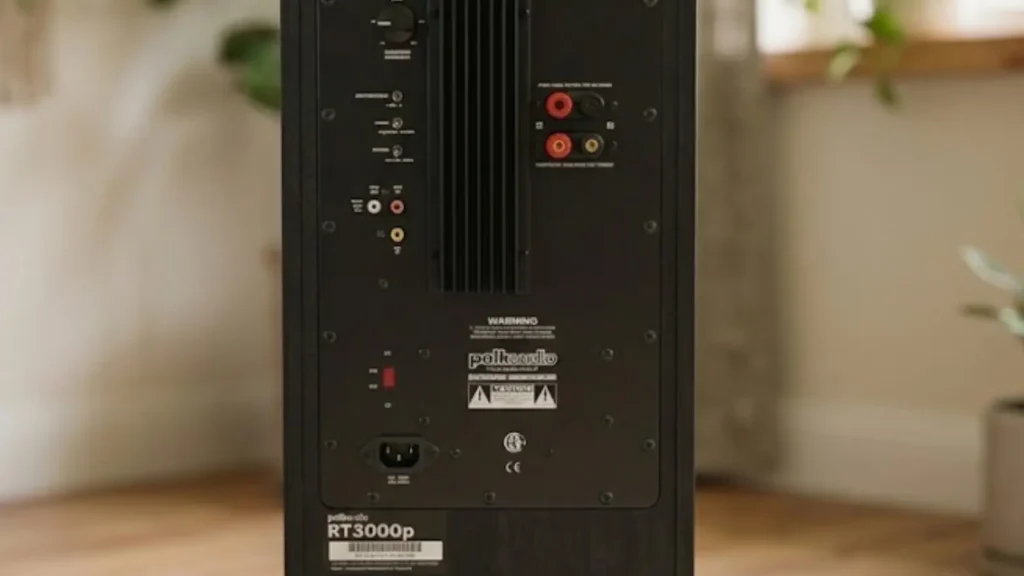
Where the RT3000P truly separates itself from many vintage competitors is its ability to maintain control as volume levels increase. Because each bass section benefits from its own dedicated 300-watt amplification, increasing playback volume does not dramatically increase the workload placed on the main amplifier. The result is a presentation that remains stable even during large dynamic swings.
There is, however, a recognizable character to the bass. Listeners accustomed to extremely damped sealed-box systems may notice that the RT3000P favors fullness and scale over ultimate speed. Bass notes possess generous body, giving rock and orchestral recordings satisfying weight, although they may not exhibit the razor-sharp transient precision associated with certain high-end studio monitors.
This is less a flaw than a design choice. The speaker prioritizes musical enjoyment over forensic analysis.
Midrange Performance
If bass provides the foundation, the midrange determines whether a loudspeaker truly connects emotionally with the listener.
Fortunately, the RT3000P performs admirably in this crucial region.
Male vocals are reproduced with convincing body and natural warmth. Baritone voices sound appropriately rich without becoming chesty, while spoken dialogue remains exceptionally intelligible.
String instruments benefit from the speaker’s smooth tonal character. Acoustic guitars exhibit realistic resonance, with the wooden body contributing as much to the overall presentation as the strings themselves. Piano recordings likewise sound balanced and substantial, avoiding the thinness that sometimes accompanies overly analytical loudspeakers.
Jazz recordings are particularly rewarding. Saxophones possess satisfying tonal density while retaining enough bite to communicate the instrument’s expressive dynamics. Trumpets sound energetic without crossing into excessive brightness, and brass sections maintain convincing scale during large ensemble performances.
Female vocals deserve special attention. The RT3000P generally presents female voices with admirable smoothness, although some recordings reveal a slight relaxation in the upper midrange. Rather than projecting singers aggressively toward the listener, the Polk tends to place them naturally within the recorded acoustic.
On excellent recordings this creates a believable sense of depth. On darker recordings, however, some listeners may wish for slightly greater vocal presence. Fortunately, this characteristic rarely crosses into obvious coloration — instead it contributes to the speaker’s overall fatigue-free presentation.
Treble Performance
One pleasant surprise offered by the RT3000P is the refinement of its high-frequency reproduction.
Vintage loudspeakers sometimes suffer from either excessive brightness or noticeable dullness by modern standards. The RT3000P largely avoids both extremes.
Cymbals display convincing metallic shimmer while decaying naturally into silence. Brushes against snare drums remain delicate and textured rather than becoming lost behind the rest of the ensemble. String overtones extend smoothly without harshness, allowing violins to sound energetic yet composed.
Perhaps the greatest compliment one can pay the tweeter is that it rarely draws attention to itself. Its contribution is one of integration rather than spectacle.
Long listening sessions reveal no tendency toward glare or listening fatigue, even with less-than-perfect recordings. Modern compressed digital releases remain listenable, while high-quality recordings reward the listener with appreciable air and spaciousness.
Those seeking the last word in microscopic detail retrieval may find contemporary ribbon or beryllium tweeters more revealing. The Polk instead pursues a presentation that emphasizes musical coherence over exaggerated resolution.
Imaging and Soundstage
Imaging and soundstage have always been a strong suit for Polk, and the RT3000P carries that torch beautifully. Once positioned correctly, these large speakers simply vanish — physically large yet acoustically invisible. The soundstage stretches convincingly past the edges of the cabinets, delivering a wide presentation without losing precise placement. Vocals stay locked dead-center, and instruments occupy stable, precise positions across the stage.
Depth is equally satisfying. With a well-recorded orchestral piece, genuine front-to-back layering places different sections of the orchestra in their own space rather than collapsing into a flat wall of sound. Ambient recordings shine here — natural reverb extends beyond the speakers themselves, drawing the listener into the performance.
For home theater use, panning effects glide smoothly across the front stage with no awkward gaps, making film soundtracks feel immersive and physically convincing.
Dynamics and Scale
If there is one area where the RT3000P truly demonstrates its engineering, it is in the effortless handling of dynamics — from the quietest whisper to the loudest crash.
On smaller acoustic material, the speaker captures subtle microdynamics beautifully — the soft touch of a pianist’s fingers, the gentle decay of a brushed cymbal, the slow swelling warmth of a bowed cello. None of it feels exaggerated or forced.
But when challenged with large-scale material, the RT3000P does not flinch. Full orchestral crescendos build with real authority, rock recordings retain punch and energy without compression, and film soundtracks deliver explosive power while keeping dialogue clear and intelligible. Throughout all of this the speaker remains composed and completely in control.
Across Music Genres
It is rare to find a speaker that does justice to just about every genre, the RT3000P comes impressively close.
Jazz sounds superb, excellent instrument separation and a rich, natural tonal balance. Rock benefits enormously from the powered bass system, delivering real weight and authority while maintaining clear vocals. Classical music, with its wide dynamic range and complex arrangements, shines through the expansive soundstage and convincing sense of concert hall scale.
Electronic music presents no challenge — the bass modules dig to 18Hz and deliver the extension that synthesizer-heavy material demands. Stripped-down acoustic material sounds warm and intimate through the smooth, inviting midrange.
The fact that the RT3000P handles all of this so competently, rather than excelling only with audiophile reference recordings, is one of its most significant strengths.
Home Theater Performance
Even though the RT3000P was born during the early days of home theater, it holds its own remarkably well in modern surround setups. Explosive action scenes hit with real physical impact, and the low-frequency extension digs deep enough to compete with dedicated subwoofers from the same era. Yet even during complex action sequences, dialogue stays crisp and intelligible.
The wide, immersive soundstage serves cinematic material exceptionally well, particularly in large environmental scenes where the sense of acoustic space genuinely enhances immersion. For a vintage-inspired home theater, it is difficult to find another speaker from that generation that balances musical refinement and cinematic authority as successfully.
Living With the Polk Audio RT3000P Today
Buying a pair of RT3000Ps today is a fundamentally different proposition from purchasing them new. Available only on the used market, originally retailing at $3,600 per pair, a well-maintained set can be found today for between $300 and $800 depending on condition and whether the amplifiers have been recapped.
The powered amplifiers deserve careful inspection. Confirm they operate quietly and cleanly with no hum or instability. After more than two decades, the capacitors may require attention, and foam surrounds should be inspected and replaced if deteriorated.
That said, Polk built these with genuine durability in mind, and many surviving examples have held up remarkably well. An active enthusiast community means replacement parts remain traceable with patience. A properly restored pair will outperform a surprising number of modern speakers available at equivalent used prices.
Pros and Cons Polk Audio RT3000P
Pros:
- 300W dedicated bass amplification per channel: effortless dynamics at any volume
- 18Hz extension: genuine deep bass that most passive floorstanders cannot match
- Modular design reduces bass vibration affecting midrange clarity
- Flexible placement: bass modules adjustable independently
- Exceptional imaging and soundstage for a speaker of this size
- Highly versatile across music genres and home theater
- Currently available for $300 – $800 used: extraordinary value
Cons:
- Available used only — requires careful inspection before purchase
- Amplifier capacitors may need recapping after 20+ years
- Foam surrounds require inspection on older examples
- Bass character favors fullness over ultimate speed — not ideal for studio monitoring
- Large footprint requires a medium to large room
- No modern inputs — purely analog
Conclusion:
Looking back, the Polk Audio RT3000P captures a fascinating moment in speaker history. It arrived before active speakers were fashionable, before room correction was a household term, and before powered bass systems were widely accepted in traditional hi-fi circles. Yet so many of its design choices feel remarkably prescient today. The modular build reduces cabinet resonance, the powered bass relieves the external amplifier, and the imaging holds its own against speakers decades newer.
What truly matters is that these speakers still deliver music with warmth, authority, and an effortlessness that is genuinely difficult to find. They are not pursuing analytical precision or exaggerated detail. Instead they offer something more valuable, a sound that makes you stop analyzing and simply get lost in the music.
More than two decades later, that is an achievement worth celebrating.
If you are a vintage audio enthusiast looking for a speaker that satisfies both musical and home theater demands, the RT3000P is one of the hidden gems of American speaker design, absolutely worth hunting down.
⭐⭐⭐⭐ 4.5/5 — Original MSRP: $3,600 | Used market: $300 – $800
Polk Audio RT3000P Specifications:
| Feature | Specification |
|---|---|
| Original MSRP | $3,600 per pair |
| Current used market price | $300 – $800 depending on condition |
| Woofers | 2 × 8-inch Dynamic Balance subwoofers |
| Mid/bass drivers | 2 × 6.5-inch Dynamic Balance mid/bass (shielded) |
| Tweeter | 1 × 1-inch Dynamic Balance tri-laminate dome (shielded) |
| Frequency response | 18Hz – 26kHz |
| –3dB limits | 26Hz – 25kHz |
| Sensitivity | 92dB / 1W / 1m |
| Impedance | 8 ohm compatible / 4 ohm minimum |
| Subwoofer amp power | 300 watts per channel |
| Recommended amplification | 20 – 500 watts per channel |
| Crossover — mid/high | 2nd order LPF at 1.2kHz and 2kHz / 80Hz HPF |
| Crossover — subwoofer | 4th order Butterworth LPF variable 60Hz – 120Hz |
| Crossover components | Mylar film capacitors and air core inductors |
| Cabinet dimensions | 50 × 10 × 17 inches (127 × 25.4 × 43.2cm) |
| Satellite weight | 26 lbs each (11.81kg) |
| Subwoofer weight | 50 lbs each (22.72kg) |
| Finishes | Black or Rosewood wood veneer |