Remember These 9 Blu-ray Players? Some Were Way Ahead of Their Time
There was a time when buying a Blu-ray player meant choosing much more than a box that could play movies in high definition. Some manufacturers were fitting their players with advanced video processors, high-quality audio circuitry, support for SACD and DVD-Audio, and features that promised to make a single component the centre of a home entertainment system.
Others took the idea in completely different directions. LG built a Blu-ray player with a hard drive for storing music, Sony created a machine capable of holding hundreds of discs, Panasonic brought Blu-ray movies to a portable screen, and the PlayStation 3 made high-definition movie playback part of a games console.
Looking back at that period, the variety is remarkable. Manufacturers were competing to make their players more versatile, more convenient and, in some cases, considerably more ambitious than the average buyer needed. There were affordable models for everyday movie watching, expensive universal players aimed at audiophiles, and machines designed around problems that today’s streaming-focused households might barely recognise.
Many of these players have long since disappeared from shops. Modern Ultra HD Blu-ray machines offer features that these older models cannot, and some of the internet services once advertised on them have disappeared or changed. Yet these classic machines remain interesting examples of home cinema engineering, particularly for enthusiasts who still collect physical media.
Here are nine Blu-ray players and home entertainment systems that deserve to be remembered, each for a different reason.
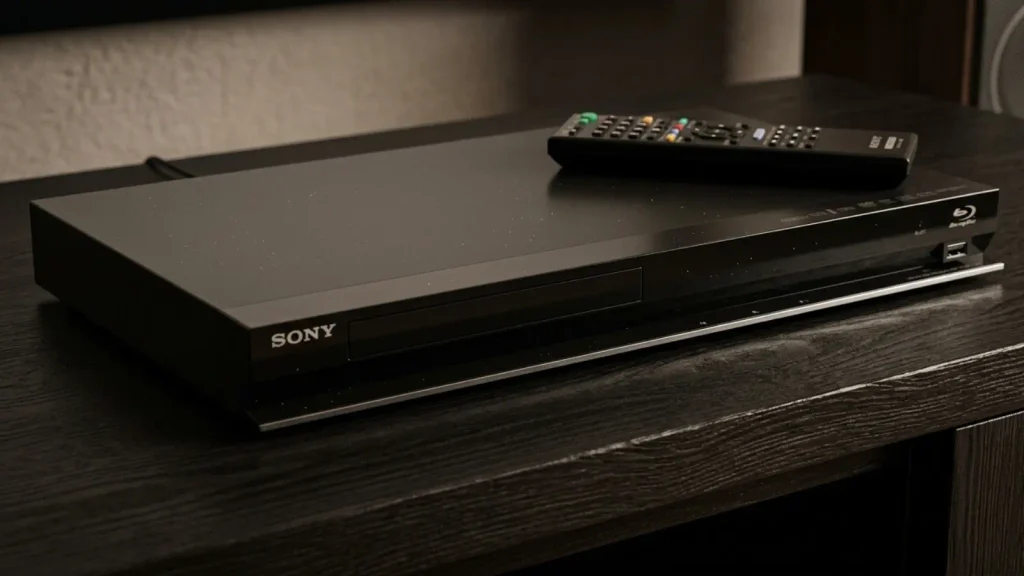
1. Sony BDP-S570: When a $250 Player Felt Like a Complete Entertainment Hub
The Sony BDP-S570 arrived when Blu-ray players were beginning to evolve beyond their original purpose. At an announced price of around $250, it offered Full HD 1080p playback, built-in Wi-Fi, and access to Sony’s online entertainment platform. It also supported SACD playback, giving music listeners another reason to consider it alongside a conventional CD player.
Its 3D story is worth clarifying. Sony initially described the BDP-S570 as 3D-ready, with Blu-ray 3D compatibility to be added through a firmware update. That was part of the industry’s wider push to bring 3D movies into the living room.
The built-in wireless connection was particularly useful. Owners did not have to run an Ethernet cable to the player simply to connect it to their home network, while Sony’s entertainment database features helped make browsing disc information more convenient.
The S570 was not an extravagant high-end component, and that was precisely its appeal. It offered a strong collection of features at a price that did not require a dedicated home cinema budget.
Today, its network services should be treated as historical features rather than guaranteed working functions. Anyone buying one second-hand should check that it reads Blu-ray discs reliably, that its firmware is in working order, and that its HDMI output works with the intended television or receiver.
Sony’s original BDP-S570 announcement confirms its original price and key features.
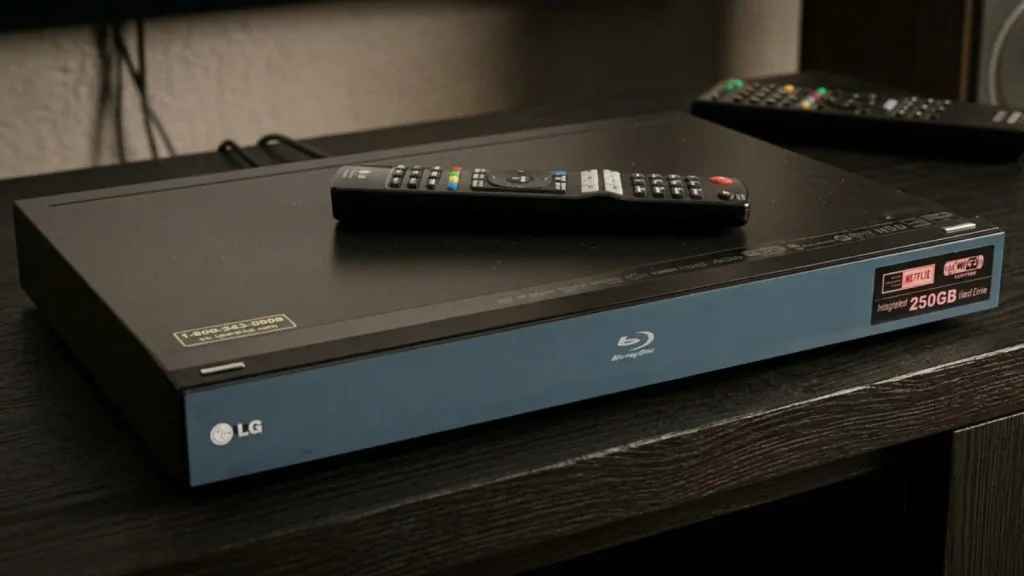
2. LG BD590: The Blu-ray Player That Could Store Your Music Collection
The LG BD590 had a feature that made it stand out from most players of its generation: a built-in 250GB hard drive. Rather than simply playing a CD and sending the audio to an amplifier, it could rip music CDs and store the tracks for convenient playback.
For people with large CD collections, this was a genuinely interesting idea. You could build a digital music library without immediately investing in a computer-based music server or separate network storage system. The player also used Gracenote metadata to identify albums and tracks, helping organise the library.
The BD590 supported Full HD Blu-ray playback and included Wi-Fi and network entertainment features. Its original feature set covered services such as Netflix, Vudu, Pandora and CinemaNow, although those services should not be assumed to remain accessible today.
Price is another important detail. The BD590 carried a historical list price of approximately $430, with contemporary reviews reporting street prices around $380. That makes it more accurate to describe it as a premium mainstream player rather than an inexpensive entry-level model.
The LG BD590 now feels like a product from the transition between physical media and digital libraries. It attempted to combine movies, music storage and online entertainment in one component, years before those functions became commonplace across different devices.
Its 250GB hard drive is also a reminder of how quickly storage technology has changed. Today, the same capacity is modest, but at the time it gave the BD590 a useful advantage over players that could only access files from external devices.
LG’s official BD590 specification sheet confirms the hard drive and network features, while Sound & Vision’s contemporary review records its original pricing.
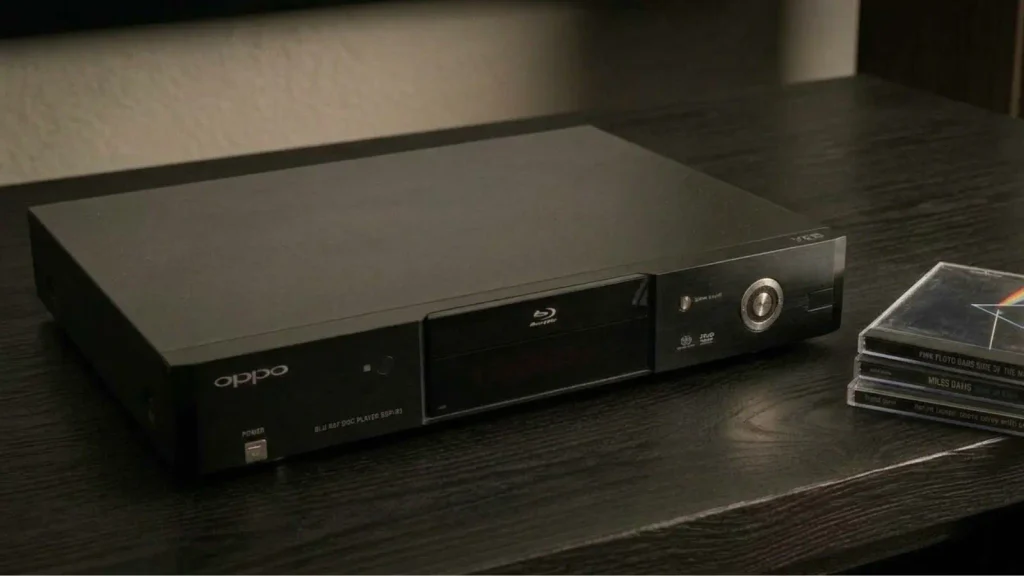
3. Oppo BDP-83: The Universal Player That Made Enthusiasts Take Notice
The Oppo BDP-83 is one of the most interesting machines on this list because it was designed to handle much more than ordinary Blu-ray movies. It supported Blu-ray, DVD, CD, SACD and DVD-Audio, making it an appealing option for enthusiasts who wanted one component to cover several physical media formats.
That versatility mattered. An owner with a collection of standard CDs, concert DVDs, Blu-ray movies and high-resolution music discs did not necessarily need separate players for each format. The Oppo offered a single route into all of them.
Its video processing was another important part of the package. The BDP-83 used Anchor Bay VRS technology to handle video processing, including DVD deinterlacing and upscaling. That made it particularly interesting for collectors whose shelves contained older DVDs alongside newer Blu-ray releases.
Oppo also equipped the player with multichannel analog outputs and support for high-resolution audio formats. Those connections could be valuable in a home theater system built around an older receiver or a separate multichannel preamplifier.
What made the BDP-83 special was not simply the number of features on its specification sheet. It was the way those features came together in a dedicated universal player that appealed to both movie collectors and music enthusiasts.
Oppo has discontinued the model, but its official BDP-83 support page still lists the manual, specifications and firmware information.
A used BDP-83 is worth considering only if it suits your collection and the particular unit is in good condition. Check the optical drive, test every disc format you intend to use, and make sure the remote and necessary cables are included.
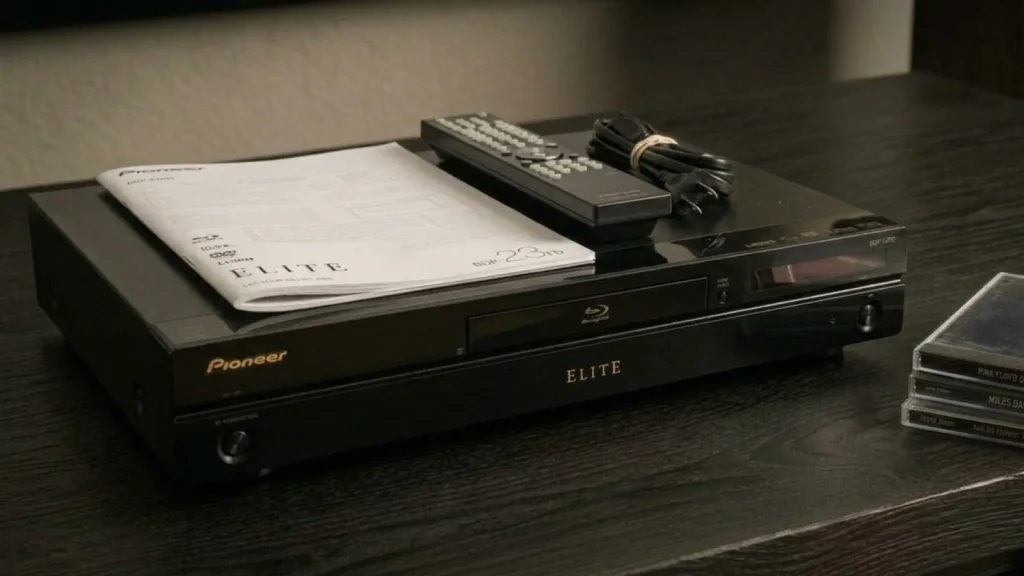
4. Pioneer Elite BDP-23FD: A Premium Player for a Serious Home Theater
Pioneer’s Elite range was aimed at buyers who wanted more substantial home theater components, and the BDP-23FD followed that approach. Rather than concentrating only on basic disc playback, it offered advanced video controls, multichannel analog outputs and features intended to integrate with a compatible home theater system.
The player supported 1080p output and 48-bit Deep Color, along with internal decoding of advanced audio formats. Its 7.1-channel analog outputs were particularly useful for owners of receivers or preamplifiers that could accept multichannel analog audio.
Pioneer also included 1GB of internal memory for BD-Live features. At the time, Blu-ray discs could offer downloadable extras and interactive content, so internal storage was a practical feature rather than a meaningless number on a specification sheet.
The BDP-23FD supported PQLS, or Precision Quartz Lock System, for compatible Pioneer equipment. The feature was intended to improve digital audio transmission between supported components, although its presence should not be taken as proof that every listener would hear an audible improvement.
The machine’s premium positioning made it attractive to home theater enthusiasts who wanted a dedicated disc player rather than an inexpensive device with only the most basic connections.
Today, the Pioneer is primarily of interest to collectors and owners of compatible older equipment. Its age makes condition especially important, and buyers should check that the player reads discs reliably and that its analog and HDMI outputs function correctly.
The original Pioneer Elite BDP-23FD manual and specifications document its multichannel outputs, BD-Live storage and PQLS support.
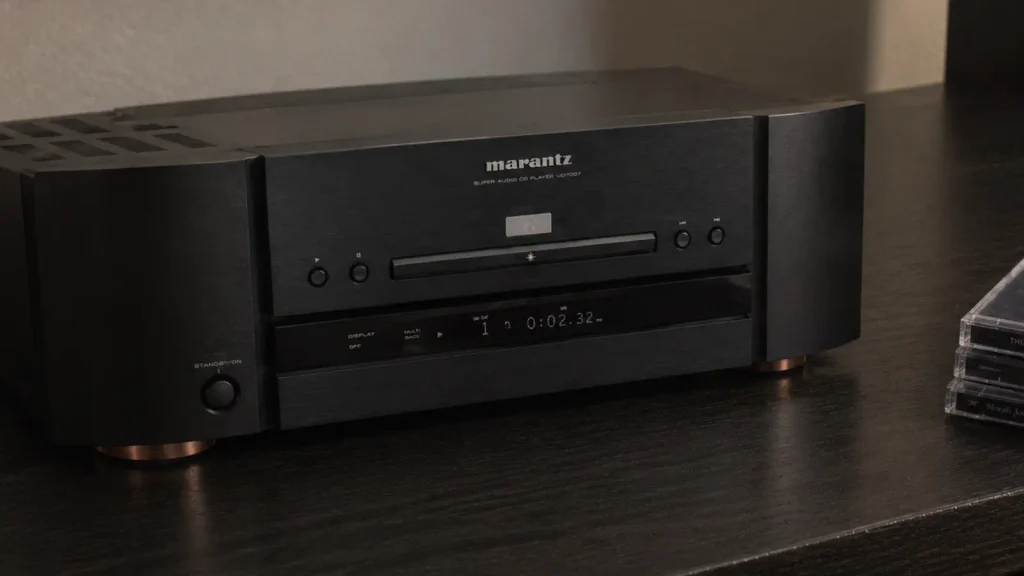
5. Marantz UD9004: A $6,000 Blu-ray Player Built for the High End
The Marantz UD9004 occupied a very different part of the market. With an original suggested retail price of approximately $5,999.99, it was a flagship universal player for enthusiasts who wanted a premium component capable of handling both movies and music.
Its construction reflected that ambition. Marantz specified a copper-plated chassis, a dedicated high-grade audio power supply and high-quality internal components. The player supported Blu-ray, DVD, CD, SACD and DVD-Audio, giving it a broad range of disc compatibility.
For video processing, the UD9004 used Realta Optix HQV technology. Its video conversion specifications included 297MHz/14-bit processing, while its audio conversion used 192kHz/32-bit digital-to-analog conversion.
The connections were equally significant. The UD9004 included two HDMI outputs, stereo XLR analog outputs and multichannel analog outputs. Those options gave system builders flexibility when connecting the player to a separate preamplifier, an AV receiver or other equipment.
This was a period when manufacturers were willing to invest heavily in dedicated disc players, even as the market began moving toward streaming. The Marantz was not intended to compete with an inexpensive player on price. It was built for buyers who wanted one substantial component to handle a broad physical-media collection.
Whether it makes sense to buy one today is another question. The original price does not establish its current value, and the condition of the drive, power supply, display and output circuitry matters far more when purchasing a used unit.
The UD9004 remains a striking example of how far manufacturers once pushed the universal Blu-ray player. Its specifications are documented on Marantz’s official archived product page.
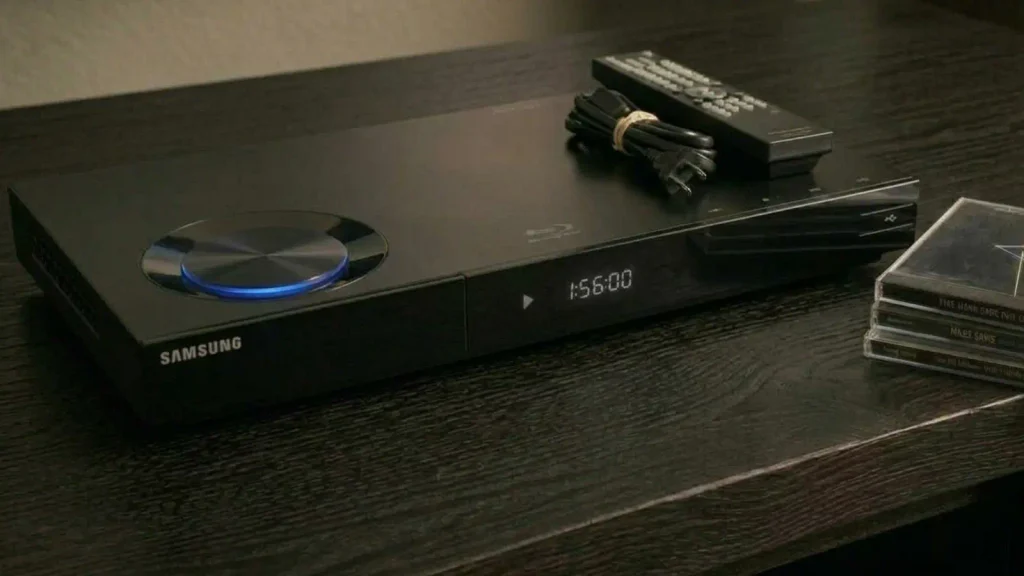
6. Samsung BD-C7900: Built for the 3D Blu-ray Boom
When 3D televisions began attracting attention, manufacturers needed Blu-ray players that could handle the new format. Samsung’s BD-C7900 was designed for that moment, combining 3D Blu-ray playback with network features and a useful connection layout.
One of its most practical features was its second HDMI output. Many early 3D systems had a problem: owners might have a 3D television but an older AV receiver that could not pass the new video signal. With two HDMI outputs, the player could send video directly to the television and route audio separately to the receiver.
For people upgrading one part of a home theater system at a time, this could make the transition considerably easier. There was no immediate need to replace a perfectly usable older receiver simply because it lacked support for 3D video passthrough.
The BD-C7900 also offered network entertainment features, including services available during its commercial life. However, those services have changed since the player launched, so buyers should not assume that the original streaming options remain operational.
The Samsung is a useful reminder that a successful product is not always about delivering the highest possible picture quality. Sometimes it is about solving a specific compatibility problem that many households were facing.
Today, its main attraction is as a working example of early 3D home cinema hardware. Check its disc drive and both HDMI outputs before buying one second-hand.
A contemporary Macworld review of the Samsung BD-C7900 discusses its dual-HDMI arrangement and its usefulness with older receivers.
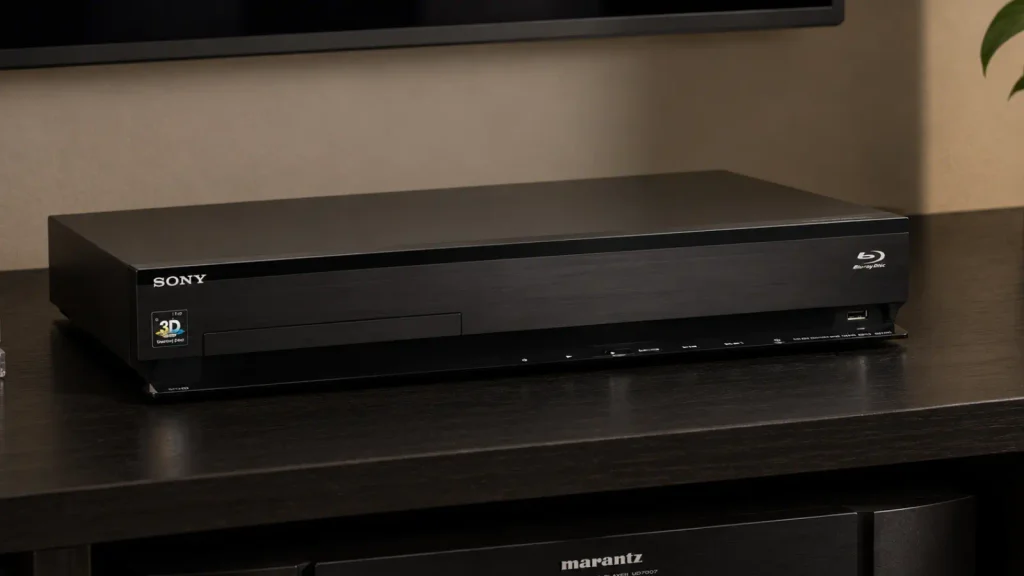
7. Sony BDV-E770W: A Blu-ray Player That Came With the Home Theater
Not everyone wanted to build a home theater one component at a time. Sony’s BDV-E770W offered a different approach by combining Blu-ray playback, amplification, and a set of surround speakers in one home-theater package.
This distinction matters: the BDV-E770W was not a standalone Blu-ray player like the BDP-S570. It was a complete system designed for people who wanted a straightforward way to enjoy movies with surround sound.
The package included speakers for a multichannel setup, with wireless rear-speaker connectivity helping to reduce some of the cable runs across the room. It also supported Blu-ray 3D through a firmware update, making it part of Sony’s broader push toward 3D home entertainment.
Network features and online services were part of the appeal as well, although their present-day availability should not be assumed.
The system was never intended to replace a carefully assembled separates-based theater with a high-end AV receiver, dedicated power amplification and individually selected speakers. Its appeal was convenience. Buyers could purchase a coordinated package instead of researching every component separately.
That approach still makes sense for some households, particularly when simplicity matters more than extensive upgrade options. The BDV-E770W is now a discontinued product, however, so the condition of the speakers, remote, wireless components and main unit should be checked carefully.
Sony’s official BDV-E770W support page provides its manuals and product documentation.
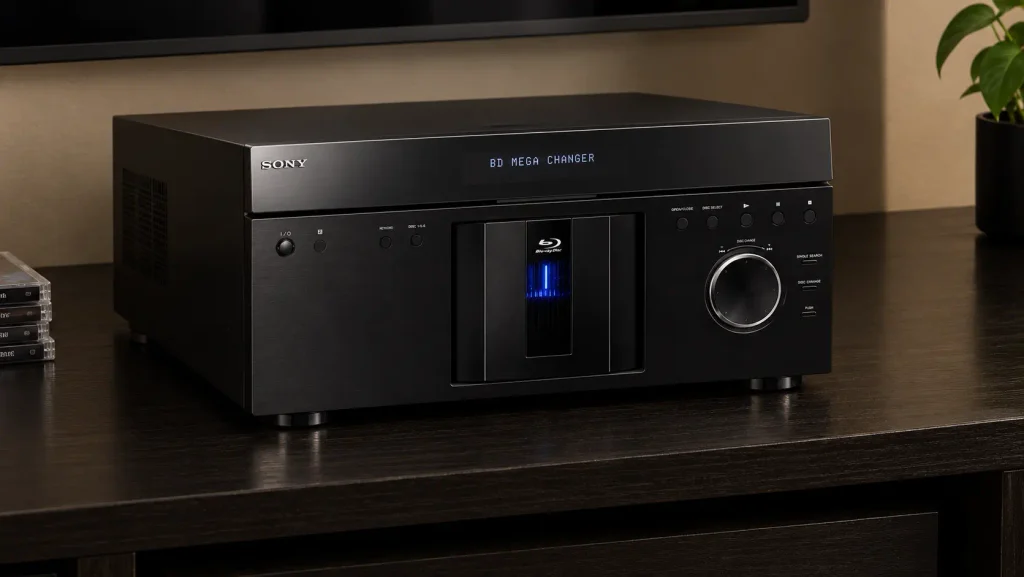
8. Sony BDP-CX7000ES: The 400-Disc Changer for Movie Collectors
The Sony BDP-CX7000ES addressed a problem that anyone with a large physical-media collection will recognise. Once your shelves are filled with hundreds of movies, finding the disc you want and changing it every time you watch something different can become a chore.
Sony’s answer was a huge disc changer capable of holding up to 400 discs across Blu-ray, DVD and CD formats. Instead of loading one disc at a time, owners could keep a substantial collection inside a single machine.
The player used Gracenote information to help identify and organise titles, making it easier to navigate a large library. For collectors, the convenience was obvious: a sizeable collection could be browsed without repeatedly opening the disc tray and searching through shelves.
The BDP-CX7000ES also offered 7.1-channel analog audio output, DVD upscaling to 1080p, Ethernet connectivity and an RS-232 connection for custom-installed systems. It did not have built-in Wi-Fi, so network access required a wired connection.
The changer’s size and complexity are important considerations today. A machine with a large carousel and loading mechanism has more moving parts than a conventional single-disc player. A used example should be tested for reliable disc loading, recognition and playback across the carousel, not just for whether it powers on.
Repairs can also be more involved than those of a simple player, so a cheap purchase may not remain cheap if the mechanism needs attention.
Still, the BDP-CX7000ES was a fascinating solution for people who wanted to keep a large physical-media collection ready to play. Sony’s official specifications confirm the 400-disc design, Ethernet connection and single HDMI output.
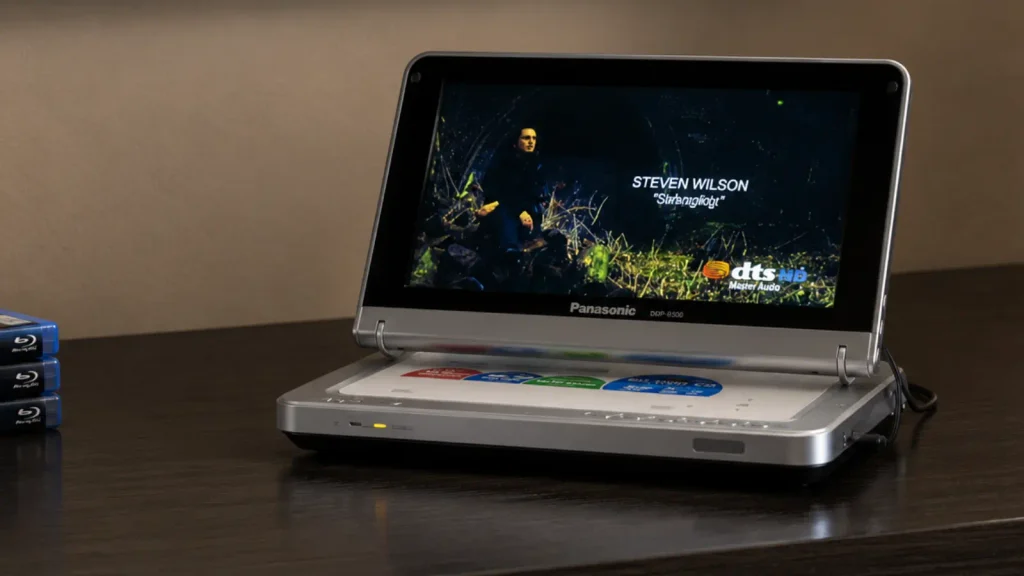
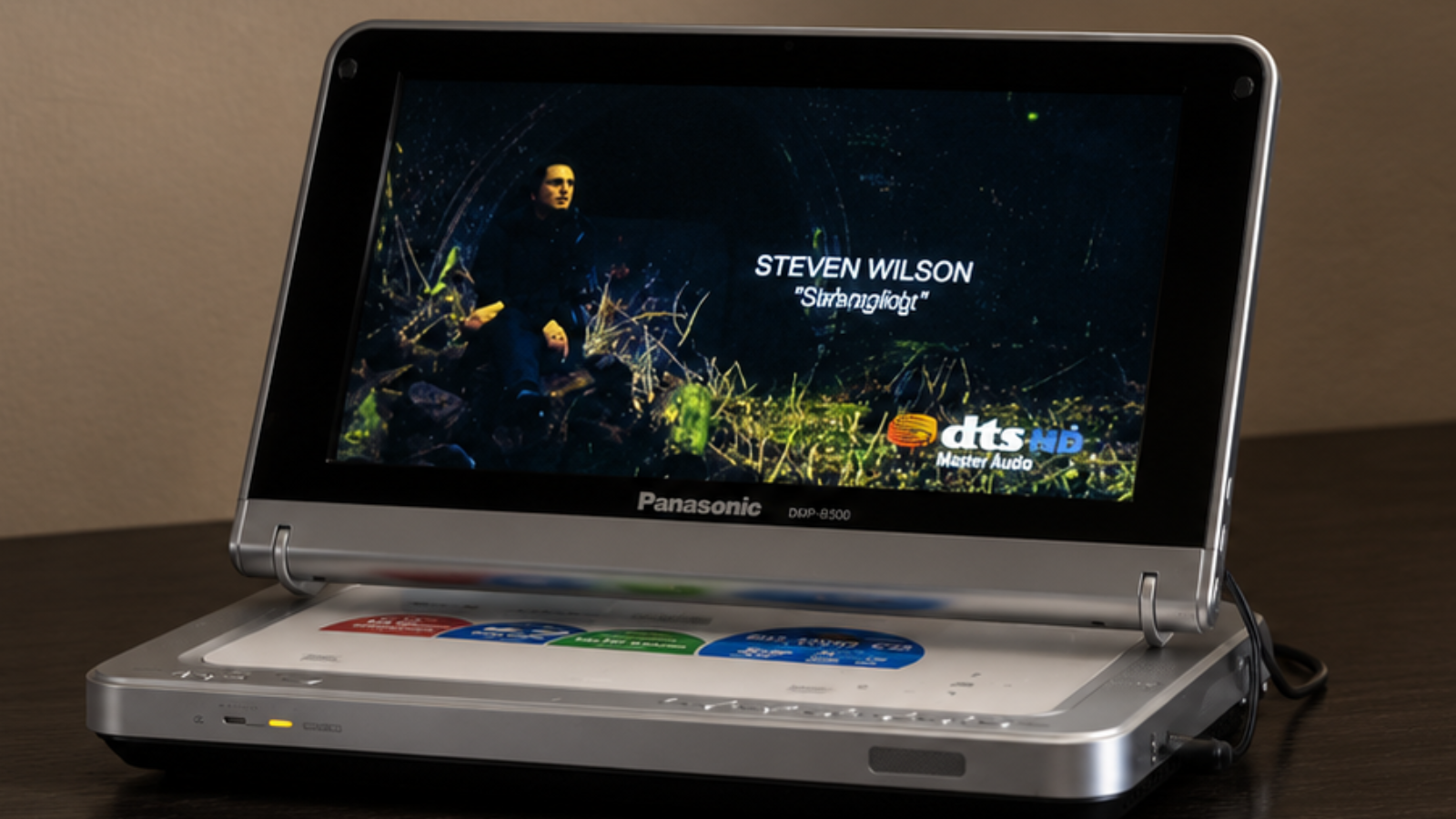
9. Panasonic DMP-B500: Blu-ray Movies on a Portable Screen
Most Blu-ray players were designed to sit beneath a television. Panasonic’s DMP-B500 took a different route by building a screen directly into the player, making it possible to watch physical movies without a separate display.
The portable machine featured a 10.1-inch widescreen display with a resolution of 1024 × 600. That was not Full HD, but it offered a more practical way to watch a Blu-ray movie when travelling or when a television was unavailable.
Panasonic also included a rechargeable battery, an adjustable stand and support for a range of disc and media formats. Its network features included Wi-Fi and access to the company’s VIERA Cast platform during the product’s supported life.
The DMP-B500 was an unusual product because it tried to combine the quality and convenience of physical media with the portability people associated with smaller entertainment devices. A conventional Blu-ray player could offer a better experience on a large television, but it could not provide the same self-contained setup.
The original price was high compared with basic standalone players, and portable Blu-ray machines never became as common as portable DVD players. That makes the Panasonic an interesting example of a product designed for a relatively narrow use case.
For anyone considering one today, the screen, battery and optical drive deserve particular attention. A worn-out battery can undermine the main reason to buy a portable player, while a damaged display can make the entire unit impractical.
The model’s key specifications are listed by B&H Photo’s product archive.
Are These Classic Blu-ray Players Worth Buying Today?
That depends on what you want from a disc player. These machines are interesting because of their features and place in home theater history, but nostalgia alone is not a good reason to buy one.
If you collect SACDs and DVD-Audio discs, a working Oppo BDP-83 or Marantz UD9004 may be worth investigating because of its broader format support. If you have hundreds of physical movies, the Sony BDP-CX7000ES offers a very different experience from a conventional single-disc player. And if you want an inexpensive way to revisit standard Blu-ray movies, a working Sony BDP-S570 or PlayStation 3 Slim might be worth considering, depending on local availability and condition.
There is one major distinction to remember: standard Blu-ray and Ultra HD Blu-ray are not the same format. None of the nine products here should be treated as a replacement for a modern 4K Ultra HD Blu-ray player if your collection includes 4K discs and you want their full resolution and HDR features.
Before buying any of these machines second-hand, check the optical drive with several discs, test the outputs you intend to use, inspect the remote and accessories, and confirm region compatibility. For portable models, check the battery and screen. For a multi-disc changer, test the loading mechanism and disc recognition across the carousel.
Do not pay a premium simply because a player was expensive when new. Original retail prices tell us what manufacturers once charged, not what a used unit is worth today.
What makes these nine products worth remembering is their variety. Some focused on affordability, others on high-end audio, 3D video, portability or the convenience of storing hundreds of discs in one machine. They came from a period when physical media was central to home entertainment and manufacturers were still experimenting with what a disc player could become.
They are not all sensible purchases for a modern home theater, and some of their once-important features have aged better than others. But each tells a story about an era when the Blu-ray player was much more than a simple box for playing movies.