

Smart Ways to Organize a Music Room That Sounds and Looks Right
Learning an instrument is a beautiful thing.
The first few weeks of learning it? Not so much.
Between sharp notes, constant repetition, and instruments slowly taking over your living space, many home music rooms start with good intentions—and end in chaos. Poor acoustics, angry neighbors, cluttered corners, and a room that sounds nothing like real music.
The good news?
With a bit of planning, you can build a music room that sounds better, looks intentional, and keeps the peace without turning your home into a recording studio bunker.
Why Your Music Room Sounds Worse Than You Think
Most home music rooms fail for one simple reason: bare surfaces.
Hard walls, empty corners, and untreated ceilings reflect sound aggressively, exaggerating mistakes and making even good playing feel uncomfortable. The solution isn’t expensive studio gear—or, please no, egg cartons.
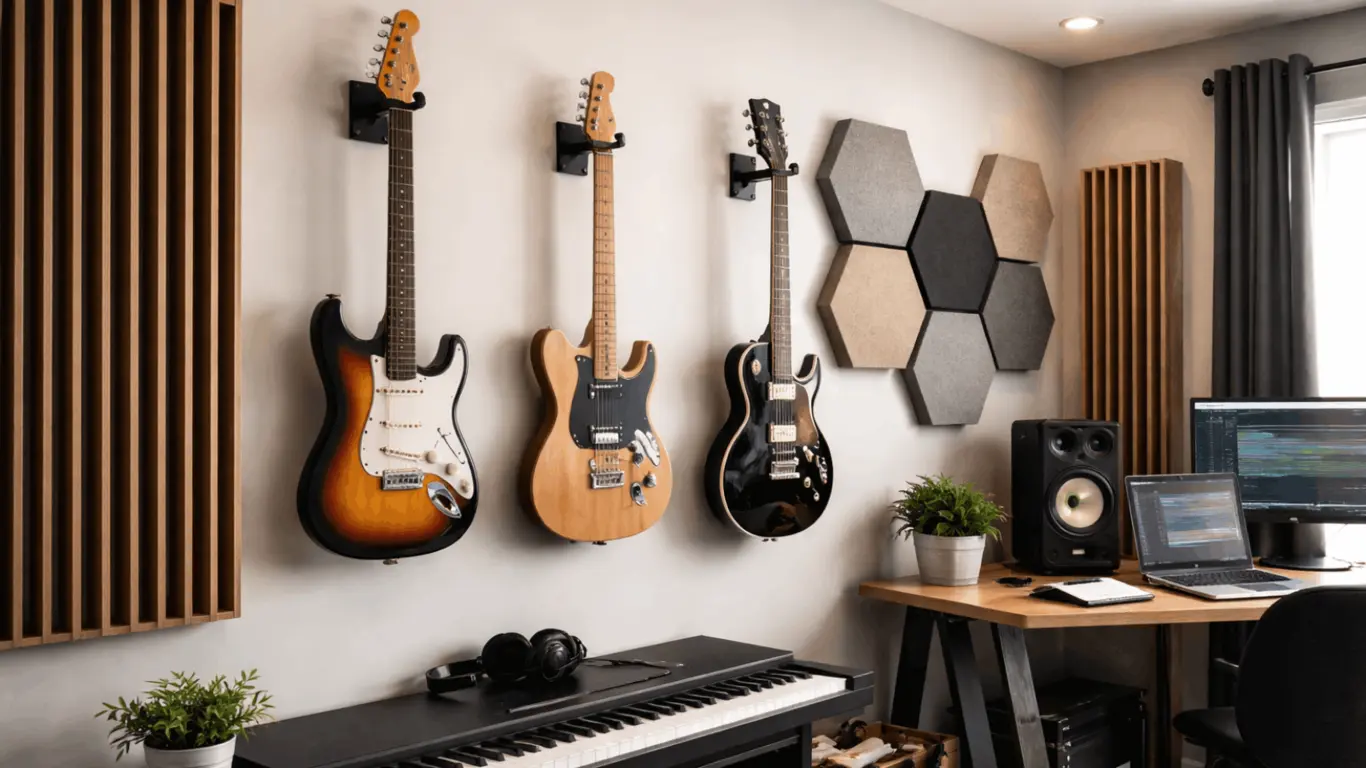
Modern acoustic panels are designed to blend in. They come in clean fabrics, bold colors, and even decorative patterns. Installed correctly, they improve clarity, reduce harsh reflections, and quietly signal that someone in this room actually understands sound.
And yes—good acoustics can still look good.
The Placement Mistake Almost Everyone Makes
In an ideal world, your listening or playing position would sit perfectly in the center of the room. That allows sound reflections to arrive evenly from all directions.
Real life, of course, disagrees.
If perfect centering isn’t possible, aim for symmetry. Keep your setup evenly spaced from side walls, avoid cramming speakers or instruments into corners, and resist the temptation to “just make it fit.”
If noise is a serious concern—thin apartment walls, close neighbors—a professional soundproofing consultation can save money and frustration long-term. Smart treatment beats overbuilding every time.
Bad Acoustics Are Ruining Your Playing
Soundproofing isn’t just about being polite to others—it’s about hearing yourself accurately.
Untreated rooms lie. Notes feel harsher, dynamics disappear, and recordings sound wildly different once you play them elsewhere. If your music room doubles as a recording or editing space, acoustic treatment should come before décor.
One hard truth:
There is no truly “universal” music room.
Decide early whether the space is for:
- Practice
- Composition
- Recording/production
One function will always dominate. Accept it—and design accordingly.

The Storage Problem Every Musician Eventually Faces
One instrument is easy.
Five guitars, a keyboard, a trumpet, and a child’s piano? Not so much.
Walls are your best friend.
Properly mounted instrument hangers free floor space and turn instruments into design elements. Exotic or vintage pieces can even become focal points—displayed proudly, not hidden away.
For larger collections, custom cabinets with dedicated compartments keep things accessible without looking like a pawn shop. When instruments have history, treat them like exhibits, not clutter.
Where Musicians Actually End Up Practicing
In small apartments, the “music room” often becomes a music corner—a carefully negotiated zone of coexistence.
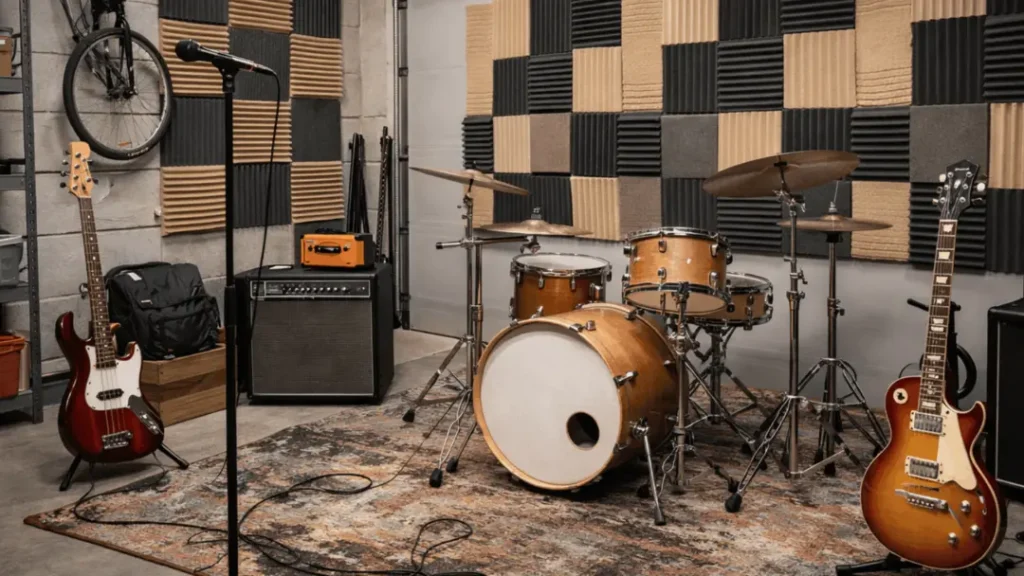
Basements and garages, when available, are underrated heroes. Basements forgive imperfect acoustics, while garages—especially in music culture—are legendary. Add rugs, wall carpeting, and suddenly even a loud teenage band becomes manageable.
Bonus: no broken china, no spilled drinks on parquet floors, and zero complaints about volume.
Have you carved out space for music in your home?
Where do you practice, store your instruments, or improve acoustics? Share your solutions—we’re all learning from each other.