
KEF LS60 Wireless Review: Why Are These Speakers So Incredibly Thin?
The first thing that makes the KEF LS60 Wireless difficult to ignore isn’t its streaming capability, its built-in amplification, or even its famous Uni-Q driver. It is the physical size of the speaker itself.
At just 130 millimeters wide, the LS60 Wireless features a narrow silhouette that makes you wonder where KEF managed to hide everything required to produce full-range sound. Yet behind that slim cabinet sits a sophisticated active loudspeaker built around KEF’s 12th-generation Uni-Q driver, Uni-Core force-canceling bass technology, and Metamaterial Absorption Technology (MAT).
The result is a speaker that looks like modern furniture while operating as a complete, high-end audio system.
Flagship Tech in an Attainable Active Design
KEF developed the speaker for its 60th anniversary, drawing together technologies that previously appeared across the company’s most ambitious flagship products, particularly the Blade family.

Why the Coaxial Uni-Q Driver Matters
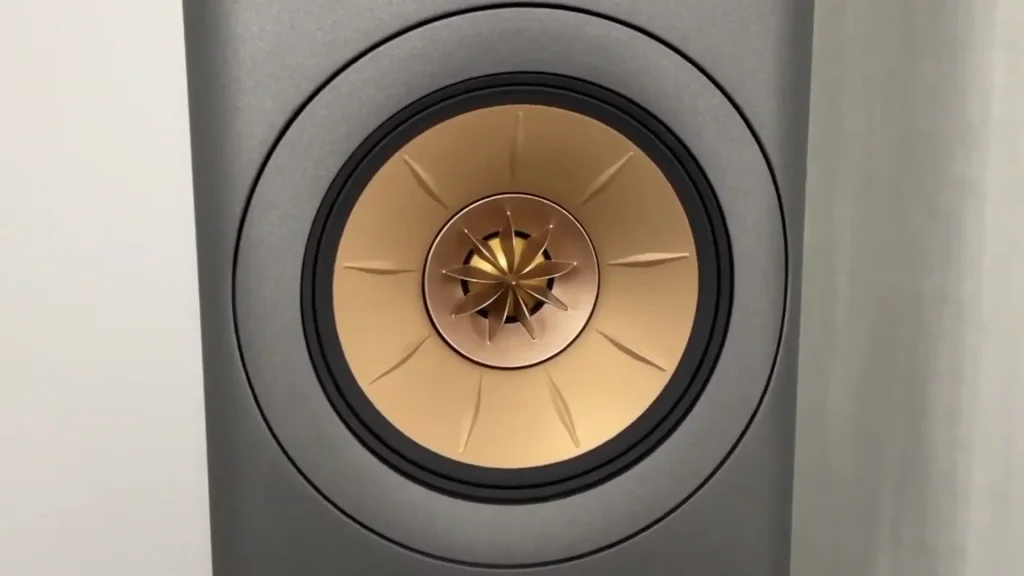
The heart of the LS60 Wireless is its coaxial Uni-Q driver array. Instead of separating the tweeter and midrange driver across the front baffle, KEF places the tweeter in the acoustic center of the midrange cone.
- Point Source Realism: Separated drivers project sound from different physical points. A coaxial layout approximates a single point source, ensuring all frequencies originate from the same location.
- Consistent Room Reflections: Symmetrical sound radiation helps room reflections maintain a natural, consistent tonal balance.
- Complex Driver Engineering: Placing a tweeter inside a moving midrange diaphragm requires precise control over the cone shape to avoid high-frequency distortion away from the listening axis.
Hidden Side-Mounted Bass & Single Apparent Source
Instead of mounting a traditional woofer on the front, KEF positioned two 135 mm bass drivers on opposite sides of the cabinet.
Uni-Core Force Cancellation
Borrowed from the KC62 subwoofer, the woofers sit back-to-back and move in opposing directions. The mechanical forces cancel each other out, drastically reducing cabinet vibration and unwanted resonance.
Single Apparent Source Architecture
The side-mounted woofers align vertically with the Uni-Q driver. This setup maintains a consistent acoustic source across the frequency spectrum down to 330 Hz, preserving voice and instrument cohesion.
The Tiny Acoustic Labyrinth: Metamaterial Absorption Technology
Behind the aluminum tweeter dome sits KEF’s Metamaterial Absorption Technology (MAT).
- 30 Custom Absorption Paths: Functions as an acoustic black hole, absorbing 99% of unwanted sound waves radiating from the back of the driver.
- Clean Highs: Eliminates rear reflections that cause high-frequency distortion, leaving pure, detailed treble.
Built as a Complete Active Streaming System
The LS60 Wireless is not a passive speaker with an amp tacked inside. It features a fully active, tri-amplified architecture managed by precision DSP crossovers at 330 Hz and 2.8 kHz:
| Driver | Amplification | Output Power |
| Bass (x4) | Class D | 500 Watts |
| Midrange (x2) | Class D | 100 Watts |
| Tweeter (x2) | Class AB | 100 Watts |
Internal Electronics & Inputs
- Resolution: Internal processing supports up to 24-bit / 384 kHz.
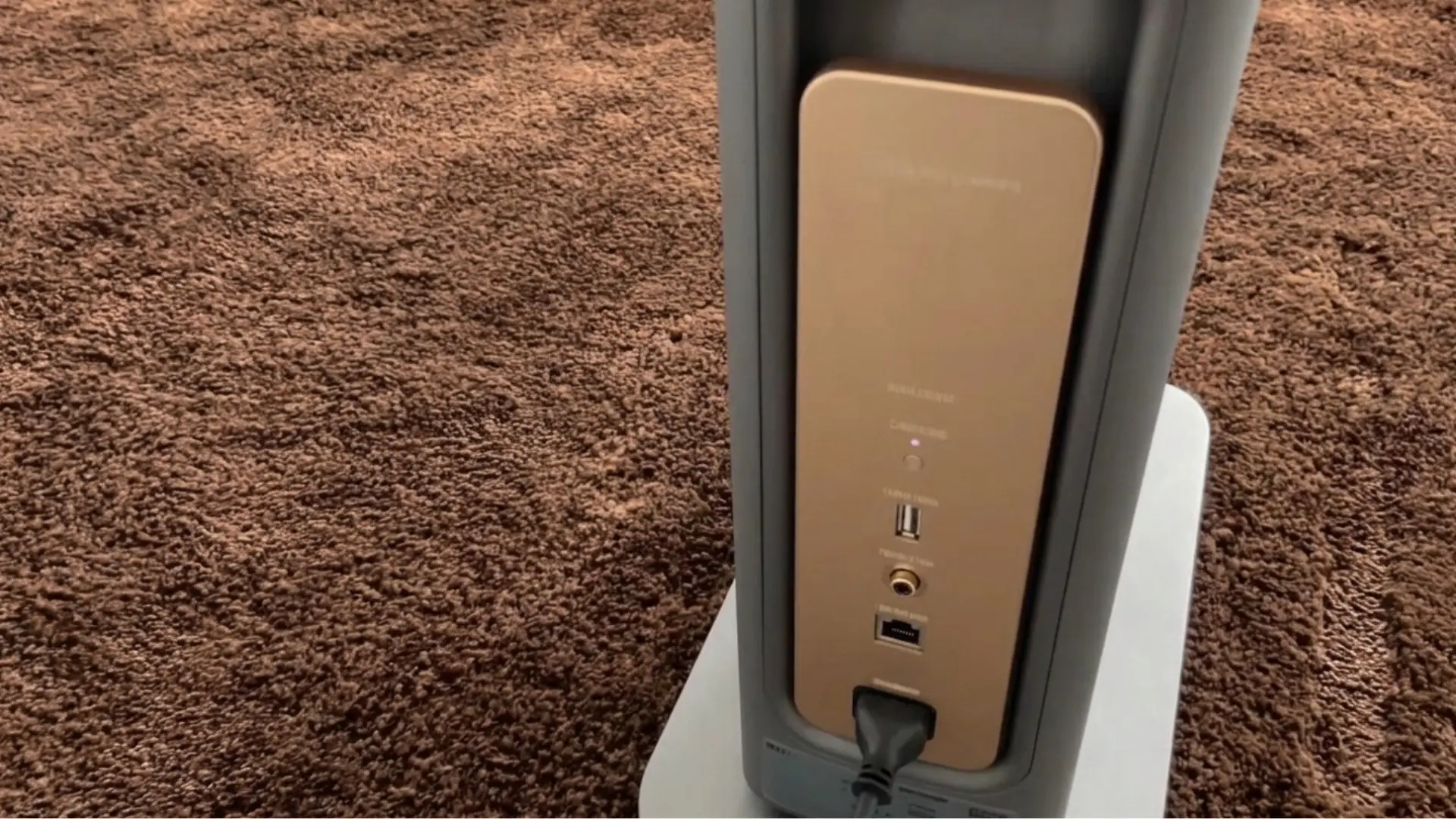
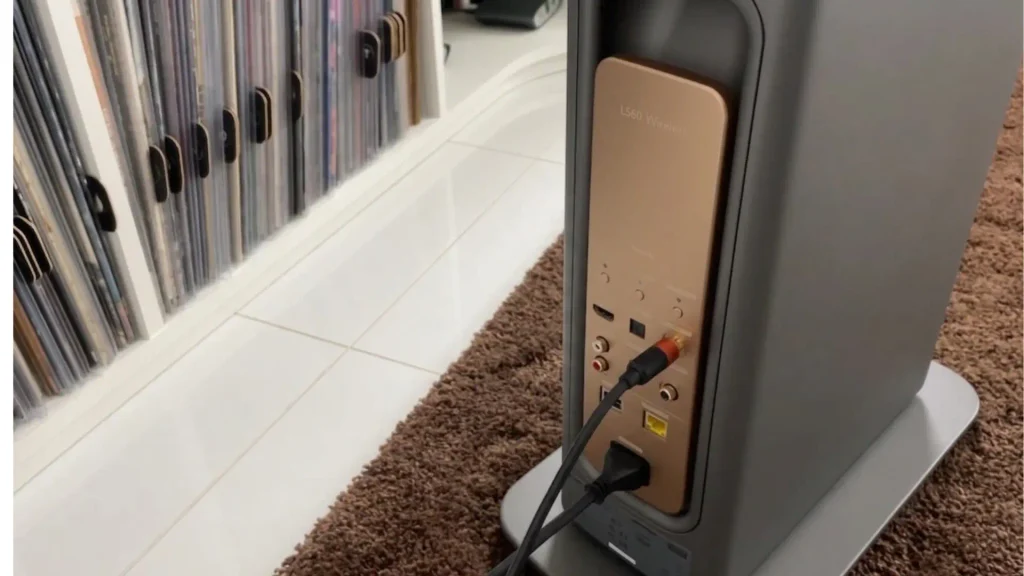
- Connectivity: HDMI eARC, Optical, Coaxial, RCA Analog, Bluetooth, and Wi-Fi.
- Ecosystem Integration: Native support for Roon Ready, Spotify Connect, Tidal Connect, and the KEF Connect App.
- Low-Frequency Performance: Reaches down to 30 Hz, with peak acoustic output up to 110 dB.
Sound Performance: KEF LS60 vs. Genelec 8351B
While both speakers utilize coaxial point-source engineering, their acoustic presentation reflects different design philosophies:
- The Studio Approach (Genelec 8351B): Focuses on direct, analytical detail and deep soundstage layering, placing the listener right at the mixing console.
- The Living Room Approach (KEF LS60 Wireless): Projects a wider, highly expansive soundstage with a calm, balanced tonal balance that lets music unfold naturally across the room.
On acoustic tracks like Brian Bromberg’s “Blue Bossa,” the LS60 creates a convincing physical presence for double bass. On vocal tracks like Kandace Springs’ “Don’t Need The Real Thing,” it prioritizes seamless width over analytical clinicality.
How KEF Fixed the “Dry” Sound of the Q Series with the Q750
Final Verdict: The Speaker System to Beat?
The KEF LS60 Wireless isn’t trying to impress you with boosted treble or bloated bass. Its primary achievement is how invisibly all its complex engineering works together.
Key Highlights:
- Replaces an entire rack of separates (DAC, Streamer, Preamp, Amplifiers)
- Delivers subterranean bass without a massive footprint
- Eliminates cabinet coloration through force cancellation
While listeners with massive rooms or those seeking studio-monitor analytical precision might look elsewhere, the LS60 Wireless succeeds at the most important task in high-end audio: it gets out of the way and lets you hear the music.
KEF LS60 Wireless Specifications:
- Concept: Fully active, streaming, floorstanding speaker with multiple source options. Supports AirPlay 2, Google Chromecast, Roon Ready, UPnP, Bluetooth 4.2.
- Furnishing: 1 x 12th gen Uni-Q driver, 4 x 13.5 cm bass drivers, 700 watts of amplifier power per cabinet; Spotify, Tidal, Amazon Music, Qobuz, Deezer, QQ Music, Internet Radio, Podcast
- Particularities: Extensive streaming app with DSP features
- Inputs/Outputs: HDMI ARC, Coax, Toslink, AUX, Sub-Out, Wireless or Wired Network, Bluetooth
- Dimensions (H x W x D): 109.0 × 21.9 × 39.4 cm
- Weight: 31.2 kilos