
Why I Sold My B&W 802 D2 for an Electrostatic DIY System
Community Setup #001
- Owner: Péter Vastag
- Status: Founding Community Member
- Country: Hungary
- Listening Preference: Electrostatic & Open-Baffle Audio
- System Philosophy: Music First
Editor’s Introduction
When I first had the idea of building the AmpReviews Community Setup Showcase, I wasn’t sure whether anyone would be willing to share their personal listening room and audio journey with our community.
Péter Vastag became the very first member to say yes.
He generously shared not only photographs of his system, but also the story behind it—explaining how years of experimentation eventually led him from world-class loudspeakers such as the Focal Utopia and Bowers & Wilkins 802 D2 to a completely different philosophy centred around electrostatic sound.
Péter is also one of our Founding Community Members, and we’re honoured to feature his personal story as the very first community setup on AmpReviews.
Thank you, Péter, for trusting us with your story. We hope it inspires fellow audiophiles around the world.
The following story is written by Péter Vastag and is published with his permission. Minor edits have been made for grammar and readability while preserving his original voice.
My Audiophile Journey
Music has always been more than a hobby for me. Over the years, I have searched for a sound that feels as close to a live performance as possible. My journey has taken me through many different loudspeakers, listening sessions and philosophies, and every step taught me something new.
A Change in Sonic Perspective
My journey began with the Focal Utopia. At first, the beryllium tweeter impressed me with its beautiful presentation. However, after visiting other audiophiles and listening to different systems, I always felt something was missing. The sound never felt completely natural to me.
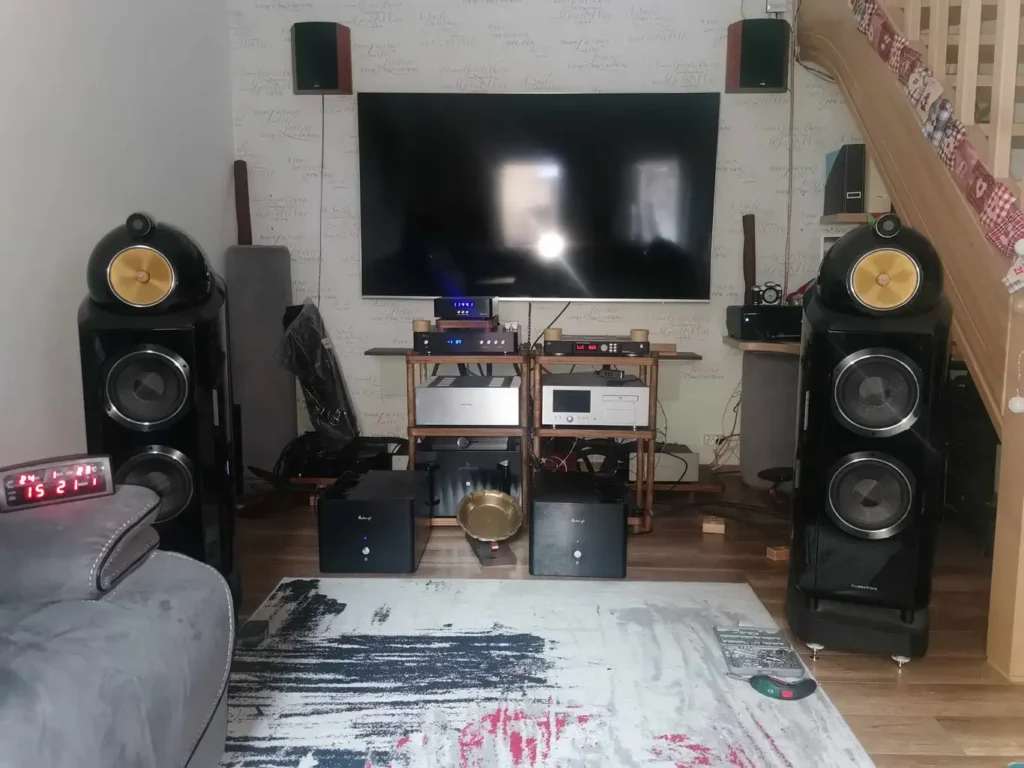
Later, I moved to one of Bowers & Wilkins’ most beautiful loudspeakers—the 802 D2. The diamond tweeter sounded impressive and the speakers looked stunning, but over time I realised I preferred the presentation of a dome tweeter.
Eventually, I made the difficult decision to say goodbye to my beloved 802 D2 speakers. It was a major leap of faith and marked the beginning of a completely different approach to high-end audio.

The Meeting That Changed Everything
My new direction began after spending nearly two months listening to a magnetostatic loudspeaker.
During that time, I met an audiophile friend who completely changed the way I thought about sound. He told me that panel speakers were always a better choice than traditional box speakers. But in his opinion, magnetostatic speakers were only part of the journey—the real destination was electrostatic sound.
He invited me to his home, where he demonstrated a 35-year-old MartinLogan CLS. There was a surprise, however. The electrostatic panels had been extended with a homemade open-baffle bass system.
A measurement microphone stood in the middle of the room, connected to a laptop running frequency analysis software. We listened to several familiar recordings, and I had never experienced such a realistic and lifelike presentation before.
Later, he showed me another prototype system. It sounded even fresher and more open than the classic MartinLogan CLS. I believe the ribbon tweeter extension played a significant role in creating that sense of openness.
I couldn’t believe that such an affordable DIY solution could compete with loudspeakers like my Bowers & Wilkins or even the Avalon Eidolon Vision.
We loaded the three-piece DIY system into my car and started what I jokingly call our “road show.” We visited several different audio systems, and at every stop Uncle Lajos carefully analysed each setup while comparing it with the DIY speakers.
Those listening sessions convinced me that this was the direction I wanted to follow.
Affordable Elegance: Discovering Electrostatic Sound
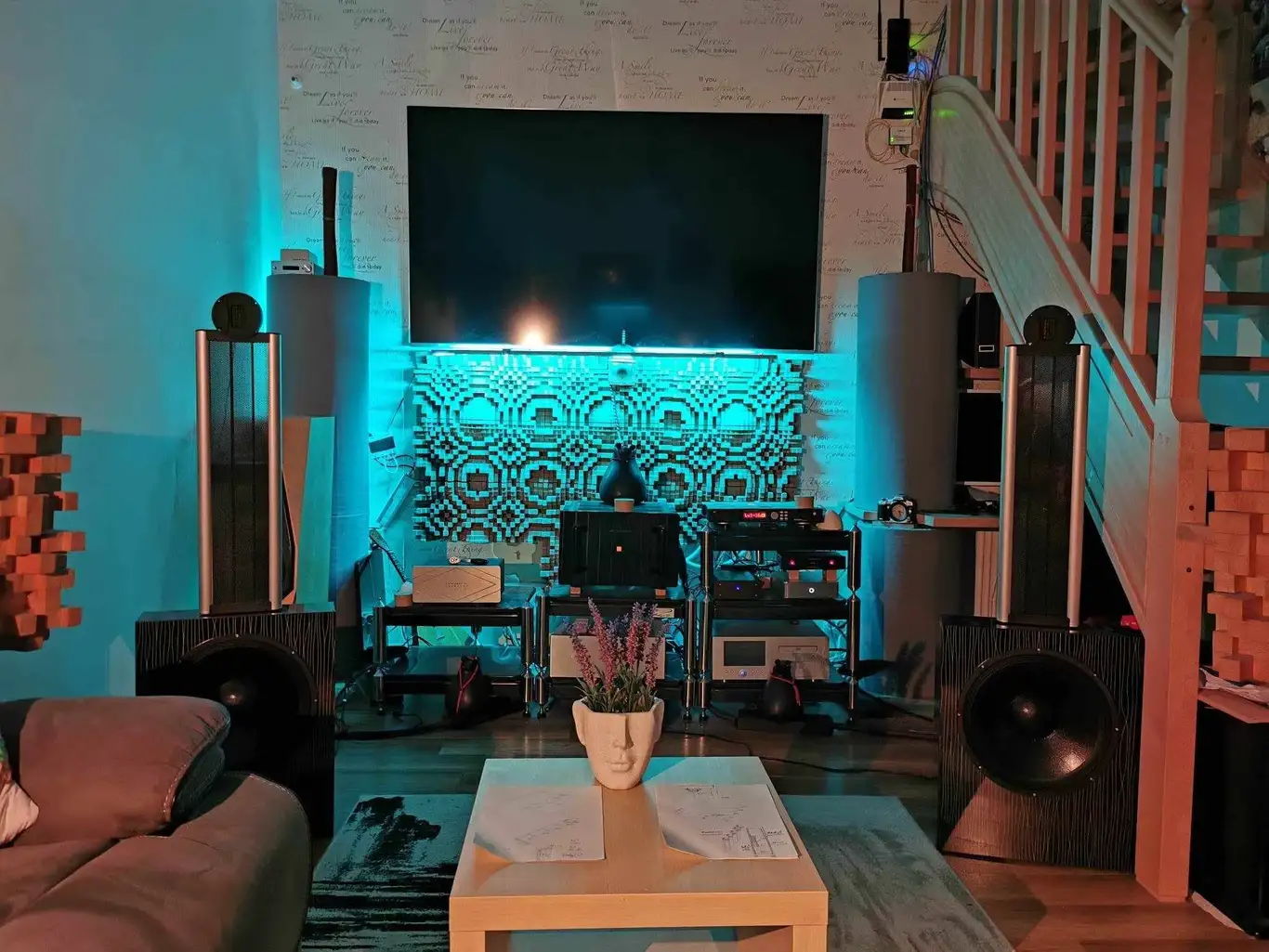
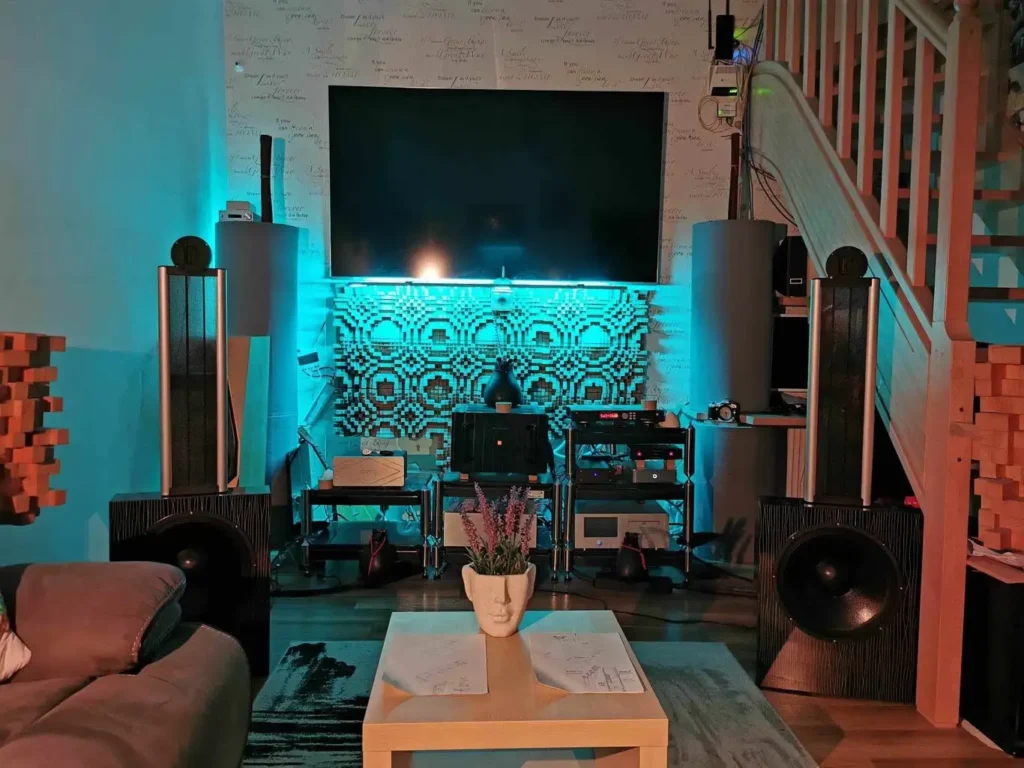
Today, I enjoy listening through electrostatic loudspeakers from Final Audio in the Netherlands, together with the Avalon Eidolon Vision.
Interestingly, I almost never connected the Avalon speakers to my system. I had already advertised them for sale because I had completely fallen in love with the speed, transparency and openness of electrostatic sound.
Despite their modest price, these Final Audio speakers produce music with remarkable honesty and emotion. They prove that outstanding musical enjoyment is not determined solely by price.
The Art of Harmonic Fusion
To complement the electrostatic panels, I incorporated components from my previous high-end system.
The most significant addition was a 15-inch open-baffle bass driver, extending the system’s low-frequency performance to approximately 30.5 Hz while remaining usable down to 22 Hz at -6 dB.
This combination transformed the listening experience, delivering deep, effortless bass while preserving the speed and transparency of the electrostatic panels.

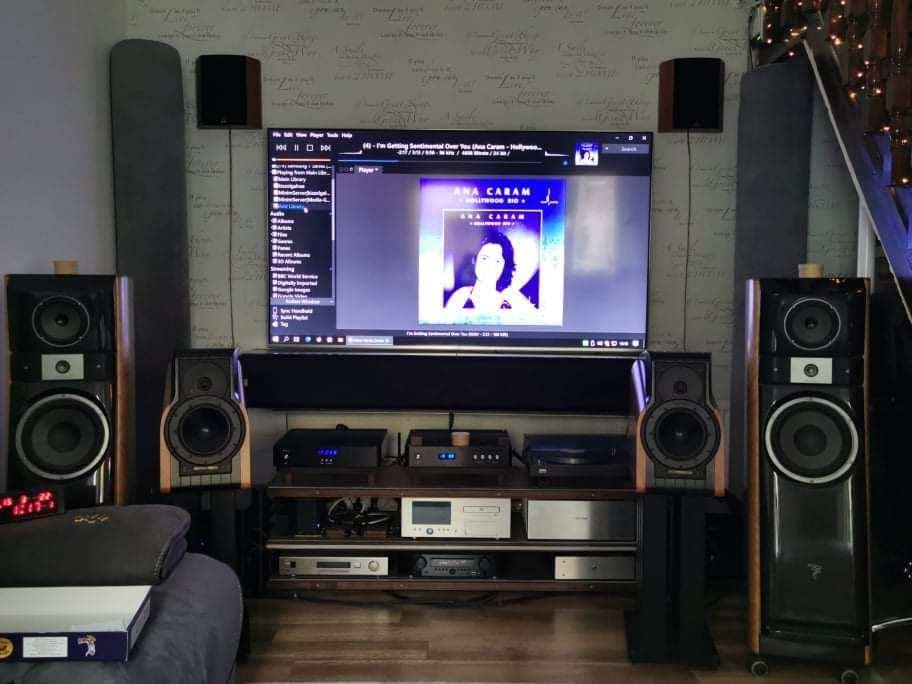

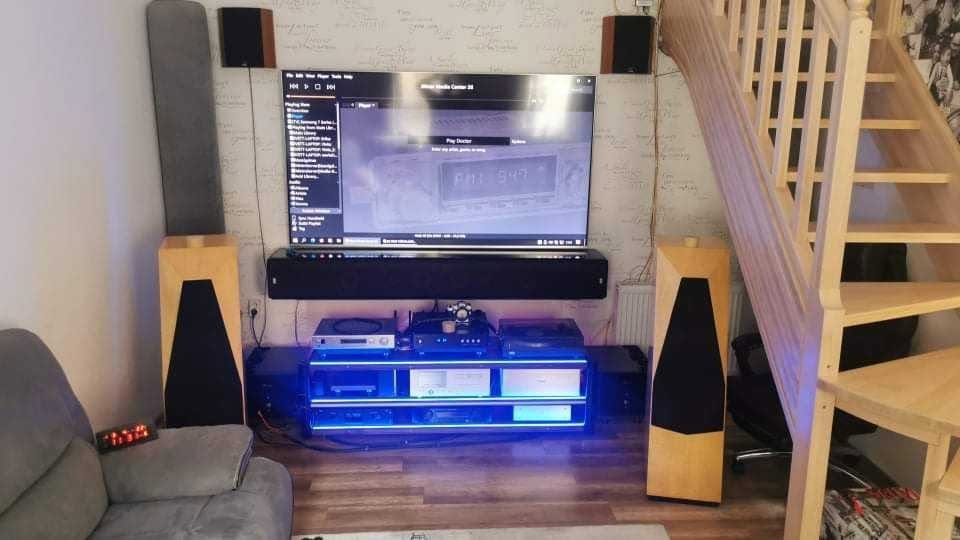

Building the System
To complement the electrostatic panels, I incorporated components from my previous high-end system.
The most significant addition was a 15-inch open-baffle bass driver, extending the system’s low-frequency performance to approximately 30.5 Hz while remaining usable down to 22 Hz at -6 dB.
To complete the system, I added a ribbon tweeter that extends the highest frequencies and adds an extra level of air, openness, and realism.
The combination of electrostatic panels, open-baffle bass and ribbon tweeter created exactly the kind of sound I had been searching for throughout my audiophile journey.
A Special Thank You
This complete change in philosophy would never have happened without the guidance of an audiophile friend who is now over 70.
An outstanding sound engineer, Uncle Lajos has spent many years developing open-baffle, electrostatic and ribbon loudspeaker systems.
His experience, knowledge, and willingness to share his ideas completely changed the direction of my own audio journey.
Thank you, Uncle Lajos, for everything.
Final Thoughts
Looking back, my journey taught me that exceptional sound is not defined by price alone.
Careful system matching, open-minded experimentation, and a genuine love for music can often produce results that are impossible to predict simply by looking at price tags.
If my story encourages even one audiophile to trust their ears instead of specifications or brand names, then sharing it has been worthwhile.
Thank you for taking the time to read my story.
If you have any questions about my setup, the components I use, or my approach to building an affordable high-end audio system, I’d be happy to answer them in the comments below.
Editor’s Note
We’re incredibly grateful to Péter Vastag for becoming the very first community member to share his complete audiophile journey with AmpReviews.
We hope this is the beginning of a growing collection of real listening rooms, real systems and real stories from passionate music lovers around the world.
If you’d like your own setup featured on AmpReviews, we’d love to hear from you. Share your story, photos, and passion for great sound, and you could be featured in our Community Setup Showcase.