
Why Are Audiophiles Going to Be Watching Wharfedale’s New Nova Subwoofers?
Wharfedale has launched a new range of subwoofers that takes a different approach to the usual bass-heavy formula. With four models, downward-firing passive radiators, Class D amplification, and DSP-controlled bass, the new Nova series is designed to deliver deeper bass without allowing low frequencies to overwhelm the music or movie sound effects.
When people talk about subwoofers, the conversation usually starts with one thing: how deep can they go?
Wharfedale is taking a slightly different approach with its new Nova series. The British manufacturer is putting just as much emphasis on precision, control, and how the bass integrates with the rest of a system.
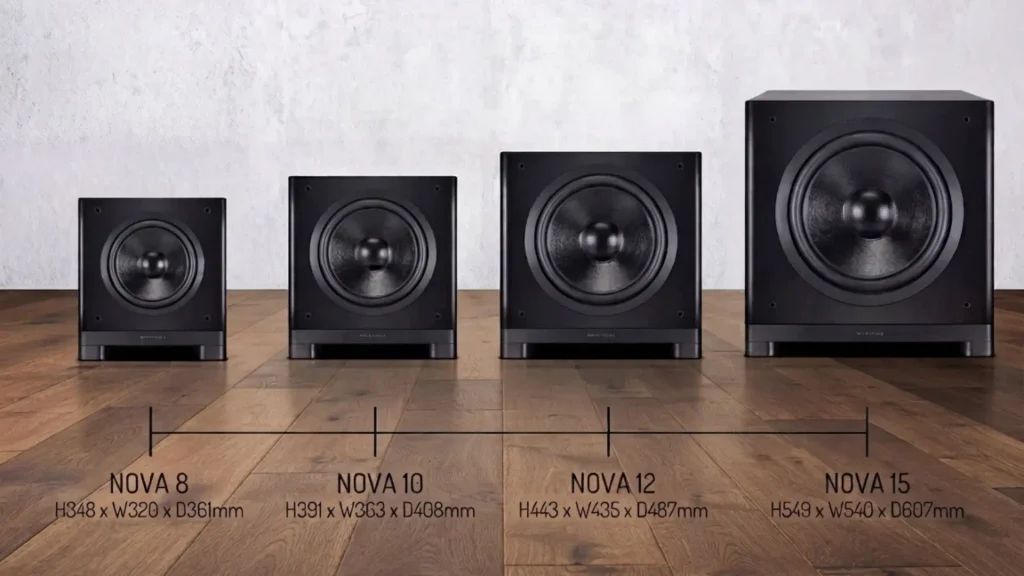
The new range consists of four models: the Nova 8, Nova 10, Nova 12, and flagship Nova 15. As their names suggest, the subwoofers use drivers measuring 8, 10, 12, and 15 inches respectively.
The interesting part is that Wharfedale hasn’t simply increased the driver size and amplifier power. The company has developed the drivers, cabinets, amplification, and DSP as a complete system, with the goal of keeping bass powerful but controlled.
Four Nova Subwoofers, One Different Approach to Bass
The Nova range covers a fairly wide range of systems, from the compact Nova 8 to the considerably larger Nova 15.
All four models use long-throw drivers with lightweight paper cones. Wharfedale has added a special coating to the cones to increase their rigidity without adding significant weight.
The motor system also features an aluminum shorting ring. According to Wharfedale, this helps reduce distortion while improving the linearity of the driver.
That combination is important because a subwoofer isn’t only about moving as much air as possible. The driver also needs to start and stop accurately, particularly when reproducing music where poorly controlled bass can quickly make an otherwise detailed system sound slow or muddy.
And this is where Wharfedale’s approach to the Nova series becomes particularly interesting.

The Bass Port Is Gone. What Replaced It?
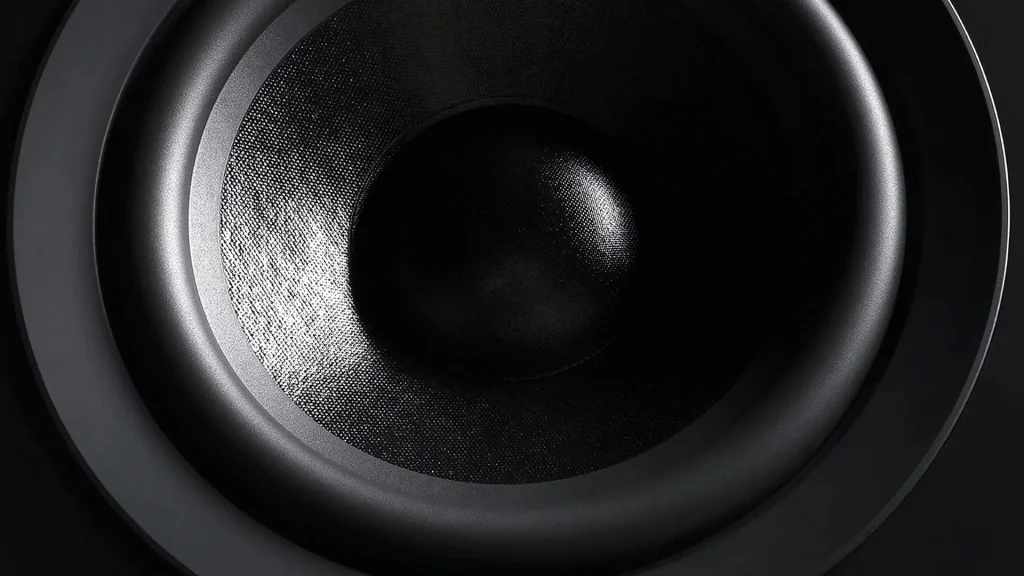
Rather than using a conventional bass reflex port, Wharfedale has equipped the Nova subwoofers with a downward-firing auxiliary bass radiator, or ABR.
The passive radiator is designed to work with the active driver and cabinet to extend the low-frequency response without requiring a traditional port.
Wharfedale says the design can help avoid the port noise, compression, and unwanted resonances that can occur with conventional bass-reflex systems.
The downward-firing arrangement also means there isn’t a large port opening on the rear of the cabinet, giving the Nova range a somewhat different approach to cabinet design and placement.
For anyone who has ever heard a subwoofer produce a noticeable chuffing sound during demanding movie scenes or heavy bass passages, the choice of a passive radiator is particularly noteworthy.
Wharfedale Is Using DSP to Keep Bass Under Control
The Nova series also uses Class D amplification, with nominal power ranging from 200 to 360 watts depending on the model.
But the amplifier isn’t being treated as a separate component. Wharfedale says the amplifier, driver, enclosure, and DSP were developed together as a single system.
Digital processing adjusts the subwoofer’s output depending on the listening volume, allowing the Nova to behave differently at lower and higher levels.
This becomes particularly important with Wharfedale’s dynamic equalizer.
The Feature That Could Matter More Than Raw Power
At low listening levels, the dynamic equalizer is designed to preserve the weight and depth of the bass that can otherwise become less noticeable when the volume is turned down.
Turn the volume up, however, and the system takes a different approach.
Wharfedale says the DSP monitors and controls driver movement at higher levels to help reduce the possibility of distortion.
In other words, the Nova isn’t simply trying to produce more bass. The goal is to maintain the character of the bass as the listening level changes.
That could make a noticeable difference for people who use the same system for both quiet evening listening and full-volume movie sessions.
You Can Still Tune the Nova to Your System
Wharfedale has also included the usual controls needed to integrate a subwoofer into an existing system.
Users can adjust the crossover frequency, phase, and volume, allowing the Nova to be matched with the main speakers and listening environment.
That flexibility should make the range suitable for both hi-fi and home theater applications.
For music, the emphasis on control could help the subwoofer integrate more naturally with the main speakers instead of simply adding a large amount of low-end energy. If you’re using a smaller Wharfedale setup, my Wharfedale Diamond 12.1 Review would also be worth a look.
For movies, the larger models should have the headroom needed to reproduce the impact of explosions, sound effects, and deep cinematic bass.
How Much Do the New Wharfedale Nova Subwoofers Cost?
Wharfedale has positioned the four models across a fairly broad price range.
The Nova 8 costs £799, while the Nova 10 is priced at £899. The larger Nova 12 costs £1,099, and the flagship Nova 15 comes in at £1,299.
In the United States, prices start at $999 for the entry-level model and rise to $1,999 for the top model.
With four sizes available, Wharfedale is clearly aiming to give buyers the option of matching the subwoofer to both the size of their room and the demands of their system.
The Nova Series Is About More Than Just Deep Bass
The new Wharfedale Nova range is interesting because the company isn’t presenting these subwoofers simply as bigger boxes designed to produce bigger bass. I’ve also spent time with Wharfedale’s Elysian 4 speakers, which give a good idea of what the company’s higher-end approach to hi-fi can deliver.
The combination of long-throw paper-cone drivers, aluminum shorting rings, downward-firing passive radiators, Class D amplification, and DSP suggests that Wharfedale is focusing heavily on controlling what happens after the bass reaches the room.
And that may be the more important question for a subwoofer.
Deep bass is easy to advertise. Getting that bass to sound powerful while remaining controlled enough that it doesn’t dominate the music is considerably harder.
With four models ranging from the Nova 8 to the Nova 15, Wharfedale is now giving listeners several ways to find out whether its new approach can deliver that balance.