
ADAM Audio’s New Subwoofer Hits 21 Hz and Can Correct for Your Room
Getting deep bass from a studio subwoofer is one thing. Making that bass accurate enough to trust when mixing music is another. ADAM Audio is addressing both challenges with the new Sub10 PRO, a 10-inch active subwoofer designed to work alongside studio monitors and deliver more control over the lowest frequencies.
The Sub10 PRO reaches down to a claimed 21 Hz and combines a 200-watt RMS Class D amplifier with built-in digital signal processing. It also supports room correction through Sonarworks SoundID Reference, giving studio users another way to deal with the bass problems that can make it difficult to judge a mix accurately.
With adjustable crossover settings, equalization and signal delay, the Sub10 PRO is designed to become part of a properly integrated monitoring system rather than simply adding more bass to the room.


A 10-Inch Driver Designed to Reach Down to 21 Hz
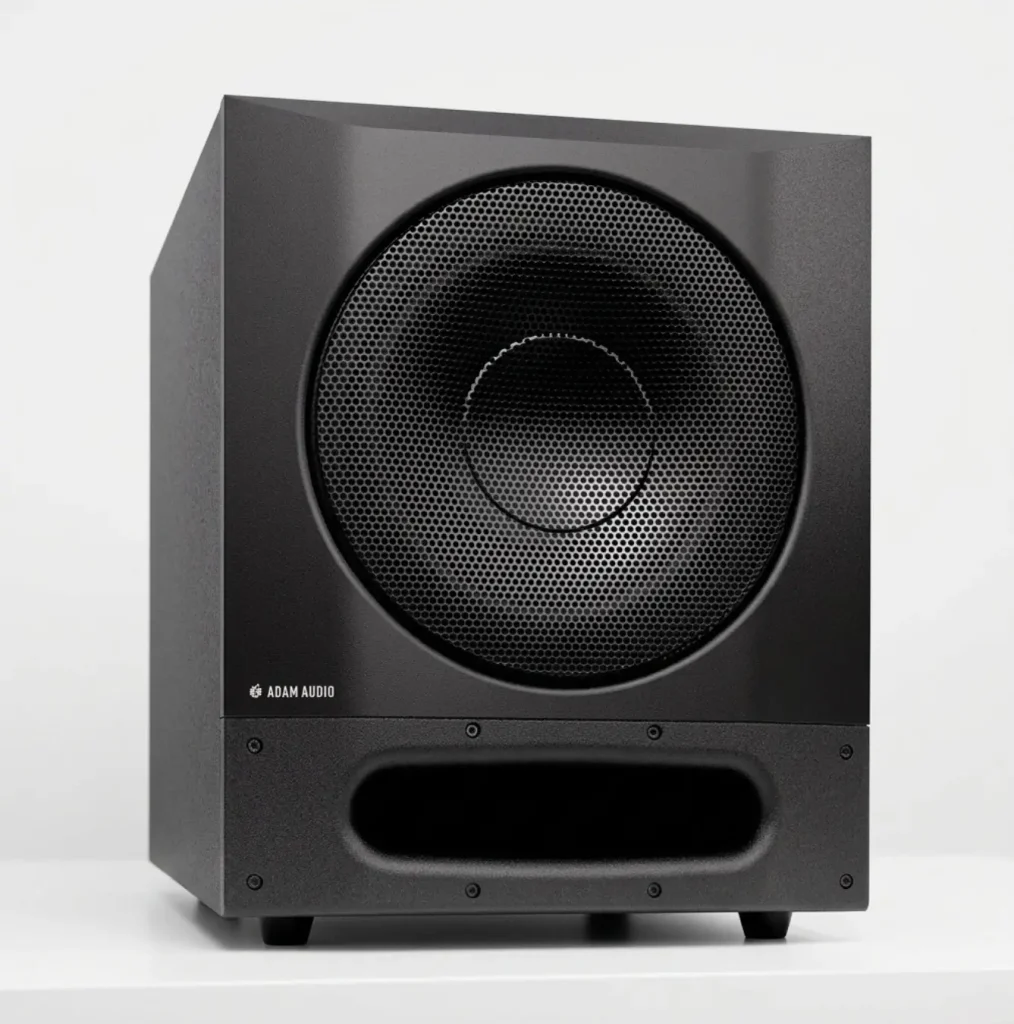
The ADAM Audio Sub10 PRO uses a 10-inch driver with a fiber-reinforced paper cone and rubber surround. Its stated low-frequency extension reaches 21 Hz, placing it within the range of very deep bass reproduction.
That matters in professional audio because the lowest frequencies can influence how a mix translates to other systems. A bass line may sound powerful in a studio but lose weight elsewhere, while excessive energy around the bottom octave can make a mix sound muddy or unbalanced. Adding a dedicated subwoofer can help extend a system’s low-frequency reach, as explored in our JL Audio Dominion D108 review.
A subwoofer with sufficient low-frequency extension allows engineers to hear more of that information during production. It can also help when working with electronic music, film soundtracks and recordings that contain substantial sub-bass content. or listeners interested in how a conventional hi-fi subwoofer compares in a home system, our look at why the Monitor Audio BRW-10 still sounds so good in 2026 offers another perspective on dedicated bass reproduction.
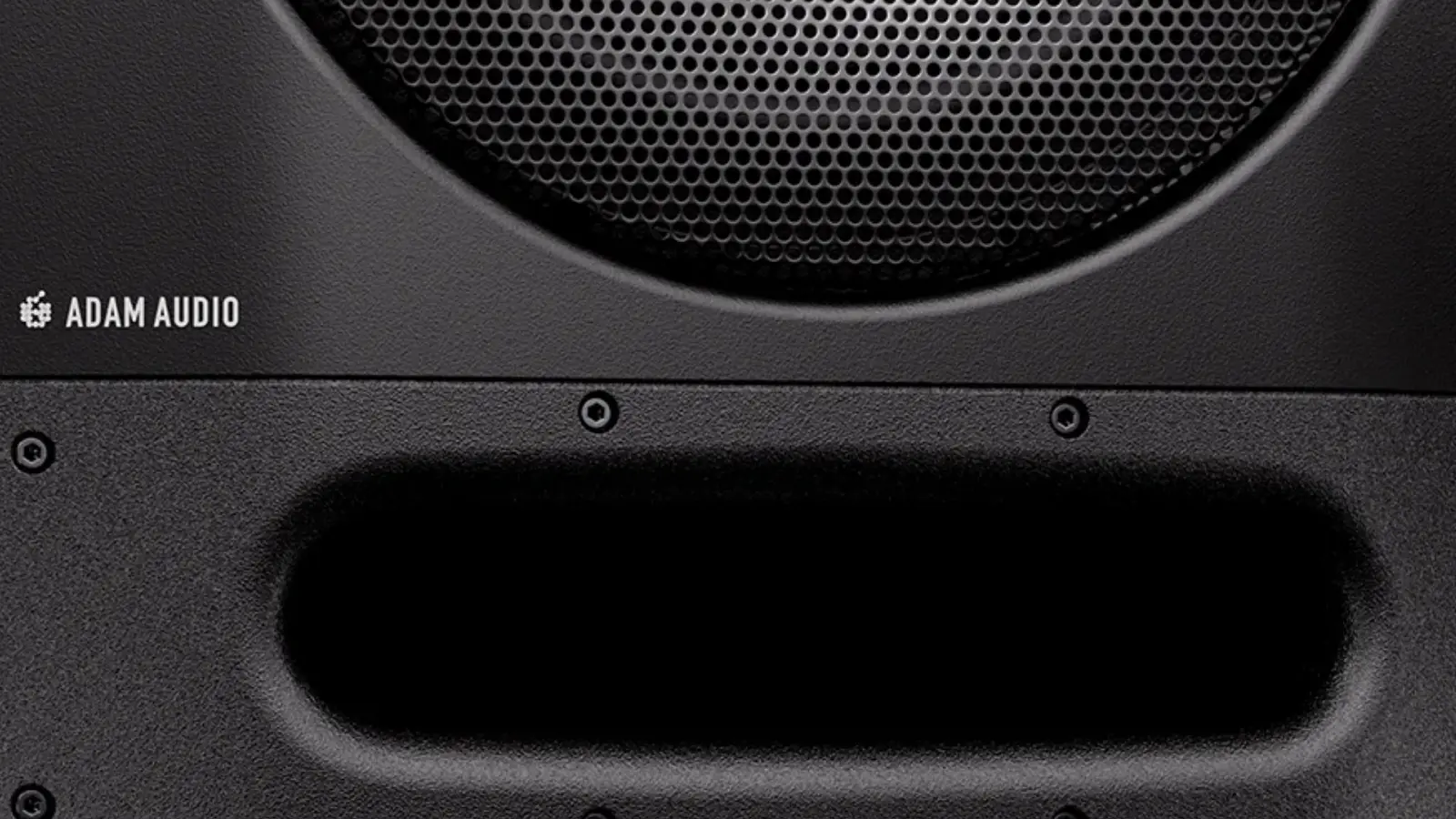
ADAM Audio specifies a maximum sound pressure level of 110 dB. The subwoofer uses a front-firing port designed to reduce airflow noise, an important consideration when reproducing demanding bass passages at higher levels.
The cabinet is constructed from MDF with additional internal bracing. At 22.8 kg, the Sub10 PRO is a substantial piece of equipment, reflecting its intended role as a dedicated studio component rather than a small desktop accessory.
Built-In DSP Gives You More Control Over How the Subwoofer Integrates With Your Monitors
Built-In DSP Gives You More Control Over How the Subwoofer Integrates With Your Monitors
Adding a subwoofer to a monitoring system is not simply a matter of connecting the cables and turning up the volume. The crossover frequency, relative level, timing and room response all influence how the subwoofer blends with the main speakers.
This is where the Sub10 PRO’s built-in DSP becomes particularly important.
Its digital processing allows users to adjust the crossover, apply equalization and set signal delay by up to 10 milliseconds. These controls help align the subwoofer with the main monitors and manage the transition between their respective frequency ranges.
Crossover adjustment is useful because different monitor systems have different low-frequency capabilities. A compact nearfield monitor may need a different handover point from a larger three-way studio speaker.
Signal delay offers another important adjustment. Even when the subwoofer and monitors are connected correctly, their acoustic output may not arrive at the listening position in ideal alignment. Adjusting delay can help improve integration, although the best settings depend on speaker placement, the room and the monitoring system.
For readers interested in dedicated tools for this process, our DSPeaker Anti-Mode X2 review explores another approach to room correction and bass optimization. The DSPeaker Anti-Mode X4 review is also worth reading for a broader look at digital room correction in audio systems.
The ADAM Control app for Windows and macOS provides access to the settings, allowing users to configure the subwoofer from a computer.
For engineers who regularly change monitoring configurations, this flexibility could be just as valuable as the Sub10 PRO’s low-frequency extension.

Sonarworks SoundID Reference Brings Room Correction Into the Sub10 PRO
Room acoustics remain one of the biggest challenges in accurate bass reproduction. Low-frequency waves interact with room boundaries, producing peaks and dips that can vary significantly depending on where the speakers and listener are positioned.
The Sub10 PRO supports room acoustic correction using Sonarworks SoundID Reference. Following room measurements, a correction profile can be loaded directly into the subwoofer, allowing its processing to operate independently of a particular digital audio workstation.
That last point is especially useful. If correction is handled inside the subwoofer, it does not have to rely on a plugin running within the music production software. The processing can therefore remain part of the monitoring signal path when compatible sources are connected.
For studios using multiple audio applications, or for listening systems that also handle music playback outside a DAW, this approach can make the setup more convenient.
There is an important limitation, however. Room correction cannot eliminate every acoustic problem. Equalization can help reduce certain frequency-response irregularities, but it cannot fully fix deep cancellation nulls, excessive reverberation, or poor speaker placement. Careful positioning and appropriate acoustic treatment remain important.
XLR, TRS and AES3 Connectivity for Professional Audio Systems
The Sub10 PRO offers a selection of connections intended for integration into studio monitoring environments.
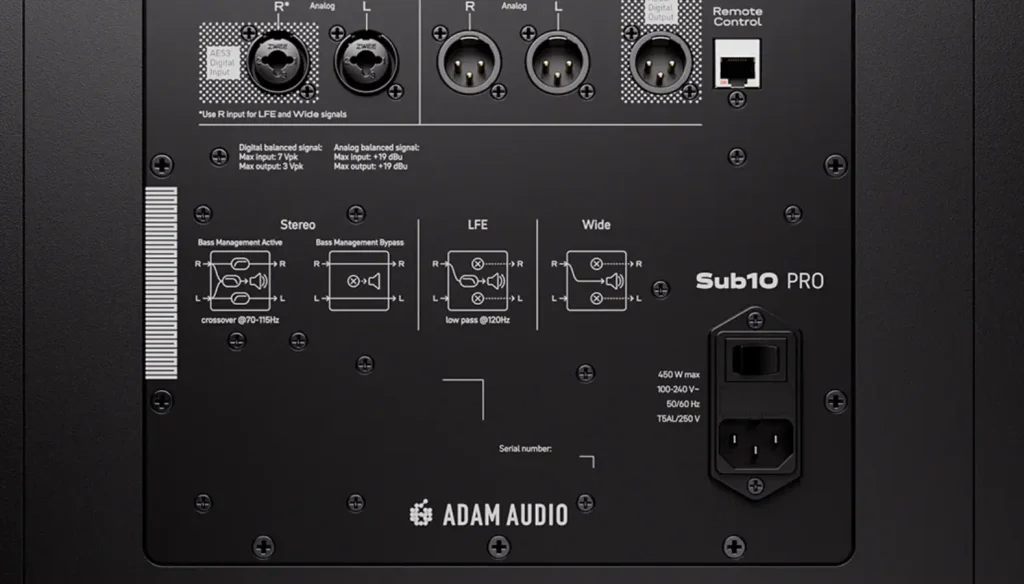
Analog connectivity includes XLR/TRS inputs and XLR outputs, while an AES3 digital interface provides another option for compatible professional audio equipment.
This range of connections gives the subwoofer flexibility when used with different monitoring setups. The exact connection method will depend on the output options available from the audio interface, monitor controller, or other source equipment.

For professional users, connectivity matters because the subwoofer needs to fit into an existing signal chain without introducing unnecessary complexity. The combination of analog and digital interfaces makes the Sub10 PRO relevant to a wider range of studio configurations.
ADAM Audio Sub10 PRO Specifications
| Specification | ADAM Audio Sub10 PRO |
|---|---|
| Type | Active studio subwoofer |
| Driver | 10-inch |
| Frequency extension | Down to 21 Hz |
| Amplifier | Class D |
| Amplifier power | 200 W RMS |
| Maximum SPL | 110 dB |
| Enclosure | Braced MDF |
| Port | Front-firing |
| DSP | Crossover, equalization and signal delay |
| Maximum signal delay | 10 ms |
| Analog connections | XLR/TRS inputs and XLR outputs |
| Digital connection | AES3 |
| Software control | ADAM Control for Windows and macOS |
| Room correction | Sonarworks SoundID Reference support |
| Weight | 22.8 kg |
| Dimensions | 450 × 360 × 450 mm |
Is the ADAM Audio Sub10 PRO Worth Considering for a Home Studio?
The Sub10 PRO is aimed primarily at users who need dependable low-frequency monitoring and the ability to configure a subwoofer around their existing speakers.
For a professional mixing room, its combination of deep bass extension, DSP adjustments and SoundID Reference support makes it an interesting proposition. Engineers can tune the integration with their monitors and address some of the room-related frequency-response problems that otherwise make bass decisions difficult.
It may also appeal to serious home studio owners who produce bass-heavy music or work with film and game audio. For readers choosing speakers for this kind of listening, our guide to speakers for bass-heavy music offers a useful starting point for exploring how bass performance affects system choices.
However, a 10-inch driver and a 21 Hz specification do not automatically guarantee accurate bass in every room. Placement, listening distance, room dimensions, and the main monitors’ capabilities will all affect the result.
Its 450 × 360 × 450 mm dimensions and 22.8 kg weight also mean that buyers should plan their placement rather than treat it as a casual desktop addition.
ADAM Audio’s Sub10 PRO puts considerable emphasis on adjustment and system integration, not just low-frequency output. For anyone building a monitoring setup where bass accuracy matters as much as bass extension, that could be its most important feature.
The ADAM Audio Sub10 PRO is priced at $1,499.99 on the manufacturer’s official website. With its 21 Hz low-frequency extension, built-in DSP, and support for Sonarworks SoundID Reference, it is positioned as a serious monitoring tool for studios where accurate bass reproduction and system integration are essential.