
Which of These Vintage Yamaha Hi-Fi Monsters Have You Actually Experienced?
There was a period when Yamaha seemed determined to prove that it could build almost anything in audio, and build it without compromise.
During the 1970s, 1980s and early 1990s, the Japanese company produced turntables, cassette decks, CD players, amplifiers and loudspeakers that were often far more ambitious than their price categories demanded. Some were elegant, some were technically bizarre, and a few were so heavily engineered that they looked more like laboratory equipment than domestic hi-fi.
Decades later, many of these machines have become highly desirable on the used market. Some can still be found for a few hundred dollars, while the rarest Yamaha creations can command five-figure prices.
Yamaha’s New CXR12 mk3 Puts 1,100 Watts Into a 15.4kg Speaker
Here are some of the company’s most important and fascinating vintage components.

Yamaha MX-10000: The 43 Kg Amplifier That Still Looks Excessive
1986–1988
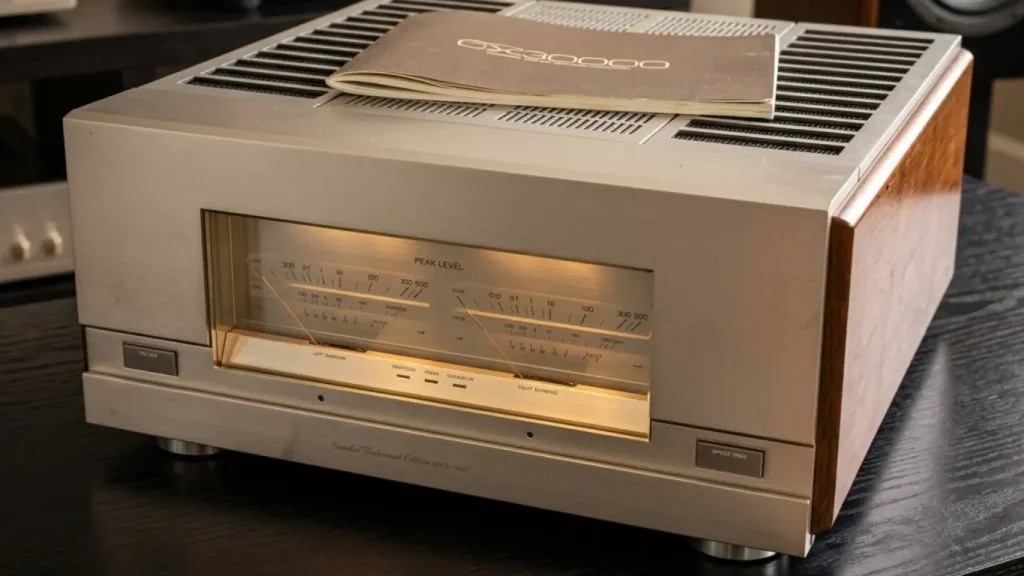
The MX-10000 may be the perfect expression of Yamaha’s engineering excess during the 1980s.
This was a Class A power amplifier built around a massive 1.2 kV power transformer, six pairs of Sanken transistors, and four pairs of Toshiba MOSFETs. Yamaha also used a huge aluminum chassis and oxygen-free copper internal wiring.
The specifications were just as extraordinary. The amplifier had a claimed damping factor of 1,000, dynamic output exceeding 1 kW at 1 ohm, a frequency response extending from 2 Hz to 300 kHz, and a signal-to-noise ratio of 132 dB.
It weighed approximately 43 kg.
The MX-10000 was an extremely expensive component when new, and it has become even more interesting on the vintage market. Current used examples are generally being offered around $6,900–$7,500, with particularly desirable examples reaching higher. Recent Japanese listings include examples around $7,050 and $7,144.
For a power amplifier approaching 40 years old, those prices say a lot about its reputation.
Yamaha GT-2000: One of The Greatest Turntables Yamaha Ever Made
1982–1992
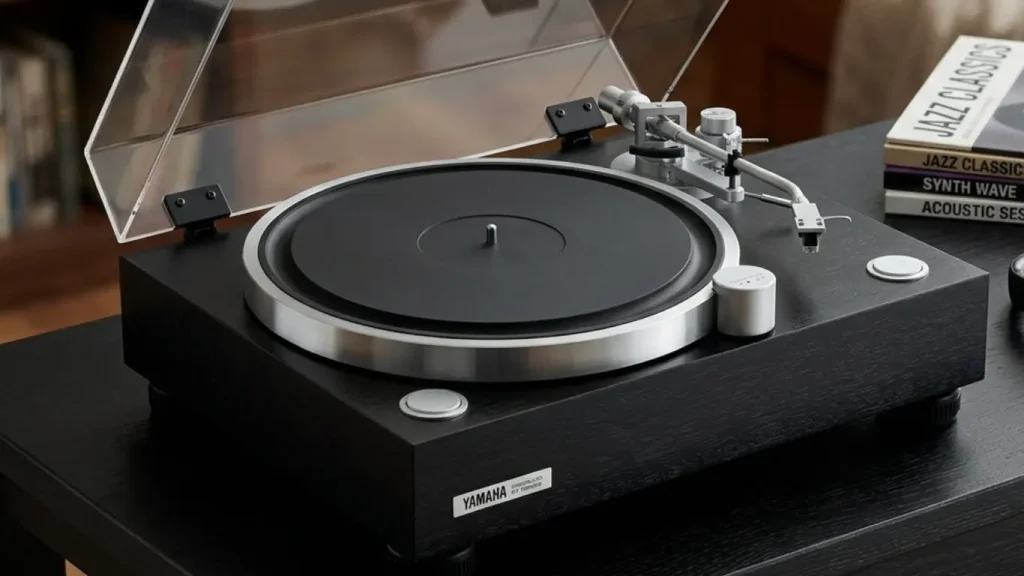
The GT-2000 was Yamaha’s ultimate conventional turntable and one of the company’s most famous analog products.
It used direct drive with quartz-controlled speed regulation, an 8-pole motor and a massive 5.8 kg ultra-pure aluminum platter. Even the acrylic dust cover weighed around 2 kg and was designed to contribute to vibration control.
Yamaha also offered a remarkable selection of upgrades, including alternative mats and additional bases. With enough optional hardware installed, the already massive turntable could weigh more than 60 kg.
The published specifications were equally serious, including a claimed signal-to-noise ratio of 85 dB and wow and flutter of just 0.005%.
Today, the GT-2000 remains one of the most desirable vintage Japanese turntables. Current used listings show ordinary working examples around $1,400–$2,200, while serviced, upgraded or particularly complete examples can reach $3,000–$4,000 or more. Some rare GT-2000 variants command considerably more.
Today’s used price: around $1,400–$4,000+
That is a remarkable second life for a turntable introduced more than four decades ago.

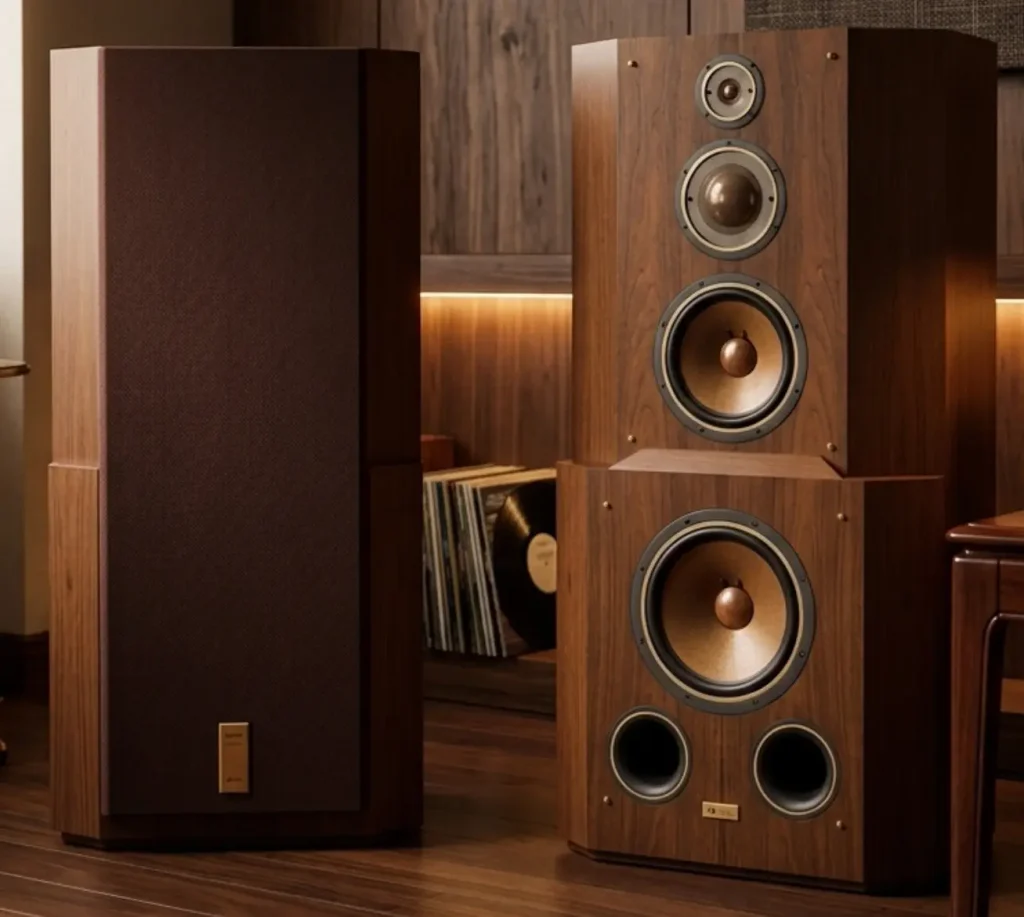
Yamaha GF-1: A $50,000 Loudspeaker System From The Early 1990s
1991–1994
If the MX-10000 represents Yamaha’s amplifier ambitions, the GF-1 represents something even more extreme.
The GF-1 was a gigantic four-block loudspeaker system weighing approximately 150 kg. It used four-channel amplification and was designed around dedicated electronics, with 100-watt-per-channel Class A power amplifiers and external power supplies.
Both the midrange and high-frequency drivers used beryllium diaphragms.
The price was almost unbelievable. Depending on the finish, the GF-1 originally sold for approximately $35,000–$50,000, with the dedicated preamplifier adding roughly another $8,000. Contemporary Japanese specifications list the system at ¥5 million for the walnut version and ¥7 million for the more expensive finish.
Finding one today is extremely difficult. A historical second-hand listing was around $24,000, but there simply isn’t enough current transaction volume to establish a reliable 2026 market average.
Today’s used price: roughly $20,000–$30,000+ when a complete system appears
The GF-1 wasn’t simply an expensive speaker. It was Yamaha demonstrating how far the company was willing to go when there were essentially no practical limits.
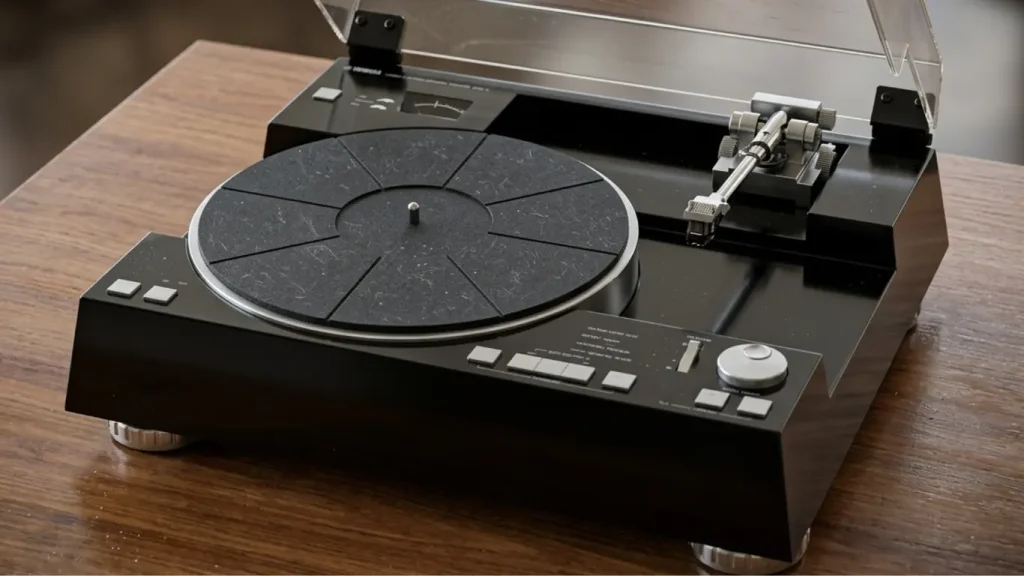
Yamaha PX-1: the Luxury Turntable Built Like a Machine Tool
1977–1980
Long before the GT-2000, Yamaha produced another extraordinary turntable: the PX-1.
This fully automatic deck combined electronic control with a tangential tonearm and an enormous 5.6 kg duralumin platter. Its 20-pole direct-drive motor was designed with the same obsession with mechanical stability that would later define Yamaha’s GT series.
The separate power supply alone weighed around 5 kg, while the main turntable weighed approximately 27 kg.
Only around 1,836 units were produced, making the PX-1 considerably rarer than most Yamaha turntables.
Its original Japanese price was approximately $3,000–$3,500 when converted to contemporary U.S. dollars. A fully serviced PX-1 sold through a Japanese specialist in 2024 for roughly $2,700, while a current, untested example is being offered for approximately $3,950.
Today’s used price: around $3,000–$5,000+
For a clean, fully functional PX-1, the price can be considerably higher than that of an ordinary vintage Yamaha deck.
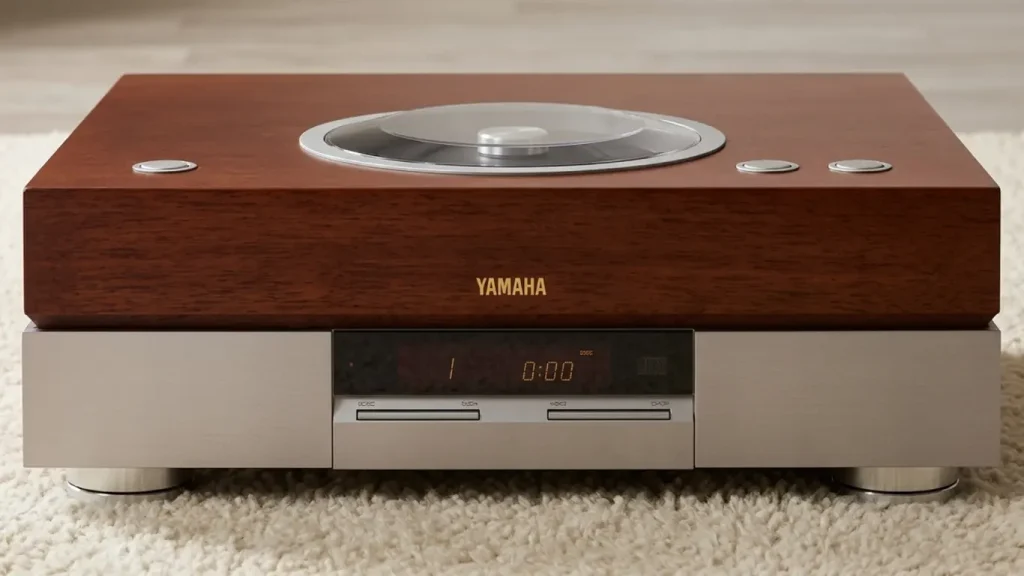
Yamaha GT-CD1: Yamaha’s Idea of The Ultimate CD Player
1991–1994
The GT-CD1 may be the most spectacular CD player Yamaha ever produced.
It was part of the company’s famous GT philosophy, which stood for a level of mechanical and electrical engineering far beyond what was normally expected from a CD player.
The digital section used an advanced conversion system with single-bit DAC technology, correction modules, and a 20-bit digital filter. Yamaha also paid extraordinary attention to the power supply.
The capacitor bank alone had a capacity of approximately 48,000 µF, while the entire player weighed around 24 kg.
The original price was approximately $4,000 in contemporary U.S. dollar terms.
Today, the GT-CD1 is one of Yamaha’s most collectible CD players. Current listings show working examples around $2,800–$3,000, while parts or non-working examples can paradoxically be listed even higher due to their rarity.
Today’s used price: around $2,500–$3,500
At this age, however, the condition of the transport mechanism matters enormously.
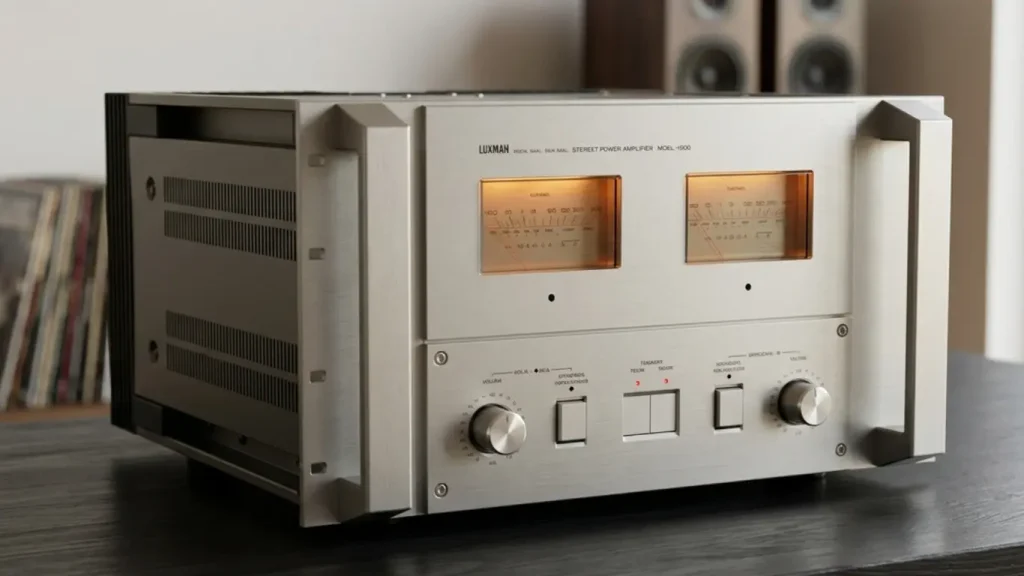
Yamaha 101M: 1,000 Watts of Vintage Yamaha Muscle
1982–1984
The Yamaha 101M is where things become genuinely ridiculous.
This enormous stereo amplifier was conservatively rated at 500 watts per channel into 8 ohms and 750 watts per channel into 4 ohms. Its frequency response extended from 10 Hz to 100 kHz, while the claimed signal-to-noise ratio reached 125 dB.
The amplifier used a twin-mono configuration and contained an enormous number of output transistors. The complete unit weighed approximately 61 kg.
The 101M was extremely expensive when new, with a Japanese list price of around $7,000–$8,000 in contemporary dollar terms.
Today, however, it can cost dramatically more.
A current used 101M listing is asking $23,540, although this is an asking price rather than a confirmed completed sale. Another Japanese specialist sale recorded a considerably lower price, demonstrating just how widely the market can vary according to condition and provenance.
Today’s used price: roughly $10,000–$25,000+
This is no longer simply a vintage amplifier. It is a serious collector’s piece.
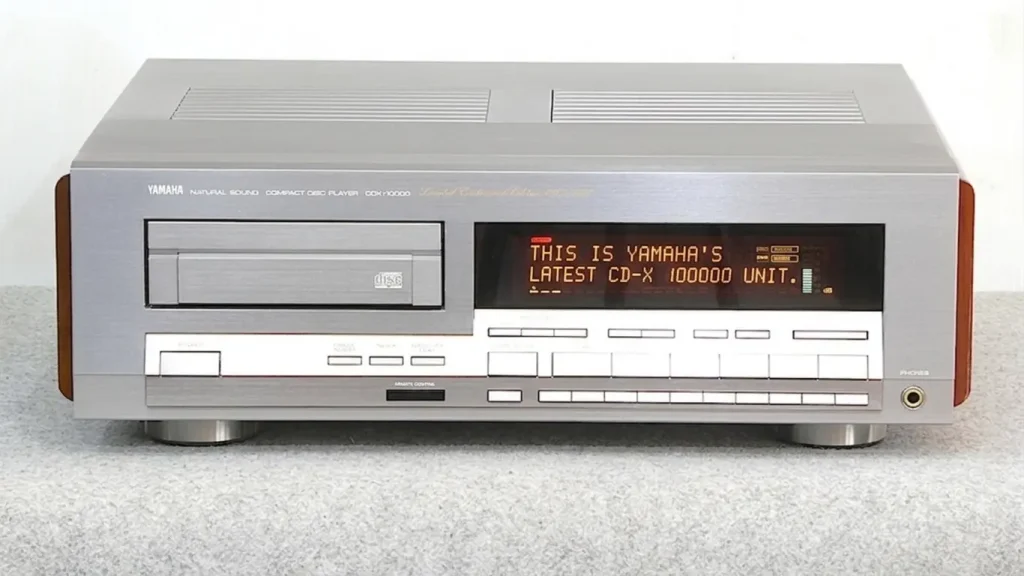
Yamaha CDX-10000: When a CD Player Cost as Much as a Car
1986–1988
Yamaha’s CDX-10000 belonged to the company’s celebrated 1000-series and represented an extraordinary approach to digital audio.
It originally sold for approximately $2,500–$3,000 in contemporary U.S. dollar terms.
The player incorporated Yamaha’s Hi-Bit technology, 18-bit DACs and sophisticated digital filtering. Distortion was specified at just 0.002%, while the signal-to-noise ratio reached a claimed 115 dB.
The machine itself weighed approximately 25.5 kg.
The CDX-10000 remains surprisingly affordable compared with Yamaha’s most extreme amplifiers. A fully serviced working example currently listed on eBay is priced at $2,000.
Today’s used price: around $1,500–$3,000
As always with vintage CD players, buying a working example is far more attractive than buying a cosmetically perfect machine with a failing transport.

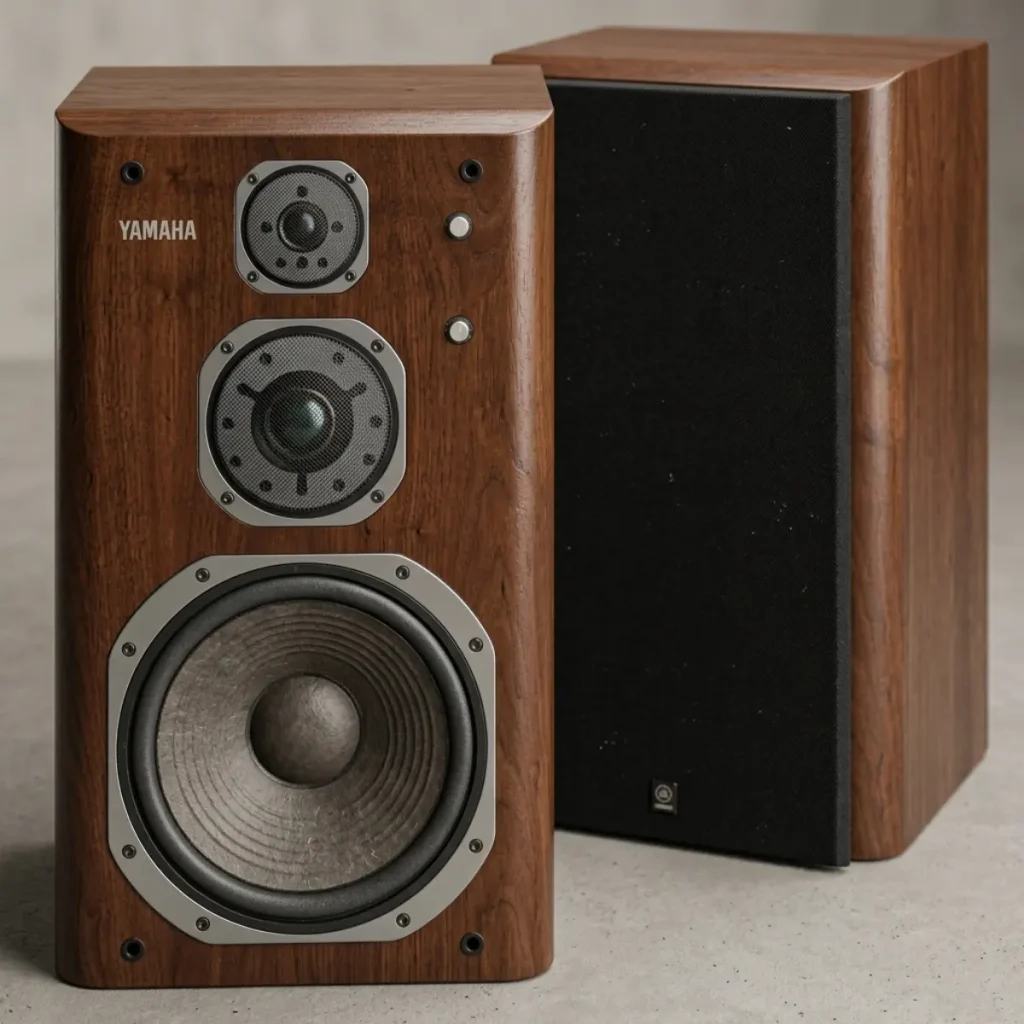
Yamaha NS-2000: The 47 Kg Loudspeaker
1982–1987
The NS-2000 showed that Yamaha was prepared to take loudspeaker construction just as seriously as amplification.
The speaker used aluminum and carbon-fiber materials in its diaphragms and featured a 33 cm woofer. Yamaha specified a frequency response of approximately 28 Hz to 20 kHz and power handling of up to 250 watts.
Each speaker weighed around 47 kg.
The original price was approximately $900–$1,000 per pair in contemporary U.S. dollar terms, although that figure obviously does not reflect today’s value.
The modern market is much more interesting. Current used listings show pairs around $2,200, while exceptionally clean examples can be considerably more expensive. Previous enthusiast-market discussions have seen asking prices as high as $5,800, although such prices should not be treated as normal market value.
Today’s used price: around $2,000–$4,000 per pair
For collectors of classic Japanese loudspeakers, the NS-2000 remains one of Yamaha’s most desirable models.
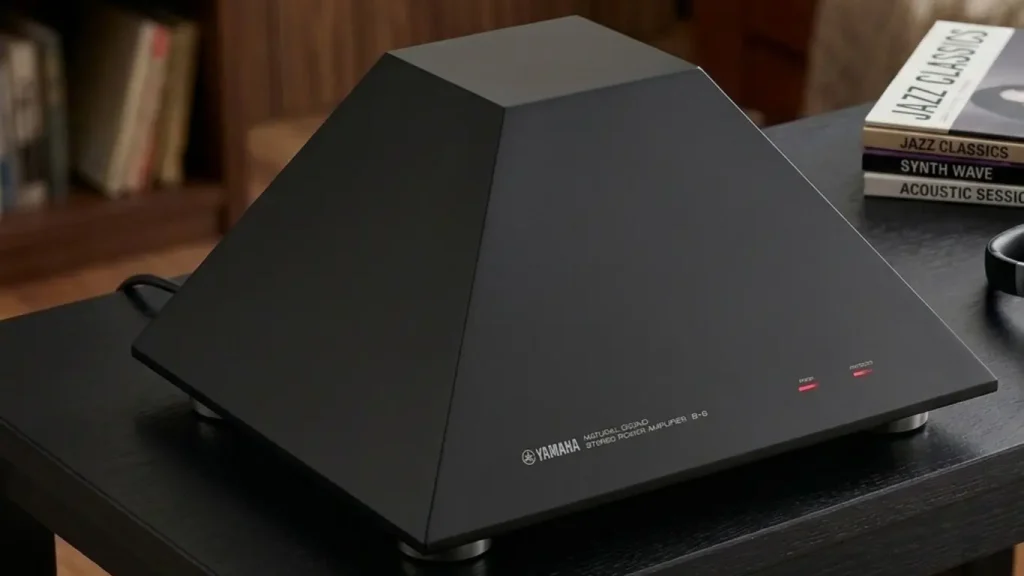
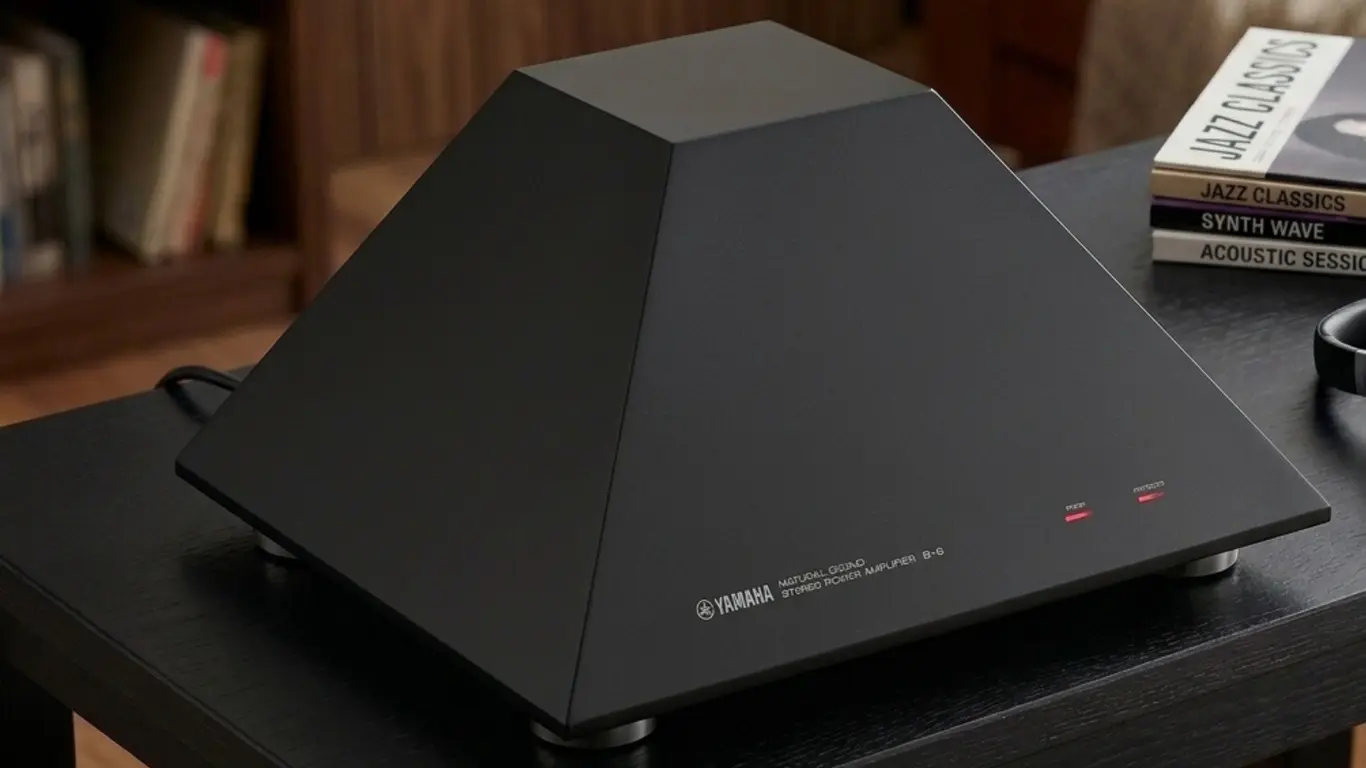
Yamaha B-6: The Pyramid Amplifier
1980–1983
The Yamaha B-6 is one of those components that could only have come from the golden age of Japanese hi-fi.
Its unusual pyramid-shaped chassis was based on technology associated with Nissho Electronics and Bob Carver. The result was an amplifier that looked unlike practically anything else on the market.
It delivered around 200 watts per channel into 8 ohms, with a claimed frequency response from 10 Hz to 100 kHz and a damping factor of 200.
Yamaha A-S3200 Review: Can This Classic Amplifier Still Beat the Competition?
The B-6 was considerably more affordable than Yamaha’s giant 10000-series amplifiers, and that remains true today.
Current used examples are appearing around $600–$850, including a working Japanese example currently listed at $837.70 and a U.S. specialist listing at $699.95.
Today’s used price: around $600–$900
That makes the B-6 one of the more attainable ways to own a genuinely exotic Yamaha amplifier.

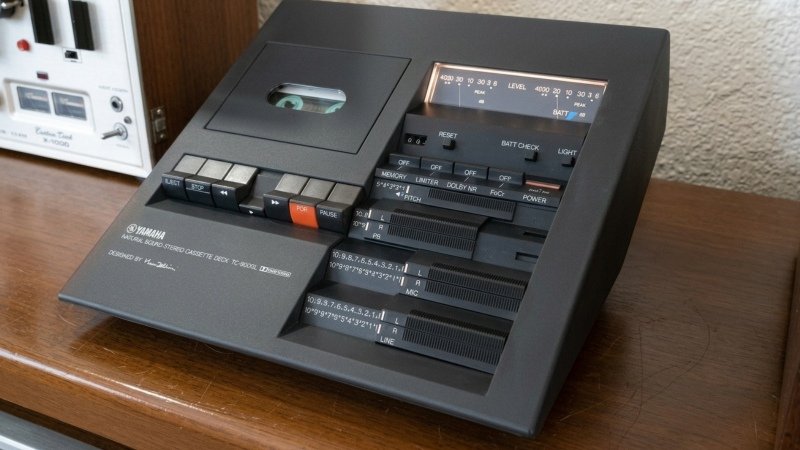
Yamaha TC-800GL: The Cassette Deck Designed like Furniture
1975–1978
The TC-800GL proves that Yamaha’s obsession with design wasn’t limited to its most expensive equipment.
Designed by renowned Italian designer Mario Bellini, the TC-800GL had a dramatic wedge-shaped form that looked more like a piece of modern furniture than a conventional cassette deck.
The later version incorporated Dolby noise reduction and offered a wow-and-flutter figure of 0.06%, a 58 dB signal-to-noise ratio with Dolby, and a frequency range of 30–15,000 Hz.
It weighed approximately 5 kg.
Current used listings range from inexpensive parts machines to fully working examples. A working example is currently listed around $400, while lesser examples can be considerably cheaper.
Today’s used price: around $200–$500
For collectors, however, the styling is arguably half the attraction.
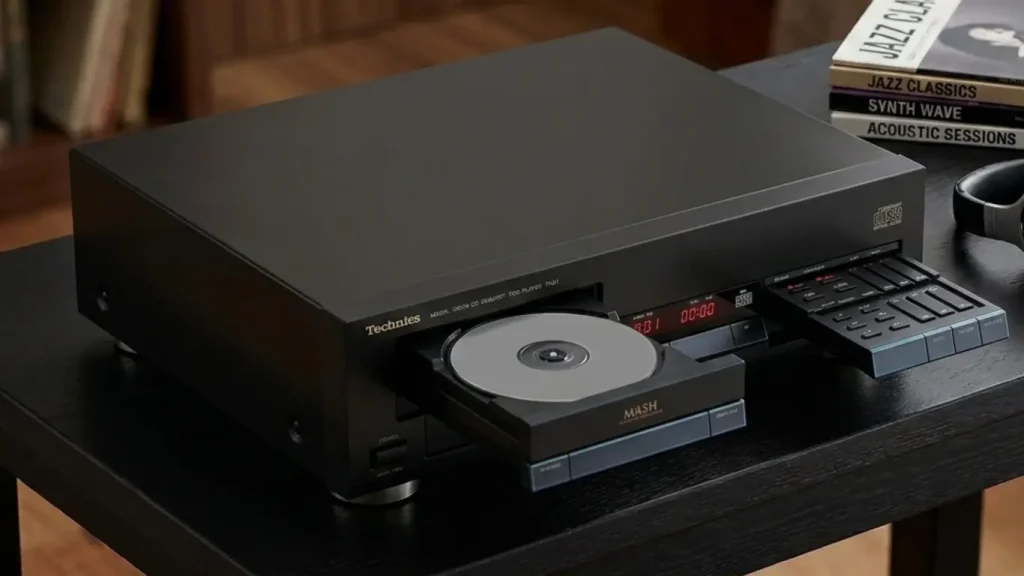
Yamaha CD-1: Yamaha enters the compact-disc era
1982–1984
Yamaha’s first CD player was not a modest experiment.
The CD-1 used two Sony CX-890 DAC chips in a dual-mono arrangement and featured a substantial power supply for an early digital machine.
It offered a frequency response of 10 Hz–20 kHz, distortion of no more than 0.005% and a signal-to-noise ratio of 90 dB.
At approximately 13.5 kg, it was also built like a serious piece of hi-fi rather than a lightweight digital appliance.
Yamaha itself describes its 1982 CD player as its first compact-disc machine and notes the importance of the model in establishing the company’s high-performance CD-player direction.
The modern used market is much harder to price accurately because working examples appear infrequently.
Today’s used price: roughly $500–$1,000 for a functioning example
A cheaper unit may be tempting, but with a player this old, transport condition and availability of replacement parts should be considered before price.
Yamaha’s vintage era was something special
What makes these Yamaha components fascinating isn’t simply their age.
The company was willing to experiment with materials, mechanical engineering, digital conversion, amplification, and industrial design at a level that was unusual even among the great Japanese manufacturers of the period.
Some of these products were beautifully restrained. Others were gloriously excessive.
The GT-2000 and PX-1 showed what Yamaha believed a turntable could become. The CDX-10000 and GT-CD1 demonstrated that digital audio could receive the same obsessive engineering attention. The B-6 and 101M represented two completely different approaches to amplification, while the MX-10000 pushed Yamaha’s engineering philosophy almost to absurdity.
And then there was the GF-1.
A system that originally cost tens of thousands of dollars has become one of the rarest and most fascinating pieces of Yamaha’s history.
The second-hand market also tells an interesting story. A TC-800GL can still be found for a few hundred dollars, while a GT-2000 can cost several thousand. The MX-10000 is now routinely offered around $7,000 and above, while rare 101M amplifiers can reach five-figure prices.
That is perhaps the ultimate compliment to Yamaha’s vintage engineering.
These machines aren’t simply surviving.
Audiophiles are still hunting them down.
“Used prices above are approximate 2026 market references rather than fixed valuations. Vintage Yamaha equipment can vary dramatically in price depending on condition, restoration, originality, voltage, accessories, and location. Asking prices can also be substantially higher than completed-sale prices, particularly for extremely rare models“