
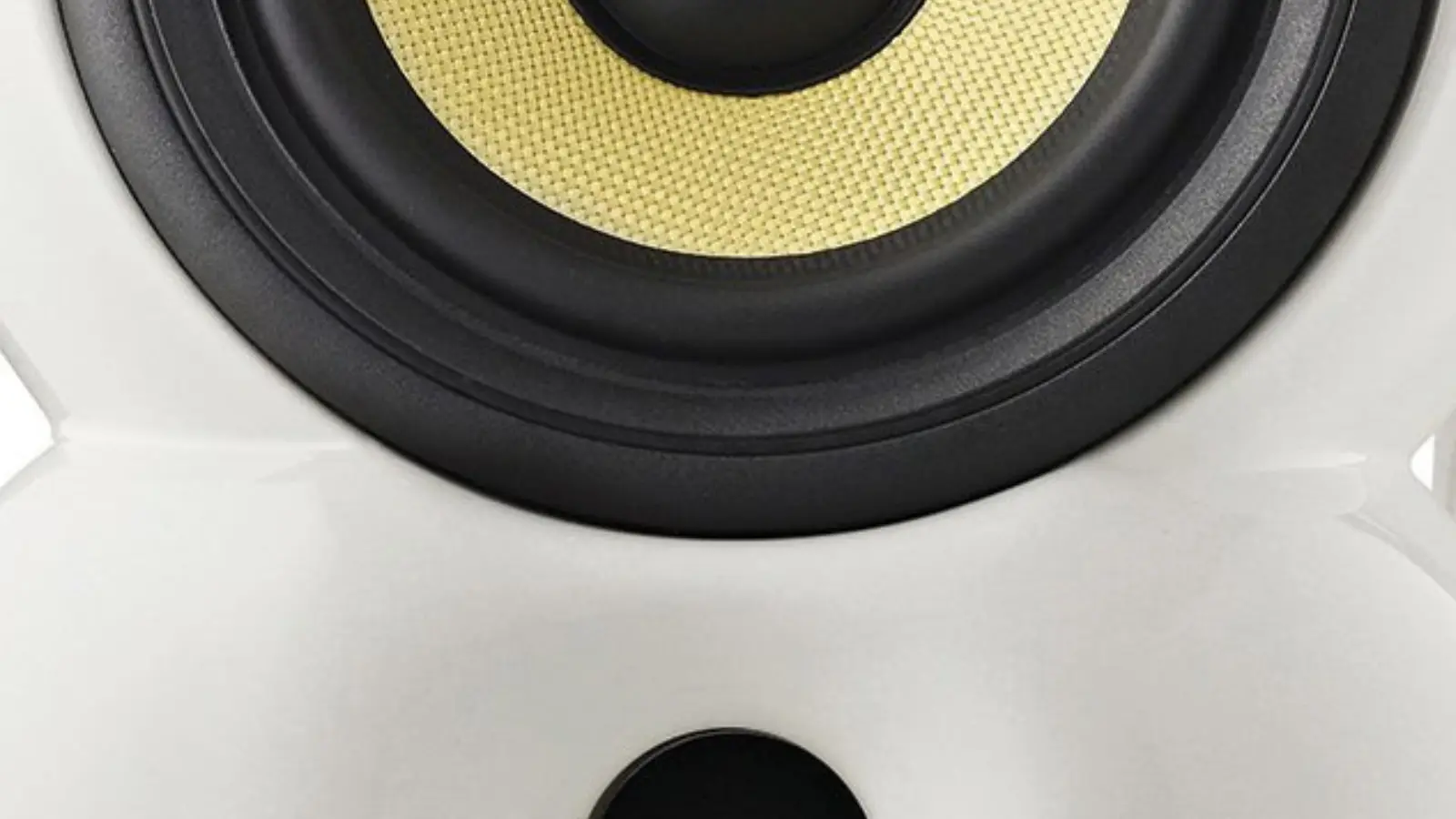
These Unusual Speakers Were Designed in 1991, But They Still Look Like the Future
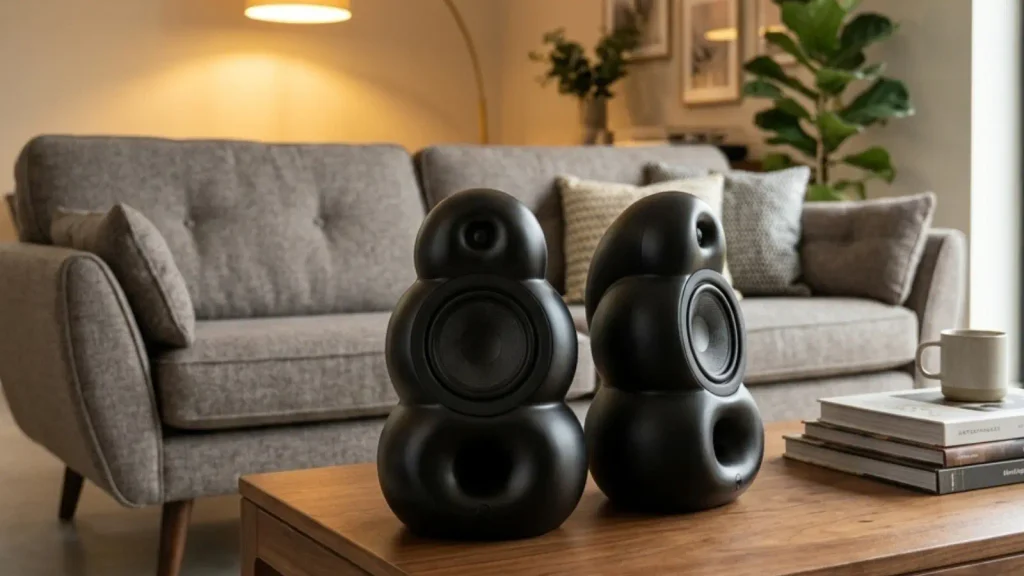
There are plenty of Bluetooth speakers that promise to bring music into your home, but very few look like the Podspeakers MiniPod Bluetooth MKII. With its rounded, almost sculptural enclosure, unusual proportions and distinctive personality, this is a speaker that looks more like a piece of contemporary design than conventional hi-fi equipment.
Interestingly, its story goes back much further than Bluetooth. The original Podspeakers concept dates back to 1991, and its distinctive appearance even became familiar to television audiences through Joey’s apartment in Friends.
But the MiniPod Bluetooth MKII is more than a conversation piece. Behind that unusual exterior is a powered loudspeaker with Bluetooth streaming, optical and analog inputs, a dedicated subwoofer output, and the option to build a proper stereo system.
So, can a speaker designed around such an unconventional appearance deliver the sound quality to match? We spent time looking at what makes the Podspeakers MiniPod Bluetooth MKII such an interesting little hi-fi system.
A 1990s Design That Still Looks Different Today
The Podspeakers story began in 1991, when designers Simon Ghahary and Lawrence Dickie developed an early prototype using salvaged loudspeaker components.
Both designers were also associated with the development of the famous Bowers & Wilkins Nautilus loudspeaker series, and their approach to the Podspeakers concept was equally unconventional.
Rather than following the familiar rectangular bookshelf speaker design, they wanted something sculptural, rounded and visually connected to the music it reproduced.
The idea was simple but ambitious: create loudspeakers that people would appreciate with their eyes as much as their ears.
That philosophy remains immediately recognizable in the MiniPod Bluetooth MKII. Its curved ABS enclosure, distinctive proportions and optional decorative accessories make it difficult to confuse with an ordinary wireless speaker.
There is also a practical reason behind the unusual shape. Rounded cabinets avoid the sharp edges associated with conventional rectangular enclosures, helping reduce edge diffraction. The rigid enclosure also provides a useful combination of structural strength and internal volume.
It is a design that has aged remarkably well. While many wireless speakers follow similar cylindrical or rectangular shapes, the MiniPod still looks like something from a different design era.
More Than Just a Pretty Speaker
The MiniPod is part of a wider Podspeakers family that shares the same distinctive design philosophy.
The range includes the passive MiniPod, the smaller MicroPod, the larger BigPod MK III, and the Podspeakers The Drop MK3.
The Drop is particularly unusual, with its droplet-shaped enclosure designed to be suspended from the ceiling using a mounting rod.
The different models allow listeners to build a system around their available space, whether that means a compact desktop arrangement, a living room music system or a more unusual home theater installation.
Scandyna has also sold more than 100,000 speakers worldwide, helping establish Podspeakers as a recognizable name among enthusiasts who appreciate unconventional loudspeaker design.
The Accessories Make the MiniPod Even More Interesting
One of the nicest things about the MiniPod design is that you can personalize its appearance.
Scandyna offers a selection of accessories that change both the look and placement possibilities of the speaker. These include decorative hoops, metal and wooden spikes, wall mounts, and protective metal grilles.
The hoops surround the woofer and provide an additional visual accent. The spikes give the MiniPod a more distinctive stance, while the wall-mounting hardware allows the speakers to be positioned away from furniture.
There are also ceiling-mounting possibilities, making the MiniPod an interesting option for unconventional listening rooms and home theater installations.
Inklang Ayers Two Wireless Review
These accessories might seem like small details, but they reinforce the original design philosophy. Instead of treating loudspeakers as equipment that needs to be hidden away, Podspeakers makes them part of the room’s interior design.

Bluetooth Is Only Part of the Story
The MiniPod Bluetooth MKII is much more versatile than its appearance might suggest.
At its heart is a powered loudspeaker system with two built-in 25-watt Class D amplifiers, supported by digital signal processing.
You can use a single MiniPod as a compact music system, configure two powered MiniPods as a stereo pair, or combine one powered MiniPod with a passive MiniPod.
The connectivity options are particularly useful.
Bluetooth provides convenient wireless streaming from smartphones, tablets, laptops, and computers. However, the MiniPod also includes a Toslink optical digital input and a 3.5mm analog auxiliary input.
That optical connection is especially welcome. It gives you the option of connecting compatible televisions, digital music players and other audio sources without relying entirely on Bluetooth.
There is also an analog subwoofer output, allowing you to connect a separate powered subwoofer.
That last feature makes a considerable difference to the MiniPod’s potential. Rather than being limited to the bass produced by its compact enclosure, you can build a more substantial 2.1-channel system around it.
For a speaker of this size and design, that is a useful level of flexibility.
A Surprisingly Clever LED Indicator
The MiniPod Bluetooth MKII has a single LED positioned near the bottom of its front panel.
It might sound like an ordinary design detail, but this indicator communicates a surprising amount of information.
Depending on its color and illumination pattern, it tells you which input is selected, whether the speaker is playing, waiting for a source, in standby, or entering Bluetooth pairing mode.
Inklang Ayers Two Wireless Review
The indicator uses blue, white, and green illumination, along with different brightness levels and pulsing patterns.
It is a neat example of thoughtful product design. Rather than covering the enclosure with buttons and indicators, Scandyna keeps the appearance clean while making the essential operating information easy to understand.
Simple Controls and Useful DSP Settings
The MiniPod’s physical controls are located underneath the speaker.
These include the power and input-selection button, volume controls, a switch to disable wireless input, and separate pairing controls.
The pairing buttons also provide access to the DSP equalization settings.
There are three available sound modes:
- Optimal: The standard DSP setting intended for normal listening.
- Flat: A more neutral equalization option.
- Boost: An alternative setting for listeners who prefer a different tonal balance.
The included remote control makes everyday operation easier, giving you access to the important functions without reaching underneath the speaker.
There are also audible confirmation tones for certain operations.
It is a straightforward control arrangement that avoids unnecessary complexity.
How Does the Podspeakers MiniPod Bluetooth MKII Sound?
This is where the MiniPod becomes more interesting than its unusual appearance might initially suggest.
Our listening experience was positive. The midrange is clear and well balanced, with a good amount of detail, while the high frequencies are smooth rather than aggressively bright.
Vocals and everyday music reproduction benefit from that balanced presentation. The MiniPod does not try to disguise its compact dimensions with an exaggerated presentation, and its sound is enjoyable over extended listening sessions.
Bass is the more obvious limitation.
The MiniPod’s compact enclosure cannot reproduce the kind of deep, powerful low frequencies that a dedicated subwoofer can deliver. Listeners who enjoy electronic music, large orchestral recordings or bass-heavy movie soundtracks may eventually want more low-frequency extension.
Fortunately, Scandyna has already provided the solution.
The dedicated subwoofer output allows you to connect a powered subwoofer and build a more complete 2.1 system. This is one of the MiniPod’s biggest advantages over many conventional Bluetooth speakers.
With a suitable subwoofer handling the lowest frequencies, the MiniPod can concentrate on the midrange and treble while the larger driver provides the additional bass foundation.
For desktop listening, smaller rooms and compact living room systems, this flexibility makes the MiniPod a particularly appealing proposition.
Bluetooth, Optical and Analog Connectivity
The MiniPod Bluetooth MKII offers several ways to enjoy music.
Bluetooth is the obvious choice for everyday convenience. You can stream music from a smartphone, laptop or tablet without needing a separate amplifier or complicated wiring.
The speaker uses Bluetooth 4.0 with aptX support, alongside the SBC codec.
There is no dedicated streaming application or integrated network music platform. Instead, the MiniPod relies on the music services and playback applications already available on your devices.
Whether you use Spotify, Tidal or Apple Music, playback can be handled through your connected device.
The optical and analog inputs provide additional flexibility for listeners who prefer wired connections.
For anyone building a small desktop audio system, this combination of inputs is particularly useful.
Colours, Configurations and Accessories
The MiniPod Bluetooth MKII is available in several finishes, including White Stain, Black Matte and Red Matte.
The Red Matte version is particularly striking, while the black and white finishes offer a more understated appearance.
The standard package includes an AC power cable, remote control, user documentation, and two sets of rubber feet.
Additional accessories include:
- Aluminium and wooden spikes in different finishes.
- Decorative hoops in different materials and colours.
- Adjustable wall-mounting brackets.
- Metal woofer grilles.
The MiniPod Bluetooth MKII is sold individually rather than automatically as a stereo pair.
For stereo listening, you can purchase a second powered MiniPod Bluetooth MKII or combine the powered version with a passive MiniPod.
The passive model provides another way to create a stereo system without purchasing two complete powered speakers.
Pricing and accessory availability can vary by market, so check with an authorized dealer for current options.
What We Like and What Could Be Better
The MiniPod Bluetooth MKII gets a lot right, particularly when you consider the combination of design, connectivity, and convenience.
What we like
- Distinctive sculptural enclosure that stands apart from conventional speakers.
- Clear and well-balanced midrange.
- Smooth high-frequency reproduction.
- Built-in 2 x 25W amplification.
- Bluetooth aptX connectivity.
- Optical and analog audio inputs.
- Dedicated subwoofer output.
- Three DSP equalization settings.
- Useful remote control.
- Internal power supply rather than an external wall adapter.
- Flexible stereo configurations.
- Interesting mounting and customization accessories.
What could be better
- Bass extension is limited without a separate subwoofer.
- No built-in Wi-Fi streaming or dedicated music application.
- No battery-powered operation.
- Only three DSP sound settings.
- The unusual styling will not appeal to everyone.
- A stereo setup requires purchasing additional equipment.
Is the Podspeakers MiniPod Bluetooth MKII Worth Considering?
The Podspeakers MiniPod Bluetooth MKII is a refreshing alternative to the conventional Bluetooth speaker.
It combines an unmistakable design with a useful selection of connectivity options and sound quality that makes it more than just an attractive piece of furniture.
The clear midrange and smooth treble make it enjoyable for everyday music listening, while the subwoofer output gives owners an opportunity to expand the system when they want more substantial bass.
We particularly like the flexibility. A single MiniPod can serve as a compact desktop music system, while a pair can create a more convincing stereo arrangement. Add a powered subwoofer, and you have the foundations of a surprisingly capable little 2.1-channel system.
There are limitations, of course. The lack of Wi-Fi streaming, battery operation, and extensive EQ adjustments may disappoint listeners looking for a modern all-in-one smart speaker.
But that is not really what the MiniPod is about.
Its appeal lies in combining music reproduction with distinctive industrial design. It is a loudspeaker that does not ask to be hidden behind furniture or tucked away in a cabinet.
For anyone who appreciates unusual hi-fi equipment, wants a stylish desktop system or needs a compact living room setup with the option of adding a subwoofer, the MiniPod Bluetooth MKII remains an interesting proposition.
And perhaps that is the most impressive thing about it. A design concept born in 1991 still manages to look different in a market filled with wireless speakers.
Podspeakers MiniPod Bluetooth MKII Specifications
| Specification | Details |
|---|---|
| Speaker type | Active Bluetooth loudspeaker |
| Cabinet material | ABS and fibre material |
| Bass driver | 5.25-inch Kevlar cone |
| Tweeter | 25mm cloth dome |
| Bass tuning | Front-firing tuned port |
| Amplifier power | 2 x 25W |
| Amplifier type | Class D with DSP |
| Sensitivity | 86dB |
| Nominal impedance | 6 ohms |
| Frequency response | 58Hz to 22kHz (+/-3dB) |
| Extended frequency response | 48Hz to 22kHz (+/-6dB) |
| THD | Less than 1% at rated output |
| Bluetooth | Version 4.0 |
| Bluetooth codec | aptX and SBC |
| Bluetooth profiles | A2DP and AVRCP |
| Digital input | Toslink optical |
| Analog input | 3.5mm auxiliary |
| Subwoofer output | Analog 3.5mm |
| EQ settings | Optimal, Flat and Boost |
| Power supply | Internal |
| Power requirements | 100 to 240V AC |
| Standby consumption | 0.4W |
| Network standby consumption | 1.1W |
| Dimensions | 14 x 11 x 7 inches (H x W x D) |
| Weight | 7 lbs |
| Battery | No, AC-powered |