
The IOTAVX SA3 Review: Why This Unassuming Amplifier Has Audiophiles Talking
There are certain products that quietly earn legendary status without ever dominating advertising campaigns or showroom floors. They’re the components enthusiasts recommend on forums, the ones experienced audiophiles suggest when someone asks, “What’s the best value for money?” Years later, people are still talking about them because they delivered something genuinely special at a price few expected.
The NAD 3020 did exactly that when it arrived in 1978. It proved that outstanding musical performance didn’t have to come wrapped in an expensive chassis. Decades later, amplifiers like the NAD C316BEE V2 and Cambridge Audio’s AX series continue that tradition, offering honest hi-fi performance without demanding a four-figure investment.
IOTAVX SA3.
Costing around €450, the compact integrated amplifier has built a remarkable reputation among enthusiasts. Spend a few minutes browsing audio forums and you’ll find owners comparing it to amplifiers costing two or even three times as much. That’s a bold claim for a relatively unknown brand, and naturally it raised an important question: is the hype deserved, or is this simply another internet favorite enjoying its moment in the spotlight?
After several weeks of listening, comparing, and experimenting with different loudspeakers and system configurations, it’s safe to say the SA3 earns far more praise than skepticism.
Rather than chasing fashionable features or flashy design, IOTAVX has concentrated on the fundamentals that matter most: generous power reserves, sensible engineering, and the flexibility to grow alongside the rest of your hi-fi system. That philosophy becomes apparent long before you press play.
One reason many listeners may not immediately recognize the IOTAVX name is because the company spent much of its history working behind the scenes. According to IOTA, the company has over sixty years of engineering experience, primarily as an OEM manufacturer supplying products and technology for other audio brands. Among those associations is Nakamichi, particularly during the company’s later years, when its amplifiers gained a reputation for robust construction and impressive power delivery.
Whether every chapter of that history is widely documented is almost beside the point. What matters is that the engineering philosophy behind those products clearly survives in today’s IOTAVX lineup.
IOTAVX MA3 Review: The All-in-One That Gets Everything Right?
The company’s first real statement to enthusiasts arrived with the AVXP1 seven-channel power amplifier. Delivering a claimed 170 watts per channel into 4 ohms for around €1,200, it quickly established itself as one of the strongest values in affordable home cinema amplification. Reviewers were impressed not only by its power output but also by its ability to remain composed under demanding loads—something many budget amplifiers struggle to achieve.
The SA3 follows exactly the same philosophy.
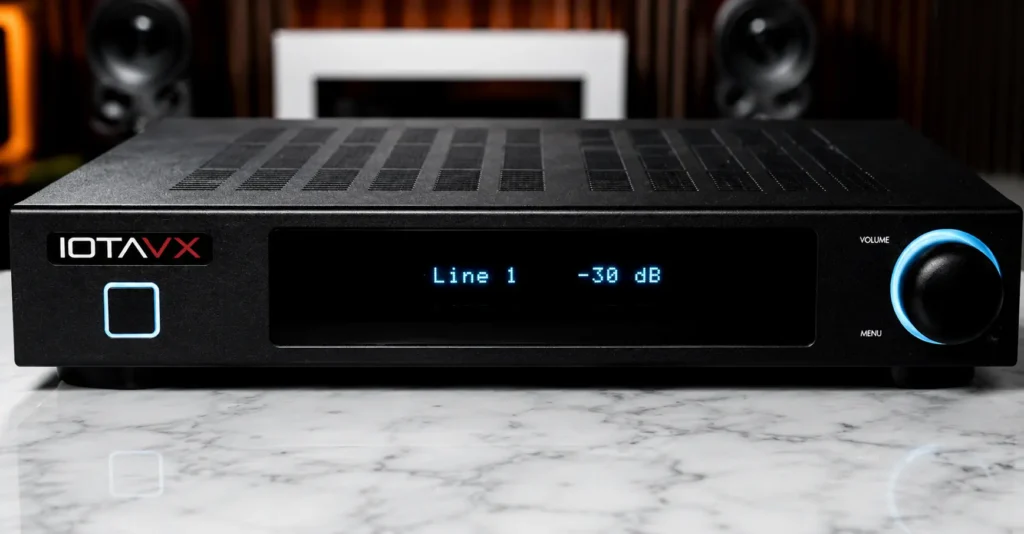
At first glance it looks almost understated. There’s nothing extravagant about its appearance. The clean front panel, simple controls, and compact dimensions suggest an amplifier designed to disappear into the background rather than become the centerpiece of your rack. Yet sometimes the most interesting engineering is hidden beneath the lid.

Rated at 90 watts per channel into 4 ohms, the SA3 already offers more power than many integrated amplifiers in this price category. More importantly, those figures feel entirely believable once you examine the hardware inside. Instead of relying on a compact Class D module—a common choice among affordable amplifiers today—IOTAVX has stayed loyal to a traditional Class AB design.
That decision immediately sets it apart.
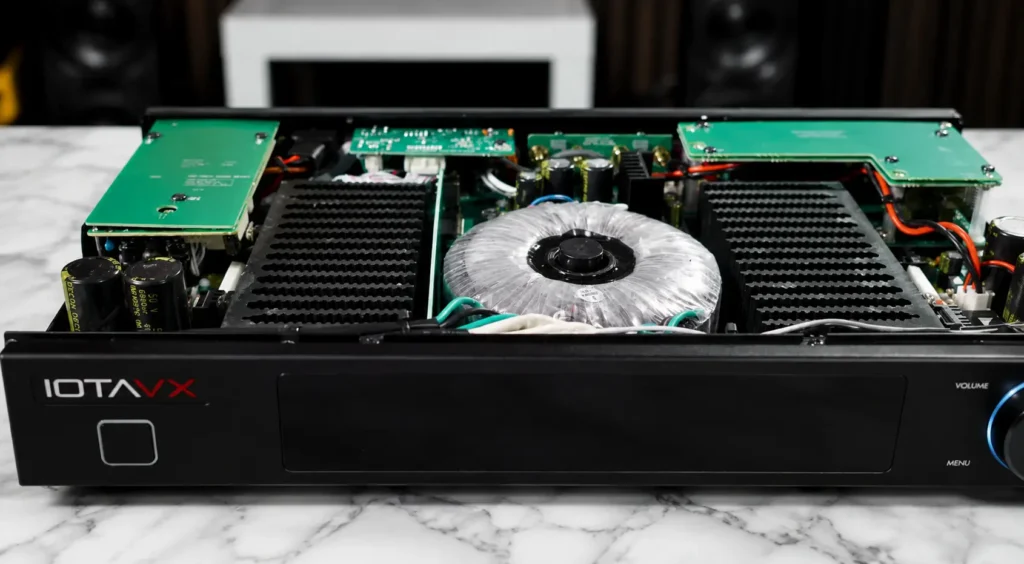
Inside, a substantial toroidal transformer dominates the chassis, supported by generously sized reservoir capacitors and discrete output devices. Rather than chasing headline specifications through clever marketing, IOTAVX has invested in the power supply, arguably the single most important part of any amplifier. It’s this foundation that gives the SA3 its confident, controlled character, particularly when driving speakers that demand plenty of current.
The amplifier’s construction inspires confidence too. The steel chassis feels reassuringly rigid, with no obvious flex or vibration when handled. Despite its compact footprint—measuring only around 24 centimeters deep including the rear connections—the amplifier never feels cramped or cheaply assembled. Every millimeter of internal space has been used efficiently without sacrificing airflow or accessibility.
That compact size also turns out to be surprisingly practical. Many integrated amplifiers require deep equipment racks simply because manufacturers have always built them that way. The SA3 occupies noticeably less shelf space while still accommodating a full-sized linear power supply, making it easier to integrate into modern furniture without compromise.
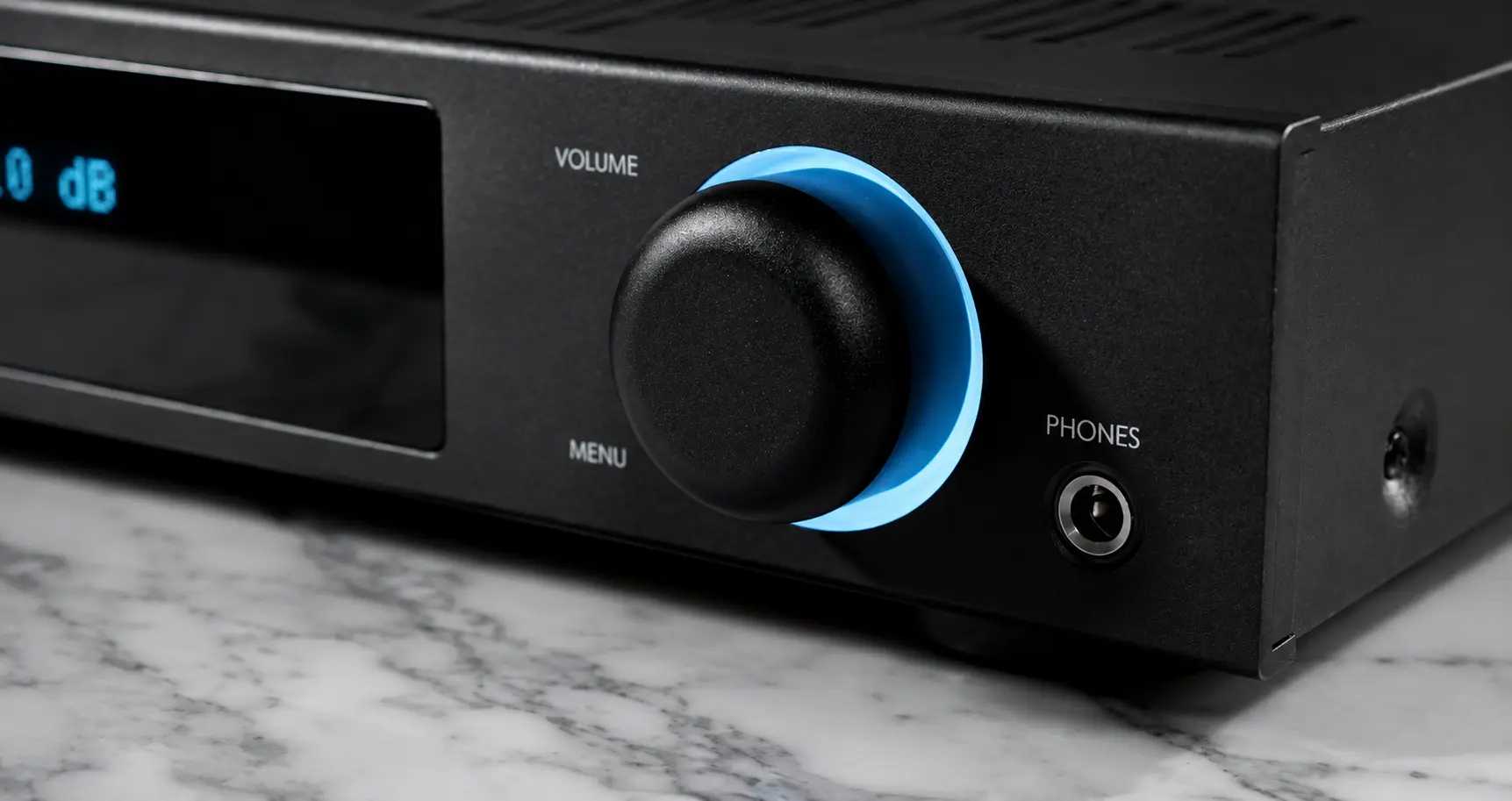
The controls continue the theme of understated practicality. The volume knob moves with reassuring resistance, input selection is straightforward, and operation never feels complicated. Even after extended listening sessions, the amplifier remained pleasantly warm rather than excessively hot—a reassuring characteristic for a Class AB design intended for everyday use.
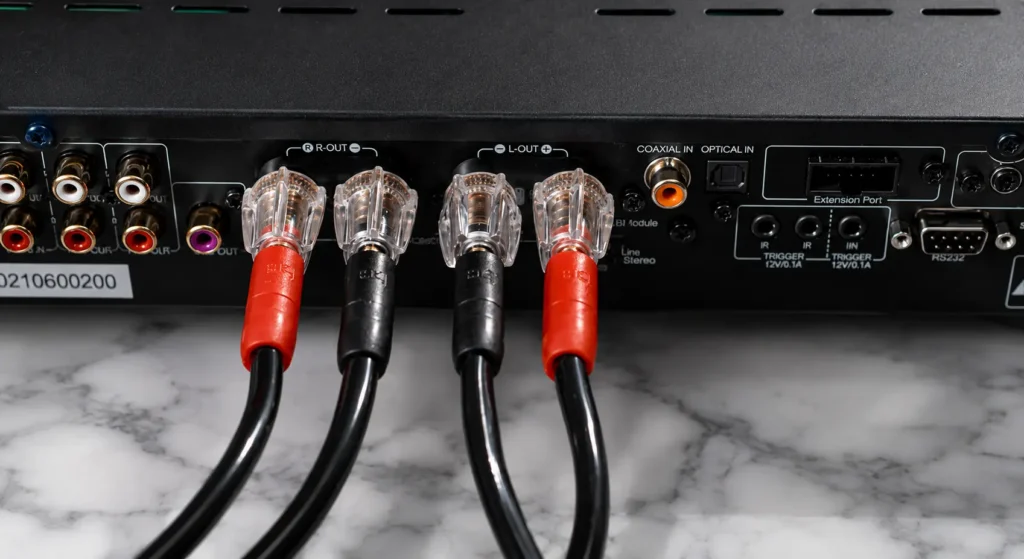
Around the rear panel, it’s immediately obvious that IOTAVX hasn’t cut corners on connectivity.
Five analogue RCA inputs provide enough flexibility for multiple source components, while optical and coaxial digital inputs allow televisions, streamers, or CD transports to connect directly to the amplifier’s internal DAC. Vinyl enthusiasts haven’t been forgotten either, thanks to a dedicated moving-magnet phono stage specified for cartridges with around 2.5mV output, making it compatible with virtually every mainstream MM cartridge currently available.
Wireless listeners can also join the party through IOTA’s optional aptX Bluetooth module. Rather than permanently integrating Bluetooth hardware that many owners may never use, IOTAVX wisely leaves the choice to the buyer. For a modest additional cost, the optional dongle provides convenient wireless playback without increasing the amplifier’s base price.
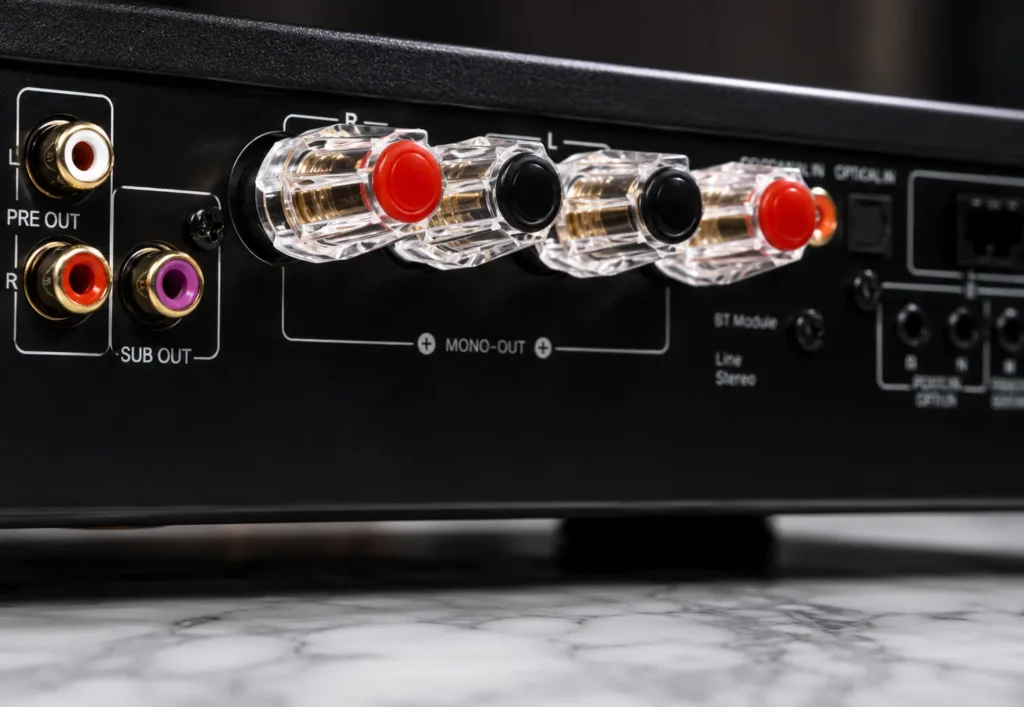
The output section is equally impressive. Alongside conventional pre-outs and record outputs sits an independent subwoofer output, allowing the SA3 to integrate seamlessly into both traditional stereo systems and 2.1-channel setups. While the subwoofer output isn’t actively filtered, most modern subwoofers include adjustable crossover controls, making this a perfectly practical solution in real-world systems.
Perhaps the most fascinating feature, however, is one that’s almost unheard of at this price.
A simple switch transforms the integrated amplifier into a bridged mono power amplifier, effectively doubling its available output. Pair it with the matching PA3 power amplifier—or even a second SA3—and entirely new upgrade paths become possible, from bi-amping to dual mono operation. It’s the sort of flexibility normally reserved for considerably more expensive separates, and it gives the SA3 something many competitors simply cannot offer: a genuine upgrade path without replacing the amplifier you’ve already invested in.
Even before a single note of music is played, it’s clear that IOTAVX approached this amplifier differently. Instead of chasing features that look impressive on a specification sheet, they’ve concentrated on engineering choices that continue paying dividends long after the excitement of unboxing has faded.

Under the Hood
The more time you spend with the IOTAVX SA3, the more obvious it becomes that this amplifier wasn’t designed around marketing bullet points. While many manufacturers in this price range focus on adding streaming platforms, colorful displays, or smartphone apps, IOTAVX has invested where it matters most—in the amplifier itself. Remove the lid and you’ll immediately notice that the majority of the internal space is occupied by a substantial toroidal transformer and a generously specified linear power supply. It’s an old-school approach, but one that continues to pay dividends when the music becomes demanding.
Rather than adopting the increasingly common Class D modules found in many affordable integrated amplifiers, the SA3 stays faithful to a traditional Class AB topology. Discrete output transistors handle amplification duties, supported by sizeable reservoir capacitors that provide the current reserves needed during dynamic musical peaks. On paper, this might not sound particularly revolutionary, but in practice it’s one of the reasons the SA3 feels considerably more substantial than its modest asking price suggests.
One feature that deserves particular attention is the amplifier’s ability to operate as a bridged mono power amplifier. It’s an unusual capability at this level and one that dramatically increases the SA3’s flexibility. With the simple flick of a switch, the amplifier can be transformed into a high-powered mono amplifier delivering around 180 watts into a 4-ohm load. Pair it with a second SA3 or the matching PA3 power amplifier, and suddenly an affordable integrated amplifier becomes the foundation of a remarkably capable separates system.
It’s this forward-thinking approach that makes the SA3 particularly appealing. Rather than forcing owners to replace the entire amplifier as their systems evolve, IOTAVX allows the amplifier to grow alongside the rest of the equipment. That’s something rarely seen in this price category.
Another pleasant surprise is the preamplifier stage. Instead of relying entirely on integrated operational amplifier chips, much of the analog circuitry remains discretely designed. Again, this isn’t the cheapest way to build an amplifier, but it reflects IOTAVX’s clear intention to prioritize sound quality over manufacturing convenience.
Equally impressive is how quietly everything operates. Throughout weeks of listening, the amplifier remained free from transformer hum or mechanical noise, while background hiss was virtually nonexistent through both the Monitor Audio Silver 100 and the far more revealing Canton A55. Even with an ear placed close to the tweeter, the SA3 maintained an impressively silent background, allowing quiet musical passages to emerge naturally without unwanted distractions.
Listening Test
Specifications can only tell part of the story. Ultimately, an amplifier succeeds or fails according to how convincingly it communicates music, and this is where the SA3 begins to justify the enthusiasm surrounding it.
For the majority of our evaluation, the IOTAVX was partnered with the Monitor Audio Silver 100. Their balanced presentation made them an ideal reference for comparing the SA3 directly against the Cambridge Audio AXA35 and the Exposure 1010 S2. To assess the amplifier’s current delivery and control, we also connected it to the considerably more demanding Canton A55 floorstanders, whose electrical characteristics quickly expose weaknesses in lesser amplifiers.

Music covered a broad spectrum of genres. James Blood Ulmer’s Crying remained a useful benchmark for dynamics and rhythmic drive, while Norah Jones’ Don’t Know Why highlighted vocal texture and midrange refinement. Massive Attack’s Angel tested bass authority, and Dire Straits’ Telegraph Road proved invaluable for evaluating large-scale dynamics and stereo imaging. Classical recordings, including orchestral works by Mahler, further demonstrated how comfortably the amplifier handled complex arrangements without losing composure.
From the very first listening session, the SA3 displayed a calm confidence that immediately set it apart from many entry-level integrated amplifiers. It never sounded as though it was trying to impress with exaggerated detail or artificially boosted bass. Instead, it presented music with a relaxed authority that encouraged long listening sessions rather than demanding attention through sheer excitement.
Bass Performance
If there is one area where the SA3 immediately distinguishes itself from most competitors below the €500 mark, it’s bass reproduction.
Many affordable amplifiers can produce respectable low frequencies at moderate listening levels, but begin to lose grip as speaker demands increase. The SA3 behaves differently. Thanks largely to its generously specified power supply, bass notes retain their weight and composure even when the volume climbs well beyond comfortable domestic levels.
Massive Attack’s Angel demonstrated this beautifully. The opening bass line carried genuine physical presence without becoming loose or overblown. Each note remained clearly defined, allowing the rhythmic foundation of the track to breathe naturally while maintaining excellent control over the loudspeakers. There was no sense of strain, compression, or loss of authority as playback levels increased.
This characteristic became even more apparent when driving the Canton A55. These speakers are far from an easy electrical load, yet the SA3 controlled them with surprising confidence. Kick drums possessed convincing impact, bass guitars retained excellent texture, and orchestral recordings displayed satisfying weight without ever becoming bloated.
Compared directly with the Cambridge Audio AXA35, the IOTAVX simply sounded more muscular. The Cambridge remained wonderfully musical, but the SA3 produced noticeably greater authority and low-frequency control, particularly during demanding passages where large dynamic swings occurred.
Midrange Performance
A powerful amplifier is of little value if it can’t communicate the emotion within a performance, and fortunately the SA3 proves equally convincing through the midrange.
Vocals are reproduced with a natural warmth that immediately makes extended listening enjoyable. Norah Jones’ voice carried convincing body and intimacy without sounding artificially thick or overly romantic. Male vocals benefited equally, with Leonard Cohen’s distinctive baritone remaining rich, textured, and firmly anchored between the loudspeakers.

The SA3 doesn’t chase analytical precision in the way some brighter amplifiers do. Instead, it prioritizes coherence and musical flow. Instruments blend naturally together while still maintaining enough separation to follow individual performances within complex recordings.
Against the Exposure 1010 S2, the differences became clearer. The Exposure revealed slightly greater transparency through the upper midrange, extracting a little more micro-detail from acoustic recordings and placing vocals fractionally further forward in the soundstage. The IOTAVX responded with a smoother, more relaxed presentation that proved easier to enjoy during lengthy listening sessions, especially with recordings that weren’t mastered particularly well.
That forgiving nature ultimately became one of the amplifier’s greatest strengths. Poor recordings remained listenable without sacrificing the character of better productions, making the SA3 a remarkably versatile partner across a wide range of musical genres.
Treble & Detail Retrieval
The SA3 approaches treble with maturity rather than aggression.
High frequencies are clean, refined, and surprisingly composed for an amplifier in this price bracket. Cymbals possess convincing metallic shimmer without excessive brightness, while violins and acoustic guitars retain plenty of harmonic detail without drifting into harshness.
Listeners accustomed to amplifiers that emphasize upper-frequency sparkle may initially find the SA3 slightly restrained. However, after extended listening, that balance begins to make perfect sense. Rather than highlighting every recording flaw, the amplifier allows music to breathe naturally, encouraging hours of fatigue-free listening.
This became especially noticeable during longer evening sessions. Even after several albums played back-to-back, there was never a sense of listening fatigue. Poorly mastered rock albums remained enjoyable, while high-quality jazz and classical recordings retained all the openness and refinement necessary to satisfy more critical listeners.
The built-in DAC followed a similar philosophy. It delivered perfectly respectable performance with good clarity and timing, although it couldn’t quite match the refinement of an external source component. Using the Cambridge Audio AXC35 as a conventional analogue source produced slightly smoother textures, greater air around instruments, and a touch more sophistication than relying solely on the SA3’s internal digital conversion.
That isn’t really a criticism. At this price, the inclusion of a capable DAC should be viewed as a welcome convenience rather than a replacement for dedicated external converters costing several hundred euros.
Stereo Imaging & Soundstage
Stereo presentation is another area where the SA3 quietly impresses.
Rather than creating an exaggerated sense of width, it focuses on producing a stable, believable soundstage with convincing image placement. Well-recorded acoustic performances extend comfortably beyond the outer edges of the loudspeakers, while vocals remain securely locked in the center with excellent positional stability.
Depth is equally convincing. Layered orchestral recordings reveal clear front-to-back separation, allowing strings, brass, and percussion to occupy distinct spaces within the performance rather than collapsing into a flat wall of sound.

Perhaps most impressive is the amplifier’s composure during busy musical passages. Even when arrangements become dense, the SA3 maintains admirable separation between instruments, preventing complex recordings from sounding congested or confused.
Dynamics & High-Volume Performance
If the bass performance hinted at the SA3’s capabilities, its dynamic performance removes any remaining doubt.
James Blood Ulmer’s Crying quickly revealed the amplifier’s character. At modest listening levels, the Exposure 1010 S2 retained a slight advantage in openness and immediacy. Increase the volume, however, and the balance shifted decisively in favor of the IOTAVX.
As the music became more demanding, the SA3 simply refused to lose its composure. Drum strikes carried greater physical impact, bass lines remained tightly controlled, and crescendos expanded effortlessly without the slightest indication of compression or hardness. Rather than becoming aggressive, the amplifier seemed to grow increasingly comfortable as more power was required.
That confidence became even more dramatic when paired with the matching PA3 power amplifier, opening the door to both bridged mono operation and bi-amping. The additional headroom transformed demanding loudspeakers into remarkably effortless performers, delivering levels of authority and bass control that would normally require a significantly larger investment.
By the end of the listening sessions, one conclusion had become unavoidable. The SA3’s greatest strength isn’t any single specification or feature—it’s the effortless confidence with which it delivers music. It never sounds as though it’s operating close to its limits, and that relaxed sense of control is something rarely encountered at this price point.
Conclusion:
By the end of the listening sessions, one conclusion had become unavoidable. The SA3’s greatest strength isn’t any single specification or feature, it’s the effortless confidence with which it delivers music.
It never sounds like it’s operating close to its limits, and that relaxed sense of control is something rarely encountered at this price point.
Yes, there are amplifiers that offer slightly more transparency or detail retrieval. The Exposure 1010 S2 edges ahead in some areas, particularly in the upper midrange. But the SA3 gives you something arguably more important for everyday listening: a thoroughly musical, forgiving, and surprisingly powerful amplifier that adapts to your system rather than forcing you to adapt to it.
Add the upgrade path, bridged mono operation, bi-amping capability, matching power amplifiers, and you’ve got an amplifier that genuinely grows with you. That’s rare at any price, let alone €450.
The hype? It’s earned.
Pros:
- Excellent bass authority and control
- Genuinely useful upgrade path with bridged mono capability
- Compact footprint without compromising performance
- Comprehensive connectivity including phono stage and subwoofer output
- Forgiving character that works with varied recordings
- Solid build quality
Cons:
- Slightly restrained treble may not suit everyone
- Internal DAC is decent but not exceptional
- Budget rivals offer slightly more transparency in the midrange