
MartinLogan Aeon Review: I Didn’t Expect an Older Electrostatic Speaker to Sound This Good
Electrostatic speakers have always carried a certain mystique. They’re different to look at, different in the way they work, and, perhaps most importantly, different in the way they reproduce music. I still remember hearing my first pair many years ago and being completely captivated by the openness and realism they brought to familiar recordings. That experience sparked a fascination that has stayed with me ever since.
Over the years, electrostatic loudspeakers have evolved considerably. Many of the compromises that once limited the technology have been reduced, while its greatest strengths have become even more refined. MartinLogan has played a major role in that evolution, earning a reputation as one of the world’s leading manufacturers of electrostatic loudspeakers.
As a long-time MartinLogan owner myself, I was particularly interested in finding out how the considerably smaller and more affordable MartinLogan Aeons would compare, not only against my own Prodigies but also against conventionally designed floorstanding loudspeakers in a similar price bracket. Could they still deliver the huge soundstage, breathtaking transparency, and effortless realism that make electrostatic speakers so addictive, or would their compromises become too obvious in everyday listening?
After spending several weeks listening to a wide variety of music and putting them through demanding movie soundtracks, I came away with a very clear answer.

Design and Build Quality
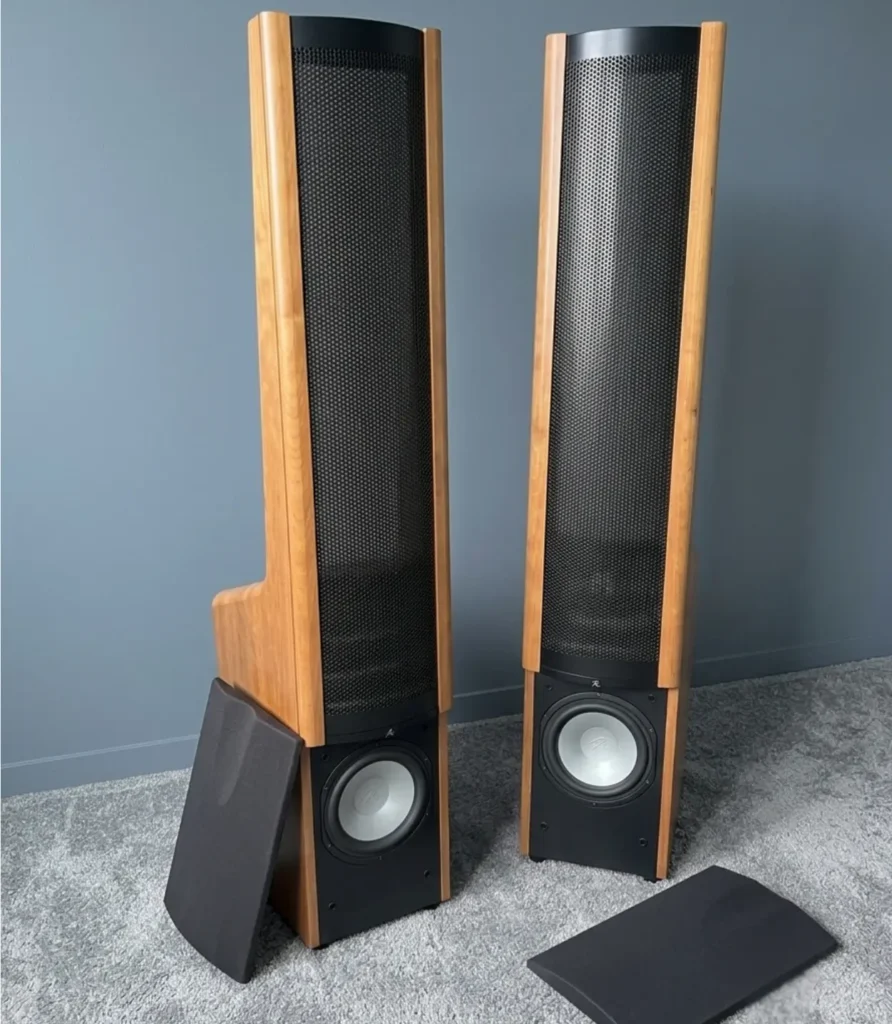
The MartinLogan Aeons are floorstanding hybrid electrostatic loudspeakers designed for both dedicated stereo systems and high-performance home cinema installations. They combine the company’s signature curved electrostatic panel with an eight-inch high-excursion dynamic woofer responsible for the lower frequencies.
Martin Logan Motion 35XTi Review
On paper, the specifications are respectable. The Aeons offer a quoted frequency response of 43Hz to 22kHz, a sensitivity of 89dB, and a nominal impedance of four ohms. Measuring 57 inches tall, 15.5 inches deep, and 10.25 inches wide, each speaker weighs around 56 pounds. While certainly substantial, they’re far more manageable than MartinLogan’s flagship Statement models, which occupy an entirely different universe in both size and price.
My review pair arrived finished in the standard matte black with black rail trim. MartinLogan also offers numerous trim finishes, allowing buyers to match the speakers with a wide variety of interiors. Even today, the slim transparent electrostatic panel remains one of the most distinctive loudspeaker designs available, giving the Aeons an elegant appearance that avoids the bulky look of many traditional floorstanders.
At a retail price of $2,995 per pair, the build quality feels entirely appropriate. The cabinet is solid, panel alignment is excellent, and every component fits together with the precision expected from a premium loudspeaker manufacturer. While they may not have the luxurious woodworking found on some similarly priced rivals, the overall presentation still feels purposeful and well executed.
Setup and Placement
Like virtually every dipole loudspeaker, the MartinLogan Aeons reward careful positioning. They aren’t speakers that can simply be pushed against a wall and forgotten.
For the best results, I found they performed happiest around two to three feet from the front wall and at least a foot or two from the side walls. This allows the rear radiation from the electrostatic panel to develop properly, producing the spacious and holographic presentation these speakers are known for.
Toe-in also has a noticeable influence on performance. A slight angle towards the listening position delivered the most convincing balance in my room, sharpening image focus without making the treble sound overly forward. Too little toe-in produced a broader but softer stereo image, while excessive toe-in narrowed the listening window more than I preferred.

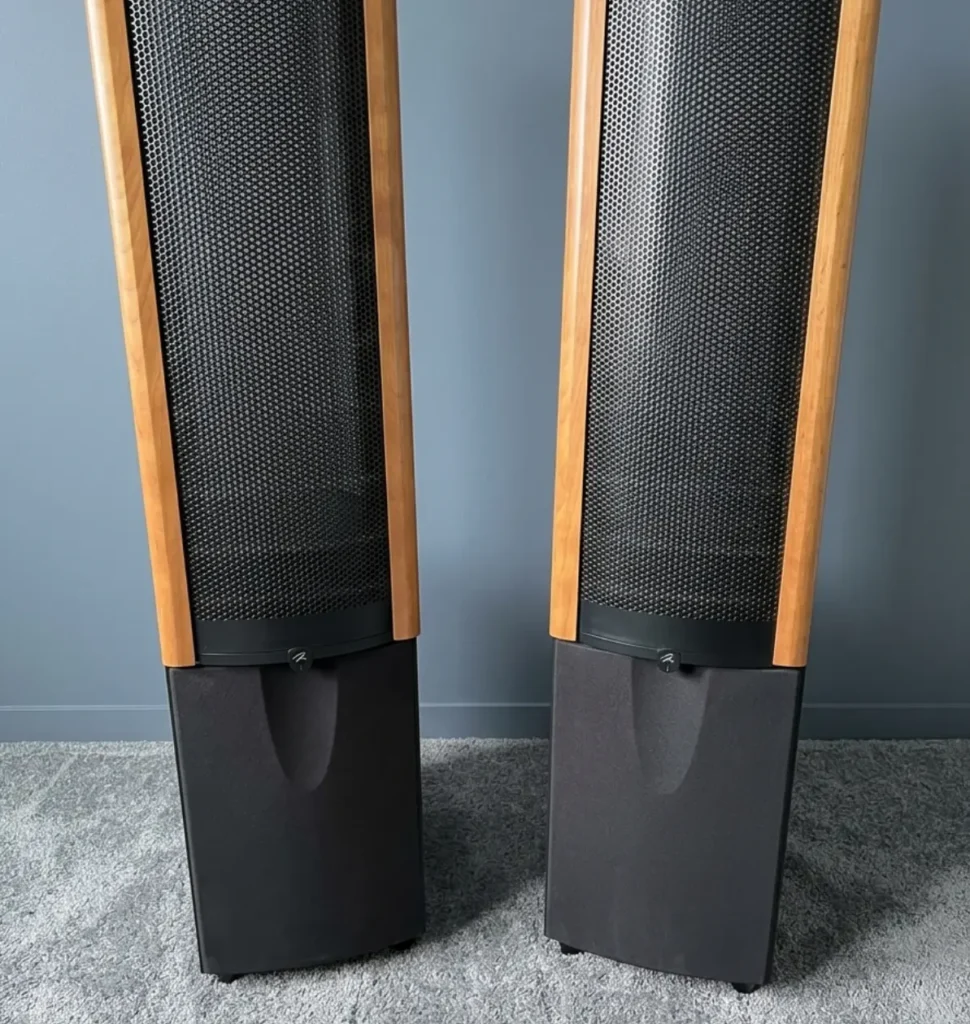
Listening distance is equally important. Ideally, your seating position should be slightly farther away than the distance separating the two speakers. Once correctly positioned, the stereo image locks into place with remarkable precision, creating the illusion of performers occupying real physical space rather than simply appearing between two loudspeakers.
MartinLogan supplies both spikes and flat feet, depending on your flooring, although I achieved the best results using the supplied spikes on a solid surface.
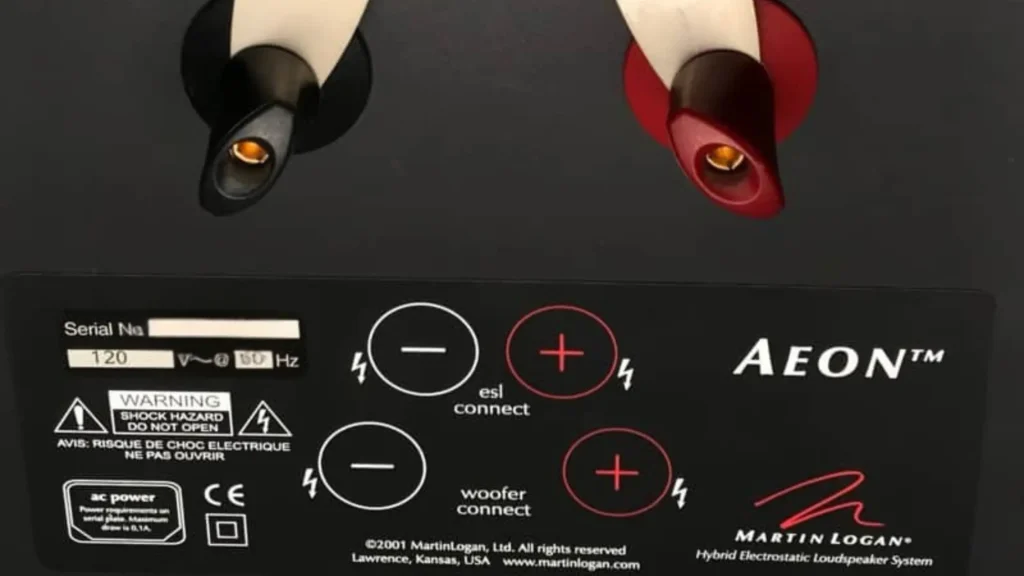
One practical consideration is power. Like all MartinLogan electrostatic loudspeakers, the Aeons require an AC connection to energise their electrostatic panels. Power consumption is minimal, but it does mean each speaker must be positioned close enough to a mains outlet or extension lead.
MartinLogan Aeon Technology
For anyone unfamiliar with electrostatic loudspeakers, the Aeons are unlike almost anything you’ll find in a conventional speaker design.
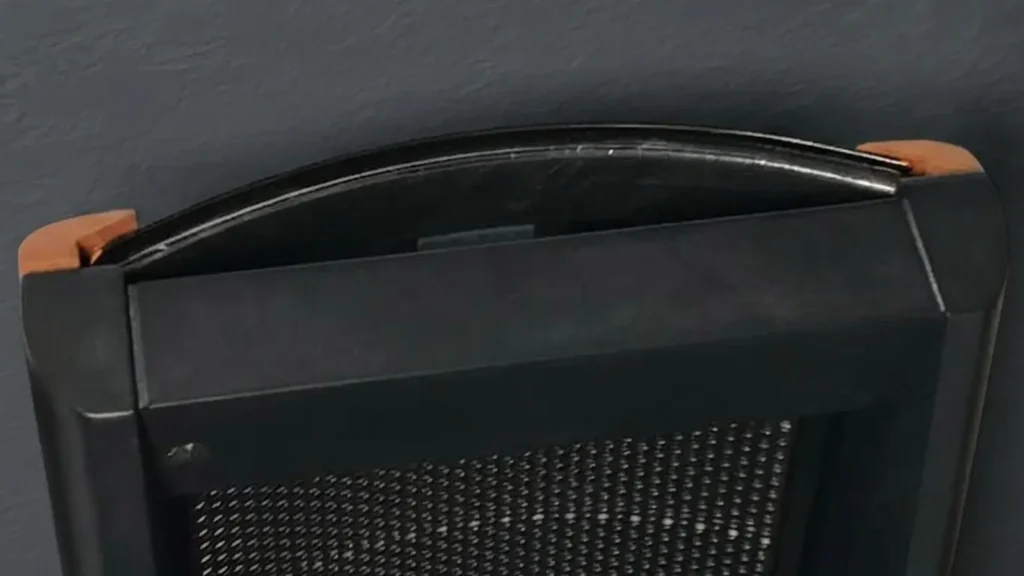
Traditional loudspeakers rely on cone drivers driven by voice coils, where only a relatively small portion of the cone performs the majority of the work. MartinLogan approaches the problem differently. The upper section of the Aeon consists of an ultra-light transparent polyethylene diaphragm suspended between two perforated metal stators. Instead of pushing sound with a conventional cone, the entire diaphragm moves as one extremely light surface.
The result is exceptionally low distortion, lightning-fast transient response, and extraordinary levels of detail retrieval. Small dynamic shifts, delicate vocal inflections, and subtle ambient cues emerge with a level of clarity that conventional moving-coil designs often struggle to match.
Why These $1,600 Floorstanding Speakers Feel Expensive: My MartinLogan Motion Foundation F1 Review
MartinLogan’s Curvilinear Line Source technology also addresses one of the traditional weaknesses of large electrostatic panels. By gently curving the diaphragm, dispersion becomes considerably more uniform while preserving the openness and transparency that electrostatic speakers are celebrated for.
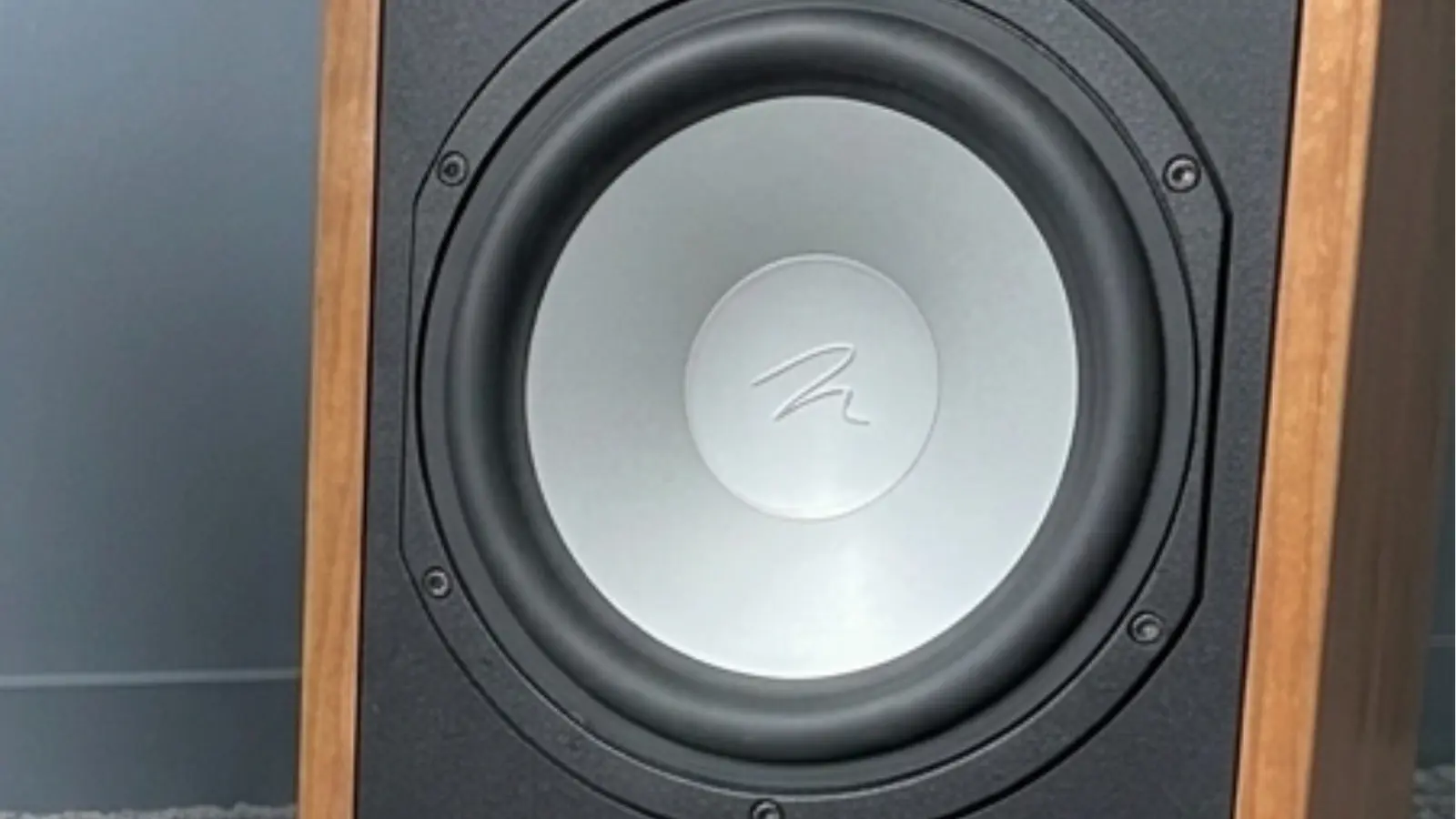
The lower frequencies are handled by an eight-inch high-excursion woofer housed inside a rigid enclosure beneath the electrostatic panel. Integration between the two drive units is impressively seamless, resulting in a presentation that sounds remarkably coherent across most of the frequency range.
Connection quality is equally reassuring. The large binding posts accept banana plugs, spades or bare wire and can be configured for either bi-wiring or bi-amping. MartinLogan’s owner’s manual also deserves praise, providing unusually detailed guidance covering installation, positioning, bi-wiring, and even a concise history of electrostatic loudspeaker technology.
MartinLogan Aeon Listening
Before diving into individual albums, one characteristic became obvious almost immediately.
The MartinLogan Aeons don’t simply reproduce music—they create an acoustic space that extends well beyond the physical boundaries of the speakers. Even before focusing on individual instruments or vocals, the sheer scale of the soundstage grabbed my attention. Images stretched wider, reached deeper, and floated more freely than many conventional loudspeakers I’ve heard at similar prices.
That expansive presentation set the stage for the rest of my listening sessions, beginning with Leon Bridges’ Gold-Diggers Sound.


I began my serious listening sessions with Leon Bridges’ Gold-Diggers Sound, starting with “Motorbike.” Within the opening few moments it became obvious what makes electrostatic loudspeakers so special. The Aeons produced a vast, three-dimensional soundstage with a level of openness that’s genuinely difficult to find at this price point. Bridges’ smooth, soulful voice floated effortlessly between the speakers with remarkable presence, making every breath and vocal inflection feel intimate and completely natural.
As the arrangement gradually built with piano, horns and subtle percussion, the Aeons maintained exceptional composure. Every instrument occupied its own clearly defined space, allowing the performance to breathe without ever sounding congested. Their ability to separate complex musical passages while preserving a convincing sense of realism was consistently impressive.
I stayed with the album for “Sho Nuff,” where the driving bass line and crisp percussion demonstrated another side of the MartinLogans. Bass notes were tight, articulate and exceptionally well controlled, even if they didn’t quite deliver the room-shaking authority of some conventional floorstanders. Rather than overwhelming the presentation, low frequencies integrated seamlessly with the electrostatic panel, creating a coherent sound that never felt disconnected from top to bottom.
Moving to Taylor Swift’s Folklore, I selected “Cardigan.” The first thing that caught my attention was the purity of her voice. It sounded wonderfully open and completely free from any obvious coloration. Imaging was so precise that on more than one occasion I instinctively glanced towards my centre speaker, convinced it had somehow joined the performance. Of course, it hadn’t—the Aeons were simply creating an incredibly stable phantom centre image.
“Exile,” featuring Bon Iver, proved equally captivating. The textured vocals of Justin Vernon contrasted beautifully with Swift’s softer delivery, while the delicate piano and subtle string arrangements retained every ounce of their emotional character. Lesser loudspeakers often blur these finer details together, but the Aeons revealed each layer effortlessly without ever sounding analytical or clinical. Despite their impressive resolution, they remained thoroughly musical throughout.
To explore something with a completely different production style, I turned to Bad Bunny’s Un Verano Sin Ti. “Ojitos Lindos” opens with delicate acoustic guitar work accompanied by gentle percussion, and the Aeons reproduced both with outstanding tonal realism. Harmonic textures were rich, decay was beautifully preserved and the sense of space around individual instruments was simply exceptional.
When Bad Bunny’s vocals entered, the soundstage expanded even further, creating an almost holographic presentation that extended well beyond the physical boundaries of the speakers. Every subtle breath, every vocal nuance and every shift in dynamics emerged naturally, reminding me once again why electrostatic speakers continue to enjoy such a devoted following.

I followed with “Neverita,” whose vibrant production highlighted the Aeons’ speed and transient response. Rhythms remained crisp and energetic, while layered electronic effects floated effortlessly throughout the room. The presentation was immersive without becoming exaggerated, drawing me deeper into the music rather than simply impressing me with detail.
Throughout my listening sessions, I repeatedly compared the Aeons with a pair of Paradigm Studio 100s, another highly respected floorstanding loudspeaker in a similar price category. The comparison proved enlightening.
The Paradigms undoubtedly offered deeper bass extension and proved more forgiving when listening away from the central seating position. However, the MartinLogans countered with a significantly larger soundstage, superior vocal realism and an almost effortless ability to resolve low-level detail. Their midrange possessed a natural openness that made voices and acoustic instruments sound remarkably lifelike, ultimately making them the more emotionally engaging loudspeaker of the two.
Movie Performance
Although many people associate electrostatic loudspeakers primarily with two-channel music listening, I was equally interested in discovering how the Aeons performed during movie playback.
I began with Dune, whose demanding soundtrack combines immense dynamic swings with countless subtle atmospheric effects. Hans Zimmer’s score filled the room with astonishing scale, while the Aeons maintained superb composure during even the busiest sequences. Deep environmental effects, whispered dialogue and massive orchestral passages all coexisted effortlessly within an enormous three-dimensional soundfield.
Every layer of the soundtrack remained easy to follow, allowing me to appreciate countless small details that often disappear through more conventional loudspeakers. The Aeons communicated the vast emptiness of Arrakis beautifully, creating an immersive cinematic experience that drew me completely into the film.
Next came Top Gun: Maverick, whose aggressive sound design places enormous demands on any loudspeaker system. From the quiet conversations in the bar to the thunderous jet engines roaring overhead, the MartinLogans handled every transition with confidence.
Jet flyovers possessed excellent speed and precision, while cockpit dialogue remained perfectly intelligible even during the most chaotic action sequences. Dynamic contrasts were handled effortlessly, giving every explosion, missile launch and engine burst convincing impact without sacrificing clarity.
Once again I compared them directly against the Paradigm Studio 100s. While the Paradigms produced greater bass slam during the larger action scenes, I consistently preferred the MartinLogans for their superior transparency, vocal clarity and expansive soundstage. They simply created a more convincing illusion of being present within the scene itself.
Weaknesses
No loudspeaker is perfect, and the MartinLogan Aeons are no exception.
Ironically, one of their greatest strengths can also become their biggest weakness. These speakers reveal absolutely everything contained within a recording. Feed them a beautifully mastered album and the results are breathtaking. Play a harsh or poorly recorded track, however, and they make very little effort to hide its flaws. Compression artifacts, excessive brightness and poor production choices become immediately obvious.
System matching is equally important. With their four-ohm impedance and revealing character, the Aeons deserve high-quality partnering electronics capable of maintaining control while delivering a smooth tonal balance. Pair them with bright or underpowered amplification and they can become less forgiving than many conventional loudspeakers.
Placement also demands patience. Their dipole design means they need generous breathing space behind them to perform at their best. If positioned too close to a rear wall, much of the spacious imaging that makes them so special begins to collapse. Likewise, their listening sweet spot remains narrower than that of many traditional dynamic speakers.
Finally, while bass quality is excellent, ultimate bass extension isn’t class-leading. Those seeking maximum low-frequency weight for large orchestral works or blockbuster movies may wish to consider adding a capable subwoofer or exploring larger MartinLogan models.
Verdict:
My appreciation for electrostatic loudspeakers has only grown stronger over the years, and the MartinLogan Aeons perfectly demonstrate why this technology continues to command such loyalty among enthusiasts.
They aren’t loudspeakers that impress through brute force or exaggerated bass. Instead, they win you over with transparency, realism, and one of the most convincing soundstages available anywhere near their price point. Whether I was listening to Leon Bridges, Taylor Swift, or Bad Bunny, or watching demanding films such as Dune and Top Gun: Maverick, the Aeons consistently delivered an immersive experience that encouraged longer listening sessions rather than simply showing off their technical abilities.
Yes, they require careful positioning. Yes, they expose poor recordings without mercy. And yes, some rivals deliver greater bass authority or a wider listening sweet spot. But those compromises become surprisingly easy to accept once you experience the clarity, openness, and effortless realism these speakers are capable of producing.
The MartinLogan Aeons may not be the perfect loudspeaker for every room or every listener, but for anyone searching for an engaging, emotionally involving, and genuinely distinctive listening experience, they remain one of the finest hybrid electrostatic speakers available in their class. Long after the music stopped, I found myself wanting to sit down and listen again, and that’s perhaps the highest compliment any loudspeaker can receive.
Pros And Cons:
Pros:
- Huge, holographic soundstage
- Outstanding vocal realism
- Exceptional transparency and detail retrieval
- Beautifully integrated electrostatic panel and woofer
- Excellent build quality and finish
- Superb performance with both music and movies
Cons:
- Requires careful placement
- Narrower listening sweet spot than conventional speakers
- Ruthlessly revealing of poor recordings
- Needs quality amplification
- Bass lacks the ultimate authority of some rivals
Overall Rating: 9.3/10
Performance: ★★★★★
Build Quality: ★★★★★
Value: ★★★★☆
Ease of Setup: ★★★★☆
Recommended Award: Highly Recommended