

The Speaker That Refuses to Age: Bowers & Wilkins Still Can’t Make Enough Nautilus Speakers
The Speaker That Refuses to Age
Thirty-three years after it first appeared, the Bowers & Wilkins Nautilus still looks like it belongs in a sci-fi movie. And people are still paying $110,000 for it.
Here’s the thing about the Nautilus: it doesn’t care about trends.
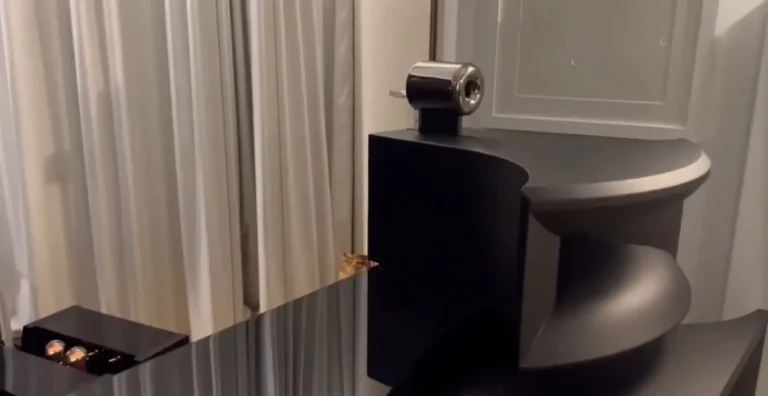
When Bowers & Wilkins dropped this thing in 1993, it looked absurd. A giant spiral shell of a speaker with tapered tubes sticking out in all directions. Nothing else on the market looked anything like it. And honestly, nothing else does today either.
But here we are, more than three decades later, and the Nautilus isn’t just surviving. It’s thriving. The waiting list is three years long. Three years. For a speaker that came out when Bill Clinton was in his first term.
It Was Never About Looking Weird
Look, that spiral shape? It’s not for show.
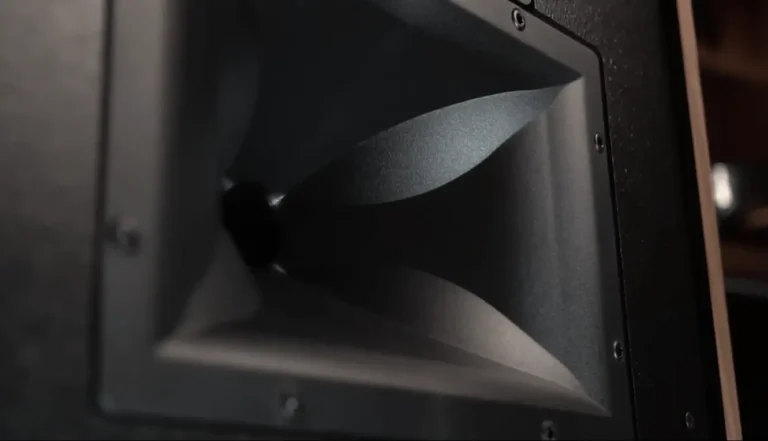
Inside those iconic curves is some seriously clever acoustic engineering. The Nautilus uses a four-way tube-loaded system. Each driver — bass, lower midrange, upper midrange, and high frequencies — has its own tapered tube behind it. The bass tube is nearly three metres long. Folded and wound into that spiral shape, obviously, because nobody wants a three-metre pipe sticking out of their living room.
What’s happening inside those tubes is the real magic. Sound-absorbing material gradually eats up the energy coming from the back of each driver. That stops it from bouncing back and messing with what the driver is trying to do. The goal? Make the speaker behave like it’s not even there. Acoustic invisibility, if you will.
The Numbers Are Bonkers
Let’s talk money.
Standard pair: about $110,000. In the UK, that’s roughly £100,000.
But here’s where it gets properly mental. Fancy a custom paint job? Of course you do. For about £120,000, Bowers & Wilkins will match any colour you throw at them. Recent builds have rolled out in McLaren Orange, Ferrari Red, and a jaw-dropping Abalone Pearl finish that mimics the inside of the sea creature that inspired the whole design.
Each pair takes 31 days to build. By hand. The company produces around 50 pairs a year. Fifty. That’s it.
Which explains the three-year wait.
How Does It Actually Sound?
Here’s the specification sheet, if you’re into that sort of thing:
- 300mm aluminium cone bass driver
- 100mm aluminium/polymer sandwich-cone lower-midrange
- 50mm aluminium dome upper-midrange
- 25mm aluminium dome tweeter
Frequency response goes from about 10 Hz to 25 kHz at -6 dB. Stands 1.21 metres tall. Weighs 86.5 kilos. Nearly half of that is the stabilising plinth, because nobody wants their hundred-grand speaker wobbling over.
But here’s the thing — this speaker has never been about winning spec wars. It’s active, not passive. No internal crossover. Every pair needs an external line-level active crossover and eight separate amplification channels, ranging from 100 to 500 watts per channel. Each driver gets its own dedicated amplifier. No phase distortion, no energy loss. Just pure, unadulterated sound.
Why Are People Still Buying This Thing?
High-end audio is brutal. New drivers appear. Fancy materials emerge. DSP gets smarter. Products that were cutting-edge five years ago look dated.
And yet, the Nautilus just keeps going.
Because people aren’t buying a speaker. They’re buying the Nautilus. There’s a difference.
For collectors, for serious listeners, for people who want something that isn’t just technically impressive but culturally significant — this is it. The spiral shape is so distinctive you could spot it from across a room without seeing the badge. It’s become an icon. An object. Something that transcends what it actually does.
The Legacy That Won’t Quit
Originally, the Nautilus was an experiment. How far could you go in reducing the audible influence of the speaker cabinet? Could you make a driver behave as if it was operating in free space?
Thirty-three years later, Bowers & Wilkins are still building the thing. Still by hand. Still at that insane price point. Still with a queue of people desperate to get their hands on one.
That’s not just a speaker. That’s a legacy.
And apparently, there are still plenty of people who want to be part of it.