
ELAC Uni-Fi Reference UBR62 Review: A Remarkably Cohesive Three-Way Bookshelf Speaker
Three-way bookshelf speakers haven’t been very common in recent years. This is understandable: fitting three drivers into a compact enclosure and still achieving convincing performance is no trivial task. Coaxial drivers can help, but they require impeccable design and precision manufacturing.
Engineers at ELAC aren’t intimidated by either challenge. The company already uses concentric tweeter and midrange assemblies in both the flagship ELAC Concentro series and the mainstream ELAC Uni‑Fi 2.0 series. More recently, the team from Germany’s northernmost industrial hub, Kiel, introduced another coaxial-based lineup: the ELAC Uni‑Fi Reference series.
At the heart of this lineup sits the ELAC Uni‑Fi Reference UBR62, a compact three-way bookshelf speaker designed to push the Uni-Fi concept even further.

Older Brothers
The word “Reference” clearly indicates that the new speakers are positioned as a more advanced evolution of the Uni-Fi 2.0 series. According to ELAC Senior Vice President James Krodel, the Uni-Fi Reference models were not constrained by the same strict price targets as their predecessors. Simply put, the engineers decided not to cut corners and instead focus on refining every important detail.
This review focuses on the ELAC Uni-Fi Reference UBR62 bookshelf speakers, which sit alongside the ELAC Uni‑Fi Reference UFR52 floorstanding towers and the ELAC Uni‑Fi Reference UCR52 center channel speaker.
The lineup clearly targets both audiophile stereo systems and home theater installations. Interestingly, ELAC offers only one bookshelf size in this series. The UBR62 uses a substantial 6.5-inch woofer, signaling that the engineers were unwilling to compromise performance for compactness.
Optical Illusions
The ELAC Uni-Fi Reference UBR62 is relatively large for a bookshelf speaker, though it never feels oversized. Standing roughly 36 cm tall and 21 cm wide, the speakers remain perfectly manageable and could even work as desktop monitors in a nearfield listening environment.
The drivers are positioned extremely close to each other vertically, helping maintain acoustic coherence. ELAC also chose to place a slotted bass-reflex port on the front baffle — a smart design decision that greatly simplifies speaker placement in real listening rooms.
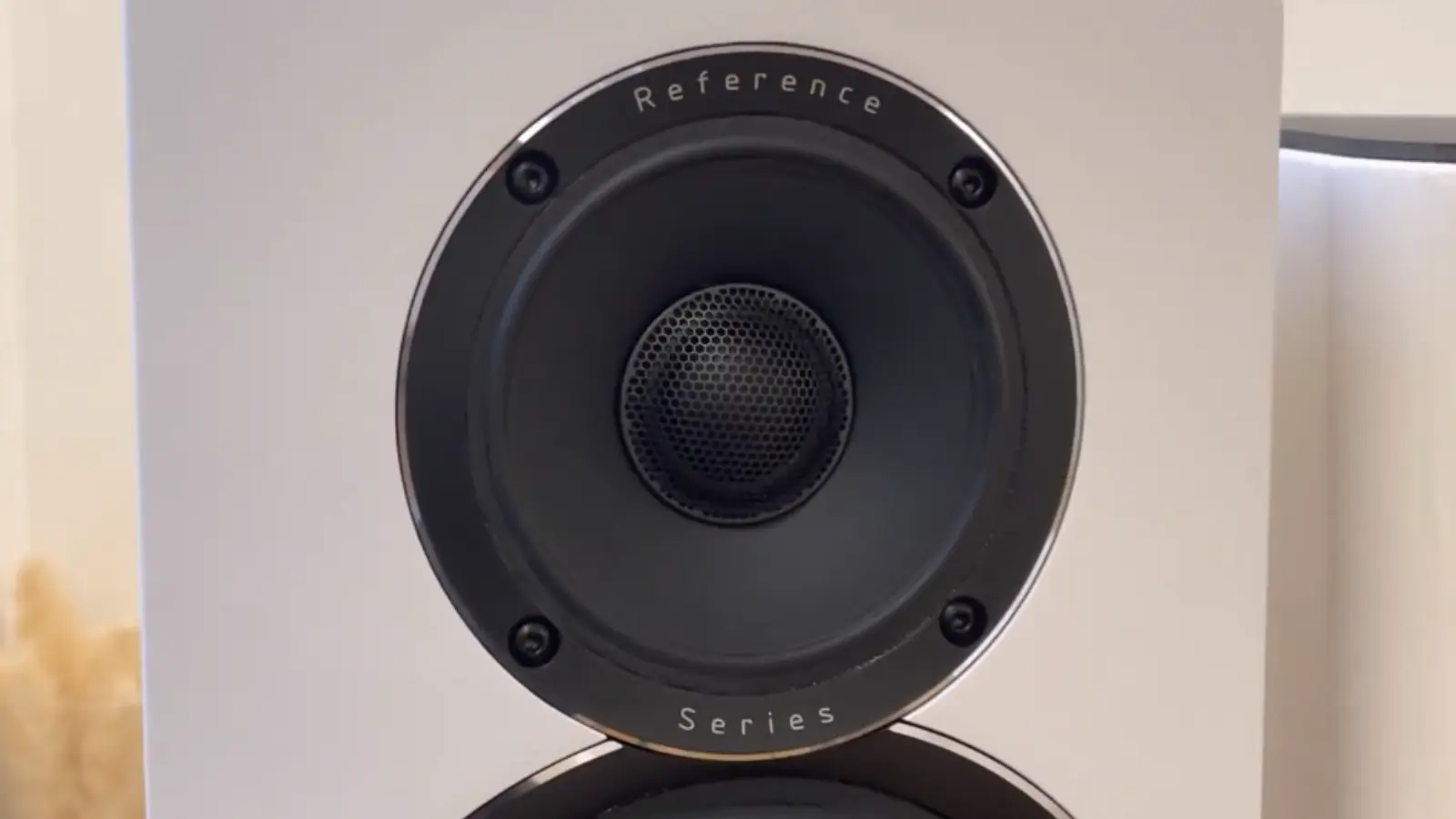
At first glance, the UBR62 cleverly disguises itself as a two-way design. The tweeter dome is protected by a metal grille, while the surrounding midrange driver can easily be mistaken for a horn.
In reality, this is a coaxial midrange-tweeter assembly. The drivers sit so close together that their metal housings partially overlap, minimizing the distance between acoustic centers and helping reduce phase distortion.
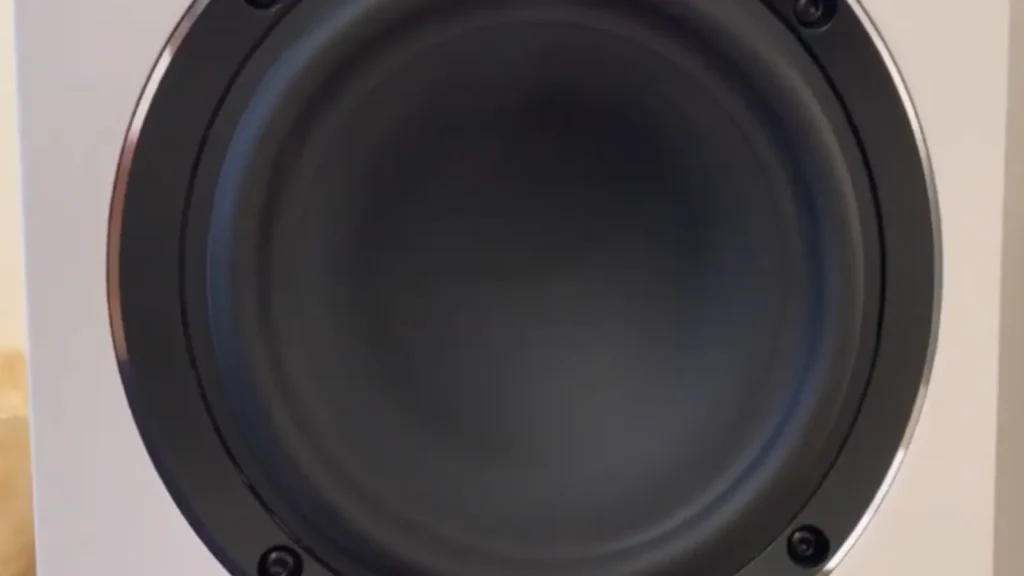
The midrange and woofer cones appear to be paper, but this is another visual trick. Both are actually aluminum drivers with a matte coating.
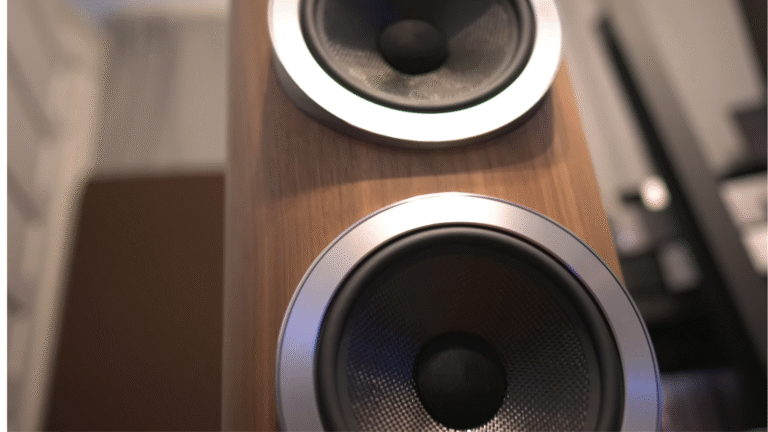
The cabinet finish varies depending on the model. The review sample featured a walnut cabinet with a black front panel, wrapped in a textured vinyl finish that feels durable and looks surprisingly natural even at close range.
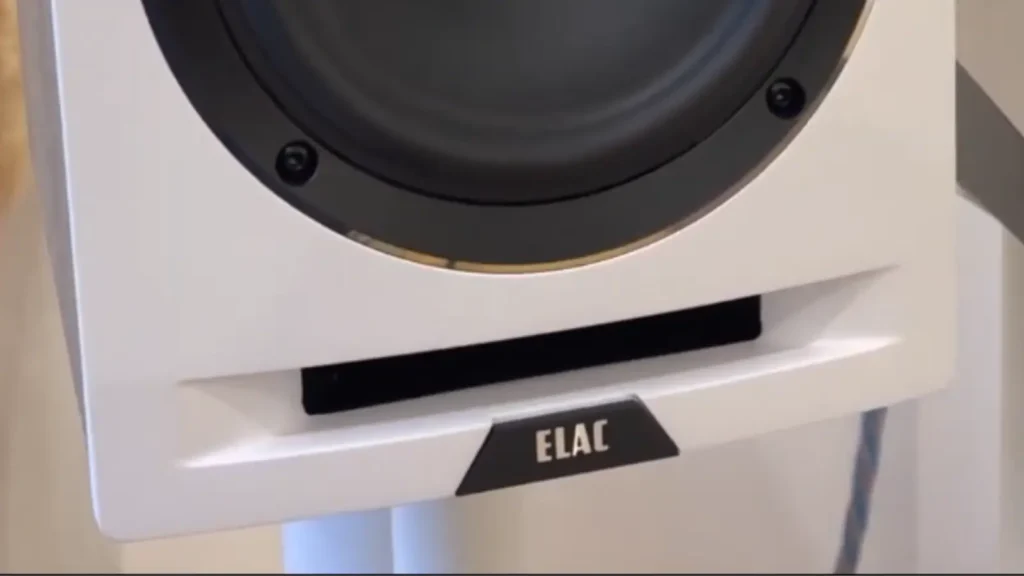
Another option combines an oak cabinet with a white front baffle. The baffle edges are also rounded, which not only improves aesthetics but also reduces diffraction effects.
Despite its three-way architecture and front-firing bass port, the UBR62 still looks surprisingly minimalist and elegant.
Blurring the Lines
The Uni-Fi Reference series is far more than a cosmetic redesign. According to ELAC documentation, the drivers themselves are completely new.
The coaxial assembly has seen the most refinement. The soft-dome tweeter now operates comfortably down to a 1.8 kHz crossover point, compared to 2 kHz in the previous Uni-Fi generation.
The 4-inch midrange driver has been almost completely redesigned. It features a new low-profile surround that reduces diffraction distortion, a larger voice coil, and a powerful neodymium magnet system. The cast basket has also been strengthened to improve rigidity.
The 6.5-inch woofer received its own upgrades, including a stronger magnet structure and a precisely engineered monolithic aluminum cone.
Can the Elac Debut 2.0 B5.2 Really Beat Speakers Twice the Price?
ELAC also designed a slotted bass reflex port with horn-shaped sidewalls. This profile helps suppress unwanted resonances while improving bass dynamics at higher listening levels.
Musical Monolith
For testing, the ELAC Uni-Fi Reference UBR62 speakers were paired with the TEAC NT‑505 network player and the Rotel A12 MKII integrated amplifier.
The Rotel amplifier operates in Class AB and delivers 120 watts per channel into 4 ohms, with a damping factor of 220. In practice, it proved to be an excellent partner for these 6-ohm speakers.
Sensitivity, however, is relatively modest at 85 dB, meaning the UBR62 benefits from a capable amplifier.
The first thing that stands out when listening to the ELAC Uni-Fi Reference UBR62 is its wide, holographic soundstage. For a coaxial speaker, this level of openness is impressive.
The redesigned midrange clearly contributes to this spacious presentation. The sound spreads naturally throughout the room without requiring an extremely precise toe-in.
High frequencies from the soft-dome tweeter sound smooth and refined. There is no harshness or exaggerated sibilance.
Listening to Please Don’t Be Dead by Fantastic Negrito revealed how well the speakers handle complex mixes. The album contains numerous backing vocals, percussion layers, and instrumental textures.
The UBR62 maintained excellent separation and spatial placement, preventing the mix from collapsing into congestion.


Bass Performance
As with most bookshelf speakers, bass capability is always an important question.
Rather than using electronic bass tests, orchestral music proved more revealing. Playing Symphony No. 6 ‘Pathétique’ by Pyotr Ilyich Tchaikovsky demonstrated that the UBR62 can produce surprisingly deep and weighty bass for a compact speaker.
However, achieving this level of authority required higher playback levels. With the powerful Rotel amplifier, the speakers handled the demands comfortably.
A weaker amplifier might struggle to fully drive the ELAC Uni-Fi Reference UBR62, particularly when reproducing large orchestral passages.
Harmony and Integrity
Listening to complex orchestral recordings also revealed the excellent integration between the drivers.
The crossover transitions are seamless, and tonal balance remains consistent across the entire frequency range. Nothing sounds artificially emphasized or recessed.
Music flows naturally, with convincing dynamics and a cohesive presentation that is rare among compact three-way bookshelf speakers.
Pros and Cons
Pros
- Wide holographic soundstage
- Excellent driver integration
- Deep bass for a bookshelf speaker
- Elegant cabinet design
Cons
- Low sensitivity requires a capable amplifier
- Large for some bookshelf installations
ELAC Uni-Fi Reference UBR62 Specifications
- Type: 3-way bookshelf speaker
- Tweeter: 1-inch soft dome
- Midrange: 4-inch aluminum cone (coaxial)
- Woofer: 6.5-inch aluminum cone
- Sensitivity: 85 dB
- Frequency Response: 41 Hz – 35 kHz
- Nominal Impedance: 6 ohms