
Apple AirPods Max Review: An Audiophile’s Honest Verdict on Dolby Atmos
⭐⭐⭐⭐ 4/5 — Price at launch: $549
Apple just launched AirPods Max 2. Want to see what changed? Read our AirPods Max 2 Review to see how much Apple improved in the second generation.
Apple has never been particularly known for great sound. Their iPod Hi-Fi speaker underdelivered, AirPods Pro were competent but unremarkable, and their smart speakers charge three times what they play for. So when AirPods Max launched at $549, the audiophile world was skeptical.
After weeks of extended testing — including long listening sessions, Dolby Atmos comparisons across every music genre, and a direct comparison with the Beyerdynamic Amiron Wireless — here is the honest verdict: AirPods Max have finally brought Apple to entry-level hi-fi. That is not a small achievement. And in Dolby Atmos, they do something genuinely special.

AirPods Max Unboxing — Design and Build Quality
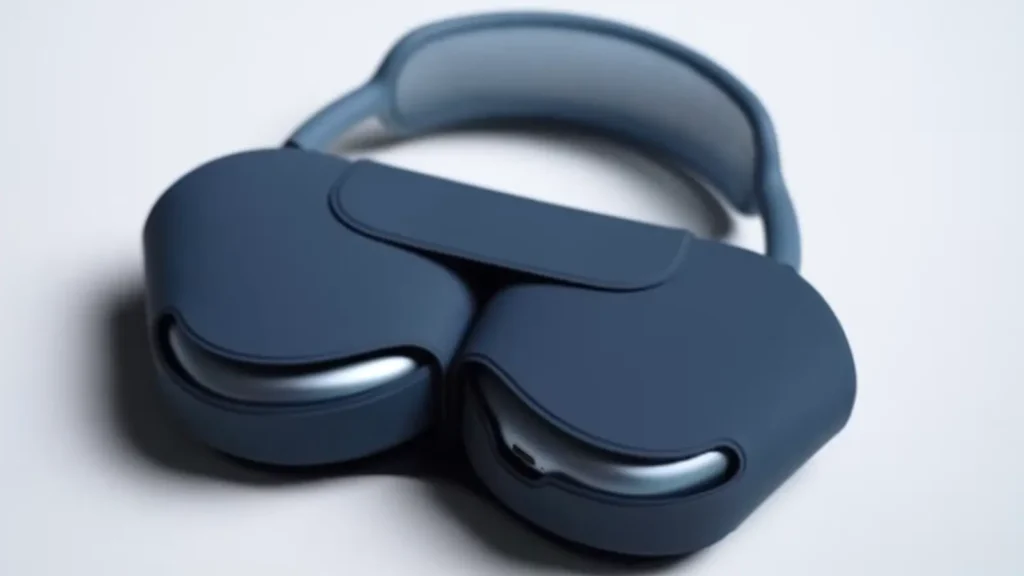
The AirPods Max arrive in a clean white Apple box. Inside, you get the headphones, the infamous Smart Case, and a USB-C to Lightning charging cable. No charger included — classic Apple.
The Smart Case has attracted its share of jokes — yes, it resembles a bra. But in practice, it has real advantages. It is genuinely small compared to standard hard headphone cases, made from quality faux leather with a magnetic clasp, and it triggers the headphones’ ultra-low power mode automatically. It is original, which takes courage to bring to market. Functional and distinctive — that is very Apple.
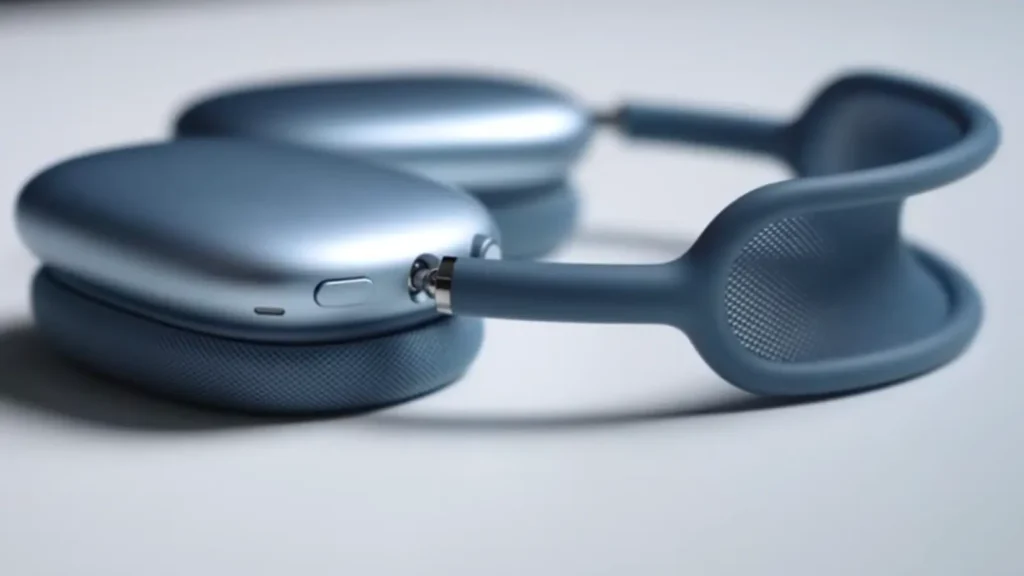
The headphones themselves are premium in every sense. The headband frame is stainless steel, wrapped in soft rubberized material, with a wide mesh section on top. After hours of use during summer heat, there was no sweating or discomfort — a genuine achievement for a closed-back headphone this heavy.
The telescopic arms have a generous extension range, but suit medium to large heads better. If your head is on the smaller side, try before you buy — you may not need to extend the arms at all.
The hinge mechanism deserves special mention. It allows the ear cup to both rotate and make a small springy angular adjustment, pressing the lower portion of the cup gently against the jaw and neck. The result is a seal with no gap — critical for both ANC performance and bass response. It is one of the best-engineered headband hinge systems in any headphone at this price.
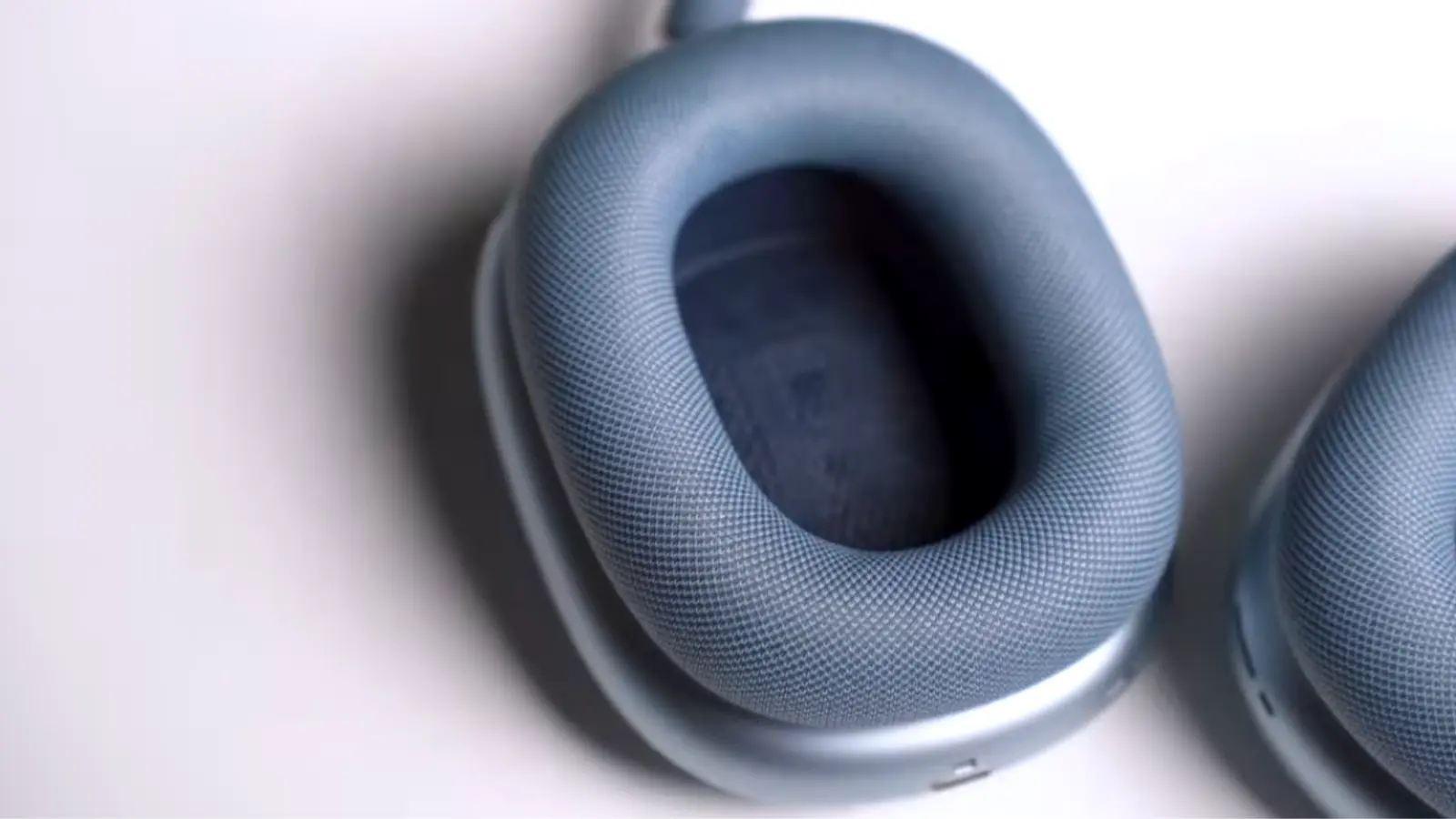
The ear pads are among the most comfortable available anywhere. Large mesh-covered cushions with acoustically optimized foam, soft on the skin, with enough internal space that the ear sits comfortably inside without touching the driver housing. They detach magnetically, and replacements are available from Apple in all five colors.
At 384.8 grams, these are not light. You feel the weight, especially when turning your head. But the clamping force is perfectly calibrated — firm enough to hold during movement, gentle enough to wear for hours without pressure fatigue. During an aggressive headbang test, they stayed put without adjustment.
My Honest Review: AirPods Pro 3 Are Brilliant: But I’m Not Sure I’d Buy Them Again
The aluminum ear cups are reminiscent of Apple’s MacBook line — strong, beautiful, and premium to the touch. Small slots on the underside of each cup house the ANC microphones and act as driver vents.
AirPods Max Controls: Digital Crown and Noise Cancellation
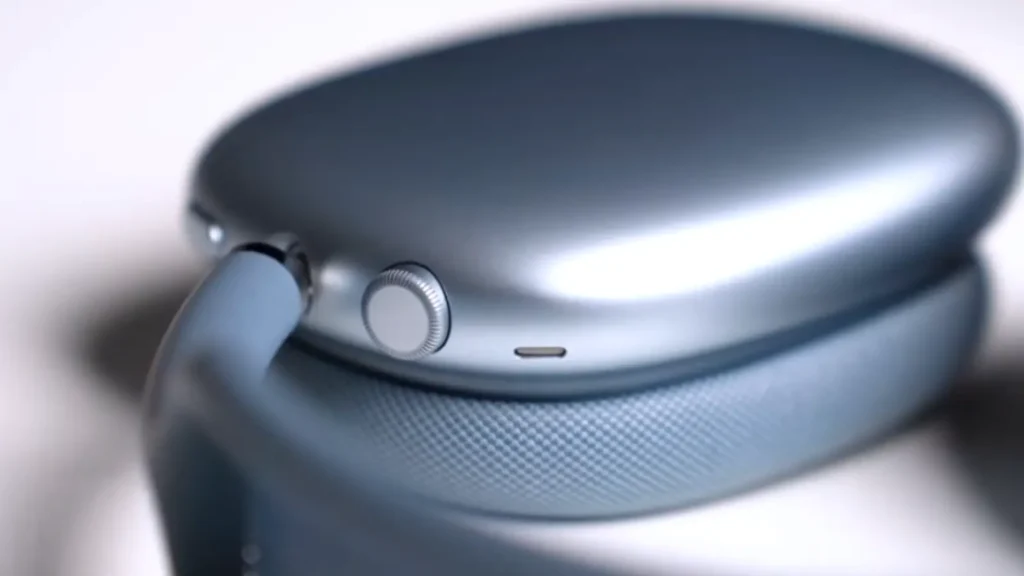
Apple borrowed the Digital Crown directly from the Apple Watch and placed it on top of the right ear cup. It controls volume with no hard stops — spin left for quieter, right for louder. The resistance is light but tactile. A single press pauses and plays, or answers calls. Double-press skips forward.
For right-handed users, it sits on the wrong side — your right hand is usually occupied. Apple made this choice to keep left-handers equally comfortable, which is consistent with their broader design philosophy.
A separate button on the right cup handles the three listening modes: Active Noise Cancellation, Transparency, and off. The ANC implementation deserves specific praise. When activated, background noise disappears without any audible effect on the music itself. No high-frequency distortion, no change in tonal character — just silence replacing noise. Subway rumble becomes barely noticeable. This is among the best ANC implementations at any price point.
Transparency mode passes outside audio through cleanly, and Conversation Detection automatically lowers the volume when you start speaking — useful in practice.
Can AirPods Pro 3 Replace Your Fitness Tracker?
For Apple ecosystem users, the experience becomes genuinely seamless. Pick up the headphones near your MacBook, and a connection prompt appears on the screen automatically. Switching between iPhone, iPad, and MacBook is near-instant. Remove the headphones and music pauses. Put them back on, and it resumes. In weeks of testing, this never failed once. Living with AirPods Max inside the Apple ecosystem is as frictionless as any wireless headphone experience available.
AirPods Max Sound Quality — How Does It Actually Sound?
Each ear cup houses an Apple H1 chip running what Apple calls computational audio — essentially, real-time DSP that monitors the fit position and adjusts the sound accordingly. Move the headphones slightly forward, backward, or press them more firmly, and the sound changes subtly. This kind of adaptive acoustic correction is genuinely unusual for an over-ear headphone.
In standard stereo, the AirPods Max deliver a decent sound, even, and somewhat polished — but not exciting by audiophile standards. There is a mild bass lift below 100Hz that adds warmth without becoming boomy. The highs are controlled, smooth, never harsh — but the very top end above 18kHz is rolled off, which reduces air and sparkle. Mid frequencies are where these headphones shine most clearly. The vocal range has good presence, sensitivity, and microdynamics.
The overall character is closer to Bang & Olufsen than Sony or Sennheiser — smooth, refined, slightly soft rather than detailed and forward. In a direct comparison with the Beyerdynamic Amiron Wireless — a similarly priced alternative — the Amiron plays noticeably more transparently with a more traditional hi-fi character. However, the AirPods Max improve with burn-in. After several days of use, the microdynamics noticeably opened up.
For pure analytical listening or critical hi-fi evaluation, the AirPods Max are not the tool. For long-session comfortable listening, especially with Dolby Atmos content, they are exceptionally good.

AirPods Max Dolby Atmos — Is It Worth It?
This is where the AirPods Max story gets genuinely interesting. Dolby Atmos in music is not psychoacoustic processing or artificial reverb. It is a real multi-track mix prepared by sound engineers specifically for spatial playback — additional audio objects placed in three-dimensional space around the listener.
The result in headphones is that the stage moves outside your head. In standard stereo, instruments sit inside your skull — the snare drum dead center between your ears, the mix contained within the width of your head. In Dolby Atmos on AirPods Max, the stage opens outward. Instruments exist in a space that feels larger than your head, separated from each other with more physical distance.
The honest genre-by-genre breakdown:
Pop music — disappointing. For most pop tracks, the Atmos mix kills the bass punch and emotional impact that makes pop work. Several listeners given a blind comparison between stereo and Atmos versions of The Weeknd and Billie Eilish consistently preferred stereo. The spatial processing removes the intimacy that defines this music. Pop sound engineers still have work to do here.
Hip-hop — surprisingly good. Hip-hop producers tend to mix with heavy bass in reserve, and it survives the Atmos process better. Bas and J. Cole’s “The Jackie” is a standout — the bass hits with full weight, and the spatial separation makes the arrangement feel larger and more interesting. Start here if you want to hear Atmos working.
Rock classics — genuinely worthwhile. Queen’s “Bohemian Rhapsody,” REM’s “Drive,” The Rolling Stones’ “Angie” — hearing familiar recordings with new spatial separation is a real listening experience. You catch details and instrument placements that have been buried in the same stereo mix for decades.
Jazz — excellent. This is where Dolby Atmos is most consistently impressive. Complex polyphonic arrangements that turn into mush in standard headphone listening become clearly separated and easy to follow. The extended stage suits the genre perfectly. The Jazz in Spatial Sound playlist on Apple Music is a reliable starting point.
Classical — the best of all. Orchestra recordings in Dolby Atmos on AirPods Max approach something that standard headphone listening rarely achieves — a sense of real physical space around the ensemble. Tchaikovsky’s Nutcracker performed by the Los Angeles Philharmonic, Mozart’s Requiem, and Max Richter’s Exiles — all are worth your time. Alice Sara Ott’s Echoes of Life on Deutsche Grammophon is particularly well engineered.
One practical note: Dolby Atmos tracks play slightly quieter than their stereo counterparts. When comparing the two, raise the volume by 2 to 3 steps after switching to Atmos for a fair comparison.
AirPods Max Spatial Audio — Head Tracking Explained
Beyond Dolby Atmos, AirPods Max support Spatial Audio with head tracking — the headphones use motion sensors to keep the perceived sound stage fixed in space as you move your head. Turn left, and the audio field stays where it was, exactly as sound works in real life.
This feature works on iOS and iPadOS devices when watching Dolby content in the Apple TV app. It is most noticeable in film and television rather than music. The result is a more cinematic experience than standard stereo headphone audio — the center channel stays anchored to the screen even as you turn your head.
Whether this enhances music listening is debatable. It is unusual and occasionally disorienting at first. But for film watching, it adds a genuine sense of physical space that standard stereo cannot replicate.
AirPods Max vs Beyerdynamic Amiron Wireless
| Comparison | AirPods Max | Beyerdynamic Amiron Wireless |
|---|---|---|
| Price | $549 | ~$500 |
| Sound character | Smooth, warm, refined | Transparent, detailed, hi-fi |
| ANC | Excellent | None |
| Dolby Atmos | Yes | No |
| Ecosystem | Apple only | Universal |
| Weight | 384.8g | 340g |
| Wireless | Yes | Yes |
| Best for | Long sessions, Apple users | Pure sound quality |
The Beyerdynamic wins on pure sound transparency. The AirPods Max wins on everything else — ANC, ecosystem integration, Dolby Atmos, and controls. Choose based on your priority.
AirPods Max Verdict: Worth the Price?
The AirPods Max are the best headphones Apple has ever made and a genuine entry into hi-fi territory. For Apple ecosystem users who want seamless device switching, excellent ANC, and access to Dolby Atmos on Apple Music, they are the obvious choice at this price.
For pure audiophile sound quality per dollar, they are outclassed by competitors like the Beyerdynamic Amiron Wireless. The lack of a wired connection, the weight, and the price are real compromises.
Buy AirPods Max if: You are deep in the Apple ecosystem, listen on Apple Music, travel frequently, need ANC, and want the best Dolby Atmos headphone experience available.
Skip AirPods Max if: You want maximum sound quality for the money, use Android or Windows, or need a wired connection option.
Quick Specs: Apple AirPods Max
| Feature | Specification |
|---|---|
| Price | $549 |
| Weight | 384.8g |
| Driver type | Closed-back, single broadband dynamic |
| Chip | Apple H1 (one per ear cup) |
| Noise cancellation | Active — computational ANC |
| Transparency mode | Yes |
| Connectivity | Bluetooth 5.0 |
| Wired connection | No — wireless only |
| Battery life | 20 hours (ANC on) |
| Charging | Lightning (USB-C on newer units) |
| Dolby Atmos | Yes — via Apple Music |
| Spatial Audio | Yes — with head tracking |
| Colors | 5 — Silver, Space Gray, Sky Blue, Pink, Green |