
A 10-Inch Driver, 75 Watts and an Unusual Idea: Remember This Sonance’s Little Son of Sub?
Originally priced at just $349, it was designed to complement smaller speakers rather than compete with the big, room-shaking subwoofers of the day. Its relatively compact enclosure, installation-friendly controls, and straightforward connectivity made it an interesting proposition for people building modest home theater and music systems.
More than two decades later, the Son of Sub offers an interesting glimpse into how manufacturers approached affordable bass reproduction in the early 2000s. But was this little Sonance capable of delivering more than its modest specifications suggested?
Sonance Son of Sub: A Different Approach to Affordable Bass
Sonance has long been associated with the custom-installation market, particularly its in-wall and in-ceiling loudspeakers. The Son of Sub represented a slightly different direction for the company, offering a freestanding powered subwoofer that could also meet installation requirements in limited spaces.
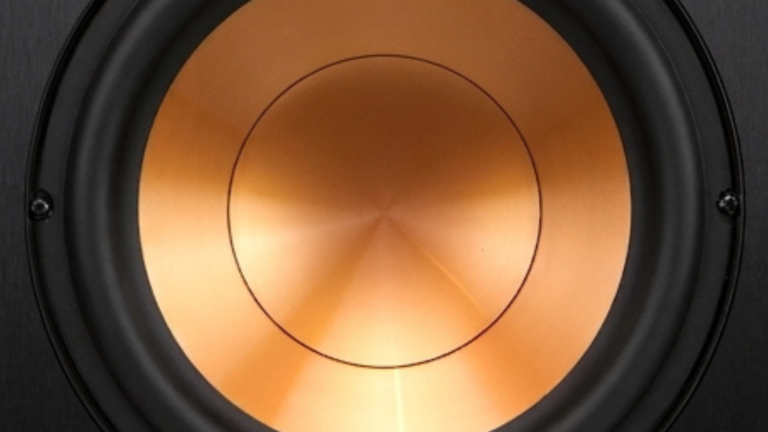
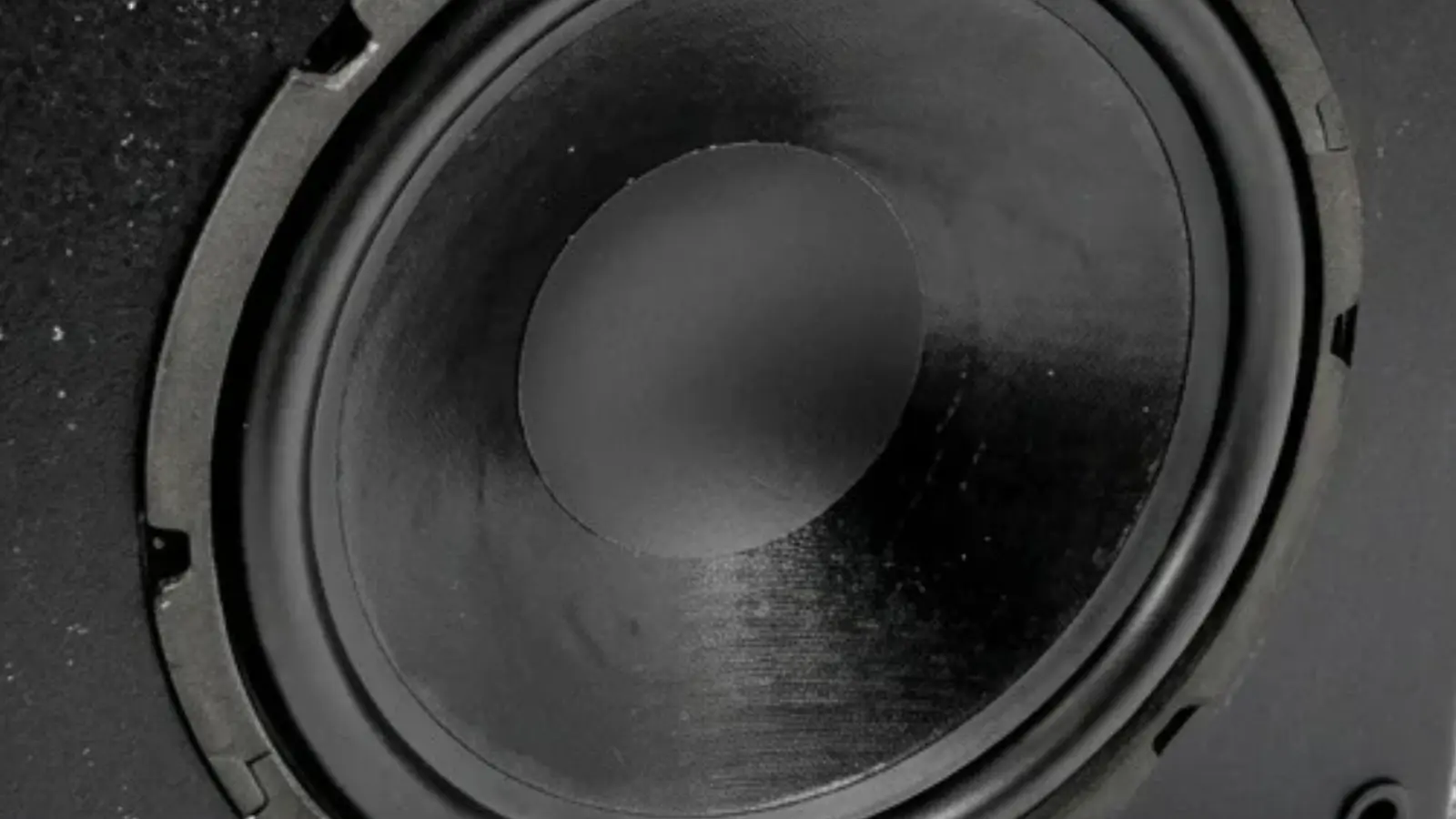
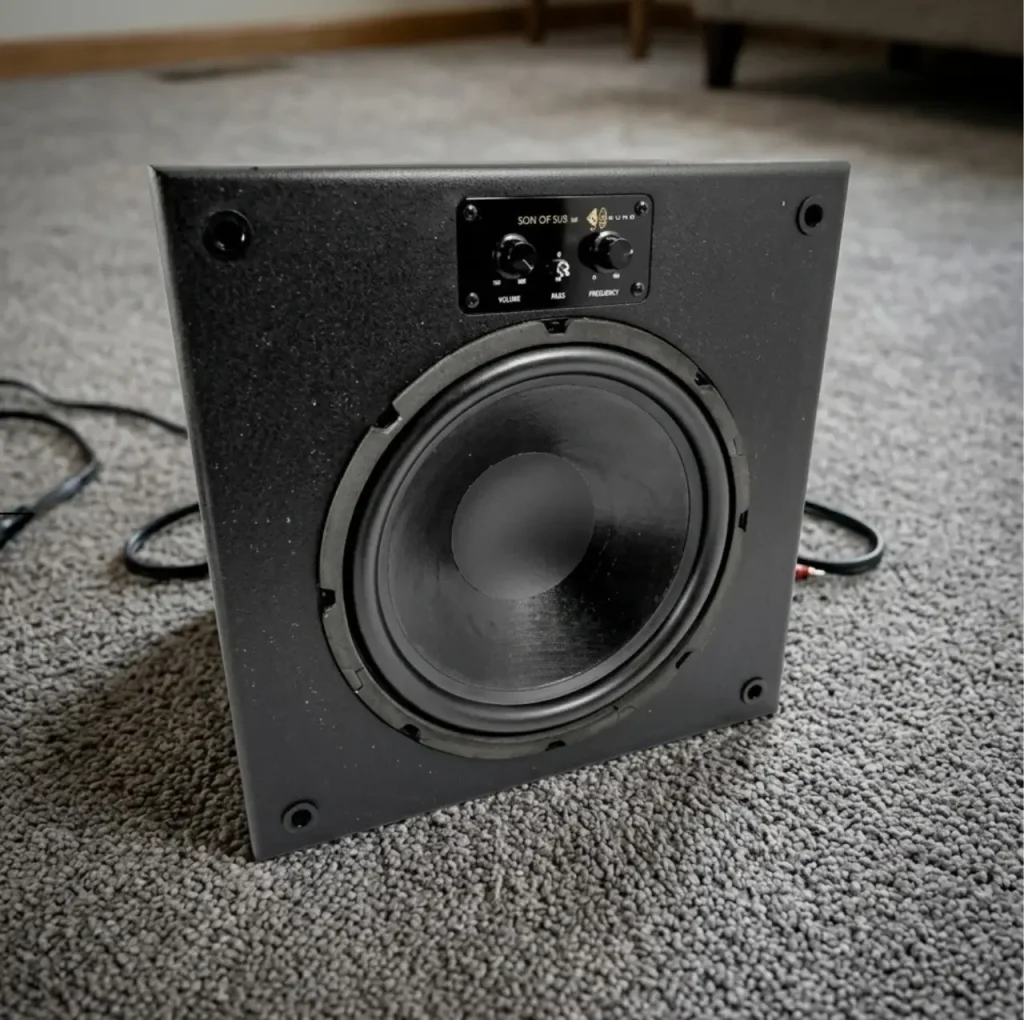
At its heart was a 10-inch, video-shielded paper-cone driver with a rubber surround and a two-inch voice coil. Power came from an integrated amplifier rated at 75 watts RMS, while the published frequency response extended from 35 Hz to 250 Hz.
This Discontinued 175-Pound Subwoofer Packed 2,000 Watts and Serious Bass
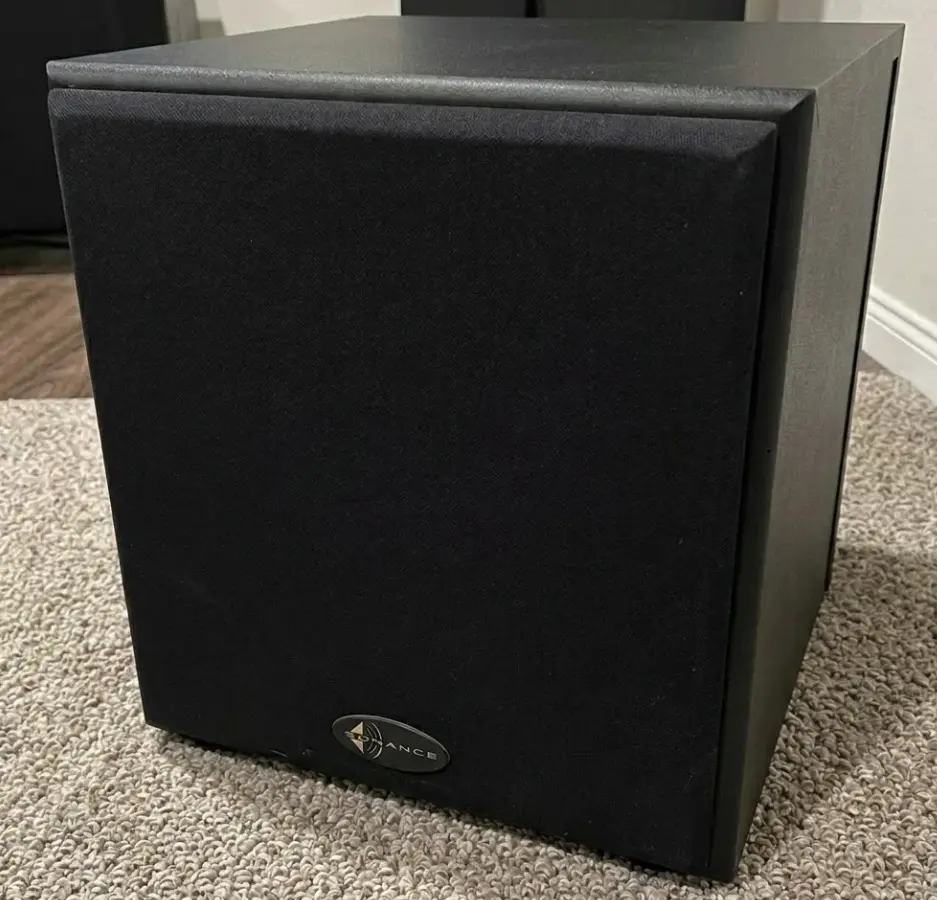
The cabinet measured 14 inches wide, 14 inches high, and 13.5 inches deep, with a substantial weight of 45 pounds.
For a product selling for $349, the feature list was reasonably generous. The SOS included speaker-level and line-level inputs, speaker-level outputs, adjustable crossover controls, a phase switch, and an automatic turn-on feature.

The amplifier automatically switched on when it detected an incoming audio signal and powered down after an extended period without one. Sonance also incorporated an anti-clipping circuit to help prevent the amplifier from being overdriven.
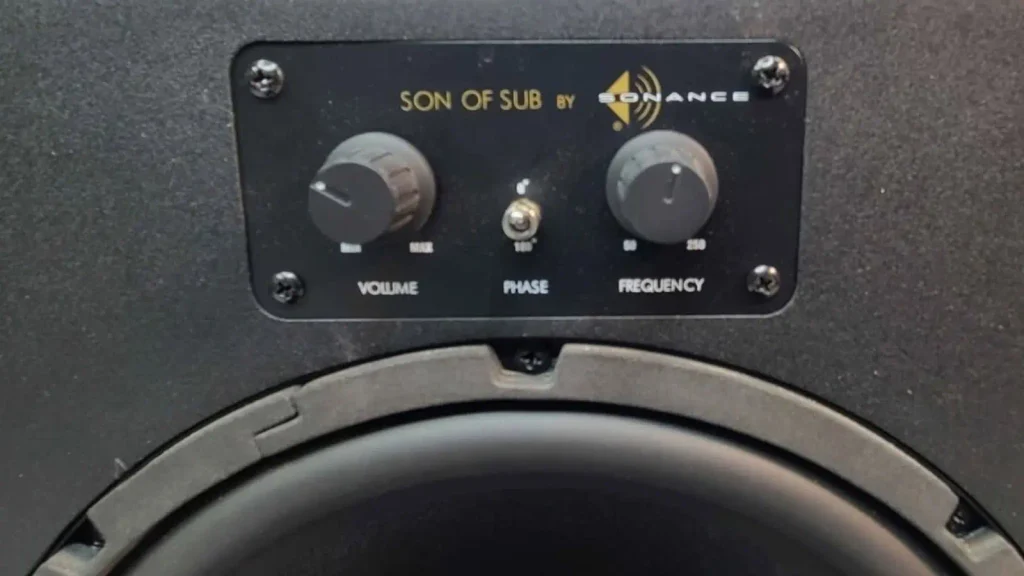
One particularly interesting detail was the location of the controls. The crossover, phase, and volume adjustments were positioned behind the removable front grille, making them accessible even when the subwoofer was installed flush against a wall or inside a cabinet.
This was a thoughtful decision for a company whose products were often intended for custom installations.
The variable crossover offered adjustment between 60 Hz and 250 Hz, allowing the SOS to be matched with different types of satellite and bookshelf speakers.
However, its published frequency response also revealed the limitations of the design. With a lower frequency limit of 35 Hz, the Sonance was better understood as a bass-reinforcement speaker than a conventional deep-bass subwoofer. Its purpose was to give smaller speakers some much-needed low-frequency support, not reproduce the deepest effects found in demanding movie soundtracks.
Build Quality and Features: A Product Built for Practicality
The Sonance Son of Sub was never particularly luxurious, and its appearance reflected its original price point.
The enclosure felt solid and well constructed, although the black textured vinyl finish was rather utilitarian. There was nothing particularly glamorous about it, but the overall construction was appropriate for an affordable subwoofer.
The crossover and volume controls felt smooth and durable. Unfortunately, the speaker terminals were the spring-clip variety, providing a relatively weak connection and limiting the choice of speaker cables.
Another notable omission was high-pass line-level output connectivity.
This would have made the SOS considerably more versatile for systems using separate preamplifiers and power amplifiers. A high-pass connection allows the lowest frequencies to be removed from the signal reaching the main speakers, helping them and their associated amplifiers concentrate on the frequencies they handle more effectively.
Without this facility, anyone wanting to use the SOS’s high-pass filtering had to route the amplifier’s speaker outputs through the subwoofer.

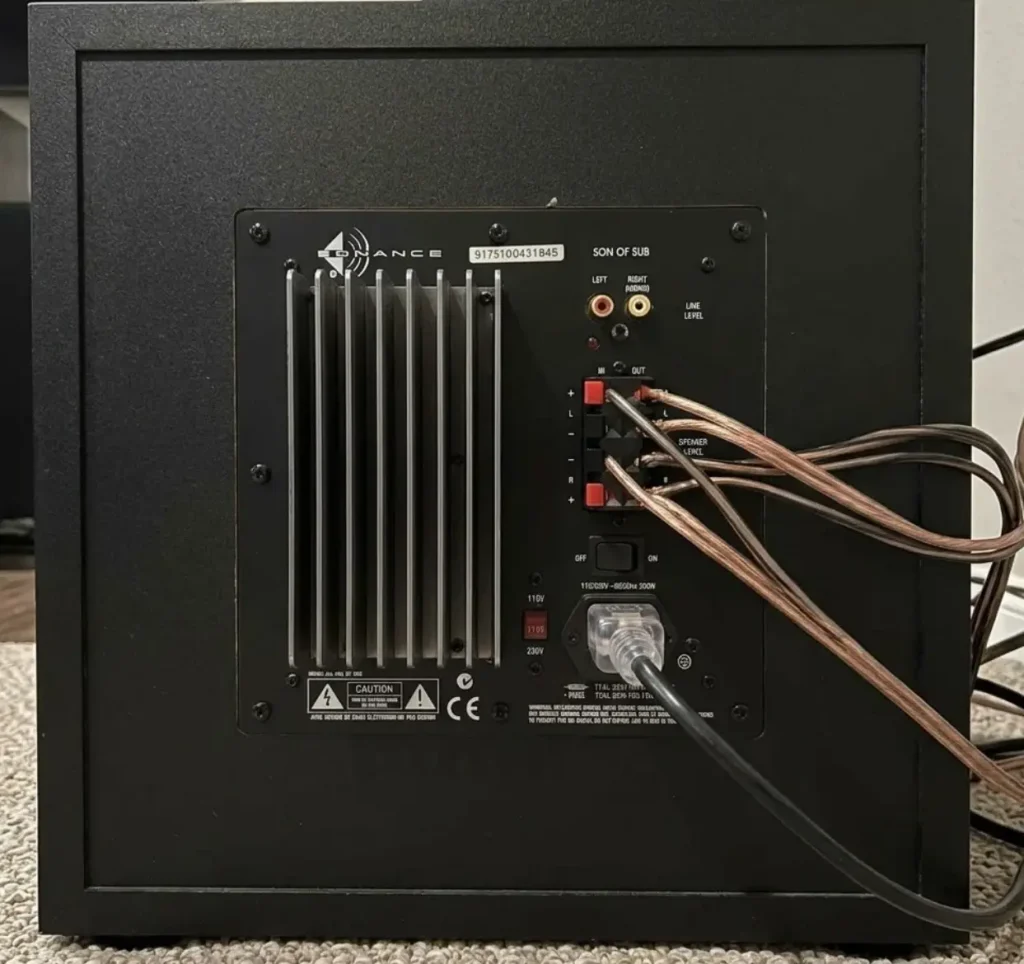
It was a compromise, particularly for more sophisticated stereo systems, although the intended audience was unlikely to be particularly concerned about it.
Setup: Finding the Right Speakers for the Sonance SOS
I initially connected the SOS to the subwoofer output of a Classe SSP 30 MKII A/V processor.
My main left and right speakers were the Revel F30s, with a Revel C30 handling center-channel duties. Unfortunately, this combination made it difficult to appreciate what the little Sonance could actually contribute.
The Revel F30s already produced useful bass down to approximately 30 Hz, putting their low-frequency extension in roughly the same territory as the SOS. The Sonance certainly added some reinforcement, but with larger speakers and capable amplification already doing the heavy lifting, its contribution was largely unnecessary.
I decided to switch to the Snell K.5 Mk II bookshelf speakers for the more serious evaluation. These proved to be a much more realistic partner for the compact subwoofer.
Sonance recommended positioning one SOS in each front corner, close to the left and right speakers. This arrangement could help achieve a smoother transition between the subwoofer and the main speakers, while corner placement could also increase the overall bass output.
For my evaluation, I configured the crossover in the A/V processor so that the Snell speakers handled frequencies from 70 Hz upward, leaving the SOS responsible for everything below that point.
Movie Performance: Could 75 Watts Deliver the Impact?
I started my movie evaluation with Blue Crush (Universal Studios Home Video), the surfing drama starring Kate Bosworth.
Set on the North Shore of Oahu, the film features plenty of surfing footage at Pipeline, a legendary spot known for its enormous waves and hollow barrels.
For a surfer like me, watching this kind of footage is almost irresistible. But the soundtrack also provides some interesting challenges for a subwoofer, particularly when the waves come crashing down.
The Sonance handled the dynamic energy of those moments surprisingly well. It added weight to the soundtrack and gave the action a more convincing sense of scale.
However, switching to my reference Klipsch RSW 15 and Linn Sizmik 12.45 subwoofers made the limitations immediately apparent. With those larger and considerably more expensive models, I could actually feel the waves crashing rather than simply hear them.
The SOS simply did not extend low enough to reproduce that kind of room-shaking bass.
To be fair, the reference subwoofers cost between four and seven times as much. The comparison was hardly equal, but it illustrated the difference between bass reinforcement and genuine deep-bass reproduction.
For smaller bookshelf and in-wall speakers, though, the Sonance made a worthwhile contribution. It filled out the lower frequencies and gave the soundtrack more presence without pretending to be something it wasn’t.
Next, I watched Scooby-Doo (Warner Home Video), a film I often enjoyed with my kids.
In Chapter 8, Shaggy and Scooby stumble upon the monsters’ cave, setting off a series of events that eventually reveal the creatures’ weakness to sunlight. The resulting explosions provide a useful opportunity to test the subwoofer’s ability to reproduce sudden bursts of low-frequency energy.
The SOS had enough power to give these effects convincing impact, delivering the kind of home theater excitement you might not expect from such a modestly priced component.
I followed this with XXX (Columbia/TriStar Home Entertainment), starring Vin Diesel. Think of it as a punk-rock interpretation of a James Bond adventure, complete with extreme sports stunts, explosions and an unusually active surround soundtrack.
There is almost always something flying overhead or exploding somewhere around the listening room.
The Sonance proved capable of delivering some genuinely impressive moments. Even at relatively high playback levels, it remained composed and did not become noticeably confused by the action.
It only began to run out of steam during the loudest explosions. Considering its modest amplifier power and original price, that was hardly surprising. Many similarly priced subwoofers would have reached their limits considerably sooner.
For listeners who enjoyed movies at normal to moderately high volumes, the SOS offered enough output to make a meaningful difference. Those who regularly pushed their home theaters to extreme levels would probably want something considerably more powerful.

Music Performance: More Than Just Movie Bass
After the movie sessions, I turned to music to see whether the Sonance could deliver something beyond cinematic impact.
I tried several different genres and was pleasantly surprised by the results.
The second track on Keb’ Mo’s self-titled CD (Epic Records) provided an encouraging start. The bass was powerful and extended nicely, giving the music a satisfying foundation.
It was not as well-defined as what I had experienced with my reference subwoofers, but the SOS communicated the rhythm and drive of the performance effectively.
On Track 5, “Angelina,” the bass line had my toes tapping and kept me thoroughly involved in the music. For a relatively inexpensive subwoofer, that was a welcome result.
Next came Red Hot Chili Peppers’ What Hits!? (EMI). The opening track, “Higher Ground,” remains one of my all-time favorites from the band.
Every time I hear it, I am transported back to my college days, when bouncing around in a mosh pit seemed like a perfectly reasonable way to spend an evening.
This track proved more demanding.
The SOS was only borderline capable of keeping up with the bass demands of the performance. A more powerful amplifier would certainly have helped, and the subwoofer struggled to reproduce the full energy of the track at higher listening levels.
Still, considering its original price of $349, expecting it to deliver everything a substantially more expensive reference subwoofer could would be unrealistic.
The Downside: Where the Sonance Son of Sub Fell Short
The biggest limitation of the Sonance Son of Sub was its low-frequency extension.
With a published frequency response starting at 35 Hz, it was not the right choice for anyone looking to reproduce the deepest sub-bass effects, particularly frequencies below 20 Hz that can give large home theaters their physical impact.
Owners of full-range floorstanding speakers with capable amplification were unlikely to benefit much from adding the SOS, as my experience with the Revel F30 speakers demonstrated.
The absence of high-pass line-level outputs was another drawback, particularly for systems built around separate preamplifiers and power amplifiers. The spring-clip speaker terminals also felt like an unnecessary compromise.
Its 75-watt amplifier ultimately placed a limit on how much output it could deliver, especially during demanding movie scenes and energetic music played at high volumes.
These limitations did not make the SOS a bad product. They simply defined the type of system in which it made the most sense.

Verdict: A Forgotten Sonance Subwoofer That Had a Job to Do
The Sonance Son of Sub was designed to be an affordable, practical addition to modest home theater and music systems, and that is precisely where it made the most sense.
At its original $349 retail price, it offered a 10-inch driver, a built-in amplifier, flexible crossover adjustment, and installation-friendly controls in a relatively compact enclosure.
It could not reproduce the earth-shaking low frequencies of a large reference subwoofer, nor did it have the amplifier power to satisfy listeners who regularly demanded extreme playback levels. But that was never really its purpose.
I could see the SOS working particularly well in rooms equipped with in-wall speakers, distributed music systems, or smaller home theaters where the main speakers needed a little help at the bottom end.
It added the extra weight and impact that smaller speakers often struggled to provide, making music more engaging and movie soundtracks more convincing.
Looking back, the Sonance Son of Sub is an interesting reminder that not every subwoofer was designed to shake the room. Sometimes, the goal was simply to give a modest speaker system the bass it was missing.