

Bowers & Wilkins 801 D4 Speaker Review
The Bowers & Wilkins 800 Series has now evolved over more than a decade, and the current generation represents its fifth major iteration. Six years have passed since the previous update. While the overall concept and engineering philosophy were firmly established several generations ago, this latest revision brings numerous refinements, not only in construction, but perhaps more importantly, in sound.
So is this an entirely new speaker, or a deeply refined evolution of an already great design?
Design and Construction
The 801 D4 stands as the flagship of the current 800 Series lineup. Of course, the legendary Nautilus remains a separate and higher symbolic reference point in the company’s hierarchy, but it exists outside the normal product cycle.

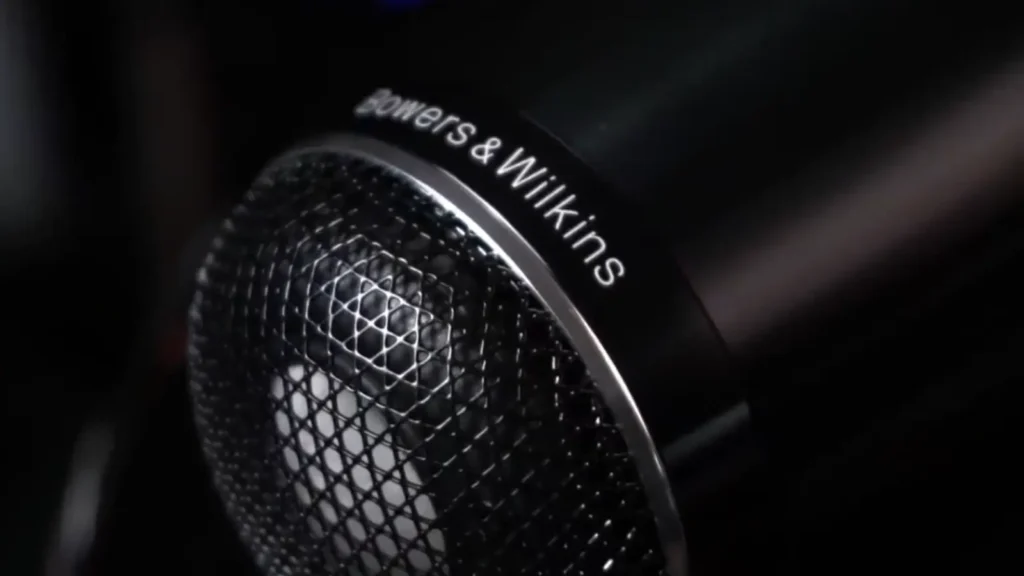
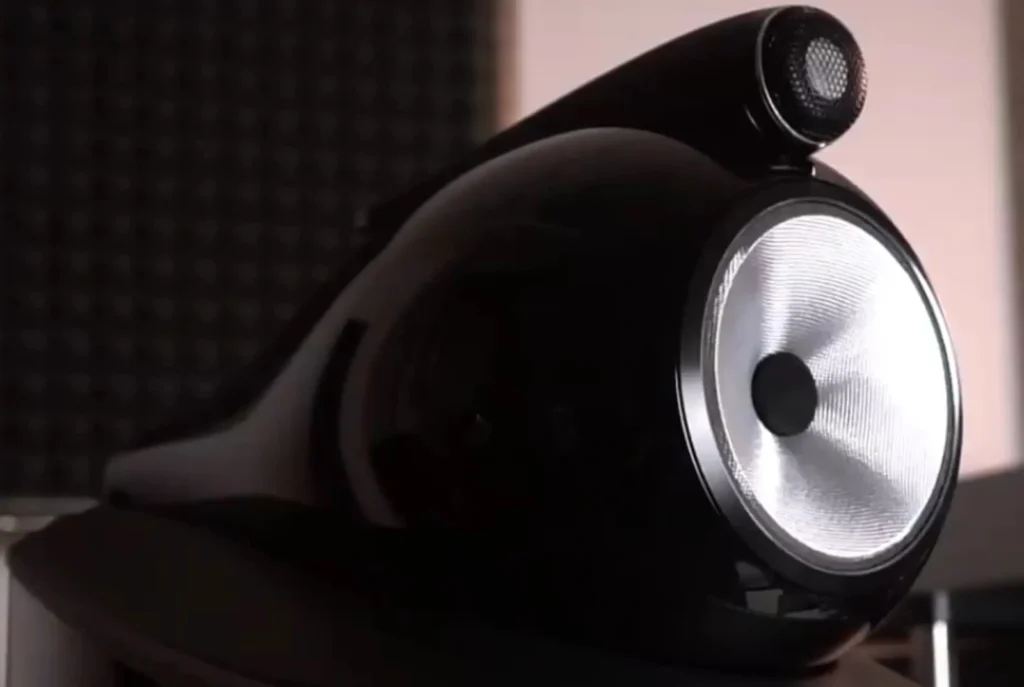
At first glance, the 801 D4 is instantly recognizable. The proportions, the separate bass enclosure, the distinctive “turbine head” midrange housing, and the iconic tweeter-on-top design all remain intact.
New finish options include walnut and red walnut veneers, adding a welcome touch of visual warmth.
However, beneath the familiar exterior lies extensive engineering revision.
B&W 803 D4 Review: Can $25,000 Speakers Really Be Worth It?”
The bass enclosure has been significantly redesigned internally. While the external shape remains similar, the curvature has been refined, and the internal structure has been substantially reworked.
The curved plywood cabinet is now reinforced with an internal aluminum front plate that supports the drivers, along with additional aluminum bracing to improve rigidity. The rear aluminum panel, introduced in the previous generation, remains, although slightly revised in form, and now carries the crossover network internally.
One of the most important structural changes is the top plate connecting the bass enclosure to the midrange housing. This interface now incorporates an aluminum layer, significantly improving mechanical stability and isolation.
These changes are far from cosmetic; they reflect serious engineering effort.

Drivers – Evolution Rather Than Reinvention
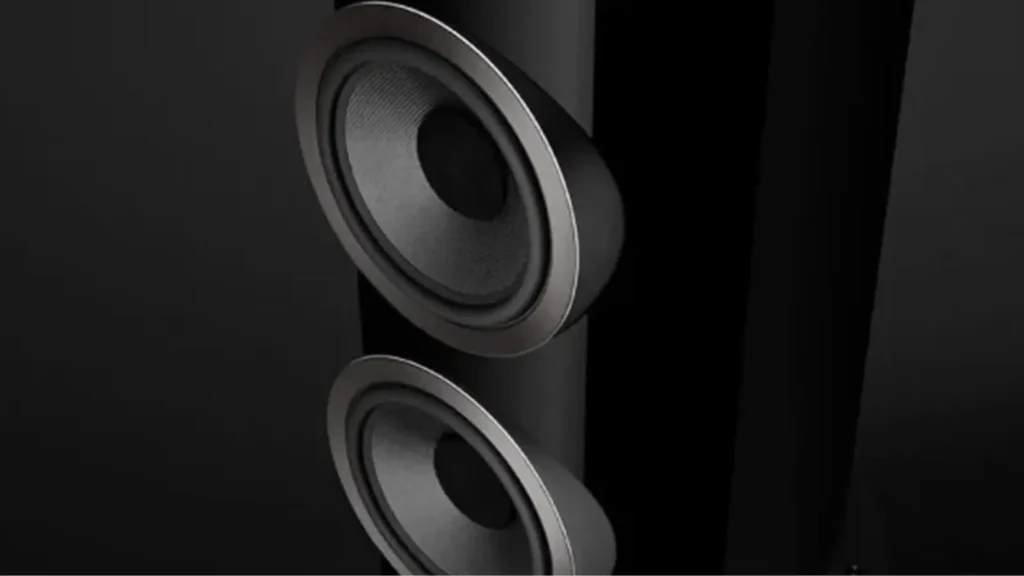
The twin 10-inch woofers continue to use Bowers & Wilkins’ Aerofoil cone technology, but now feature redesigned soft center caps similar in material to the midrange driver. Previously, rigid dome caps were used.
The midrange driver remains housed in the iconic aluminum “turbine head,” a beautifully machined structure designed to eliminate unwanted resonance. It uses the company’s Continuum cone and sophisticated suspension system, both carried over but further optimized.
The diamond dome tweeter remains fundamentally unchanged, but its mounting system has been redesigned. The tweeter tube is now supported by a revised two-point damped mounting system instead of the previous single-point design, improving mechanical isolation and stability.
Listening Test – A More Mature Voice
Listening tests were conducted in the same room, using identical speaker placement and Transparent cabling, but with two different amplification systems: PS Audio hybrid electronics and Michi amplifiers. Sources included PS Audio digital components and an AVM digital front end.
First Impressions – Control and Naturalness
With Bingo Miki & The Inner Galaxy Orchestra’s Montreux Cyclone, the first impression was of a slightly softer presentation than expected, but in a positive sense.
The bass was superb: deep, controlled, and accurate, without any artificial emphasis. Compared to the previous generation, it felt more precise and honest.
The level of detail was exceptionally high, but presented in a more natural and relaxed manner. Imaging was stable, and spatial proportions were realistic and well defined.
The speakers demonstrated excellent rhythm and timing, yet everything was delivered with refinement and elegance rather than aggression.
Frequency integration felt seamless and coherent.
Midrange and Treble – Balanced and Refined
The midrange was open, airy, and free from harshness. Treble was highly extended, as expected from a diamond dome tweeter, but better integrated and less forward than before.
Joni Mitchell’s Both Sides Now demonstrated excellent tonal richness and emotional depth. The presentation was warm and fluid, yet retained clarity and separation.
The speakers delivered an even frequency response with no obvious coloration or emphasis.
The sound was clearly more mature than previous versions.
Complex Recordings – Precision and Scale
With orchestral recordings such as Nino Rota’s compositions, the 801 D4 demonstrated impressive bass authority without excess. The soundstage was wide, deep, and highly organized.
Image separation was excellent, and spatial air was preserved.
The speakers conveyed scale convincingly; these are unquestionably large, full-range loudspeakers.
Amplification Changes – Revealing and Honest
Switching to Michi amplification increased dynamic authority and overall control, while preserving tonal balance.
The speakers clearly reflected the character of the electronics without losing their own identity, a hallmark of high-end transducers.
Psapp’s The Only Thing I Ever Wanted revealed excellent rhythmic articulation and scale, while Shape Of Despair’s Illusions Play exposed fine recording details with remarkable transparency.
The speakers remained composed and controlled even during demanding passages.
Performance At Low-Volume
Even at reduced listening levels, large-scale orchestral works such as Schnittke’s First Symphony retained dimensionality and balance.
Nothing collapsed. Nothing disappeared.
The soundstage remained intact.
This is a rare and valuable quality.

Monitor-Like Accuracy with Musicality
The overall tonal presentation was neutral, honest, and slightly analytical, but never sterile.
Dynamics were excellent, and harmonic decay was rendered naturally.
Wagner’s Flying Dutchman demonstrated excellent vocal placement, tonal realism, and spatial coherence.
The speakers maintained composure even during complex passages.
Conclusion:
The 801 D4 is not a radical reinvention, nor does it need to be. Instead, it represents a masterfully executed refinement of an icon. The bass is noticeably more accurate and controlled, the midrange more natural, and the treble more seamlessly integrated. The result is an overall presentation that feels more balanced, mature, and universal.
While these speakers are technically sophisticated and extremely revealing, they are also slightly less demanding of amplification than their predecessors, though high-quality electronics remain essential to unlock their full potential. The 801 D4 successfully combines precision, scale, and musicality at the highest level, standing as a worthy successor to one of the most respected lineages in high-end audio.
Pros And Cons:
Pros:
- Exceptional bass accuracy, depth, and control
- Superb soundstage scale, depth, and imaging precision
- Outstanding midrange transparency and realism
- Diamond tweeter delivers extended, clean, non-fatiguing treble
- Excellent build quality and engineering
- More balanced and less aggressive than the previous generation
- Reveals upstream equipment differences clearly
Cons
- Extremely expensive
- Very large and heavy (requires a large room)
- Needs high-quality, powerful amplification to perform at its best
- Placement and setup are critical
Bowers & Wilkins 801 D4 Specifications
| Specification | Value |
|---|---|
| Official Site | Here |
| Type | 3-way floorstanding loudspeaker |
| Tweeter | 25 mm (1 in) Diamond dome |
| Midrange | 150 mm (6 in) Continuum cone, Turbine Head |
| Bass | 2 × 250 mm (10 in) Aerofoil cones |
| Frequency Response | 15 Hz – 28,000 Hz (±3 dB reference axis) |
| Frequency Range | 13 Hz – 35,000 Hz |
| Sensitivity | 90 dB (2.83V, 1m) |
| Nominal Impedance | 8 ohms |
| Minimum Impedance | 3.0 ohms |
| Recommended Amplifier Power | 50 W – 1000 W |
| Dimensions (H × W × D) | 1221 × 451 × 600 mm |
| Weight | 100.6 kg (each) |
| Cabinet | Reverse-wrap plywood with aluminum reinforcement |
| Port | Rear-firing Flowport |
| Connections | Bi-wire / Bi-amp capable |